Netherlands face Portugal in the UEFA Nations League 2027 quarter-finals. Discover all fixtures, Final Four dates, and promotion and relegation play-offs.
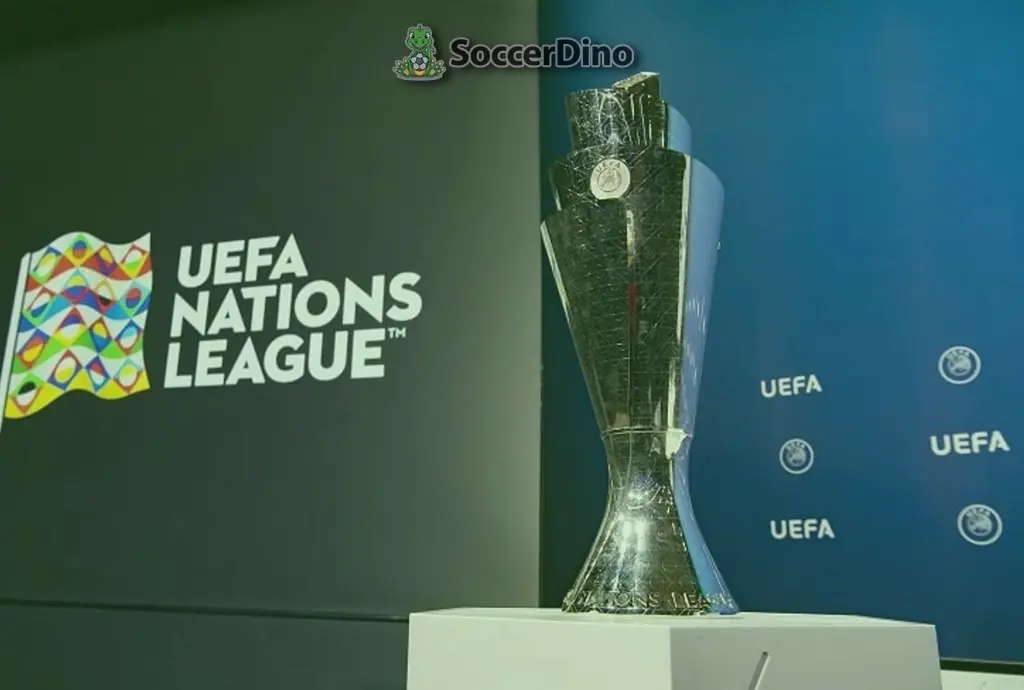
Netherlands Draw Portugal in UEFA Nations League Quarter-Finals as Road to 2027 Finals Is Revealed
The Netherlands will face Portugal in the quarter-finals of the 2026/27 UEFA Nations League following Friday's draw in Nyon, Switzerland, setting up a highly anticipated reunion between two countries that previously contested the competition's inaugural final in 2019.
The draw, held at UEFA headquarters on November 20, 2026, confirmed four major European encounters that will determine which nations advance to next summer's Nations League Finals. Alongside the Netherlands' meeting with Portugal, Spain will take on France, Norway will face England, and Belgium will meet Germany.
For the Dutch national team, the draw comes just days after a disappointing conclusion to the group stage. A heavy 5-0 defeat against Germany in Berlin cost the Netherlands first place in their League A group, despite finishing level on points with their German rivals.
That result forced Oranje to enter the quarter-final draw as one of the four group runners-up, meaning they were guaranteed to face a nation that had finished first in its respective group.
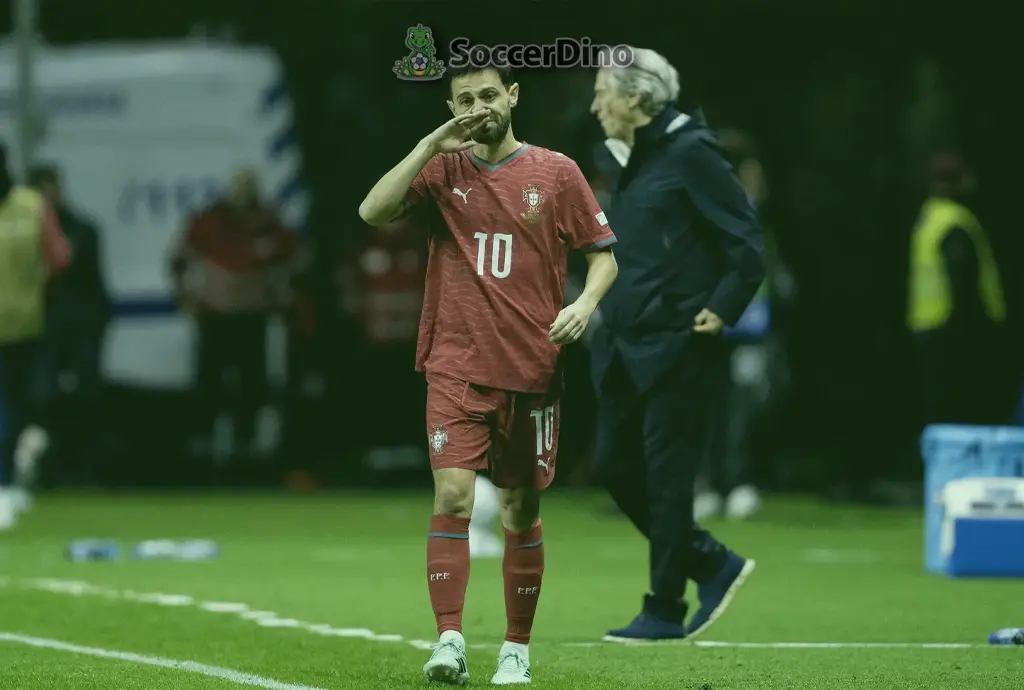
The Netherlands were eventually paired with Portugal, the reigning Nations League champions, who secured qualification by finishing six points ahead of Norway in Group A4. Jorge Jesus' side collected 15 points from six matches and will enter the knockout stage hoping to defend the trophy they won in 2025.
The meeting carries particular significance because of the history between the two countries. Portugal defeated the Netherlands 1-0 in the 2019 Nations League final, with Gonçalo Guedes scoring the decisive goal in Porto. Almost eight years later, the Dutch will have another opportunity to overcome the Portuguese in the same competition.
The quarter-finals will be contested over two legs in March 2027, with the Netherlands playing the opening match at home before travelling to Portugal for the return fixture. The winners will advance to the Final Four in June, where either Spain or France will await them in the semi-finals.
The draw also confirmed the promotion and relegation play-offs between Leagues A and B and between Leagues B and C, creating a busy March international window with important consequences for numerous European national teams.
Netherlands Pay the Price for Heavy Defeat Against Germany
The Netherlands entered the final international break of 2026 in a promising position, having enjoyed an encouraging Nations League campaign under Xavi Hernández. The Spanish coach had guided Oranje through the opening five matches without defeat, putting the team in contention to win Group A2 and secure a more favourable position in the quarter-final draw.
The Dutch began their campaign with a 1-1 draw against Germany in September before securing a 2-1 away victory over Serbia. A 2-2 draw with Greece followed, before another 2-1 victory against Serbia strengthened their position in the group.
Their most impressive performance arrived on November 13, when the Netherlands produced an emphatic 7-0 victory over Greece. Tijjani Reijnders scored a hat-trick as Oranje delivered one of their most convincing displays of the campaign, demonstrating the attacking quality available within the squad.
That result appeared to place the Netherlands in a strong position heading into their final group match against Germany. However, the situation changed dramatically in Berlin on November 16.
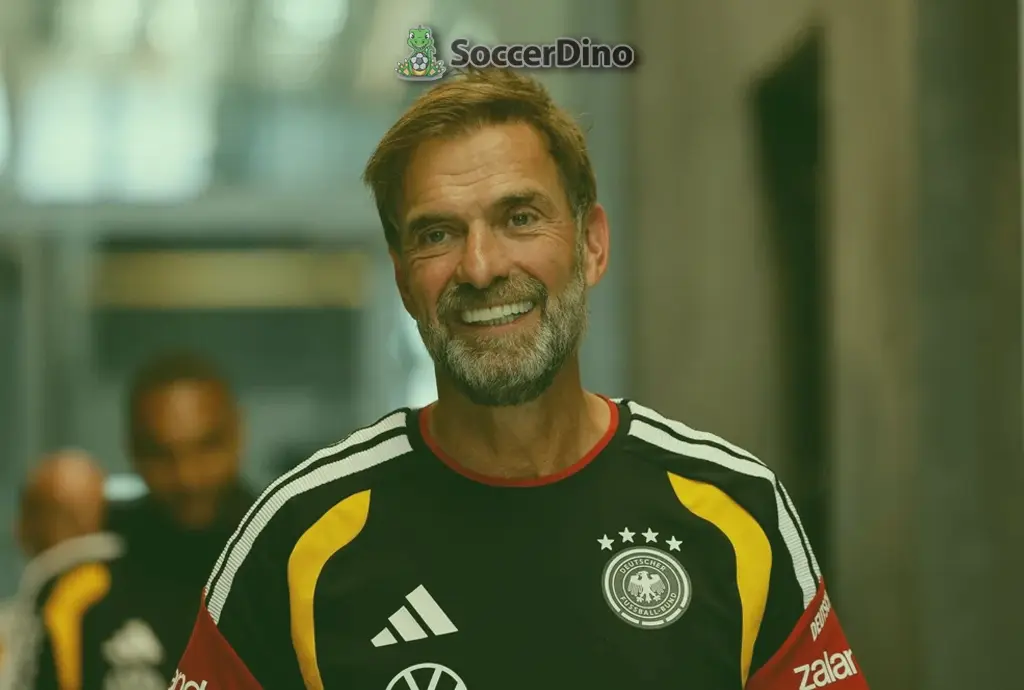
Germany, managed by Jürgen Klopp, produced a remarkable second-half performance to defeat the Netherlands 5-0. Florian Wirtz scored twice as the hosts overwhelmed their opponents and secured the result required to finish top of the group.
The defeat was particularly painful because Germany, the Netherlands and Greece all ended the group stage with 11 points. Germany claimed first place through the applicable head-to-head tiebreaking criteria, leaving the Dutch second and Greece third.
One of the most frustrating aspects for Oranje was how narrowly the final standings were decided. Germany's fifth goal proved crucial in securing first place, demonstrating the importance of every goal in a tightly contested group.
For Xavi Hernández, the result represented his first defeat as Netherlands coach and a reminder of how quickly circumstances can change in international football.
Three days earlier, the Dutch had celebrated a seven-goal victory against Greece. By the end of the international break, they were reflecting on a five-goal defeat and the loss of first place.
Nevertheless, qualification for the quarter-finals was already secured, meaning the result did not eliminate the Netherlands from the competition. Instead, it changed their position in the knockout-stage draw and ensured they would face one of the four group winners.
That opponent will now be Portugal, creating an opportunity for the Dutch team to respond to their disappointment by overcoming one of Europe's most successful national sides.
Portugal Finish Top of Group A4 Under Jorge Jesus
Portugal enter the Nations League quarter-finals with a strong record from the group stage and the additional motivation of defending their title.
Under Jorge Jesus, who took charge of the national team during the summer of 2026, Portugal collected 15 points from six matches to finish comfortably ahead of Norway and Denmark, who both ended the campaign with nine points.
The Portuguese began their Nations League campaign with a 1-0 victory over Wales before securing a 2-1 win away to Norway. They followed those results with an impressive 4-2 victory in Denmark and another 2-1 success against Norway.
Those four consecutive victories provided the foundation for Portugal's qualification and established them as the first team to secure a place in the quarter-finals.
Although a surprising 4-1 home defeat against Denmark in November interrupted their winning sequence, Portugal responded by defeating Wales 3-2 away from home in their final group match.
Their attacking performances have been particularly encouraging, with Gonçalo Ramos and João Félix both contributing three goals during the league phase.
Portugal are also undergoing an important transition following Cristiano Ronaldo's retirement from international football in November. The departure of one of the most influential players in the country's history has created additional opportunities for the next generation of Portuguese attackers.
Jorge Jesus now faces the challenge of maintaining Portugal's competitive standards while developing a team capable of succeeding without the player who defined much of the national side's identity for almost two decades.
That transition makes the upcoming meeting with the Netherlands particularly interesting. Portugal remain the reigning champions, but their current squad is entering a different stage of development.
The Portuguese possess considerable technical quality and attacking depth, while the Dutch will be determined to demonstrate that their defeat against Germany was an exception rather than an indication of deeper problems.
With a place in the Final Four at stake, both managers will have several months to prepare their tactical approaches before the first leg in March.
Netherlands and Portugal Set for a Rematch of the 2019 Nations League Final
The upcoming quarter-final inevitably brings back memories of the first UEFA Nations League final, played between Portugal and the Netherlands on June 9, 2019.
That encounter took place at the Estádio do Dragão in Porto, where Portugal secured a narrow 1-0 victory to become the competition's first champions.
Gonçalo Guedes scored the only goal of the match in the second half, beating Dutch goalkeeper Jasper Cillessen with a powerful effort after combining with Bernardo Silva.
The Netherlands had reached that final after overcoming England in the semi-finals, and there was considerable optimism surrounding a team that appeared to be rebuilding its international reputation.
However, Portugal controlled important periods of the final and ultimately made the most of their attacking opportunities to lift the trophy in front of their home supporters.
For the Dutch, the defeat was a disappointing conclusion to an otherwise encouraging campaign. For Portugal, it represented another major international achievement following their European Championship triumph in 2016.
Since that inaugural tournament, the Nations League has developed into a significant part of the European international calendar, giving leading national teams another opportunity to compete for a major trophy.
Portugal strengthened their connection with the competition by winning it for a second time in 2025, defeating Spain on penalties after a 2-2 draw in the final.
The Netherlands, meanwhile, are still searching for their first Nations League title. Their appearance in the 2019 final remains their best result in the competition.
The 2027 quarter-final therefore offers the Dutch an opportunity to change that record while also gaining a measure of revenge for their defeat in Porto.
Although the players, coaching staffs and circumstances have changed considerably since 2019, the history of the fixture adds another dimension to what already promises to be a fascinating encounter.
What the Netherlands Need to Improve Before Facing Portugal
For Xavi Hernández, the period leading up to March will provide an opportunity to assess the weaknesses exposed during the defeat against Germany.
The Netherlands demonstrated during the group stage that they are capable of producing attractive attacking football, particularly when allowed to control possession and move the ball quickly through midfield.
The seven-goal victory against Greece illustrated that potential, with the Dutch creating opportunities through movement, technical quality and intelligent combinations in advanced areas.
However, the heavy defeat in Berlin highlighted the importance of maintaining defensive organisation against opponents capable of attacking quickly and exploiting mistakes.
Germany's ability to score repeatedly during the second half suggested that the Netherlands struggled to recover control once the match began moving against them.
Against Portugal, the Dutch will need to balance their attacking ambitions with greater defensive discipline, especially during transitions when possession is lost.
Captain Virgil van Dijk remains a central figure in the team's defensive structure. The experienced defender reached 100 international appearances during the group stage and continues to provide leadership to a squad combining established players with younger talents.
In midfield, Tijjani Reijnders emerged as one of the Netherlands' most influential performers during the competition, finishing the league phase with four goals.
His ability to contribute in attacking positions gives Oranje an additional source of goals beyond their forwards, something that could prove important against a Portuguese side with considerable attacking quality.
Nevertheless, the outcome of the quarter-final will depend on more than individual performances. The Netherlands must produce consistent displays across two matches, managing the different circumstances of playing at home and away.
The opening leg will offer an opportunity to establish a positive position before travelling to Portugal. However, any advantage gained in the Netherlands will still have to be protected during the return match.
That makes tactical organisation, concentration and squad management particularly important in a knockout format where a single difficult period can significantly alter the direction of a tie.
All Four UEFA Nations League Quarter-Final Fixtures Confirmed
The draw in Nyon produced four attractive encounters involving some of Europe's strongest national teams. Each tie will be played over two legs, with the winners progressing to the Nations League Finals in June 2027.
| Quarter-Final | First Leg | Second Leg |
|---|---|---|
| Spain vs France | Spain at home | France at home |
| Norway vs England | Norway at home | England at home |
| Belgium vs Germany | Belgium at home | Germany at home |
| Netherlands vs Portugal | Netherlands at home | Portugal at home |
The draw was structured so that the four group winners were seeded and would play the second legs at home. As a result, France, England, Germany and Portugal will each have the advantage of hosting the decisive return fixture.
That could become important if the ties remain closely contested after the opening matches, although playing the second leg at home does not guarantee progression.
The quarter-finals bring together several nations with previous Nations League success, including Portugal, Spain and France, alongside teams still seeking their first title.
With only four places available in the final tournament, at least four major European nations will be eliminated before June.
Spain Face France in One of the Standout Quarter-Finals
Spain's meeting with France is arguably one of the most attractive ties produced by the draw, bringing together two countries that have enjoyed considerable success in international football.
Spain reached the quarter-finals after finishing second in Group A3, despite collecting an impressive 15 points from six matches.
Luis de la Fuente's side began the competition with five consecutive victories, including an away win against England and convincing performances against Croatia and Czechia.
However, a 3-2 home defeat to England in the final group match allowed the English to finish first, leaving Spain in second place despite ending the campaign level on points.
Spain's attacking performances were strengthened by the influence of Lamine Yamal, who contributed four goals and two assists during the group stage.
Dani Olmo also played an important creative role, while Mikel Merino contributed several important goals from midfield.
France, meanwhile, secured first place in Group A1 with 13 points, finishing narrowly ahead of Belgium.
Under Zinédine Zidane, the French team demonstrated their ability to secure important results against strong opposition, including victories over Belgium and Türkiye.
France won the Nations League in 2021, while Spain claimed the trophy in 2023. Their meeting will therefore guarantee that at least one former champion is eliminated in March.
The winner of this tie will advance to face either the Netherlands or Portugal in the semi-finals, meaning the Dutch could encounter another major European opponent if they overcome the Portuguese.
Norway and England Renew Their Rivalry After the 2026 World Cup
Norway's quarter-final against England represents another interesting rematch following their encounter at the 2026 FIFA World Cup.
The two countries met in the World Cup quarter-finals earlier this year, when England secured a dramatic 2-1 victory after extra time.
Norway will now have an opportunity to face the English again, this time over two matches rather than a single knockout encounter.
Ståle Solbakken's side finished second in Portugal's Nations League group with nine points, securing qualification after a dramatic conclusion to their campaign.
Their final match against Denmark proved decisive. Norway needed a positive result to remain in contention for the quarter-finals and eventually secured a 3-2 victory, with Erling Haaland converting a late penalty.
Haaland scored six goals during the group stage, further strengthening his reputation as one of the most effective forwards in international football.
Martin Ødegaard also played a prominent creative role, contributing five assists and demonstrating his importance to Norway's attacking organisation.
England, managed by Thomas Tuchel, qualified as Group A3 winners after collecting 15 points from six matches.
Their campaign included a remarkable 7-0 victory away to Croatia and an important 3-2 success in Spain during the final round of fixtures.
Harry Kane finished the league phase with eight goals, while Jude Bellingham contributed six assists.
England will enter the quarter-finals with considerable attacking confidence, although Norway's performances suggest they have the ability to create problems for even the strongest opponents.
The winners will face either Belgium or Germany in the semi-finals, creating another potentially demanding encounter on the road to the final.
Belgium and Germany Complete the Quarter-Final Line-Up
The fourth quarter-final will bring together Belgium and Germany in another meeting between neighbouring European nations with a long history of international football.
Germany secured first place in Group A2 after their remarkable 5-0 victory over the Netherlands, completing an impressive recovery under Jürgen Klopp.
The former Liverpool manager had experienced a difficult beginning to his time in charge, with Germany collecting only one victory from their opening four Nations League matches.
However, successive wins over Serbia and the Netherlands allowed the Germans to finish the campaign strongly and secure first place.
Florian Wirtz was particularly influential, scoring four goals during the group stage, including twice against the Dutch.
Young attacker Brajan Gruda also made an important contribution, registering two goals and two assists in his appearances.
Belgium qualified as runners-up in Group A1, finishing with 12 points, just one behind France.
Under Mark van Bommel, appointed during the summer of 2026, the Belgian national team has continued its own transition while retaining several experienced international players.
Kevin De Bruyne remained influential during the group stage, contributing three goals and two assists, while Charles De Ketelaere provided additional creativity.
Belgium secured their quarter-final place with an impressive 4-1 victory against Italy in their final group match, recovering from an early setback to finish second.
The encounter with Germany will give both nations an opportunity to take another step towards a first Nations League title.
For Germany, the tie also provides the chance to build on the momentum generated by their emphatic victory over the Netherlands. Belgium, meanwhile, will be aiming to demonstrate that their developing squad can compete consistently against the continent's strongest opponents.
Nations League Semi-Final Draw Reveals the Road to the Final
UEFA also completed the semi-final draw in Nyon, meaning all eight quarter-finalists now know which opponents they could face if they progress to the Final Four.
The Netherlands and Portugal have been placed in the same half of the knockout bracket as Spain and France. This means the winner of the Dutch-Portuguese quarter-final will meet the winner of the Spanish-French tie.
On the other side of the draw, Belgium or Germany will face Norway or England.
| Semi-Final | Possible Match |
|---|---|
| Semi-Final 1 | Netherlands or Portugal vs Spain or France |
| Semi-Final 2 | Belgium or Germany vs Norway or England |
For the Netherlands, this creates a particularly demanding potential route to the final. Oranje must first overcome reigning champions Portugal before potentially facing Spain or France, two countries with extensive experience in major international tournaments.
However, the draw also provides the Dutch with an opportunity to make a significant statement. Defeating Portugal and then overcoming another leading European nation would demonstrate the team's ability to compete at the highest level.
The semi-finals will be played as single matches rather than two-legged ties, placing additional importance on performance on the day.
If the Netherlands reach the final, they could face Belgium, Germany, Norway or England, depending on the results in the other half of the bracket.
A possible meeting with Germany would be particularly intriguing following the Dutch team's heavy group-stage defeat in Berlin, although both countries would first need to win their respective quarter-finals and semi-finals.