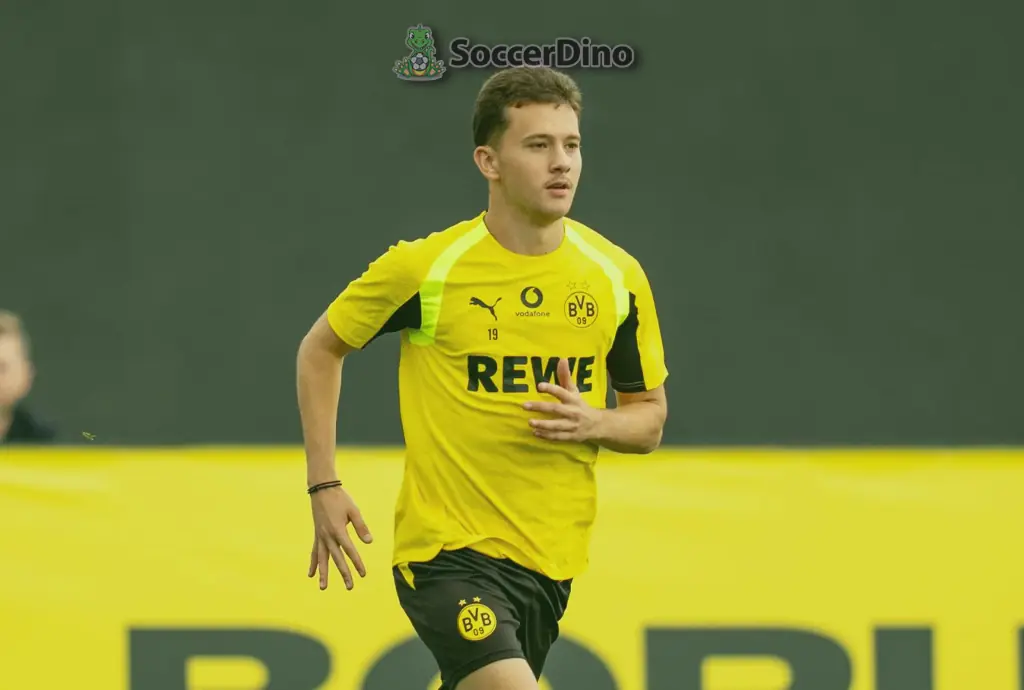
Borussia Dortmund president Hans-Joachim Watzke urges Felix Nmecha to reconsider his controversial goal celebration amid criticism from supporters.
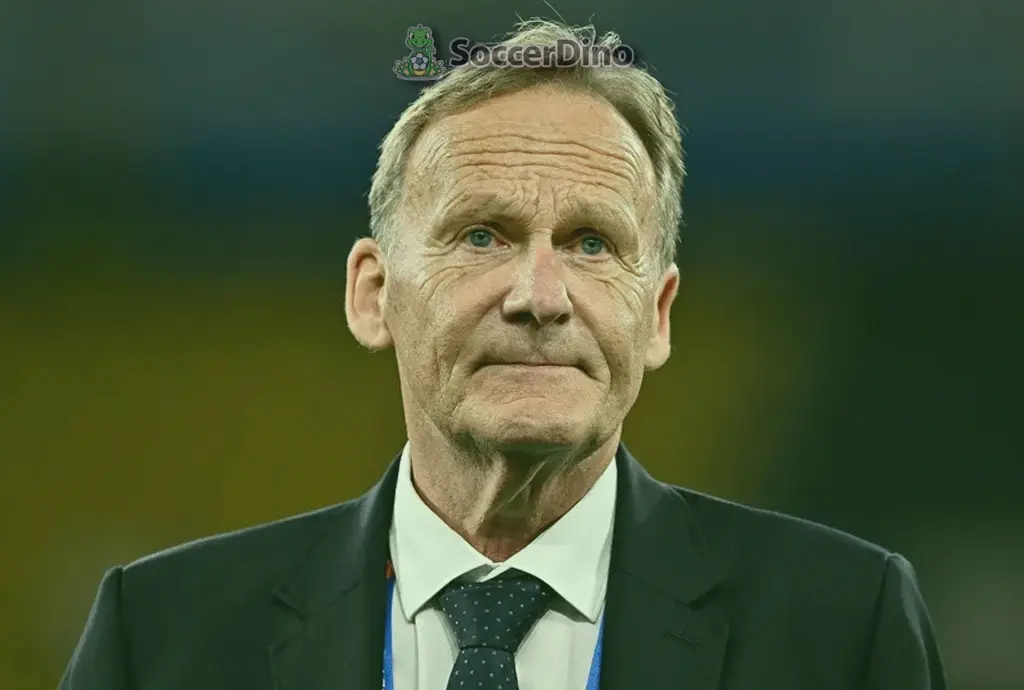
Borussia Dortmund President Hans-Joachim Watzke Calls for Understanding as Felix Nmecha Goal Celebration Sparks Controversy
Borussia Dortmund president Hans-Joachim Watzke has addressed the growing controversy surrounding Felix Nmecha's goal celebration, revealing that he has personally spoken to the German international about a gesture that has caused considerable debate among the club's supporters. The 67-year-old hopes the midfielder will reconsider using the symbolic crown celebration, which has become associated with the evangelical Christian football network Ballers in God.
The discussion has developed into a sensitive issue for Borussia Dortmund, with questions being raised about religious expression, the responsibilities of professional footballers and the values represented by one of Germany's biggest clubs. While Nmecha maintains that his celebration is simply an expression of his Christian faith, supporters have criticised the connection to an organisation whose views have been described as discriminatory towards LGBTQ+ people.
Speaking on the AUSGERECHNET podcast, hosted by journalist Freddie Röckenhaus and comedian Bruno Knust, Watzke explained that his preferred solution is to reach an understanding with the player rather than impose restrictions or disciplinary measures. The Dortmund president repeatedly emphasised his respect for Nmecha as a person and expressed confidence that the matter could be resolved through dialogue.
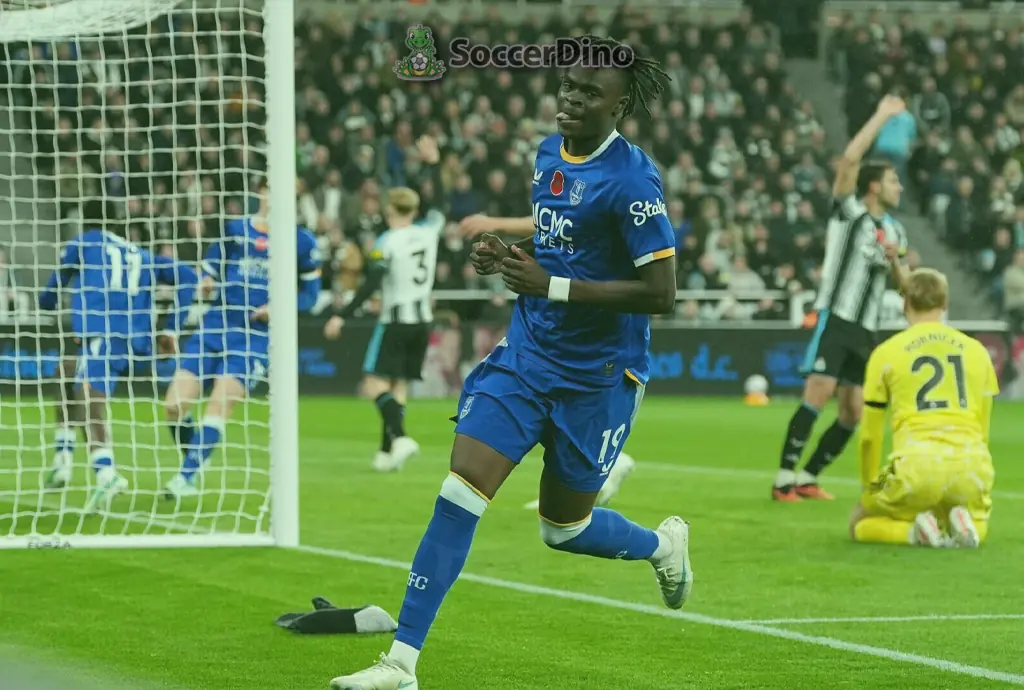
The controversy began following Dortmund's 2-1 victory over SV Elversberg, a match in which Nmecha scored both goals. However, instead of dominating the headlines for his impressive performance, the 26-year-old found himself at the centre of a discussion that has extended beyond the club and into the German national team.
Watzke Reveals Details of His Conversation With Felix Nmecha
During the podcast, Watzke confirmed that he had spoken directly with Nmecha about the controversy. Although he declined to reveal every detail of their conversation, he explained the central message he wanted the midfielder to understand.
Watzke told Nmecha that representing Borussia Dortmund involves more than delivering performances on the pitch. The club's success depends on the relationship between its players, supporters and leadership, and anything that creates unnecessary division can become a problem for the entire organisation.
"You're a Borussia Dortmund player. You want to achieve something with us, and you want us to win matches. If you realise that your celebration is dividing the fans, perhaps you'll come to understand that it's not necessarily about admitting it's the wrong celebration, but simply choosing not to do it again because it creates division," Watzke explained.
The president's message was deliberately measured. Rather than insisting that Nmecha renounce his religious beliefs or acknowledge that his celebration was fundamentally inappropriate, Watzke encouraged him to consider the broader consequences of continuing to perform the gesture.
For Watzke, the central issue is not whether a footballer should be allowed to express his faith. It is whether a particular expression, especially one associated with a controversial external organisation, is worth maintaining when it risks creating tension between the club and sections of its fan base.
The Dortmund president also made it clear that Nmecha had not rejected his concerns. According to Watzke, the midfielder listened to his position and agreed to reflect on the matter before deciding how to proceed.
"That's the stage we're at in our discussions right now. He wants to think it over. I hope we can find a sensible solution. Nobody wants to ban anything, and nobody wants to punish anyone. We always prefer to rely on understanding and personal responsibility," Watzke said.
Those comments suggest that Dortmund are attempting to handle the situation without turning it into a formal disciplinary dispute. The club would prefer Nmecha to make a voluntary decision that acknowledges supporters' concerns while allowing him to maintain his personal convictions.
What Is the Crown Celebration and Why Has It Become Controversial?
The celebration at the centre of the debate involves Nmecha symbolically removing an imaginary crown from his head and placing it on the ground. The gesture is intended to represent the idea of placing personal achievements and glory before Jesus Christ, reflecting the midfielder's Christian beliefs.
It is closely associated with The King's Return, a campaign promoted by Ballers in God, a network of Christian footballers that encourages players to use their sporting careers and public platforms to share religious messages.
Religious gestures are common in professional football. Players frequently pray before matches, point towards the sky after scoring or display other symbols connected to their beliefs. Such actions are generally regarded as personal expressions of faith, and Nmecha has argued that his own celebration should be understood in the same way.
However, the situation became more complicated because of the wider organisation associated with the crown gesture.
Investigations by German broadcaster ARD raised questions about views promoted within Ballers in God and its connections to groups expressing strongly conservative positions on homosexuality, gender identity and abortion. Some of those reported views have been criticised as homophobic and discriminatory.
The findings brought greater public attention to the organisation and prompted questions about whether professional footballers who participate in its campaigns are also endorsing the messages associated with them.
For critics, the controversy is therefore not about Nmecha celebrating a goal by expressing his Christian faith. Their concern is that the gesture has become identifiable with a network whose reported positions conflict with principles of equality and inclusion.
Nmecha, on the other hand, has insisted that his intention is not to promote an organisation or communicate hostility towards anyone. The disagreement between those interpretations has been at the heart of the debate.
Borussia Dortmund Supporters Criticise the Celebration
The reaction from Borussia Dortmund's Fan and Supporters Department played a significant role in bringing the controversy to the attention of the club's leadership.
Following the victory over Elversberg, the department publicly criticised the connection between Nmecha's celebration and Ballers in God, highlighting concerns about the organisation's reported attitudes towards sexual orientation, gender identity and other personal matters.
Supporters' representatives stressed that their objections were not directed at Christianity or the right of individual players to practise their religion. Instead, they questioned the use of a symbol linked to an organisation whose messages they believe could make certain groups of supporters feel excluded or unwelcome.
The distinction is particularly important at Borussia Dortmund, where the relationship between the club and its supporters forms a major part of its identity.
Dortmund have long promoted initiatives against discrimination and have publicly supported the principles of diversity and inclusion. Supporters who consider those commitments essential to the club's values expect the leadership to respond when concerns about potentially discriminatory messages arise.
The matter was subsequently discussed within the club, with Watzke addressing the controversy and explaining that he intended to speak directly with Nmecha.
According to German media reports, Dortmund's leadership has also considered how Ballers in God uses images of professional footballers to promote its activities, particularly when those players are shown wearing the club's colours.
That issue creates an additional concern because the appearance of a player in an official Dortmund shirt can give the impression of a connection between the organisation and the football club itself.
Reports have suggested that Dortmund want Ballers in God to stop using current BVB players in promotional material without the club's approval. The possibility of further action has also been discussed in the German media, although the situation remains separate from any disciplinary measures involving Nmecha personally.
For the club, maintaining a clear distinction between a player's private beliefs and the organisations officially associated with Borussia Dortmund is an important part of managing the controversy.
Nmecha Defends His Religious Beliefs and Rejects Discrimination
As criticism of his celebration increased, Nmecha responded publicly through Instagram, describing the controversy as a misunderstanding and explaining what the crown gesture means to him.
The German international insisted that his intention had never been to encourage intolerance, discrimination or hatred. He explained that the celebration represents his faith in Jesus Christ and his belief that personal achievements should not take precedence over his religious convictions.
Nmecha also emphasised that he believes Christianity should promote love and respect towards everyone, regardless of their background, beliefs or personal circumstances.
His explanation was intended to separate his personal intentions from the criticism directed at Ballers in God. Rather than treating the gesture as support for every position associated with the network, Nmecha asked that it be understood as an individual expression of faith.
However, his statement has not completely resolved the disagreement.
For some supporters, the problem is not limited to what Nmecha personally intends when he performs the celebration. They also believe that professional footballers must consider how their public actions are interpreted, particularly when those gestures form part of campaigns promoted by organisations facing serious criticism.
This has left Dortmund attempting to address two different perspectives. Nmecha wants his religious expression to be respected, while sections of the club's fan base want reassurance that the team will not become associated with messages they consider discriminatory.
Watzke's approach appears designed to acknowledge both positions without allowing the discussion to become a personal confrontation.
Watzke Strongly Defends Nmecha's Character
Despite encouraging the midfielder to reconsider his celebration, Watzke has repeatedly expressed his support for Nmecha as a person.
During the hour-long podcast, the Dortmund president described the player's character as beyond reproach and made clear that he has never personally experienced behaviour from Nmecha that would justify questioning his basic respect for others.
The comments are important because they demonstrate that Watzke does not regard the controversy as evidence that the midfielder is personally hostile towards particular groups of people.
Instead, the president believes there is a difference between Nmecha's intentions and the messages that supporters may associate with the organisation connected to his celebration.
Watzke's position also reflects his desire to protect the player from being judged solely through the controversy. Nmecha has been a Borussia Dortmund player since arriving from Wolfsburg in 2023, and the club's leadership has continued to regard him as a respected member of the squad.
According to reports from Germany, Watzke has also emphasised in conversations with other football officials that Nmecha has not behaved disrespectfully towards people during his time at Dortmund.
By making those points publicly, the president appears determined to prevent criticism of the celebration from developing into a broader attack on the midfielder's character.
At the same time, Watzke has not dismissed the concerns raised by supporters. His request for Nmecha to reconsider the gesture indicates that he believes the controversy warrants a response even if the player's personal intentions were not discriminatory.
That balance has become central to Dortmund's handling of the situation.
Jürgen Klopp and Rudi Völler Also Discuss the Situation With Nmecha
The controversy has extended beyond Borussia Dortmund because Nmecha is currently away on international duty with the German national team.
Germany head coach Jürgen Klopp and German Football Federation sporting director Rudi Völler have also been involved in discussions about the midfielder's celebration, demonstrating how much attention the issue has received.
Watzke has been in contact with both officials, while reports indicate that Klopp and Völler have spoken directly with Nmecha to understand his position and the reasoning behind the gesture.
The involvement of Germany's national team leadership adds another dimension to the situation. As an international footballer, Nmecha represents not only his club but also his country, meaning his public conduct can attract scrutiny in different sporting environments.
Nevertheless, there has been no indication that the German national team's leadership intends to treat the matter as a sporting disciplinary issue. The discussions have focused on understanding the midfielder's intentions and responding to the concerns raised by the controversy.
The German Football Federation has also had to address separate questions concerning Ballers in God's use of football-related promotional material. In particular, the organisation's publication of content involving Klopp prompted clarification that certain material had been used without the national team coach's knowledge or approval.
Such developments underline why football institutions are increasingly attentive to the ways external organisations use the images and statements of well-known players and coaches.
For Nmecha, the immediate challenge is to continue preparing for Germany's international fixtures while managing the attention surrounding an issue that has little to do with his performances on the pitch.
His club will also want to ensure that the situation does not become an ongoing distraction once he returns to Dortmund after the international break.
Religious Freedom and Club Values at the Centre of the Debate
One reason the controversy has attracted so much attention is that it involves two principles that football clubs are frequently required to balance: respect for individual religious freedom and a commitment to ensuring that supporters and employees feel included.
Professional footballers have personal beliefs that may influence how they behave on and off the pitch. Many express those beliefs publicly, and religious celebrations have been part of the sport for decades.
At the same time, clubs operate as public institutions with supporters from many different backgrounds. Their players' actions can become closely associated with the identity of the organisation, even when those actions are intended to communicate personal messages.
In Nmecha's case, the debate has become more complicated because the crown gesture is associated with a campaign run by a network that has faced criticism over its reported beliefs and affiliations.
The distinction between personal faith and organisational promotion is therefore crucial to understanding Dortmund's position.
Watzke has not suggested that Nmecha should stop practising his religion or expressing his beliefs. His request is narrower: the midfielder should consider whether continuing with this particular celebration is appropriate when it creates division among Dortmund supporters.
The president believes that understanding the consequences of a public gesture can be more productive than imposing a formal restriction.
Such an approach would allow Nmecha to maintain his personal convictions while selecting another way to celebrate goals, should he decide that the current gesture is no longer helpful.
It would also give Dortmund an opportunity to demonstrate that the concerns expressed by supporters have been heard without creating a conflict over the player's religious identity.
Dortmund Hope to Resolve the Matter Without Punishing the Midfielder
Watzke's repeated emphasis on dialogue suggests that Borussia Dortmund would prefer to resolve the controversy without introducing disciplinary proceedings.
That is a significant distinction from earlier reports suggesting that the club wanted the midfielder to stop using the crown celebration. While Dortmund's position on the gesture appears clear, Watzke has explained that he wants Nmecha to reach his own understanding of why continuing with it could be problematic.
The president's comments indicate that discussions are still taking place and that the midfielder has not yet publicly committed to abandoning the celebration.
Watzke remains optimistic because Nmecha has shown a willingness to consider his concerns. However, there is no confirmed final agreement, and the player's future behaviour will ultimately determine whether the issue can be brought to a close.
The situation has also placed Dortmund's leadership under scrutiny. Supporters expect the club to respond clearly to concerns involving discrimination, while the organisation must also avoid making assumptions about a player's personal beliefs based solely on his association with a particular symbol.
The challenge is to produce a response that addresses the controversy without unnecessarily escalating it.
For Dortmund, the most straightforward outcome would be an agreement under which Nmecha chooses a different celebration and the club can move forward without further conflict.
However, reaching that outcome requires the midfielder to accept that a gesture which carries a positive religious meaning for him may also have negative associations for some supporters.
Watzke appears to believe that Nmecha is capable of making that distinction.
Sporting Success Remains Important as Dortmund Seek Stability
The controversy has developed at a time when Borussia Dortmund are trying to maintain their competitive position in German and European football.
Nmecha's performance against Elversberg demonstrated his importance to the team. The midfielder scored both goals in the 2-1 victory, making a decisive contribution to a result that would normally have brought him considerable praise.
Instead, much of the discussion after the match focused on his celebrations and the reaction they generated among supporters.
For the coaching staff, such distractions can be frustrating because they shift attention away from sporting performances and preparation for upcoming fixtures.
Nmecha's ability to influence matches from midfield remains valuable to Dortmund. His physical presence, technical ability and capacity to contribute in attacking areas have made him an important member of the squad.
The club will therefore be keen to ensure that the debate does not affect his concentration or his relationship with teammates.
Watzke's decision to publicly defend Nmecha's character may help achieve that objective. By separating the player's personal qualities from the controversy surrounding a specific celebration, the president has attempted to protect the midfielder while acknowledging the legitimate concerns expressed by supporters.
Dortmund will also want the issue to be resolved before it becomes a recurring topic every time Nmecha scores or appears in an important match.
Without a clear understanding, future celebrations could generate further controversy, drawing renewed attention to the same arguments and prolonging a discussion that the club would prefer to settle.
What Happens Next for Felix Nmecha and Borussia Dortmund?
The next stage of the controversy will depend largely on Nmecha's response to the conversations he has held with Watzke and German national team officials.
For now, the midfielder has explained his intentions publicly and has agreed to consider the concerns expressed by Dortmund's president. He has not announced a definitive decision about whether he will continue using the crown celebration.
Borussia Dortmund's executive management is also expected to remain involved in discussions concerning the player's public image and the use of club-related material by Ballers in God.
The club's position on external organisations is a separate matter from Nmecha's right to express his faith. Dortmund can seek to protect its name, branding and public identity while continuing to respect the individual beliefs of its players.
For supporters who criticised the gesture, the key question will be whether the discussions produce a meaningful response to their concerns. For Nmecha, the challenge is to explain his personal beliefs while recognising that public expressions can sometimes communicate messages beyond those originally intended.
Watzke believes a constructive outcome remains possible. His comments suggest that he wants the midfielder to feel respected throughout the process, rather than pressured into accepting a position through the threat of punishment.
The president has also made clear that he does not want the controversy to become a lasting source of division within Borussia Dortmund.
Ultimately, the discussions surrounding Felix Nmecha have highlighted the responsibilities that come with representing a major football club. Players are entitled to their personal beliefs, but their public gestures can carry wider associations that attract scrutiny from supporters and institutions.
For Borussia Dortmund, finding a resolution means protecting the relationship between the club and its fan base while maintaining trust in a player whom its president continues to defend.
Whether Nmecha decides to abandon the crown celebration remains to be seen. What is clear is that Watzke wants the issue settled through understanding rather than confrontation, allowing Dortmund and their midfielder to return their attention to football without leaving supporters' concerns unanswered.