Éver Banega announces his retirement at 38, ruling out a move to Inter Miami even if Lionel Messi calls, after a trophy-filled career with Sevilla.
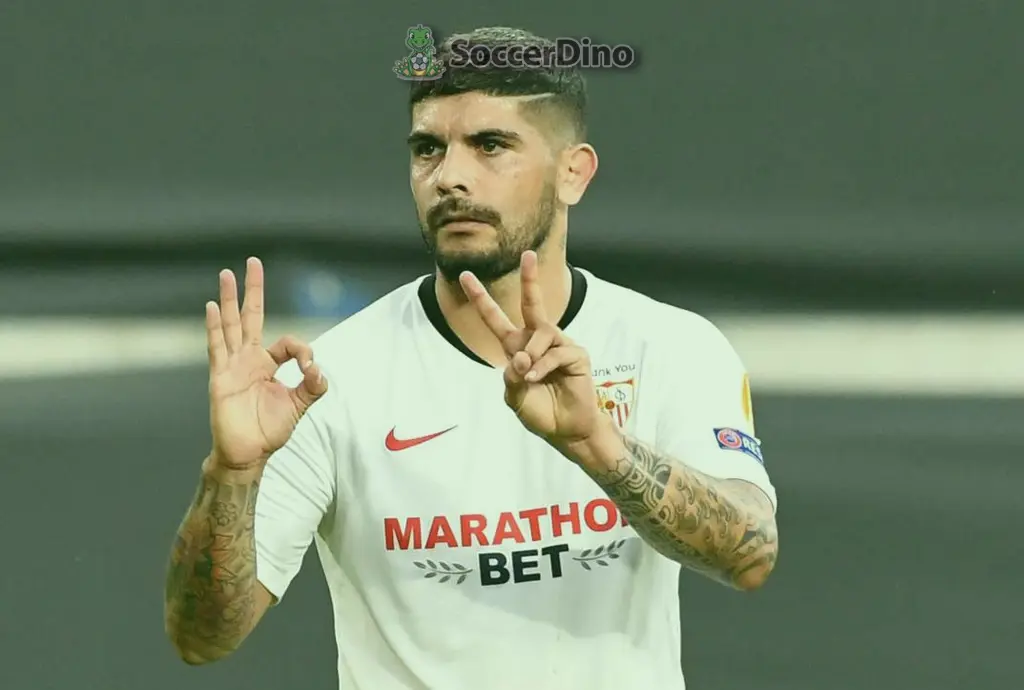
Éver Banega Announces Retirement at 38 and Rules Out Inter Miami Move Even if Lionel Messi Calls
Éver Banega has officially announced his retirement from professional football at the age of 38, bringing an end to a career that took him from Boca Juniors to some of Europe's biggest clubs and established him as one of the most technically gifted Argentine midfielders of his generation. The former Sevilla, Valencia and Inter Milan playmaker confirmed his decision during an interview with ESPN after participating in the Copa Potrero, an amateur football tournament organised by former Manchester City and Argentina striker Sergio Agüero. Having played his last competitive match for Defensa y Justicia in May, Banega admitted that the experience convinced him the time had come to leave professional football behind.
The announcement was delivered with characteristic directness. Banega explained that he had previously considered himself around 80% certain of retiring, but his participation in the tournament removed any remaining doubts. Even the possibility of receiving a personal invitation from Lionel Messi to join Inter Miami would not persuade him to reconsider, he insisted, making clear that his decision was not simply a consequence of struggling to find another club. After almost two decades of professional football, countless matches across several countries and major trophies at both club and international level, the midfielder believes he has achieved enough and is ready to enjoy a different stage of his life.
His departure marks the end of a career particularly associated with Sevilla, where he became a central figure in one of the most successful periods in the club's European history. Banega won three Europa League titles with the Spanish side and developed a reputation for his exceptional vision, passing ability and capacity to control matches from midfield. He also represented Argentina at the 2018 World Cup, won Olympic gold in Beijing in 2008 and played alongside several of the country's greatest modern footballers, including Messi, Agüero and Ángel Di María.
Although his final years took him away from the spotlight of European football, Banega remained a recognisable figure because of the distinctive style that had defined his career. He was never a midfielder who depended primarily on speed or physical dominance. Instead, his greatest strengths were his understanding of space, composure under pressure and ability to identify passing opportunities that many players would struggle to recognise. Those qualities allowed him to remain influential throughout his career and explain why his retirement has generated considerable attention, particularly among Sevilla supporters who remember him as one of the club's most accomplished creative players.
Banega Confirms Retirement After Playing in Sergio Agüero's Tournament
The announcement came during the Copa Potrero, a competition organised by Sergio Agüero that brings together former professionals, amateur footballers and well-known personalities from Argentina's football community. Banega participated with Argentina Streamers, enjoying the opportunity to return to the pitch in a less demanding environment after several months without professional competition. However, the experience also helped him recognise that he no longer wanted to maintain the physical and psychological commitment required to continue playing at the highest level.
Speaking to ESPN, the midfielder confirmed that his decision was final. He explained that he had already been considering retirement seriously, but playing again reminded him that his priorities had changed. Rather than attempting to extend his career simply because he still possessed considerable technical ability, Banega felt it was time to concentrate on other interests and allow younger footballers to pursue their opportunities.
"My retirement is 100% confirmed. I had previously said I was 80% sure, but today, while I was playing, I thought: 'That's it, this isn't for me anymore. There are other things to do,'" Banega explained. His comments reflected a player who had reached the decision gradually rather than acting out of frustration following an unsuccessful spell at his final club. After almost 20 years of professional competition, he appeared comfortable with the idea that his relationship with football could continue without requiring him to participate as a player.
The Argentine also acknowledged that his age had become an important consideration. At 38, maintaining the physical condition necessary for professional football requires considerable dedication, particularly for someone who has accumulated so many seasons across different leagues. Banega suggested that he had already enjoyed everything the sport could offer and did not want to occupy a place that might be better used by a younger player attempting to establish a career.
His final official appearance came on May 4, 2026, when Defensa y Justicia suffered a 2-1 defeat against Gimnasia de Mendoza in the Argentine Primera División. Although Banega subsequently remained involved in football through informal and amateur activities, he did not return to professional competition. The Copa Potrero therefore became an unexpected setting for the formal conclusion of his career, allowing him to announce his decision while surrounded by people who had shared important moments of his journey.
Even a Call From Lionel Messi Would Not Change His Decision
One of the most striking elements of Banega's announcement concerned Lionel Messi and the possibility of a move to Inter Miami. The midfielder was asked whether an invitation from his former Argentina teammate might convince him to continue playing, particularly given the appeal of joining a club that has attracted several internationally recognised footballers during the final stages of their careers. Banega dismissed the hypothetical possibility immediately, insisting that even a direct request from Messi would not change his mind.
The response was particularly significant because Banega and Messi shared the pitch on numerous occasions for Argentina, developing an understanding that was based on their complementary technical qualities. Both emerged from a generation of Argentine footballers renowned for creativity and intelligence in possession, and Banega's ability to deliver accurate passes into dangerous areas often suited Messi's movement between defensive lines. Their connection was particularly evident during Argentina's 2018 World Cup campaign, when Banega produced one of the most memorable assists of the tournament.
Against Nigeria in the group stage, Argentina needed a victory to maintain their hopes of progressing to the knockout rounds. Banega delivered an outstanding long pass that found Messi making a run behind the Nigerian defence, allowing the forward to control the ball and finish brilliantly. The goal became an iconic moment of the tournament and demonstrated the technical relationship between two players capable of understanding one another's intentions before opponents could react.
Given that history, the suggestion of a reunion at Inter Miami might have appeared attractive to supporters who remember their performances together. However, Banega's comments made clear that his retirement was not dependent on receiving an offer from a particular club. He has already spent years competing at the highest level and believes that continuing simply to extend his career would not be the right decision.
The midfielder also stressed that he wants to see younger players receive opportunities rather than experienced footballers occupying squad places indefinitely. His position reflects an awareness of how difficult it can be for emerging talent to establish itself in professional football, particularly when clubs continue relying on established names. Having enjoyed a career that exceeded the expectations of many young players, Banega now believes the time has come to make room for another generation.
From Boca Juniors to European Football After Copa Libertadores Success
Banega's professional career began at Boca Juniors, one of Argentina's most historic clubs and an institution renowned for producing technically gifted footballers capable of competing at the highest international level. Born in Rosario in June 1988, the midfielder developed through Boca's youth system before making his senior debut in 2007. His emergence came during an important period for the club, which was competing for major honours and possessed an experienced squad capable of challenging the strongest teams in South America.
Despite his youth, Banega quickly demonstrated the qualities that would define his career. He was comfortable receiving possession in difficult areas, possessed an excellent passing range and showed unusual composure for a teenager competing in a demanding environment. His ability to maintain control in midfield attracted attention, particularly as Boca progressed through the Copa Libertadores and eventually secured the continental title in 2007.
Winning South America's most prestigious club competition provided Banega with a remarkable introduction to senior football. Although he was still at the beginning of his career, he gained valuable experience of high-pressure matches and the expectations associated with representing one of Argentina's biggest clubs. Those achievements also increased interest from European teams looking to recruit young South American talent.
Valencia eventually secured his signature in January 2008, offering the midfielder an opportunity to establish himself in La Liga. The move represented a major step in his development, requiring him to adapt to a different football culture and the tactical demands of Spanish competition. Banega was still only 19, but his performances in Argentina had already convinced Valencia that he possessed the technical qualities needed to succeed in Europe.
His early years in Spain were not entirely straightforward. The midfielder experienced periods of inconsistency and spent the 2008/09 season on loan at Atlético Madrid, where he continued gaining experience at the highest level. However, he eventually established himself as an important figure at Valencia, developing into a creative presence capable of controlling possession and connecting midfield with attack.
During his years at Mestalla, Banega became recognised as one of La Liga's most talented midfielders. His technical intelligence allowed him to influence matches through passing and movement, while his ability to operate in different central positions provided tactical flexibility. Although his career occasionally suffered interruptions because of injuries and inconsistent form, his performances demonstrated the potential that had attracted European attention during his time at Boca Juniors.
Sevilla Became the Defining Club of Banega's European Career
Although Banega enjoyed important periods at Valencia and Atlético Madrid, it was at Sevilla that he established his most enduring legacy. The Argentine joined the Andalusian club in 2014 and became a central figure in the team's midfield under Unai Emery, whose tactical approach suited his ability to control possession and create opportunities from central areas. The partnership proved extremely successful, with Banega contributing to a period that strengthened Sevilla's reputation as one of Europe's most formidable teams in the Europa League.
His arrival provided Sevilla with a footballer capable of dictating the rhythm of matches while also offering creativity in advanced positions. Banega could receive possession from the defenders, move the ball through midfield and identify attacking opportunities with exceptional precision. His understanding of when to accelerate play and when to retain possession made him particularly valuable in European competition, where maintaining control against experienced opponents was often essential.
The first major triumph arrived in 2015, when Sevilla defeated Dnipro Dnipropetrovsk 3-2 in the Europa League final in Warsaw. Banega played an important role in the team's success and was recognised as the outstanding player of the final, demonstrating how influential he had become within Emery's system. His ability to control midfield against a determined opponent helped Sevilla secure another European trophy and established him among the competition's leading performers.
One year later, Sevilla repeated the achievement by defeating Liverpool 3-1 in the 2016 Europa League final. The Spanish club recovered from conceding the opening goal to produce a remarkable second-half performance, with Banega again contributing to the midfield control that allowed Sevilla to dominate important periods of the match. The victory completed a sequence of three consecutive Europa League titles for the club, two of which had been won with Banega as an influential member of the team.
Those achievements helped transform the midfielder's reputation. Although his technical qualities had long been recognised, his performances in European finals demonstrated that he could deliver consistently in the most demanding circumstances. He became associated with Sevilla's ability to raise their level in continental competition, particularly when facing opponents with greater financial resources or more internationally recognised squads.
Banega's relationship with Sevilla also extended beyond his performances. Supporters appreciated his creativity, competitive personality and willingness to assume responsibility in difficult matches, while the club valued his ability to influence the team's attacking organisation. Over time, he developed a strong connection with the Ramón Sánchez Pizjuán Stadium, becoming one of the defining players of an era remembered for remarkable European success.
Inter Milan Move Followed by a Successful Return to Sevilla
Banega left Sevilla in the summer of 2016 to join Inter Milan, beginning a new chapter in Serie A after establishing himself as one of Spain's most accomplished midfielders. The move offered an opportunity to experience Italian football and compete at another major European club, but his spell in Milan proved relatively brief. Although he demonstrated his technical quality on several occasions, he struggled to establish the consistency and influence that had made him such an important player in Seville.
After one season in Italy, the midfielder returned to Sevilla in 2017, a decision that ultimately proved beneficial for both parties. The club welcomed back a player who understood its competitive demands and possessed the experience required to lead midfield performances in important matches. Banega quickly re-established himself as an influential figure, demonstrating that his brief departure had not diminished the understanding he shared with Sevilla's supporters and teammates.
His second spell eventually produced another remarkable European achievement. In August 2020, Sevilla reached the Europa League final against Inter Milan, creating the unusual situation of Banega facing the club he had represented between his two periods in Spain. The match in Cologne developed into an extraordinary contest, with Sevilla securing a 3-2 victory to claim another continental title.
For Banega, the triumph was particularly emotional because it represented his final competitive appearance for the club before moving to Saudi Arabia. He had already agreed to join Al Shabab but remained with Sevilla until the conclusion of the delayed European campaign, allowing him to finish his time in Spain with another major trophy. The victory gave him three Europa League titles with the same club, an achievement that places him among the most successful players in the competition's history.
His contribution to the 2019/20 campaign also received individual recognition, with UEFA including him among the finalists for the Europa League Player of the Season award. That distinction underlined his importance to Sevilla's success and demonstrated that he remained capable of performing at an exceptional level even after spending more than a decade in European football.
When Banega eventually left Sevilla, the club's sporting director Monchi offered an extraordinary tribute to his technical qualities, describing him as the most gifted player he had encountered during his lengthy career in football recruitment. Such recognition illustrated the esteem in which the midfielder was held within the organisation, particularly by those who had witnessed his performances and development over several seasons.
Saudi Arabia and a Final Return to Argentine Football
After leaving Sevilla in 2020, Banega moved to Saudi Arabia to join Al Shabab, accepting a new challenge after spending the majority of his European career in Spain. The transfer came at a time when the Saudi league was developing its international reputation, although the most significant wave of high-profile arrivals would occur several years later. Banega brought extensive experience to the competition and became an important figure within his new team, contributing the technical leadership that had defined his career in Europe.
His time in Saudi Arabia allowed him to experience a different football environment while continuing to compete professionally. Rather than attempting another move to a major European league, he embraced the opportunity to contribute to a club seeking to strengthen its position domestically. His passing ability and tactical understanding remained valuable, particularly in matches where Al Shabab needed a midfielder capable of controlling possession and creating attacking opportunities.
In 2024, Banega returned to Argentina to rejoin Newell's Old Boys, the Rosario-based club he had previously represented on loan during the early stages of his career. The move brought him closer to his roots and provided an opportunity to compete again in the country where his professional journey had begun. Although the physical demands of the game had become increasingly challenging with age, his technical qualities continued to make him an interesting option for teams seeking experience in midfield.
His final professional move came in 2026, when he joined Defensa y Justicia. However, the spell proved relatively short, and he made his final official appearance in May before leaving the club. As the months passed without another professional match, speculation increased about whether he would attempt to continue his career or formally announce his retirement.
Banega initially appeared reluctant to make a definitive decision, acknowledging that he was considering retirement but had not completely ruled out another opportunity. That uncertainty eventually disappeared during his participation in the Copa Potrero, where the experience of playing again helped confirm that he was ready to leave professional competition behind.
His final years therefore reflected a gradual transition rather than a sudden ending. Having competed in some of Europe's most demanding leagues and later experienced football in Saudi Arabia and Argentina, Banega had accumulated an unusually varied career. By the time he reached 38, the desire to continue participating professionally no longer outweighed his interest in beginning a different stage of life.
Olympic Gold and Argentina's 2018 World Cup Campaign
Banega's international career provides another important dimension to his legacy. The midfielder represented Argentina on 65 occasions, scoring six goals and contributing eight assists, while participating in several major tournaments. Although he never won the senior World Cup or Copa América, he belonged to a generation that included some of the country's greatest modern players and enjoyed considerable success at youth and Olympic level.
One of his earliest international achievements came in 2007, when Argentina won the FIFA Under-20 World Cup in Canada. The squad featured several players who would later establish important careers in European football, including Sergio Agüero and Ángel Di María. Banega's contribution to the tournament reflected the technical qualities that were already making him an attractive prospect for major clubs, providing another important achievement during the early stages of his development.
The following year, he was part of Argentina's gold medal-winning squad at the Beijing Olympics. The team included Lionel Messi and several other talented young players, eventually defeating Nigeria in the final to secure the Olympic title. For Banega, the victory represented another significant milestone and strengthened his relationship with a generation of footballers who would remain prominent in the national team for years.
At senior level, he participated in the Copa América tournaments of 2011, 2015 and 2016, experiencing both the expectations surrounding Argentina and the disappointment of narrowly missing out on major international trophies. The national team reached the Copa América final in 2015 and again in the 2016 centenary edition, losing to Chile on penalties on both occasions. Those defeats were particularly difficult for a group of players who had consistently demonstrated their quality but struggled to convert their performances into major titles.
Banega's only senior World Cup appearance came in Russia in 2018, when Argentina endured a turbulent tournament that ended with elimination against France in the round of 16. Despite the team's difficulties, the midfielder produced one of the competition's outstanding passes during the decisive group-stage encounter against Nigeria. His delivery to Messi demonstrated the vision and technique that had become hallmarks of his career, allowing his teammate to score an extraordinary goal that helped Argentina remain in contention for qualification.
Although Argentina were eventually eliminated by the team that would go on to win the World Cup, Banega's contribution against Nigeria remains one of the most memorable moments of his international career. It represented the type of intelligent attacking action that made him valuable throughout his playing days: recognising a teammate's movement, selecting an ambitious pass and executing it with the precision required to create a goalscoring opportunity.
His international appearances eventually came to an end without the senior World Cup success that Argentina would achieve in Qatar in 2022. Nevertheless, his Olympic gold medal, Under-20 World Cup triumph and participation in major senior tournaments ensure that his achievements with the national team remain an important part of his footballing history.
A Midfielder Remembered for Creativity and Technical Intelligence
Throughout his career, Banega distinguished himself through a style of play that placed technical intelligence above physical attributes. He was comfortable receiving possession in crowded areas, often using small changes of direction or body positioning to escape pressure before delivering passes into advanced positions. His confidence on the ball allowed his teams to maintain possession during difficult periods, while his passing range gave him the ability to influence attacking movements from different areas of the pitch.
At Sevilla, those qualities became particularly important because the team frequently faced opponents with different tactical approaches. Against defensive sides, Banega could dictate possession and search for spaces between the lines. Against more aggressive opponents, he possessed the composure required to retain the ball under pressure and prevent the team from losing control of midfield. His versatility allowed him to operate as a deeper playmaker or in more advanced positions, depending on the requirements of the match.
His technical ability also made him dangerous from set pieces, particularly through accurate free kicks and deliveries into the penalty area. Although he was not primarily known as a prolific goalscorer, he contributed important goals throughout his career and regularly created opportunities for teammates. That combination of creativity and tactical understanding made him a particularly valuable footballer for managers who wanted their teams to control matches through intelligent possession rather than relying exclusively on physical intensity.
However, his career was not without difficulties. Banega experienced periods of inconsistency and injuries that occasionally interrupted his development, particularly during his earlier years in Spain. His competitive personality also attracted attention, and there were moments when his performances did not fully reflect the extraordinary technical talent he possessed. Nevertheless, those challenges did not prevent him from establishing a successful career or becoming one of Sevilla's most influential players during an exceptionally productive period.
For supporters who watched him regularly, his greatest quality was often the ability to make difficult actions appear effortless. A pass delivered through a narrow defensive opening or a subtle movement away from an opponent could completely change the direction of a match without attracting the same attention as a spectacular goal. Banega's influence was therefore frequently appreciated most by those who understood the tactical details of midfield play, where a single decision can determine whether a team maintains control or allows its opponent to regain possession.
That distinctive style also explains why he remained effective as he grew older. While physical qualities inevitably decline over time, technical intelligence and passing ability can allow experienced midfielders to continue influencing matches. Banega adapted his game accordingly, relying increasingly on positioning and decision-making to compensate for changes in speed and mobility.
What Comes Next for Éver Banega After Retirement?
Although Banega has decided to stop playing professionally, he has not suggested that he intends to disappear from football completely. During his conversation with ESPN, the former Argentina international explained that he remains interested in the sport and may eventually become involved in a different capacity. However, he was careful not to announce any immediate plans to become a coach or football agent, indicating that he wants to explore other possibilities before deciding how to approach the next stage of his life.
For now, the midfielder appears content to spend more time away from the demands of professional competition. He revealed that he has been enjoying other sports, including tennis and padel, activities that allow him to remain physically active without the intense schedules and expectations associated with professional football. After spending much of his adult life organising his routine around training sessions, travel and competitive matches, the opportunity to enjoy a more flexible lifestyle appears particularly attractive.
There is also the possibility that his experience could eventually prove valuable to younger players. Having represented clubs in Argentina, Spain, Italy and Saudi Arabia, Banega possesses extensive knowledge of different football cultures and tactical approaches. His technical qualities and understanding of midfield play could make him an interesting mentor or adviser, although he has not committed himself to any specific position.
For someone who began his professional career as a teenager at Boca Juniors, retirement represents a considerable personal adjustment. Football has shaped his routine, relationships and professional identity for almost two decades, meaning that leaving competitive action will inevitably involve changes beyond simply no longer appearing on the pitch. Banega's comments nevertheless suggest that he has accepted the transition and is looking forward to discovering what comes next.
His refusal to consider even a hypothetical opportunity at Inter Miami reinforces that conclusion. The midfielder is not waiting for a final lucrative contract or an invitation from a former teammate. Instead, he believes that the appropriate moment to stop has arrived and that continuing simply because another opportunity might become available would not change how he feels about his future.
Éver Banega Leaves a Lasting Legacy at Sevilla and Beyond
Éver Banega's retirement brings an end to a career that combined remarkable technical ability with major achievements across several countries. From winning the Copa Libertadores with Boca Juniors to becoming a three-time Europa League champion at Sevilla, the Argentine midfielder experienced some of the most important moments available to a professional footballer. His journey also included appearances in La Liga, Serie A and Saudi Arabia, as well as international success with Argentina at youth and Olympic level.
For Sevilla supporters, his legacy is particularly significant. Banega played an essential role in the club's European triumphs in 2015, 2016 and 2020, contributing the creativity and control that helped the Andalusian side repeatedly overcome strong opponents. His ability to dictate matches from midfield became one of the defining characteristics of Sevilla's most successful European campaigns, while his relationship with supporters ensured that his achievements would be remembered long after his departure.
His international career also produced memorable moments, particularly the Olympic gold medal in Beijing and his outstanding assist for Messi against Nigeria at the 2018 World Cup. Although Argentina's most celebrated senior international triumphs arrived without him, he contributed to a generation of footballers who consistently competed for major honours and helped establish the country's reputation for producing technically exceptional players.
Banega's decision to retire at 38 appears to have been made with the same clarity that characterised many of his best performances on the pitch. Having spent months considering his future, he reached the conclusion that another professional contract would offer little that he had not already experienced. Even the suggestion of joining Messi in Miami could not persuade him to reconsider, demonstrating that his priorities have moved beyond extending his playing career.
What remains is the legacy of a midfielder who made creativity central to his footballing identity. Banega was capable of transforming matches through passing, movement and an instinctive understanding of space, qualities that were particularly appreciated during his years at Sevilla. His career included difficult periods and unexpected changes of direction, but it also produced trophies, international recognition and performances that will remain part of the memories of supporters across several countries.
After almost 20 years as a professional footballer, Banega has decided that the time has come to enjoy the game from a different perspective. His final official appearance may have taken place several months before the announcement, but the confirmation of his retirement provides a definitive conclusion to an extraordinary journey. From Boca Juniors to European glory and the Argentina national team, Éver Banega leaves football with a record of major achievements and a reputation as one of the most gifted playmakers of his generation.