Germany face the Netherlands in a crucial UEFA Nations League clash as Jürgen Klopp targets qualification and Frenkie de Jong misses out through injury.
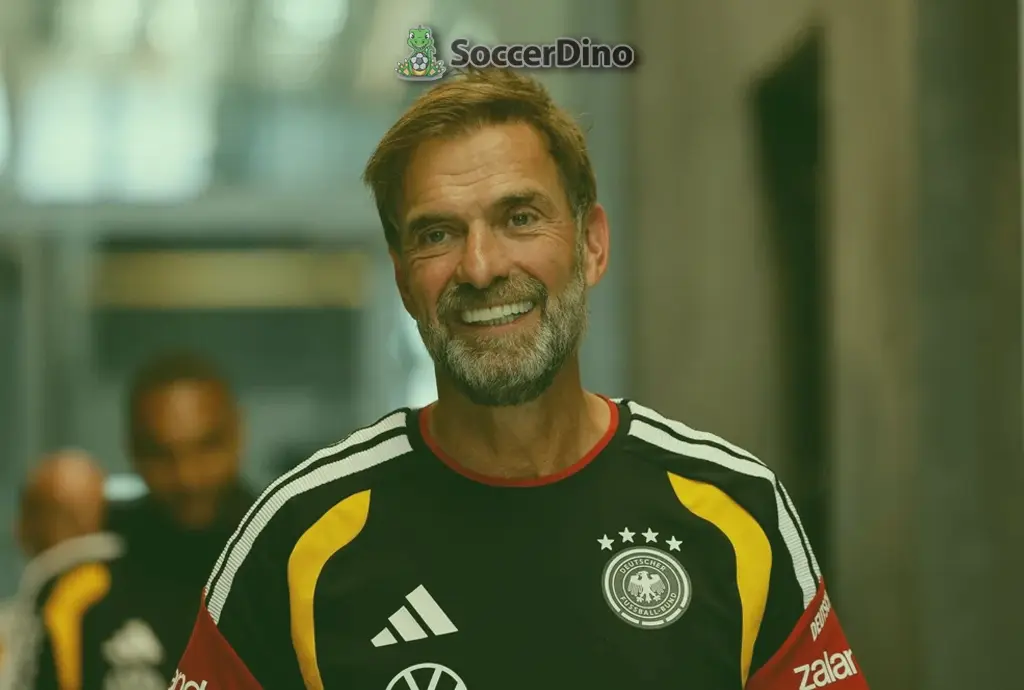
Jürgen Klopp Prepares Germany for Crucial Netherlands Clash as Frenkie de Jong Misses Nations League Decider
Germany are preparing for one of their most important matches under Jürgen Klopp as they welcome the Netherlands to Berlin on Monday evening for a decisive UEFA Nations League encounter. With qualification for the quarter-finals still uncertain, the German national team must deliver a strong performance against an impressive Dutch side managed by Xavi Hernández, who will be without Barcelona midfielder Frenkie de Jong.
The match at the Olympiastadion carries considerable significance for both countries. Germany are fighting to secure their place in the knockout stages, while the Netherlands arrive as Group A2 leaders following an emphatic 7-0 victory over Greece. The Dutch need only avoid defeat to guarantee first place, whereas Germany must approach the encounter with greater urgency after an inconsistent campaign.
Klopp has made no attempt to hide his excitement about the occasion. The former Liverpool manager believes encounters of this importance are exactly what international football should provide, and he is looking forward to testing his team against one of Europe's strongest opponents.
There is also an emotional element to Germany's preparations. The squad completed its final training session at Adidas' headquarters in Herzogenaurach, marking the end of a historic partnership between the German Football Federation and the sportswear manufacturer. After more than seven decades together, the DFB will switch to Nike at the beginning of 2027.
For the Netherlands, meanwhile, attention has focused on De Jong's withdrawal from the squad. Although Xavi still has numerous talented players available, losing his experienced midfielder and temporary captain represents a significant development ahead of a match that could determine the final group standings.
Jürgen Klopp Excited About Germany's Nations League Showdown
Klopp is approaching Monday's match with enthusiasm despite the pressure surrounding Germany's qualification prospects. Speaking to Sky Sport, the national team coach described the encounter as the type of high-stakes occasion that players and managers should embrace.
"These are the kinds of finals you want to play," Klopp said, emphasising the importance of the meeting with the Netherlands.
The German coach also praised the quality of the opposition, describing Xavi's team as exceptionally strong and expressing his excitement about the challenge awaiting his players.
His comments reflect the atmosphere surrounding a fixture that has long been one of international football's most recognisable rivalries. Germany and the Netherlands have faced each other in numerous important competitions, producing memorable matches and intense battles over several generations.
Monday's encounter may not be a tournament final, but the consequences could be considerable. Germany remain in contention for a place in the Nations League quarter-finals, yet they know that another disappointing result could end their campaign.
Klopp wants his players to approach the match with confidence rather than anxiety. Germany have demonstrated encouraging attacking qualities during recent international appearances, and the manager believes the squad possesses enough talent to compete with the Dutch.
However, he also recognises that the Netherlands are capable of punishing mistakes. Their recent performances have demonstrated considerable attacking quality, meaning Germany will need to combine ambition with defensive discipline throughout the contest.
The German coach has emphasised the importance of preparing properly and maintaining concentration, particularly because the visitors arrive with greater freedom in the qualification race.
Germany Complete Final Training Session at Adidas Headquarters
Germany's preparations began with a particularly emotional moment in Herzogenaurach, where the national team completed its final training session at the modern Adidas facilities that have served as an important base for the squad.
The DFB's relationship with Adidas has been one of the longest and most recognisable commercial partnerships in international football. The German manufacturer has supplied the national team for more than seven decades, becoming closely associated with some of the country's greatest sporting achievements.
However, that historic relationship will officially end on December 31, 2026, when the current agreement expires. Nike will become Germany's new equipment supplier on January 1, 2027, beginning an eight-year partnership scheduled to continue until the end of 2034.
The decision to change manufacturers was announced in March 2024 and generated considerable attention because of Adidas' longstanding association with German football.
For generations of supporters, Germany's national team and Adidas have been almost inseparable. The famous three stripes accompanied historic World Cup victories, European Championship triumphs and numerous memorable international performances.
The partnership was also significant beyond the playing kit. Adidas provided training facilities and equipment while maintaining a close relationship with the German Football Federation.
During the current international break, Klopp's squad returned to the company's headquarters for one final training camp. The players used the state-of-the-art facilities while preparing for their Nations League matches against Serbia and the Netherlands.
The farewell included a special opportunity for Adidas employees and their families to meet the national team. Approximately 3,000 people attended a public training session, with players signing autographs, taking photographs and interacting with supporters.
Klopp and DFB sporting director Rudi Völler also participated in the farewell activities, recognising the importance of the relationship between the federation and the German sportswear company.
The squad completed its final training session in Herzogenaurach on Sunday before travelling to Berlin for Monday's match.
Germany will also wear their black Adidas kit against the Netherlands, making the encounter the national team's final match in the manufacturer's equipment before the partnership comes to an end.
Nike Partnership Begins a New Era for German Football
The transition from Adidas to Nike represents more than a change in the design of Germany's football shirts. It marks the beginning of a different commercial chapter for the German Football Federation after decades of close cooperation with a domestic manufacturer.
Nike's agreement with the DFB will run from January 2027 until December 2034, covering Germany's national teams and wider football development activities.
The American company secured the agreement after a competitive commercial process, with the DFB previously explaining that the decision was based on the economic opportunities presented by the new partnership.
Reports have suggested that the contract could be worth approximately €100 million annually, although the federation has not publicly confirmed every financial detail.
The change generated debate when it was announced because Adidas occupies such an important position within Germany's sporting history.
However, DFB officials have emphasised their gratitude towards the outgoing manufacturer and their determination to conclude the partnership positively.
The Nations League encounter against the Netherlands will therefore provide a symbolic conclusion to an era. Germany will attempt to secure qualification while wearing the equipment of a company associated with some of the country's most important footballing moments.
For Klopp and his players, the immediate priority remains the result. Nevertheless, the historical significance of the occasion adds another dimension to an already important international fixture.
Germany Gain Confidence After Important Victory Over Serbia
Germany approach Monday's encounter with renewed confidence following their 3-1 victory against Serbia in Belgrade on Friday.
The result was essential for Klopp's side, who had entered the November international break under considerable pressure after collecting only five points from their opening four Nations League matches.
Germany needed a positive result to remain competitive in Group A2, and their performance against Serbia provided encouragement at an important moment.
Florian Wirtz played a prominent role, demonstrating the creativity and technical ability that have made him one of Germany's most important attacking players.
Brajan Gruda also delivered an outstanding performance, scoring an impressive individual goal during his full international debut.
The RB Leipzig winger carried the ball forward from around the halfway line before finishing with a precise low effort, highlighting his confidence and ability to influence matches through individual actions.
Gruda's performance has created an interesting selection decision for Klopp ahead of the Netherlands match. The German coach has several talented attacking players available, but the winger's contribution against Serbia strengthened his case for retaining a place in the starting lineup.
The victory also demonstrated that Germany can respond positively when faced with pressure. After a difficult opening to the competition, Klopp's players produced an important result that kept their quarter-final ambitions alive.
However, the Netherlands are expected to provide a considerably more demanding challenge.
The Dutch have been one of the most productive attacking teams in the group and arrive in Berlin with a three-point advantage over Germany.
Klopp will therefore want his players to reproduce the attacking confidence demonstrated against Serbia while maintaining greater control against opponents capable of exploiting defensive spaces.
Netherlands Arrive in Berlin After Stunning Greece Victory
The Netherlands enter Monday's encounter following one of their most impressive performances under Xavi Hernández.
On Friday, Oranje recorded a remarkable 7-0 victory over Greece in Amsterdam, strengthening their position at the top of Group A2 and providing an enormous confidence boost ahead of the trip to Germany.
Tijjani Reijnders was among the outstanding performers, scoring a hat-trick as the Dutch dominated their opponents.
The victory highlighted the attacking approach that Xavi has been developing since taking charge of the national team. The former Barcelona coach has encouraged his players to move the ball quickly, attack available spaces and create opportunities through coordinated movement.
Against Greece, those principles were particularly effective. The Netherlands repeatedly found ways through the opposition's defensive structure and converted their opportunities with impressive efficiency.
Xavi expressed satisfaction with the performance, praising the players' understanding of how to attack and the quality of their movement.
The result also provided an important response to the earlier meeting between the two countries, which ended in a 2-2 draw.
For Germany, the scale of the Dutch victory represents a warning. Klopp's team cannot afford to leave large spaces between the lines or allow the visitors to establish their attacking rhythm.
With players such as Cody Gakpo, Reijnders and Donyell Malen available, the Netherlands possess several different ways of creating scoring opportunities.
The challenge for Germany will be to prevent those players from receiving the ball in dangerous positions while maintaining enough attacking ambition to pursue the victory they require.
Frenkie de Jong Ruled Out of Germany Match as Precaution
Despite their encouraging form, the Netherlands have suffered a significant setback ahead of the decisive encounter.
Barcelona midfielder Frenkie de Jong has withdrawn from the national team squad after experiencing physical discomfort during Friday's victory over Greece.
The 29-year-old had returned to international duty after missing the opening four Nations League matches of the campaign and was named captain against Greece because Virgil van Dijk was unavailable.
However, De Jong was replaced at half-time after reporting discomfort in his back.
Initially, Xavi suggested that there was no immediate reason for concern regarding the midfielder's condition. Nevertheless, further assessment led the Dutch Football Association to decide that he should not travel to Berlin.
The decision was taken as a precaution, with the medical staff unwilling to risk aggravating a problem that could become more serious if the player continued competing.
De Jong's injury history makes caution particularly important. The Barcelona midfielder has experienced several physical setbacks during recent seasons, and both club and country are aware of the consequences of allowing minor problems to develop into longer absences.
He also experienced difficulties during the summer's World Cup, when he continued playing despite fitness concerns. Barcelona subsequently had to manage his recovery over an extended period.
Against Greece, Teun Koopmeiners replaced De Jong at half-time, providing Xavi with another experienced midfield option.
Although the Dutch possess considerable squad depth, De Jong's absence removes a player capable of controlling possession, progressing the ball under pressure and helping the team maintain its passing rhythm.
His experience in major international encounters would also have been valuable against Germany, particularly with the opposition expected to apply pressure in midfield.
Xavi must now decide how best to reorganise his team without one of its most technically accomplished players.
Xavi Hernández Chooses Not to Replace De Jong
Following confirmation of De Jong's withdrawal, Xavi decided against calling up another player to replace the Barcelona midfielder.
The decision leaves the Netherlands with exactly 23 footballers available for Monday's encounter.
Although losing an experienced midfielder is disappointing, the reduced squad size offers a small administrative advantage. UEFA permits teams to name 23 players in their matchday squad, meaning Xavi will not need to exclude anyone from the group before the game.
The situation contrasts with Friday's encounter against Greece, when the Dutch coach had 24 players available and was required to leave one out.
On that occasion, Sepp van den Berg was the unfortunate player who missed out.
The Brentford defender had joined the national team following Virgil van Dijk's withdrawal, but he was not included in the matchday squad against Greece.
Van den Berg has yet to make his senior international debut and will be hoping that the encounter in Berlin provides an opportunity to reach that milestone.
At 24, the defender has developed valuable experience in club football and is attempting to establish himself among the Netherlands' defensive options.
His inclusion in the 23-man squad does not guarantee that he will play, but it means he will be available for selection if Xavi decides to introduce him.
The decision not to replace De Jong also reflects confidence in the remaining midfield options.
The Netherlands have several players capable of contributing centrally, and Xavi will be able to adjust his tactical approach according to the demands of the match.
Virgil van Dijk Absence Adds to Netherlands Leadership Changes
De Jong's withdrawal is particularly notable because the Netherlands were already without their usual captain, Virgil van Dijk.
The experienced defender had previously pulled out of the squad, forcing Xavi to make changes to the team's leadership structure.
De Jong was selected to wear the captain's armband against Greece, but his absence from the Germany match means the responsibility will now pass to another member of the squad.
Denzel Dumfries is among the most experienced players available and could become an important figure in maintaining organisation and communication during the match.
Van Dijk's absence also creates a defensive challenge because the Liverpool centre-back has long provided leadership and stability at the heart of the Dutch back line.
However, the Netherlands demonstrated against Greece that they are capable of performing effectively without their established captain.
Xavi will be encouraged by the way his players adapted during that encounter, although Germany's attacking quality is likely to provide a different examination of their defensive structure.
The Dutch coach must balance the need to protect his team's unbeaten position in the group with the ambition to finish the campaign positively.
With qualification within reach, a controlled performance may prove more valuable than taking unnecessary risks against an opponent desperate to win.
Germany and Netherlands Face Different Qualification Scenarios
The Nations League standings provide additional importance to Monday's encounter.
After five matches, the Netherlands lead Group A2 with 11 points, while Greece and Germany both have eight. Serbia remain bottom without a point.
The top two teams advance to the Nations League quarter-finals, meaning three countries are still competing for two places.
For the Netherlands, the situation is relatively straightforward. Avoiding defeat against Germany would guarantee first place in the group and secure qualification.
Xavi's side can therefore approach the contest knowing that a draw is sufficient to achieve their main objective.
Germany face a more complicated situation.
A victory against the Netherlands would allow Klopp's team to reach 11 points and potentially move into first place, provided Greece fail to defeat Serbia.
However, a German victory would not automatically guarantee top spot if Greece also win, because the final standings would then depend on the relevant tiebreaking criteria.
A draw could also be sufficient for Germany to reach the quarter-finals, but only if Greece lose their final match against Serbia.
The simultaneous encounter between Greece and Serbia therefore creates another important dimension to the evening.
Both matches will begin at the same time, ensuring that none of the teams can plan its approach around a completed result elsewhere.
For Klopp, the simplest strategy is to concentrate on defeating the Netherlands rather than relying on developments in Greece.
The German coach wants his players to take responsibility for their own qualification prospects, particularly after the progress demonstrated during Friday's victory in Belgrade.
Germany and Netherlands Renew Historic Football Rivalry
Beyond the immediate importance of qualification, Monday's fixture brings together two countries with one of international football's most recognisable rivalries.
Germany and the Netherlands have produced numerous memorable encounters over the decades, including matches that helped shape the history of European and world football.
One of the most famous came in the 1974 World Cup final, when West Germany defeated the Netherlands 2-1 in Munich.
The Dutch team, inspired by Johan Cruyff and their revolutionary style of Total Football, entered that tournament with enormous expectations, but West Germany secured victory through goals from Paul Breitner and Gerd Müller.
The countries met again in the semi-finals of Euro 1988, when the Netherlands earned a famous 2-1 victory before going on to win the tournament.
Those encounters established a rivalry that has continued through subsequent generations, producing intense matches and memorable individual performances.
The most recent meeting took place in September 2026, when the teams drew 1-1 in Amsterdam.
Felix Nmecha gave Germany the lead before Cody Gakpo scored a dramatic stoppage-time equaliser to rescue a point for the Netherlands.
That result demonstrated how closely matched the teams can be and provided another example of the competitive intensity that regularly characterises their meetings.
Monday's encounter promises similar tension, particularly because the result could determine which country progresses to the Nations League quarter-finals.
Tactical Battle Between Klopp and Xavi Could Decide the Match
The meeting between Jürgen Klopp and Xavi Hernández also adds an intriguing tactical dimension to the contest.
Both coaches are associated with attacking football, but their approaches are influenced by different tactical traditions.
Klopp has built his reputation around intensity, aggressive pressing and rapid transitions. His teams have traditionally attempted to recover possession quickly and use forward movement to exploit space before opponents can reorganise.
Xavi, meanwhile, has developed his coaching philosophy around positional discipline, technical quality and the importance of controlling possession.
The Netherlands' performance against Greece demonstrated how effectively those principles can work when the players move the ball quickly and recognise opportunities to attack space.
Germany will therefore need to find the correct balance between pressing high and maintaining defensive organisation.
If Klopp's players apply pressure too aggressively without sufficient support, the Netherlands could exploit the spaces behind them.
Conversely, if Germany allow Xavi's side to dominate possession without resistance, the visitors may be able to control the rhythm and reduce the hosts' opportunities to build momentum.
Midfield is likely to be one of the decisive areas.
Joshua Kimmich and Germany's other central players will have significant responsibility in organising possession and preventing the Netherlands from advancing through the middle.
With De Jong unavailable, Xavi may need to adjust his midfield structure, potentially creating opportunities for Germany to apply greater pressure during the visitors' build-up play.
However, the Netherlands possess enough technical quality to adapt, making it unlikely that one absence will completely change their approach.
The attacking battle could also be important, with Wirtz and Gruda among Germany's potential creative influences, while Gakpo and Reijnders provide significant threats for the visitors.
Klopp Faces Important Selection Decisions Ahead of Berlin Encounter
Germany's coaching staff have received encouraging news regarding the physical condition of the available squad.
After Friday's victory over Serbia, no major new injury concerns were reported among the players preparing for the Netherlands match.
That situation allows Klopp to concentrate on tactical decisions rather than dealing with unexpected absences.
One of the most interesting questions concerns whether Brajan Gruda will retain his starting position after his impressive performance in Belgrade.
The winger demonstrated considerable confidence against Serbia, and his ability to carry the ball forward could be particularly useful against an attacking Dutch team.
However, Klopp also has talented alternatives, including Said El Mala and Lennart Karl, who provide different attacking qualities.
Florian Wirtz is expected to remain an important creative figure, while Niclas Füllkrug offers a more traditional attacking presence.
Defensively, Jonathan Tah, Nico Schlotterbeck and Malick Thiaw provide experienced options, with Kimmich capable of contributing to the team's organisation and leadership.
Germany must also consider the Netherlands' pace in wide areas, which could influence the selection of full-backs and the responsibilities assigned to midfield players.
Klopp will finalise his plans after assessing the players' recovery from the Serbia encounter and completing preparations in Berlin.
Xavi and Cody Gakpo Prepare to Address Media Before Match
Both national teams have scheduled media activities in Berlin ahead of Monday's encounter.
Xavi Hernández is expected to appear at a press conference alongside Netherlands international Cody Gakpo, providing an opportunity to discuss the team's preparation and the impact of De Jong's withdrawal.
Gakpo is likely to attract considerable attention following his important contribution during the previous meeting between the countries.
The attacker scored the late equaliser in Amsterdam and remains one of the Netherlands' most dangerous offensive players.
His ability to operate from wide areas, move into central positions and finish attacking moves makes him an important part of Xavi's plans.
With the Netherlands needing only a draw, Gakpo's movement and counterattacking ability could be particularly valuable if Germany commit additional players forward.
Klopp will also address the media as Germany complete their final preparations.
The German coach is expected to discuss his team's qualification prospects, the challenge posed by the Netherlands and his plans for the decisive encounter.
However, neither manager is likely to reveal every tactical detail before kick-off, particularly given the importance of the result.
Berlin Set for Major Nations League Occasion
The Olympiastadion will provide an impressive setting for the final Group A2 match.
More than 71,000 spectators are expected to attend the encounter, creating an atmosphere appropriate for a fixture involving two of Europe's most successful footballing nations.
The stadium has hosted numerous historic matches, including the 2006 World Cup final and major domestic and European football events.
Germany's supporters will hope the venue can provide additional motivation as Klopp's side attempt to secure their place in the quarter-finals.
However, the Netherlands have already demonstrated that they are comfortable competing in demanding environments.
Having collected 11 points from their opening five Nations League matches, Xavi's team will arrive confident in their ability to produce another positive result.
The encounter will also represent Germany's final international appearance of 2026, adding to the importance of concluding the year successfully.
For the home side, securing qualification would provide an encouraging conclusion to the first months of Klopp's tenure and create momentum ahead of the knockout stages in 2027.
For the Netherlands, finishing first would confirm the progress made under Xavi and strengthen their ambitions of competing for the Nations League trophy.
Germany and Netherlands Ready for Decisive Nations League Encounter
Monday's match brings together several important storylines: Germany's fight for qualification, the Netherlands' impressive attacking form, Frenkie de Jong's absence and the conclusion of the DFB's historic partnership with Adidas.
Klopp has made clear that he is looking forward to the challenge, describing the Netherlands as an exceptionally strong opponent and embracing the importance of the occasion.
Xavi, meanwhile, must prepare his team without De Jong but can take considerable encouragement from the 7-0 victory over Greece and the depth of attacking quality available within his squad.
The contrast in qualification circumstances could influence how both teams approach the match. Germany have greater incentive to attack, while the Netherlands can afford to be more patient, knowing that avoiding defeat guarantees first place.
However, both teams possess the technical quality and attacking ambition to produce an entertaining contest, and neither coach is likely to approach such an important rivalry without a clear plan to impose his preferred style of football.
For Germany, the encounter offers an opportunity to demonstrate that the progress made under Klopp can translate into results against elite opposition. Victory would strengthen confidence and potentially secure a place in the Nations League quarter-finals.
For the Netherlands, another positive result would represent an important statement under Xavi Hernández, confirming their ability to compete successfully against major European opponents.
As both squads complete their preparations in Berlin, attention now turns towards Monday evening at the Olympiastadion. With qualification, national pride and the conclusion of a historic German football partnership all part of the occasion, the latest chapter in the Germany-Netherlands rivalry promises to be one of the standout matches of the November international break.