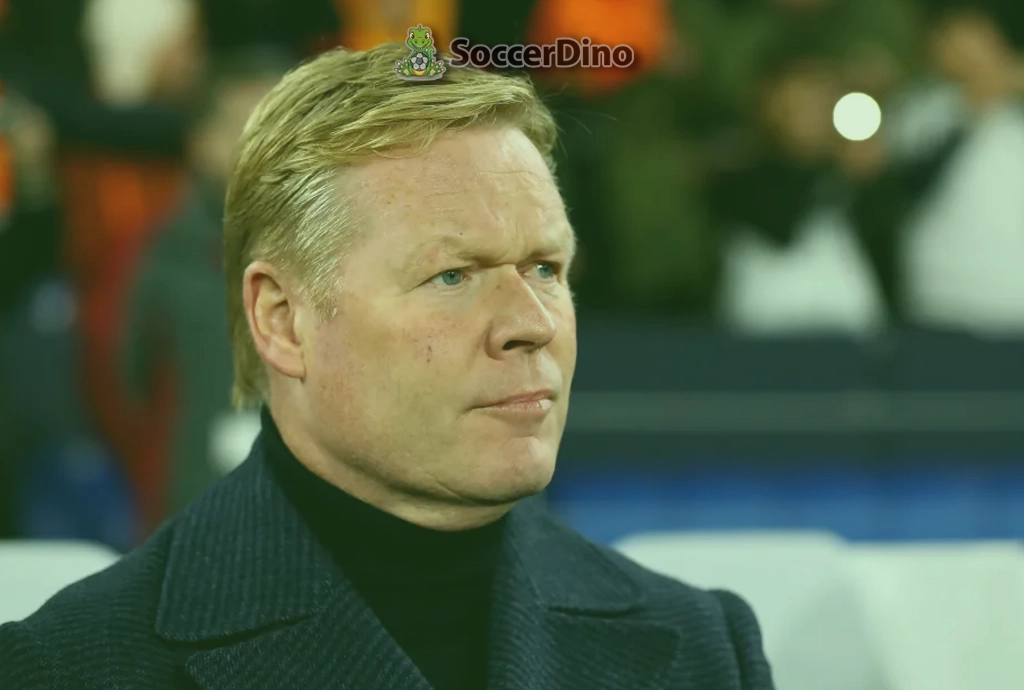
The Turkish Football Federation has referred 1,024 of the 3,700 players to the disciplinary committee as a precaution due to an ongoing investigation into involvement in betting activities. Among them is Galatasaray player Eren Elmali (pictured), who came on as a substitute against Ajax just last week.

The Turkish football landscape has been rocked by an integrity crisis of unprecedented proportions, as the scope of the ongoing betting and match-fixing investigation continues to widen dramatically.
What initially appeared to be an internal audit has now escalated into one of the largest disciplinary operations ever conducted by the Turkish Football Federation (TFF). A total of 1,024 players out of 3,700 registered professionals have been referred to the disciplinary committee, a staggering figure that represents nearly one in every three players active in Turkey’s professional leagues. The scale alone has sent shockwaves through the football community domestically and internationally.
At the center of the storm is the involvement of several high-profile players, including Eren Elmali, a 20-cap Turkey international and current Galatasaray left back, who featured only last week as a substitute in the match against Ajax. Elmali, considered one of the country’s most promising defenders, has been immediately removed from the national team squad, an extraordinary move that underscores the seriousness of the allegations and the sensitivity surrounding national team integrity.
Elmali is not alone. His teammate Metehan Baltaci is also among the players flagged in the investigation. Even more attention has fallen on Beşiktaş, one of the nation’s biggest clubs, after two senior squad members were identified: goalkeeper Ersin Destanoğlu and veteran defender Necip Uysal. Uysal, a 34-year-old lifelong Beşiktaş player and widely admired figure in Turkish football, issued a passionate and forceful public denial. Speaking to Fanatik, he stated:
“I have never had anything to do with gambling in my life. I have never played, nor have I ever had a betting account. The idea has never even crossed my mind. I will fight every legal battle necessary to defend my name, a name I have worked tirelessly for years to keep clean. Beşiktaş fans and all sports fans should have no doubt about that.”
His reaction highlights a crucial dimension of the scandal: not all those listed may ultimately be found guilty. Some may be suspended purely as a precautionary measure while the TFF continues its investigation, which aims to uncover potential patterns of organized betting activity, financial incentives, or even coordinated manipulation of match outcomes.
Yet the crisis extends far beyond players. The TFF’s parallel examination of referees within the professional structure produced equally alarming findings. Out of 571 active referees, 371 had betting accounts, and 152 of those were actively placing bets. Even though not all of these bets were directly linked to matches they officiated, the mere presence of such activity raises profound questions about neutrality, conflicts of interest, and the overall credibility of the competition. Turkish football authorities have acknowledged that trust in officiating has been strained for years, but these new revelations represent an integrity breach of a magnitude never previously documented.
As a result, the TFF has adopted emergency measures designed to stabilize the leagues while investigations continue. All fixtures in the second and third divisions have been postponed for two weeks, giving clubs time to reassess squad availability as many have suddenly lost a significant portion of their playing staff. This unprecedented pause reflects the severity of the findings; some teams have been left with nearly unmanageable squad shortages.
The hardest-hit clubs provide a sobering illustration of the crisis. Diyarbekirspor, from the third division, has seen 18 players suspended. Agrispor and Erbaaspor, from the fourth and third divisions respectively, each have 17 players implicated. For these teams many of which already operate with smaller budgets, limited squad depth, and fewer youth resources—this situation threatens not only short-term competitiveness but potentially their sustainability as professional entities.
With clubs scrambling to avoid catastrophic roster imbalances, the TFF has formally requested that FIFA authorize the immediate opening of the transfer window. This measure would allow teams to sign replacements, promote academy players, or explore emergency loan agreements. Without such flexibility, some clubs would be unable to field a complete matchday squad when competition resumes.
The scandal has ignited widespread public debate in Turkey, raising questions about deeper systemic issues. Critics point to persistent financial instability in lower divisions, inconsistent salary payments, and the general precariousness of professional football careers outside the top tier. These conditions, some analysts argue, may have created an environment where players become vulnerable to illegal betting networks or financial incentives from unregulated markets.
On the other hand, the involvement of top-flight players and a large group of referees suggests that the issue transcends financial pressure alone. Integrity units from UEFA and FIFA are now monitoring developments closely, and further external oversight may be introduced depending on the outcome of the disciplinary process.
Legal experts warn that if evidence confirms coordinated betting patterns or match manipulation, criminal charges could follow. Turkish law includes penalties for sports manipulation, and past cases have resulted in long suspensions, fines, and even imprisonment. Clubs may also face sanctions if it is determined that they failed to adequately supervise or report suspicious behavior.
For Turkish football, the path forward is steep. Restoring trust among supporters, players, sponsors, and international partners will require more than disciplinary action. Analysts predict that broad reforms will be necessary, including:
• stricter regulatory frameworks
• enhanced monitoring of betting activity
• mandatory integrity training programs for players and officials
• improved financial transparency
• strengthened internal disciplinary mechanisms
Ultimately, the scandal is likely to reshape the governance and culture of Turkish football for years to come. As the investigation unfolds, the sport faces a reckoning that could redefine its structures, its policies, and its public reputation.
For now, the country waits as the largest integrity investigation in Turkish football history continues to reveal its full extent.