Liverpool went down again on Tuesday after conceding a goal in stoppage time. Away at Wolverhampton Wanderers, it happened for the fifth time this season. That meant an unwanted record for the Reds.
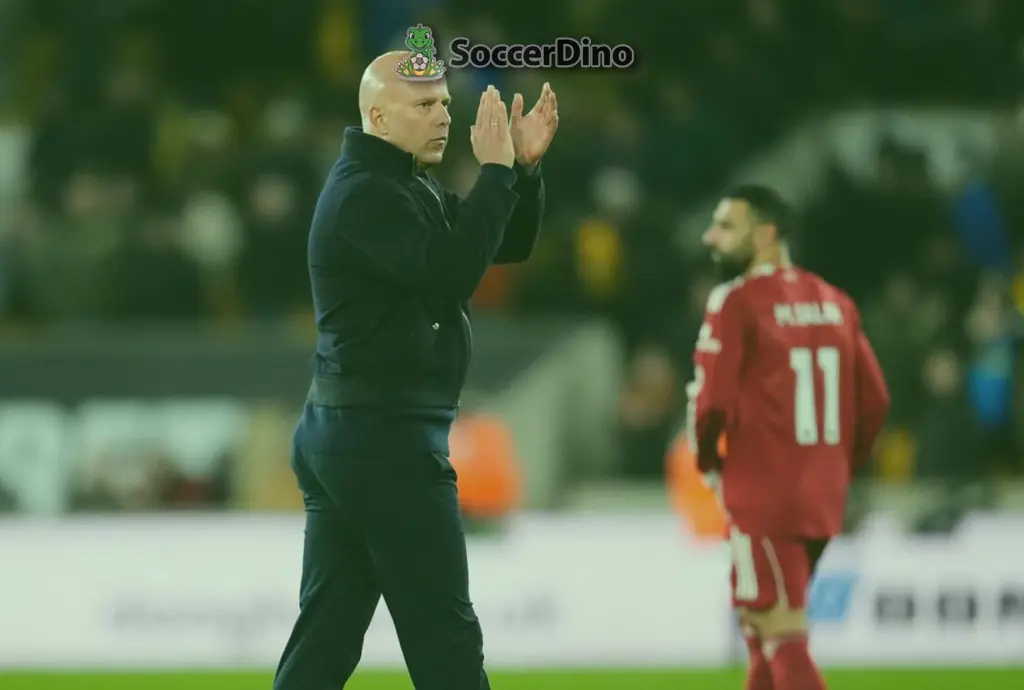
Wolverhampton Wanderers may still be staring relegation in the face, but at Molineux they delivered another reminder that desperation can be a weapon.
After a stubborn draw with Arsenal, Wolves followed it up by shocking Liverpool, winning 2-1 in a match that seemed to be drifting toward an away win or, at worst, a draw. Instead, it ended with a late gut punch, a deflected stoppage time strike, and a new, unwanted Liverpool record.
For long stretches, the game had a familiar rhythm. Liverpool controlled territory, circulated the ball with patience, and tried to draw Wolves out of a compact shape. Wolves, meanwhile, looked more focused on surviving each wave than building any sustained threat of their own. They defended deep, left few gaps between the lines, and relied on last-ditch blocks and hurried clearances whenever Liverpool found a way into the final third. The home side offered very little in possession, and when they did win it back, they often lost it quickly under pressure.
That lack of attacking output was reflected brutally in the numbers. Until the 78th minute, Wolves had produced an expected goals figure of 0.00. Not low, not modest, literally nothing. They were not creating shots that registered as chances. They were barely arriving in positions to test Alisson Becker, and Liverpool looked increasingly likely to wear them down. In a match like that, the key question usually becomes whether the dominant side can turn control into a decisive goal before frustration and risk begin to creep in.
Liverpool did create the better openings overall, and their xG of 1.06 points to a steady flow of opportunities, even if not all were clear cut. Wolves ended on 0.44, a figure that underlines how little they produced but also how ruthlessly they punished the moments that did fall their way. This was not a night where Wolves peppered the goal and finally got their reward. This was a night where they waited, suffered, and then struck with maximum effect.
The breakthrough arrived from the first real Wolves moment that carried any danger. In the 78th minute, Rodrigo Gomes seized his chance and chipped the ball over Alisson to make it 1-0. It was the kind of finish that flips a match instantly: one touch of composure after nearly 80 minutes of scarcity. For Wolves, it was a release, a surge of belief that they could turn survival mode into something more. For Liverpool, it was a shock, and it forced an immediate change in emotional temperature.
Liverpool responded the way top sides usually do when punched unexpectedly. The tempo rose, the urgency became clearer, and the attacks sharpened. Mohamed Salah then dragged Liverpool back into the contest, scoring to make it 1-1 and restore hope of salvaging at least a point. His goal did not just equalise, it shifted the momentum again, and for a period Liverpool looked closer to winning it than losing it. Wolves had expended so much energy defending that it was natural to expect their legs and concentration to fade as Liverpool pushed.
There were moments that supported that expectation. Liverpool went close, with Salah leading a counterattack that threatened to turn into the winner, and Virgil van Dijk getting an opportunity with a header. Those are the fine margins that define matches like this. Convert one of those moments and the story becomes Liverpool resilience, late pressure, and a professional escape. Miss them and the match stays alive for one more Wolves break, one more set piece, one more scramble that can decide everything.
That decisive moment came in the 94th minute, and it was cruel in a way that managers hate because it feels avoidable and unavoidable at the same time. André hit a shot that took a deflection off Joe Gomez and ended up in the net, making it 2-1 to Wolves. From the Liverpool perspective, it was not even a clean chance in the usual sense, which is exactly why it stung so much. A deflection changes angles, blinds a goalkeeper, and turns a manageable situation into chaos. Wolves did not need to carve Liverpool open. They only needed the ball to fall their way once, at the very end.
After the match, Arne Slot made it clear he was frustrated not only by the result but by the pattern behind it. “It wasn’t even a chance,” he lamented, pointing to how little Wolves had created for most of the night and how harsh the deciding moment felt. Yet the numbers, while supporting Liverpool’s superiority in chance creation, also showed Wolves’ effectiveness: Wolves finished with an xG of 0.44, Liverpool with 1.06.
Slot also highlighted a damaging trend in Liverpool’s season. This defeat means Liverpool have now lost 5 Premier League matches this season due to a stoppage time goal, an unwanted record in the Premier League era dating back to 1992-93. He underlined the short-term version of the same issue too: in their last 22 matches, Liverpool have lost 3 times, and every one of those defeats arrived in stoppage time. For a team fighting for consistency and momentum, that is the kind of pattern that can shape a campaign, not just individual results.
Beyond the statistics, the bigger concern for Liverpool is what these late collapses say about game management. Sometimes it is fatigue, sometimes it is concentration, sometimes it is decision-making when a match is on a knife edge and emotions are high. Whether Liverpool were chasing a winner too aggressively, whether the defensive structure became stretched, or whether they simply suffered another episode of cruel luck, the outcome is the same: points slipping away when the finish line is already in sight.
For Wolves, the win was as valuable as it was unexpected. A side that has struggled all season found a way to beat one of the league’s biggest teams, and to do it with a mix of defensive endurance and clinical timing. They survived Liverpool pressure, recovered from the equaliser, and still had the composure and belief to keep playing until the final whistle. In a relegation fight, results like this can be season-defining, even if the wider table still looks bleak.
The story continues immediately, because Liverpool get a rapid opportunity to respond when the sides meet again on Friday in the FA Cup. That quick turnaround offers a chance for instant revenge, but it also means Liverpool must process the frustration quickly and find solutions fast. Wolves, meanwhile, will try to bring the same discipline, patience, and late-game bite that delivered them a 2-1 victory at Molineux.