Ronald Koeman says he has no desire to return to club management, admitting only a future national team role could still be possible depending on family circumstances.
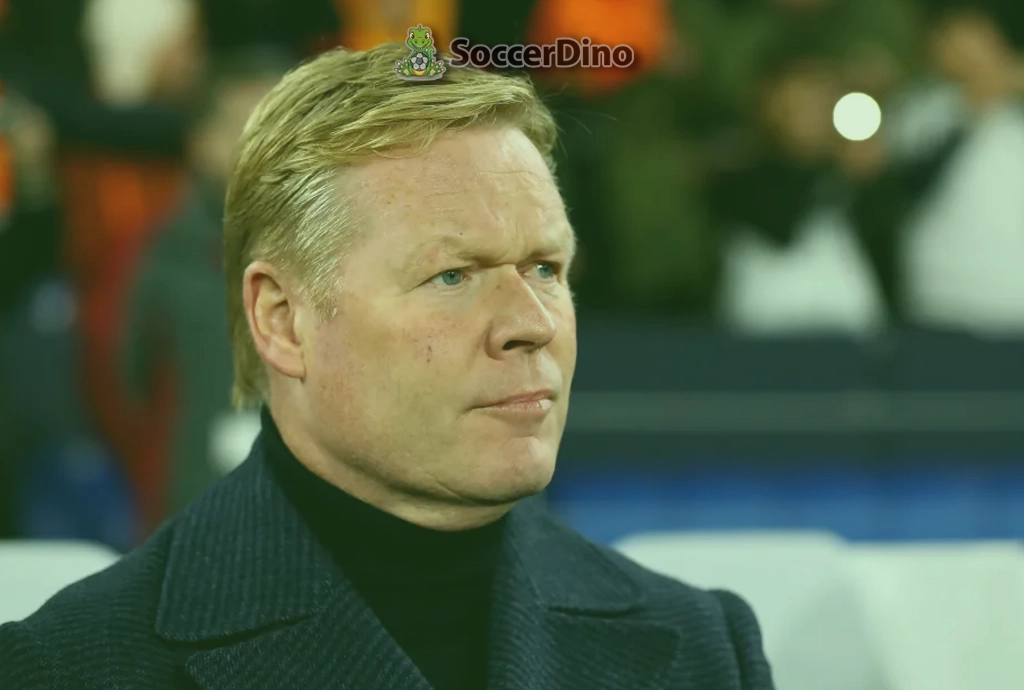
Ronald Koeman has made it clear that he does not see a return to club football in his future, drawing a firm line under one of the most varied and high profile coaching careers in European football.
The 62 year old, currently in his second spell as head coach of the Netherlands national team, said he no longer has the desire to take on the relentless demands of daily club management. While he has not completely ruled out the possibility of one day coaching another national team, he was decisive on one point: his time as a club coach is over.
Koeman statement is significant because it comes from a coach whose managerial career has taken him across some of the biggest clubs in the Netherlands and Europe. Few Dutch coaches can match the range of his experience. In his home country, he worked with all 3 of the traditional giants of Dutch football, Ajax, PSV and Feyenoord, while also managing Vitesse and AZ. Abroad, he added further weight to his resume with spells at Benfica, Valencia, Southampton, Everton and FC Barcelona, giving him exposure to very different football cultures, expectations and pressures.
That long journey has clearly shaped how Koeman now sees the final stage of his coaching life. Speaking in an interview with Hans Kraay Jr on Sunday morning, Koeman was asked directly whether his current role with Oranje would be his last job in football management, or whether he still had another challenge in mind. His answer was immediate and unambiguous. He said he no longer feels any ambition to return to club coaching, making it clear that the rhythm and intensity of that environment no longer suit the life he wants to live.
For a coach with Koeman background, that is a notable conclusion. Club football has defined most of his professional life after retirement as a player. It gave him the platform to build his reputation, win major matches and experience some of the highest points and toughest moments of management. Yet it also brought the nonstop pressure that comes with the modern game: daily training, constant media scrutiny, transfer politics, dressing room management, long seasons and the near total lack of breathing space between matches. Koeman comments suggest that, at this point in his life, those demands no longer feel attractive.
Instead, the national team role appears to offer exactly the balance he now values. Koeman said the position of national team coach fits the phase of life he is in. That remark says a great deal about how he views his career today. International football still allows him to work at the highest level and still gives him access to elite players, big matches and the competitive thrill that has always been central to his life in football. At the same time, it does not require the same day to day intensity as club management.
That difference seems crucial to him. Koeman explained that he still takes great pleasure from working with top players, but not on a daily basis. In other words, the joy of coaching remains, but the format matters. He still wants the tactical work, the preparation, the leadership and the challenge of representing a national side, but not the constant week to week grind of club football. It is a view that many experienced coaches eventually reach, especially those who have already spent decades inside the demanding structure of the professional game.
His current role with the Netherlands therefore seems to match both his professional ambitions and his personal priorities. This is his second spell as Oranje coach, which also adds a layer of familiarity and emotional connection. Returning to lead his national team was never just another job. It carried symbolic weight, especially for someone so deeply associated with Dutch football both as a player and as a coach. In that sense, the role allows him to stay close to the highest level of the game while also remaining connected to something personally meaningful.
Even so, Koeman did not entirely close the door on future work after the Netherlands. While he rejected the idea of another club post, he admitted that the possibility of coaching another national team cannot be fully dismissed. He did not present that as a concrete plan, but neither did he rule it out. His answer was measured and realistic: it could be possible, depending on circumstances.
Those circumstances, however, are not purely professional. Koeman also made clear that any future decision about continuing in football after his time with the Dutch national team will depend heavily on the health of his wife, Bartina. That is perhaps the most important part of his comments and gives his reflections a much more personal dimension. His wife is living with chronic breast cancer, and in 2025 metastases to her liver were also diagnosed. Koeman said that her situation is currently stable, which is clearly a source of relief, but it also underlines why he is looking at the future in a careful and conditional way.
This context helps explain why Koeman is no longer thinking in terms of career ambition alone. At an earlier stage in life, a coach might evaluate opportunities based on prestige, salary, project potential or competitive appeal. Koeman words suggest that he now sees things differently. Family circumstances, quality of life and emotional balance are central to his thinking. That does not mean his competitive spirit has disappeared. Rather, it means that football decisions are no longer isolated from the broader realities of life.
His openness about Bartina condition also shows why even the idea of taking charge of another national team remains hypothetical rather than definite. He said that if her stable condition continues, then the possibility of coaching another country after his second Oranje spell could be considered. That is a very different tone from the absolute certainty with which he dismissed a return to club management. In one case, the door is closed. In the other, it remains slightly open, but only if personal circumstances allow it.
That distinction matters. It shows that Koeman still sees value in coaching when the structure is manageable and when it can fit around his life rather than dominate it. A national team job, with its more intermittent schedule, may offer that flexibility. Club football almost certainly would not. For someone in his situation, that difference is enormous.
Looking back across his coaching path, it is easy to understand why he has reached this point. Koeman has experienced almost every version of the job. He has coached at historic clubs, worked under intense pressure, dealt with high expectations and taken on roles in multiple leagues and countries. He has been in title races, European competitions, rebuilding projects and emotionally charged environments. Few coaches remain untouched by that kind of career. Over time, the attraction of constant club football can give way to a desire for a different pace and different priorities.
His comments may also resonate more broadly because they reflect a reality many veteran coaches face. Football often presents management as a profession driven purely by ambition, but Koeman reminder is that even the most experienced figures eventually begin to weigh time, energy and family more heavily than the next challenge. In that sense, his remarks are not only about retirement plans or job preferences. They are about perspective.
For now, Koeman focus remains on the Netherlands. That is where his energy is directed, and it is clearly the role that suits him best at this stage. He still enjoys coaching, still wants to work with high level players and still feels motivated by the demands of international football. But his latest comments leave little doubt that the next phase of his life will be shaped by selectivity, not constant pursuit.
What happens after his second spell with Oranje remains uncertain. Another national team role is not impossible. Koeman himself admitted that such a move could happen under the right conditions. But there is now complete clarity about what will not happen. After a career that took him from Ajax, PSV and Feyenoord to Benfica, Valencia, Southampton, Everton and Barcelona, Ronald Koeman has decided that he has no more appetite for the daily world of club football. His future, if it continues in coaching at all, will only be on terms that fit both his personal life and the reality he now wants for himself and his family.