Senegal beat Morocco 1-0 after extra time to win AFCON 2025, retaining their 2021 title as Pape Gueye struck in the 94th minute after Brahim Diaz missed a last-gasp penalty in regulation time.
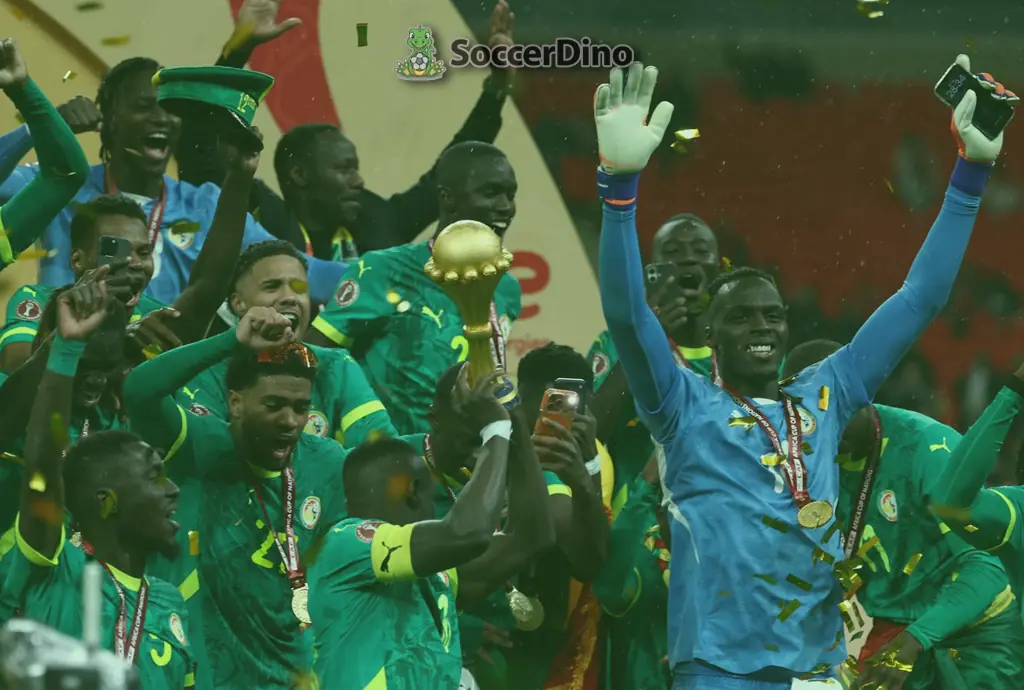
Senegal beat Morocco 1-0 after extra time to win the Africa Cup of Nations, successfully defending the crown they first lifted in 2021 and sealing the title in the most dramatic fashion.
The final was decided by fine margins, shaped by long spells of tension, a missed penalty at the end of regulation time, and a decisive goal early in extra time that ultimately separated the two sides.
For Morocco, the night carried the weight that always comes with hosting a major tournament. Playing at home adds an extra layer of expectation, and the host nation often feels the match is not just about performance, but about delivering a moment of history in front of its own supporters. Morocco came agonisingly close to forcing the final in their favour at the very last moment of normal time, only for the decisive chance to slip away from them.
That pivotal moment arrived on the edge of full time, when Morocco were awarded a penalty in the final action of regulation. With everything on the line, Brahim Díaz, the tournament’s top scorer with five goals, stepped up with the opportunity to settle the final without needing extra time. It was the kind of moment that defines careers and shapes tournament narratives, a single strike that could have completed a storybook ending for the hosts. Instead, he missed, and the final took a sudden emotional turn. In an instant, the momentum shifted from Morocco’s potential triumph to Senegal’s renewed belief that the trophy was still within reach.
That miss proved even more costly because of what followed almost immediately. Senegal began extra time knowing they had just survived the biggest scare possible, and within minutes they made it count. Pape Gueye scored in the 94th minute, a goal that would ultimately stand as the title-winning moment. In finals, timing can be as important as quality, and scoring early in extra time is often decisive. It forces the opposition to chase the game in a situation where fatigue is already a factor and composure becomes harder to maintain.
Gueye’s strike carried huge symbolic value too. Senegal have built a reputation in recent years as one of Africa’s most consistent, physically imposing, and tactically disciplined sides. Winning in 2021 marked a historic achievement, and repeating the feat in 2025 confirmed that success was not a one-off. A second title places Senegal firmly among the continent’s modern powerhouses, and doing it by beating the host nation in a final only sharpens the statement.
The story of this final was not one of a dominant team overwhelming the other for 90 minutes. Instead, it was a contest shaped by caution, resilience, and stress management. Finals often begin with both teams prioritising stability, avoiding the early mistake that can open the match up. Every duel feels heavier, every transition carries greater risk, and players can be reluctant to take the extra touch or the ambitious pass that might expose them. In that kind of environment, the match can hinge on a single set-piece, a penalty, or one moment of quality during a brief window when concentration drops.
Morocco’s missed penalty was not simply a technical failure, it was also a psychological blow. When a team misses such a late chance, the immediate emotional impact is obvious: disbelief, frustration, and a sense of injustice. But there is also a practical football impact. A miss at that stage can drain energy, because players must quickly reset for extra time while carrying the mental weight of what just happened. Senegal, by contrast, could treat survival as a surge of confidence, as if the match had given them a second life.
From Senegal’s perspective, the 94th-minute goal was exactly the kind of ruthlessness that champions produce. Great tournament teams do not always need to play brilliantly in every match, but they consistently punish opponents when the decisive chance appears. Scoring in extra time, minutes after a major escape, is a hallmark of composure and belief. It suggests a side that is not overwhelmed by the occasion and is able to turn high-pressure moments into opportunities.
The win also delivered a rare historical pattern. Senegal’s triumph against the host nation is an outcome that has occurred only a handful of times in the tournament’s long history. According to the record cited, this scenario has only been matched in three of the 35 editions of the Africa Cup of Nations. Two of those instances involved Ghana winning finals staged on host soil, in Tunisia in 1965 and in Libya in 1992. The most recent comparable case mentioned is Cameroon’s 2000 victory over Nigeria, another final where the hosts were denied at the last step. These parallels matter because they underline how difficult it is to beat a host nation in a final, where crowd support and tournament momentum often lean heavily in one direction.
For Morocco, the final will be remembered as a night of what-ifs. Hosting a tournament brings a unique chance to turn a strong campaign into a historic title, and the missed penalty will inevitably dominate the post-match discussion. Díaz had been Morocco’s most productive scorer throughout the competition, and that achievement made him the natural candidate to take responsibility in the decisive moment. The fact that the tournament’s top scorer was the one to miss only adds to the sense of cruel irony that sometimes accompanies football at the highest level.
At the same time, Senegal’s success is not just about Morocco’s miss. Winning a continental tournament requires getting through multiple high-stakes matches, managing injuries and suspensions, coping with different tactical opponents, and handling the psychological pressure of knockout football where one mistake can end everything. To repeat a title is particularly demanding because the reigning champions face a different kind of scrutiny. Opponents raise their level against the holders, every match becomes a test of composure, and there is a constant narrative of whether the champions can sustain the standard that brought them the trophy the first time.
By lifting the trophy again, Senegal reinforced the idea of continuity and authority. The 2021 title was a breakthrough moment, but the 2025 win positions Senegal as a team that can build a cycle of success rather than a single peak. Finals are often decided by the ability to remain calm under maximum stress, and this one was a perfect example: a missed penalty in the last action of regulation, followed by a goal early in extra time that punished the psychological shift.
In the end, Senegal left with the trophy, Morocco were left with heartbreak, and the final entered the tournament’s history as one of those matches defined by two moments that arrived back-to-back in the grand narrative: a penalty missed on the brink of victory, and a goal scored soon after that turned survival into triumph.