Nico Schlotterbeck has been ruled out of the World Cup after an ankle ligament injury, leaving Germany with a defensive setback before the knockouts.
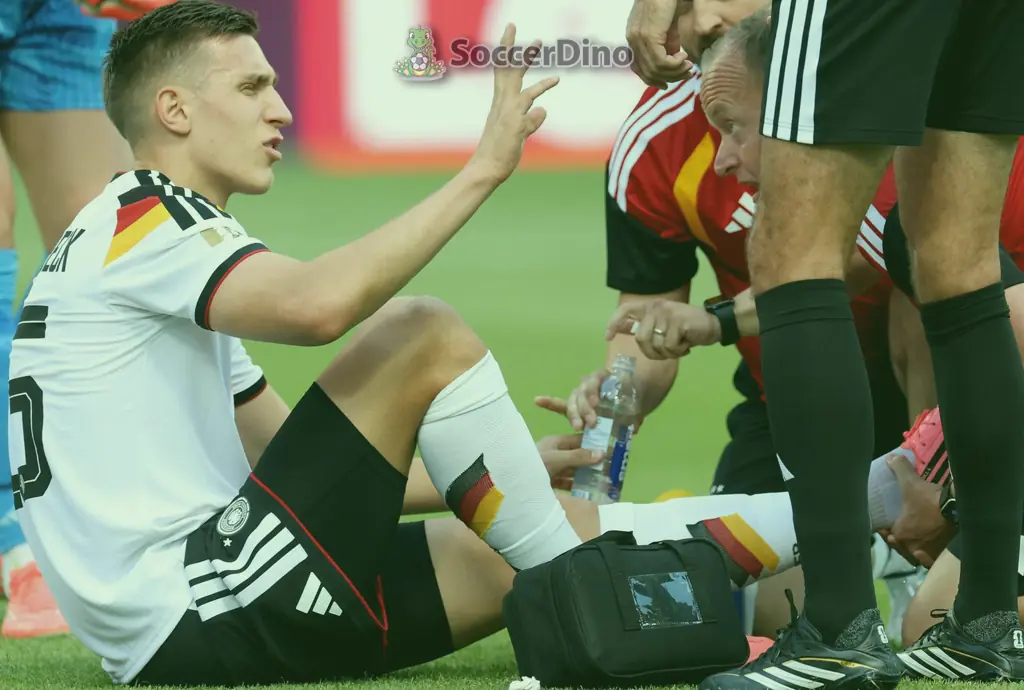
Nico Schlotterbeck ruled out as Germany suffer major defensive blow
Nico Schlotterbeck will play no further part in the World Cup after suffering an ankle injury during Germanys 2-1 victory over Ivory Coast. The Borussia Dortmund centre-back was forced to undergo medical examinations after the match, and the results confirmed a tear in the medial ligament of his left ankle.
The diagnosis is a significant setback for both the player and the German national team. Schlotterbeck had arrived at the tournament as one of the key defensive options in the squad, bringing strength, aggression, aerial presence and experience at the highest level. Instead of preparing for the knockout stages with the rest of the group, he now faces a recovery period expected to last around two months.
For Germany, the timing of the injury is particularly frustrating. The team have already secured qualification for the round of 32 and top spot in Group E after two victories, but losing a centre-back of Schlotterbeck quality before the decisive phase of the competition is a serious blow. Tournament football often becomes more demanding as the knockout rounds approach, and defensive depth can quickly become one of the most important factors for any team hoping to go far.
Schlotterbeck injury came during a match that had initially brought more positive signs for Germany. The 2-1 win over Ivory Coast confirmed the strength of the group-stage campaign and showed once again that Germany have the quality to manage difficult moments. However, the result was overshadowed by the news that one of the squad most reliable defenders would not be available for the rest of the tournament.
A painful end to the tournament for Schlotterbeck
For the player himself, this is an especially difficult moment. A World Cup is the kind of tournament every footballer dreams of playing, and Schlotterbeck had the chance to be part of a German side that has made an excellent start. To be ruled out through injury after the team had already secured qualification makes the situation even harder to accept.
The medical examinations confirmed a tear in the medial ligament of the left ankle, an injury that usually requires patience and careful rehabilitation. Although the expected absence is around two months, the priority will be to ensure that Schlotterbeck returns without complications. Ankle ligament injuries can be delicate for defenders because they affect changes of direction, jumping, tackling, balance and acceleration over short distances.
As a centre-back, Schlotterbeck relies heavily on timing and stability. Defensive duels are not only about strength. They require sharp footwork, quick reactions and the ability to adjust body position in a fraction of a second. A ligament problem in the ankle can therefore have a direct impact on the movements that define his game.
Germany will now have to continue without a player who offers much more than simple defensive cover. Schlotterbeck is comfortable defending high up the pitch, strong when stepping out to engage opponents and capable of helping the team build attacks from the back. His left-footed profile also gives balance to the defensive line, something that is not always easy to replace during a tournament.
Germany qualify, but depth will now be tested
From a results perspective, Germany are in a strong position. With two wins from two matches, they have already guaranteed a place in the round of 32 and secured first place in Group E. That gives the squad confidence and allows the coaching staff to manage the final group-stage commitments with a certain level of control.
However, injuries can quickly change the feeling around a team. Germany may have achieved their first objective, but the loss of Schlotterbeck forces the technical staff to rethink defensive planning for the next stage. In knockout football, one defensive mistake can decide an entire campaign. That makes the absence of an experienced central defender even more relevant.
The German squad still has quality and alternatives, but replacing Schlotterbeck is not only about choosing another name for the starting eleven. It can affect the way the team defends set pieces, the way the back line pushes forward, the way possession is built from defence and the level of comfort when facing quick transitions.
Germany have shown attacking power and competitive control in the group stage, but the knockout rounds usually bring different problems. Opponents become more cautious, the pressure increases and matches are often decided by small details. Having a settled defensive structure is crucial, and this injury interrupts part of that stability.
A major frustration during an important career moment
The injury also arrives at an important moment in Schlotterbeck career. The Borussia Dortmund defender has been linked with Real Madrid, where Jose Mourinho has been mentioned in connection with the club project. A strong World Cup could have increased attention around the player even further, especially if he had continued to perform well against high-level opponents.
Instead, Schlotterbeck now has to focus on recovery. For a player at this level, missing the rest of a World Cup is not just a physical setback. It is also an emotional one. These tournaments do not come around often, and every match can shape reputation, confidence and career momentum.
Still, the defender has enough experience to understand that the next step must be handled calmly. Rushing back from a ligament injury would carry unnecessary risk, particularly for a player whose game depends so much on defensive timing and physical contact. The priority will be to heal properly, rebuild strength in the ankle and return ready for club football when medically cleared.
Borussia Dortmund will also be monitoring the recovery closely. Losing a defender for around two months can affect planning at club level, especially if the injury period overlaps with preparations for the new season or important domestic commitments. Dortmund will want Schlotterbeck back at full capacity, not only available on paper.
The defensive challenge now facing Germany
For Germany, the immediate question is how to adjust. The coaching staff must decide whether to promote another central defender into a starting role, change the defensive pairing or adapt the overall structure to protect the back line more effectively. These are the kinds of decisions that can shape a knockout campaign.
Schlotterbeck offers specific qualities that are difficult to reproduce. He is aggressive in duels, confident in possession and capable of defending large spaces. Without him, Germany may need to rely more on collective organisation rather than individual defensive interventions. Midfield protection could become even more important, especially against opponents who attack quickly through the centre or exploit spaces behind full-backs.
Set pieces are another area where his absence may be felt. In major tournaments, dead-ball situations often decide tight matches. A tall, strong centre-back is valuable not only for defending crosses but also for creating danger in the opposition box. Germany lose one of those weapons with Schlotterbeck departure from the squad.
Even so, the mood around Germany should not become negative. The team have done their work in the group stage and remain well positioned for the next phase. Strong squads are built to absorb setbacks, and this will now become a test of German depth, adaptability and mental strength.
A bittersweet moment for a team with bigger ambitions
The victory over Ivory Coast should have been another step forward in Germany World Cup campaign. Instead, it became a bittersweet evening. The 2-1 result confirmed qualification, first place in the group and growing confidence, but Schlotterbeck injury added a painful note to an otherwise successful start.
Germany will move on to the round of 32 with ambition intact, but also with one important absence. The squad have enough quality to continue competing, yet the road ahead has become more complicated. In tournaments like this, success is rarely built only on talent. It depends on fitness, rhythm, balance and the ability to survive unexpected problems.
Schlotterbeck World Cup is over, and that is the clearest negative from Germany latest match. For the defender, the focus now turns to recovery. For Germany, the focus turns to finding solutions quickly. The team have already shown they can win, but the knockout rounds will now reveal how well they can adapt when an important piece of the defensive structure is suddenly removed.
The injury is a reminder of how fragile tournament momentum can be. One match can bring qualification and concern at the same time. Germany have earned their place in the next round, but they will continue the World Cup without Nico Schlotterbeck, a loss that could become increasingly significant as the pressure rises and the margins become smaller.