Real Madrid asks UEFA to reopen the Negreira Case and take action over alleged Barcelona payments linked to former refereeing official José María Enríquez Negreira.
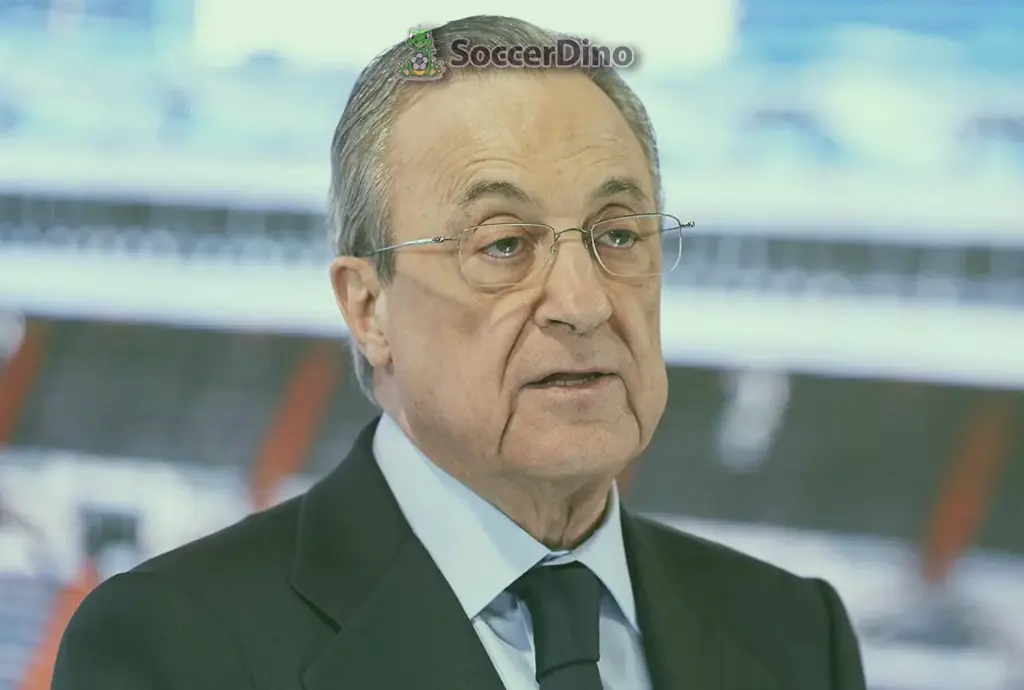
Real Madrid steps up pressure on UEFA over the Negreira Case
Real Madrid has formally asked UEFA to immediately resume the disciplinary proceedings related to the Negreira Case and to adopt what the club describes as appropriate disciplinary and reparatory measures. The request marks a new and significant step in one of the most sensitive institutional controversies in Spanish football, with the Madrid club arguing that recently identified evidence reinforces the indications of payments made by Barcelona to José María Enríquez Negreira, the former vice-president of the Technical Committee of Referees of the Royal Spanish Football Federation.
In a statement released this Wednesday, Real Madrid said it had informed UEFA of the existence of relevant evidence which, according to the club, strengthens in a conclusive manner the indications that have surrounded the case since it first became public. For the Madrid side, the matter is no longer only a question of judicial clarification within Spain, but also a sporting integrity issue that directly concerns European football and the credibility of the competitions organised under UEFA authority.
The club maintains that the alleged payments made by Barcelona to Negreira were not isolated, incidental or sufficiently justified, but rather part of what it describes as a prolonged and opaque pattern. According to Real Madrid, these payments were made over an extended period, lacked any verifiable justification and were channelled through different corporate structures linked to the former refereeing official. That, in the view of the Madrid club, raises questions that go beyond ordinary administrative irregularities and enter the field of disciplinary responsibility in sport.
A case that continues to shake Spanish football
The Negreira Case has been one of the most damaging and controversial episodes for the image of Spanish football in recent years. At the centre of the dispute are payments made by Barcelona to José María Enríquez Negreira during a period in which he held a senior position within the refereeing structure of Spanish football. Although Barcelona has repeatedly defended its position and denied having obtained sporting advantages through those payments, the case has continued to generate legal, institutional and reputational consequences.
For Real Madrid, the central issue is not only whether the ongoing criminal proceedings eventually determine the existence of criminal liability. The club argues that, in the sporting sphere, the available facts are serious enough to justify a firm response from UEFA. In other words, Real Madrid is separating the judicial timeline from the disciplinary timeline, insisting that football institutions have their own duty to protect the integrity of competitions even while courts continue to examine the case.
This distinction is at the heart of the statement issued by the Madrid club. Real Madrid says it does not intend to replace the work of state judicial bodies, nor does it seek to anticipate the criminal classification of the facts under investigation. However, it believes that UEFA has a responsibility to act within its own disciplinary framework when the credibility of competition, refereeing neutrality and public trust in football are at stake.
Real Madrid points to a systemic risk for competition integrity
One of the strongest elements of Real Madrid's position is the claim that the facts represent a systemic risk of the utmost seriousness to the integrity of football competitions. The club argues that payments allegedly made to a senior refereeing official, particularly over a long period and without clear justification, are incompatible with the principles that must govern professional sport.
From Real Madrid's perspective, the problem is not limited to whether a specific match was influenced or whether a particular decision can be traced back to external pressure. The wider concern, according to the club, is that the existence of a financial relationship between a major club and a senior figure in the refereeing structure could create an environment of suspicion, imbalance and undue influence. In elite football, where competitive margins are often narrow and where refereeing decisions can have major sporting and financial consequences, the appearance of neutrality is almost as important as neutrality itself.
That is why Real Madrid frames the issue as a matter of competitive equality, neutrality, impartiality and the unpredictability of sporting results. These are not abstract principles. They are the foundation on which trust in football rests. Supporters, clubs, players, sponsors and governing bodies all depend on the belief that matches are decided on the pitch, under the same rules, without hidden influence over the mechanisms that regulate the game.
According to the Madrid club, the alleged structure of payments undermines that belief. Real Madrid considers that the situation is incompatible with the values that UEFA is expected to defend and argues that allowing the matter to remain unresolved for too long risks damaging the authority of football institutions themselves.
UEFA urged to resume its disciplinary process
Real Madrid's request is directed specifically at UEFA, with the club asking European football's governing body to resume the disciplinary proceedings immediately. The Madrid club believes the existence of new or relevant evidence requires UEFA to re-examine the case within its own regulatory framework and to consider the adoption of measures that go beyond passive observation of the judicial process in Spain.
The use of the terms disciplinary and reparatory measures is important. Real Madrid is not merely asking UEFA to issue a symbolic statement or to monitor developments. The club is requesting concrete action, although it leaves the exact nature of those measures to UEFA's assessment. In practical terms, this means Real Madrid wants the European governing body to determine what steps are necessary to safeguard the integrity, transparency and proper functioning of its competitions.
The Madrid club argues that the continuation of the current situation is unacceptable. In its view, every additional period of uncertainty deepens the reputational damage caused by the case. Football depends heavily on public confidence, and when doubts persist around refereeing structures, the effect reaches far beyond the clubs directly involved. It affects the perception of domestic titles, European participation, institutional independence and the credibility of decision-making bodies.
Real Madrid's message is therefore both legal and political in a sporting sense. Legally, the club says there is enough material to justify UEFA action. Institutionally, it is pressing the governing body to show that it is prepared to defend competition integrity even when the case involves one of the most powerful clubs in European football.
The importance of UEFA's role
UEFA's position in this matter is particularly relevant because European competition is built on the assumption that all participating clubs meet standards of integrity, transparency and regulatory compliance. When a club involved in European football is linked to allegations concerning payments to a senior refereeing official, the issue naturally becomes broader than a domestic dispute.
Real Madrid is effectively arguing that the case cannot be treated only as an internal Spanish matter. The club believes the potential consequences for European football are serious enough to require UEFA intervention, especially if the alleged conduct could be considered damaging to the reputation or integrity of competitions under its jurisdiction.
This is also why the request for reparatory measures carries weight. In sporting law, reparatory measures may be understood as actions designed not only to punish wrongdoing, but also to restore balance, credibility or institutional trust. Real Madrid appears to be asking UEFA to consider whether the damage allegedly caused by the case requires a response capable of repairing, or at least addressing, the harm done to the image of the competitions.
At the same time, the club is careful to state that it is not asking UEFA to interfere with the Spanish courts. This is a significant point because disciplinary proceedings and criminal proceedings operate under different standards, objectives and timelines. A court may need to establish criminal responsibility according to strict legal criteria, while a sporting body may assess whether conduct violates regulatory duties, ethical principles or competition integrity rules.
Barcelona remains at the centre of a major reputational battle
For Barcelona, the Negreira Case remains one of the most damaging controversies surrounding the club's modern history. Beyond the legal questions, the case has created a reputational challenge that continues to follow the Catalan club in Spain and across Europe. Even without a final judicial outcome, the existence of the investigation and the continued institutional pressure from Real Madrid keep the matter firmly in the public debate.
The rivalry between Real Madrid and Barcelona adds another layer of intensity to the case. These are not only the two most powerful clubs in Spanish football, but also global institutions whose conflicts are followed far beyond Spain. Any dispute between them immediately takes on a broader dimension, especially when the subject concerns refereeing, competition integrity and the legitimacy of sporting success.
Real Madrid's latest move ensures that the matter will not fade quietly while the judicial process continues. By formally addressing UEFA and calling for the disciplinary proceedings to resume, the Madrid club is attempting to keep the case active in the European institutional arena. It is also sending a message that, in its view, the facts already known are serious enough to demand a sporting response regardless of how long the courts take to reach conclusions.
A dispute that goes beyond club rivalry
Although the Real Madrid and Barcelona rivalry inevitably shapes the public perception of the case, the substance of the issue goes beyond the historic tension between the two clubs. At stake is the question of how football authorities should respond when the integrity of refereeing structures is called into question. The credibility of competitions depends not only on punishing proven wrongdoing, but also on ensuring that the systems surrounding matches are transparent, independent and trusted.
Real Madrid is presenting the case as a test for the institutions that govern football. The club believes that the alleged payments to Negreira, due to their duration, opacity and connection to a former senior refereeing official, cannot be treated as a minor administrative matter. In its view, the facts point to a structural problem that requires a proportionate institutional response.
The Madrid club also argues that the persistence of the situation harms the credibility of football's leaders. This is a particularly strong accusation, because it suggests that inaction or excessive delay could be interpreted as institutional weakness. For Real Madrid, a firm and immediate response is necessary not only because of the facts under investigation, but also because of the message that football authorities send when confronted with a case of this scale.
In modern football, integrity issues are not secondary matters. Clubs compete for titles, qualification places, prize money, sponsorship value and global prestige. Any suspicion that the competitive framework may have been compromised can have long-term consequences. That is why Real Madrid is asking UEFA to treat the case as an urgent sporting matter rather than waiting indefinitely for the conclusion of criminal proceedings.
Real Madrid continues as a private complainant
In the same statement, Real Madrid recalled that it is participating in the ongoing criminal proceedings as a private complainant. The club said it will continue to take whatever actions it considers necessary at each stage of the process. This confirms that the Madrid club intends to remain active on both fronts: the judicial process in Spain and the disciplinary route within football institutions.
By maintaining its role in the criminal proceedings, Real Madrid keeps direct involvement in the legal development of the case. By asking UEFA to resume disciplinary action, it also increases pressure on football's governing bodies to take responsibility for the sporting consequences of the matter. The combination of these two paths shows that the club is pursuing a long-term strategy rather than a one-off public statement.
The outcome of Real Madrid's request now depends on UEFA's assessment of the material presented and of its own disciplinary powers. The European governing body will have to determine whether the information provided by the Madrid club is sufficient to justify reopening or accelerating disciplinary steps, and whether any measures should be adopted before the Spanish judicial process reaches its final conclusion.
A case that continues to test football's credibility
The Negreira Case remains far from closed. For Real Madrid, the latest evidence it says it has presented to UEFA strengthens the need for immediate institutional action. For Barcelona, the continuation of the case means ongoing scrutiny and reputational pressure at a time when the club is already operating under intense sporting, financial and political attention.
What makes the matter particularly sensitive is the nature of the allegations. Football can survive controversies involving transfers, finances, internal politics or sporting disputes, but questions surrounding refereeing integrity strike at the core of the game. When the neutrality of the refereeing environment is questioned, every result, every title race and every decisive moment can become part of a wider debate about fairness.
Real Madrid's position is clear: UEFA should not wait passively for the courts to conclude before acting within the sporting framework. The club believes the available evidence is serious enough to require disciplinary attention and possible reparatory measures designed to protect the integrity of competitions.
Whether UEFA decides to act immediately or adopts a more cautious approach, the pressure surrounding the case is likely to continue. Real Madrid has made it clear that it considers the matter incompatible with the basic principles of fair competition, and its latest request ensures that the Negreira Case remains one of the most important institutional questions facing Spanish and European football.