José Mourinho has started his second spell as Real Madrid coach and has given his first interview since his return. In it, The Special One is notably kind to arch-rivals Barcelona.
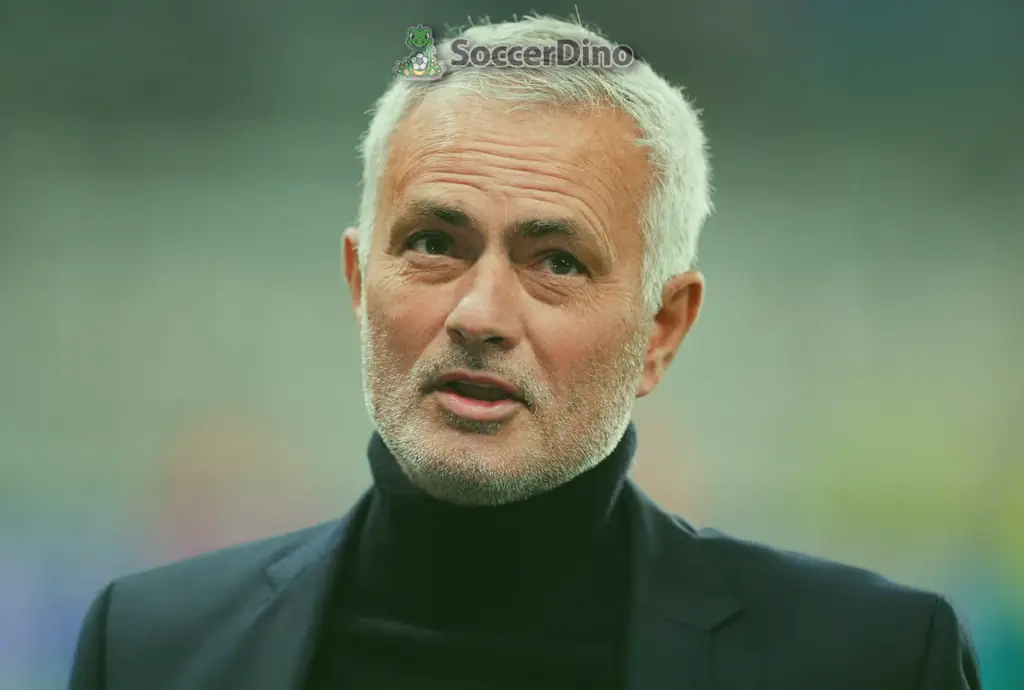
Mourinho returns to Real Madrid with a surprisingly warm message for Barcelona
José Mourinho has never been a figure associated with neutral reactions. Wherever he goes, the Portuguese coach tends to divide opinion, provoke debate and dominate the conversation around him. That is why his first interview since returning to Real Madrid has attracted so much attention, not only because of what he said about the Spanish giants, but also because of the unexpectedly respectful tone he used when speaking about Barcelona.
A little under two weeks ago, Mourinho was presented for the second time as Real Madrid coach, opening a new chapter at a club where he remains one of the most discussed managers of the modern era. His first spell in Madrid was intense, controversial, successful in parts and emotionally exhausting for everyone involved. It brought trophies, records, tactical battles and some of the most heated Clásicos ever seen between Real Madrid and Barcelona.
For many supporters, that period is still remembered through images of confrontation. Mourinho on the touchline, Pep Guardiola on the opposite bench, Cristiano Ronaldo and Lionel Messi leading two extraordinary teams, and every meeting between Madrid and Barcelona feeling like far more than a football match. It was sport, politics, pride, identity and rivalry compressed into ninety minutes.
Yet Mourinho, now back at the Santiago Bernabéu, chose not to reopen old wounds. Instead, in conversation with Vanity Fair, he looked back on Barcelona with a tone that may surprise those who only remember the conflict. The Portuguese coach made it clear that, despite his strong connection with Real Madrid, he does not carry resentment towards the Catalan club.
A personal connection with Barcelona that is often forgotten
One of the most interesting parts of Mourinho's reflection is that he reminded people of a chapter that is sometimes overlooked. Before becoming the manager who challenged Barcelona so fiercely from the Real Madrid dugout, he had already worked inside the Catalan club. Between 1997 and 2000, Mourinho was part of the Barcelona staff as assistant to Louis van Gaal.
That period came long before the image of Mourinho as The Special One had fully formed. He was still building his career, learning, observing and developing the ideas that would later shape his work at Porto, Chelsea, Inter Milan, Real Madrid and other major clubs. Barcelona was part of that journey, and Mourinho clearly does not treat those years as a minor footnote.
In the interview, he spoke warmly about life in the city and about what Barcelona meant to his family. He said that his family had an incredible time there and stressed that it was a genuinely important part of their lives. His children grew up in Catalonia, which gives the connection a personal dimension beyond football.
That matters because Mourinho is often viewed only through the lens of rivalry. To many Barcelona fans, he became the antagonist during the Guardiola era. To many Real Madrid supporters, he was the coach who restored competitive aggression against a Barcelona side that had dominated Spanish and European football. But Mourinho's own history is more layered than that. His relationship with Barcelona was not born in hostility. It was once professional, personal and formative.
Real Madrid love, but no bitterness towards Barcelona
Mourinho was also clear about where his strongest football affection now lies. He did not try to hide his love for Real Madrid. In fact, he described that bond as one of the reasons behind his return. For a coach who has worked at many of the biggest clubs in Europe, Real Madrid still carries a special weight.
However, what stood out was the balance of his message. Mourinho said he loves Real Madrid, but insisted that this does not mean he holds any bitterness towards Barcelona. In the context of his history, that is a notable statement. This is a coach whose name is still linked with some of the most tense moments in recent Clásico history, yet he now seems more interested in separating rivalry from resentment.
That distinction is important. Mourinho has always understood rivalry as part of elite sport. He has used it, fed it and sometimes pushed it to the limit. But in this interview, his tone suggests a more reflective version of the same man. The competitive edge is still there, especially when he talks about Real Madrid being the best club in the world, but the personal hostility appears absent.
There is also a sense that time has softened the way he looks back at those years. The Clásicos from his first spell in Madrid were played under enormous pressure. Every decision was analysed, every gesture was magnified and every result shaped the wider story of Spanish football. Looking back now, Mourinho seems able to separate the intensity of the moment from the broader respect he has for Barcelona as an institution.
The old criticism of defensive football returns
Mourinho also used the interview to address one of the labels that has followed him for much of his career: the idea that his teams are too defensive. It is a criticism that has appeared repeatedly, especially in recent years, and one that the Portuguese coach clearly rejects.
His argument was direct. Barcelona, he said, are often seen as the team of spectacular football, the side associated with attacking beauty and goals. But Mourinho pushed back against that narrative by pointing to his Real Madrid team from the 2011/12 season. That side scored 121 goals in La Liga and finished with 100 points, numbers that remain central to any discussion about the most productive teams in Spanish football history.
For Mourinho, those figures are not just statistics. They are evidence against a simplified reading of his career. He has often argued that people reduce his football to defensive structure, discipline and pragmatism, while ignoring the attacking power of some of his best teams. His Real Madrid side was explosive, direct, fast and ruthless in transition. It may not have played with the same aesthetic identity as Guardiola's Barcelona, but it was devastating in its own way.
The 2011/12 Real Madrid team was built around speed, verticality and efficiency. Cristiano Ronaldo, Karim Benzema, Gonzalo Higuaín, Mesut Özil, Ángel Di María and others gave Mourinho an attacking unit capable of punishing opponents with extraordinary force. Madrid did not simply defend and wait. They attacked with purpose, often turning defensive recoveries into goals within seconds.
That is why Mourinho still returns to that season when defending his record. For him, it proves that spectacular football can take different forms. Barcelona had possession, combinations and positional control. Real Madrid had intensity, acceleration and direct impact. Both approaches created memorable football, even if they were based on different principles.
A rivalry shaped by two footballing visions
The Mourinho versus Barcelona story was never only about two clubs. It was also about two ways of understanding football. Barcelona represented control, patience and technical superiority through possession. Mourinho's Real Madrid represented pressure, aggression, speed and the capacity to hurt opponents before they could recover their shape.
That contrast made the rivalry even more powerful. It was not simply a question of which team had better players. It was a clash of ideas. Every Clásico seemed to become a debate about what football should be. Was dominance measured by possession, territory and rhythm? Or could dominance also be expressed through efficiency, transitions and psychological strength?
Mourinho has always been comfortable living inside that debate. He does not need universal approval, and he has rarely chased it. His career has been built on winning, competing and creating teams that understand what each match requires. That mindset made him the perfect counterweight to Barcelona at the time, because he refused to accept that there was only one superior way to play.
Even now, his comments show that the old argument still matters to him. When he mentions the 121 goals and 100 points, he is not simply remembering a record. He is defending the identity of one of his greatest teams. He is saying that Real Madrid under his command was not just a reaction to Barcelona, but a historically powerful team in its own right.
Real Madrid first, Barcelona after
When asked about the best club in the world, Mourinho did not leave much room for interpretation. In his view, Real Madrid is the best club in the world. Barcelona, he added, is one of the best clubs in the world, but after Real Madrid.
It was classic Mourinho in tone: respectful, but still competitive. He praised Barcelona without placing them on the same level as Madrid. That is precisely the kind of sentence that reminds people that the old fire has not disappeared. Mourinho may speak kindly about Barcelona, but he remains Real Madrid through and through in this new stage of his career.
For Madrid supporters, that kind of message will likely be well received. They do not expect Mourinho to be neutral. They expect conviction, authority and a strong defence of the club. At the same time, his willingness to acknowledge Barcelona as one of the great clubs in world football adds maturity to the statement. It is not empty provocation. It is rivalry with hierarchy.
That balance may define the tone of his return. Mourinho understands the emotional weight of Real Madrid. He knows that every word matters, especially when Barcelona are involved. By praising the Catalan club while still placing Madrid above everyone else, he managed to sound respectful without losing the competitive edge that has always made him such a compelling figure.
The Clásico is different now
Mourinho also reflected on the current state of the Clásico and suggested that it no longer feels quite as spectacular as it did during his first spell in Madrid. That view will be shared by many who lived through the peak years of the rivalry between his Real Madrid and Guardiola's Barcelona.
At that time, the Clásico was arguably the biggest match in world football by a considerable distance. It had Lionel Messi and Cristiano Ronaldo at their peak. It had Guardiola and Mourinho, two managers with completely different personalities and footballing identities. It had Xavi, Andrés Iniesta, Sergio Busquets, Iker Casillas, Sergio Ramos, Xabi Alonso, Mesut Özil and many others. The quality was absurd, but so was the tension.
Mourinho compared that era to the great tennis rivalries involving Rafael Nadal, Roger Federer and Novak Djokovic. The comparison makes sense. Those tennis matches were not just sporting events; they felt like historic occasions. People watched them because they knew they were seeing greatness collide with greatness. Mourinho believes the same was true of the Clásico at its peak.
He said the world stood still, and that is not an exaggeration when applied to that period. Real Madrid against Barcelona was not only a Spanish event. It was watched everywhere. It shaped conversations in Europe, South America, Africa, Asia and beyond. Neutral supporters chose sides. Every game became part of a wider argument about Messi and Ronaldo, Guardiola and Mourinho, possession and transition, Barcelona identity and Madrid ambition.
The current Clásico still has enormous prestige. Real Madrid and Barcelona remain two of the biggest clubs in the world, and their meetings continue to attract global attention. But the specific combination of characters, tension and historical context from the early 2010s is difficult to recreate. Mourinho appears to understand that what happened then belonged to a particular moment in football history.
A more reflective Mourinho, but still unmistakably Mourinho
What makes the interview interesting is not that Mourinho has suddenly become soft or neutral. He has not. The competitive instinct remains clear in almost every answer. He still defends his record, still pushes back against criticism and still places Real Madrid above Barcelona. But there is a more reflective tone in the way he discusses the past.
At 63, Mourinho has lived through almost every type of football environment. He has been the young translator, the ambitious assistant, the Champions League winner, the Premier League disruptor, the Inter Milan hero, the Real Madrid fighter and the experienced coach trying to adapt to a changing game. His return to Madrid naturally invites comparisons with the man who first arrived at the Bernabéu more than a decade ago.
This version of Mourinho seems aware of the power of memory. He knows how people remember him. He knows the images that follow him. He knows that, for many, his first Real Madrid spell is inseparable from conflict with Barcelona. That is why his warm words about the Catalan club stand out. They add nuance to a story often told in black and white.
He can love Madrid without hating Barcelona. He can defend his own team without denying the greatness of a rival. He can remember the intensity of the old Clásicos while also recognising that they were part of something special. That may not be the Mourinho caricature many people prefer, but it is a more complete version of the coach.
A return that already carries emotional weight
Mourinho's second spell at Real Madrid will inevitably be judged by results. At a club like Madrid, sentiment only lasts for a short time. Supporters may celebrate his return, but they will expect trophies, authority and a team capable of competing at the highest level. The standards are brutal because the institution is built that way.
Still, his first interview has already set an interesting tone. Rather than returning with open hostility or dramatic declarations against old rivals, Mourinho has chosen a more measured approach. He has spoken with affection about Barcelona as a city and as part of his family history. He has defended the attacking quality of his Real Madrid side. He has praised the old Clásico era as something almost impossible to repeat. And, above all, he has reminded everyone that Real Madrid remains the club that moves him most deeply.
That combination of respect and rivalry is likely to define how his comeback is received. Barcelona fans may still see him as one of the great antagonists of their recent history, but even they will recognise that his words were not hostile. Real Madrid fans, meanwhile, will hear the message they wanted most: Mourinho is back because he loves the club and believes it stands above all others.
Whether this second chapter can match the drama of the first remains to be seen. Football has changed, the Clásico has changed and Mourinho himself has changed in some ways. But one thing remains exactly the same: when José Mourinho speaks, the football world listens.