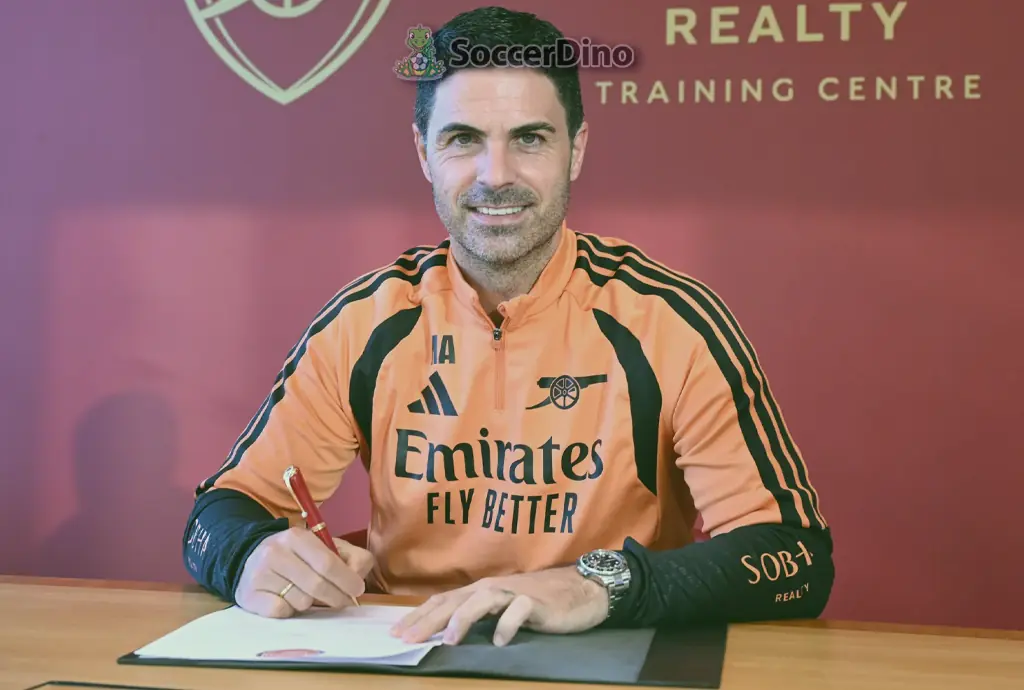
Mikel Arteta has signed a new Arsenal contract until 2030 after ending the club's 22-year Premier League title wait and leading them back among Europe's elite.
Mikel Arteta signs new Arsenal contract until 2030 after ending 22-year title wait
Mikel Arteta has committed his long-term future to Arsenal after signing a new contract that will keep him at the club until 2030. The Premier League side confirmed the agreement on Tuesday, rewarding the Spanish coach for overseeing one of the most important periods in the club's recent history and, above all, for guiding the Gunners to their first English league title in 22 years.
The renewal represents a major statement of confidence from Arsenal's hierarchy. Arteta has transformed the club from a side struggling for consistency into one capable of competing regularly for the biggest domestic and European honours. Last season's Premier League triumph finally ended a title drought that had lasted more than two decades, while Arsenal also reached the Champions League final, where they were beaten by Paris Saint-Germain.
In announcing the new deal, Arsenal made clear that they see last season's success not as the conclusion of a project, but as the beginning of a new phase. The club believe the foundations put in place under Arteta can lead to a sustained period of success rather than a single exceptional campaign.
"The new agreement reflects our shared belief in the progress we have made and that last season's success is the beginning of a special period in our history," Arsenal said in a statement.
Those words capture the direction the club has taken under the 44-year-old. Arteta has not only improved results, but has reshaped the identity of the team, created a younger and more competitive squad and restored belief among supporters who had waited years to see Arsenal return to the summit of English football.
Arteta rewarded after transforming Arsenal into title winners
Arteta arrived at Arsenal during the 2019/20 season after serving as Pep Guardiola's assistant at Manchester City. At the time, he was taking charge of a club that had endured an unstable period and was searching for a clear sporting direction.
The challenge was considerable. Arsenal were no longer regular title contenders and had fallen behind several Premier League rivals in terms of consistency, squad quality and results. Arteta was tasked with modernising the team while also restoring the standards associated with one of the most successful clubs in English football.
His first years in charge were not always straightforward, but Arsenal's board remained committed to the long-term project. The Spaniard gradually changed the squad, introduced a more demanding tactical structure and placed greater emphasis on intensity, positional discipline and collective responsibility.
The progress eventually became impossible to ignore. Arsenal returned to the Champions League, began competing seriously for the Premier League and finally converted that improvement into a title last season. Ending a 22-year wait for the championship represented a defining moment for both Arteta and the club.
It also changed the perception of his tenure. What had previously been viewed as a promising rebuilding project became a proven winning cycle. Arsenal were no longer simply improving; they had demonstrated that they could finish above the strongest teams in England over the course of a full league campaign.
The new contract until 2030 therefore provides continuity at a moment when the club are trying to establish themselves permanently among Europe's elite. Arsenal clearly believe Arteta remains the right coach to lead the next stage of that process.
Premier League title and Champions League final strengthened his position
Arteta's record at Arsenal now includes a Premier League title, an FA Cup and three Community Shields. He also guided the club to the Champions League final last season, another significant milestone in the team's development even though Paris Saint-Germain ultimately prevented them from lifting the trophy.
Reaching the final demonstrated how far Arsenal had progressed beyond the domestic level. Competing for the Champions League requires tactical adaptability, squad depth and the ability to handle high-pressure knockout matches against Europe's strongest teams. Arsenal showed they had reached that level, even if the final step proved beyond them.
The combination of winning the Premier League and reaching the Champions League final made last season particularly important. It showed that Arsenal's success was not restricted to one competition and that Arteta had built a team capable of challenging on multiple fronts.
That achievement also helps explain why the club moved to secure his future now. Elite coaches with a proven record are difficult to replace, and continuity can be especially valuable when a team has already established a clear identity. By extending Arteta's contract until 2030, Arsenal have removed any immediate uncertainty surrounding one of the central figures in their sporting project.
Arteta himself made clear that he remains deeply connected to the club and motivated by what can still be achieved.
"It is a privilege to commit my future to the club and to continue working with exceptional people who want the best for Arsenal. This club is unique, its character and the way it makes you feel, and I have a great sense of privilege knowing that our journey together will continue," he said.
Arteta believes Arsenal have only reached the beginning
Despite the trophies already won and the progress made, Arteta's message was focused more on the future than the past. The Basque coach believes Arsenal have only started to explore what the current group can achieve.
He spoke of the "special connection" he has developed with the club and the "memories that will last a lifetime", but also insisted that those achievements should not be viewed as the final destination.
That ambition is consistent with the way Arsenal have operated in recent seasons. The club have invested in strengthening the squad, improved the overall level of competition for places and built a team designed to remain competitive over several years rather than rely on a short-term peak.
The challenge now is to turn one successful season into sustained dominance. Winning a league title is extremely difficult, but defending it can be even harder. Rivals adapt, expectations rise and every opponent approaches the champions with added motivation.
Arsenal are already experiencing that pressure this season. They have made a strong start, but currently sit second in the Premier League, three points behind Manchester City. That situation highlights the level of competition Arteta's side continue to face.
The Gunners have nevertheless already added another trophy this season by winning the Community Shield, giving the squad an early reminder of the winning mentality Arteta wants to maintain.
Manchester City remain the main domestic benchmark
The relationship between Arteta's Arsenal and Manchester City has become one of the defining rivalries of recent Premier League seasons. Arteta learned alongside Guardiola at City before returning to Arsenal, and the two clubs have since become regular competitors at the top of the table.
Last season, Arsenal finally managed to finish ahead of City and end their long wait for the title. This campaign, however, Manchester City currently lead the standings by three points, ensuring that the battle is once again extremely tight.
That rivalry gives Arteta another reason to continue pushing the club forward. Arsenal can no longer be satisfied simply with returning to the Champions League or finishing among the leading sides. The standard has changed.
The objective is now to win major trophies regularly. That means competing with City across an entire league season, managing demanding European campaigns and maintaining a squad capable of responding to injuries, fixture congestion and periods of poor form.
Arteta's new deal suggests the club believe he is capable of meeting those expectations. It also gives him long-term security to continue shaping the squad according to his footballing ideas.
Strong connection with Arsenal goes back to playing career
Arteta's relationship with Arsenal did not begin when he became manager. The former midfielder spent four and a half seasons at the club as a player and finished his professional career with the Gunners in 2015/16.
That previous connection has played an important role in his identity as Arsenal coach. He already understood the culture of the club, the expectations of the supporters and the significance of restoring Arsenal to the top of English football.
Before joining Arsenal as a player, Arteta had enjoyed a varied career across several European leagues. He came through Barcelona's youth system and later represented Paris Saint-Germain, Rangers, Real Sociedad and Everton before moving to North London.
Those different experiences helped shape a footballing education that was later strengthened by his time working with Guardiola at Manchester City. By the time he returned to Arsenal as manager, Arteta had experienced different tactical environments and had worked closely inside one of the most successful coaching structures in English football.
His familiarity with Arsenal made his appointment particularly meaningful. Unlike an external coach arriving without previous ties to the club, Arteta already understood what Arsenal had once represented and what supporters expected the club to become again.
Highest win percentage in Arsenal history reflects scale of progress
Arteta currently holds the best win percentage of any manager in Arsenal history, a statistic that underlines the consistency the club have achieved under his leadership.
That figure is especially significant when placed alongside the level of opposition Arsenal have faced. The Premier League has become increasingly competitive, with several clubs possessing the financial resources and squad quality to challenge near the top.
Arteta has nevertheless managed to raise Arsenal's standards sufficiently for the club to compete regularly with those rivals. The team have become more difficult to beat, more controlled in possession and more aggressive without the ball.
There has also been a clear improvement in mentality. Arsenal have increasingly shown an ability to respond to setbacks, manage difficult matches and perform under pressure. Those characteristics were essential during last season's title-winning campaign.
The club's decision to extend Arteta's contract until 2030 therefore goes beyond rewarding one successful year. It reflects confidence in the overall trajectory of the team and in the structure created around the manager.
New contract brings stability ahead of next phase
Long-term managerial contracts do not guarantee success, but they can provide stability when a club already believes strongly in its sporting direction. Arsenal have now made it clear that Arteta remains central to that direction.
The 2030 agreement gives the manager time to continue developing younger players, refining the squad and competing for major trophies without immediate uncertainty over his position.
It also sends a message to the players. The core of Arsenal's current project is expected to continue under the same coach, with the same tactical philosophy and the same expectations.
For senior players considering their own futures, that stability can be important. For younger players, it provides a clear pathway within a system that has already demonstrated an ability to develop talent and compete at the highest level.
Arsenal's challenge now is to turn stability into sustained success. One Premier League title has ended a long period of frustration, but the club clearly believe there is much more to achieve.
Arteta appears to feel the same way. His decision to commit until 2030 reflects a belief that the current project still has significant room to grow and that Arsenal can continue competing for the biggest trophies in English and European football.
The immediate task is already clear. Arsenal are second in the Premier League, three points behind Manchester City, and will be determined to defend the crown they waited 22 years to regain. At the same time, the memory of last season's Champions League final will provide additional motivation to go one step further in Europe.
For Arteta, the new contract represents both recognition and responsibility. He has already restored Arsenal to the top of English football, created a team capable of competing in a Champions League final and built one of the strongest managerial records in the club's history.
Now, with his future secured until 2030, the focus shifts to what comes next. Arsenal have made clear that they believe last season was not the peak of the Arteta era, but the beginning of what they hope will become a prolonged period of success.