Cristiano Ronaldo could become the fifth-oldest player in World Cup history if he appears for Portugal at the 2026 tournament.
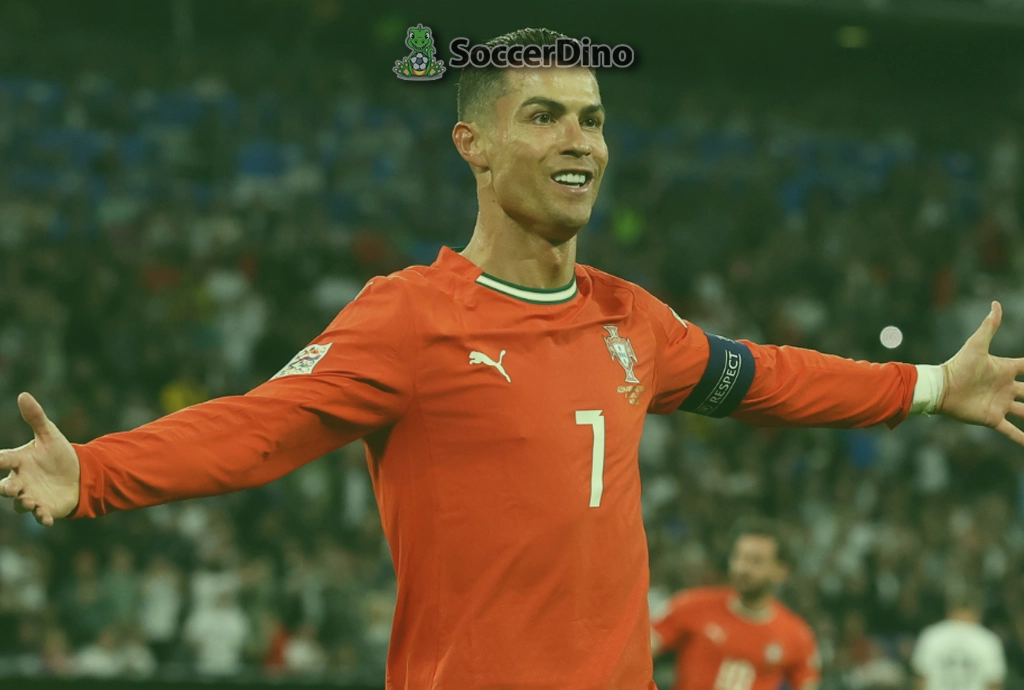
Cristiano Ronaldo on brink of another historic World Cup milestone
Cristiano Ronaldo is preparing to add yet another remarkable record to a career already filled with historic achievements. At 41 years old, the Portugal captain is close to entering a very exclusive group of footballers if he makes his debut at the 2026 World Cup, a moment that would once again underline the extraordinary longevity of one of the greatest players the game has ever seen.
For most footballers, simply reaching the World Cup is the peak of a career. For Ronaldo, however, the tournament in 2026 could represent something even more symbolic. After more than two decades at the highest level, the forward is still in position to compete on the biggest international stage, continuing a journey that has taken him from a teenage sensation at Sporting to a global icon with Portugal, Manchester United, Real Madrid, Juventus and Al Nassr.
If he steps onto the pitch at the 2026 World Cup, Ronaldo will become the fifth-oldest player in history to appear in a World Cup match. In doing so, he would move ahead of Peter Shilton, the legendary England goalkeeper, who played his final World Cup match in 1990 at the age of 40 years and 292 days.
That detail alone shows the scale of what Ronaldo is close to achieving. World Cups are usually defined by young stars, emerging talents and players at the physical peak of their careers. Ronaldo, however, continues to challenge the normal limits of age in elite football. His possible presence in 2026 would not only be another personal milestone, but also a powerful reminder of his discipline, professionalism and determination to remain relevant at the highest level.
The list of the oldest players in World Cup history is usually dominated by goalkeepers, a position where experience, positioning and decision-making often allow careers to last longer. That makes Ronaldo case even more impressive. As an outfield player, and especially as a forward, the physical demands are different. Movement, timing, acceleration, strength and finishing instinct all remain central to his role, even if his game has naturally evolved over the years.
Ronaldo is no longer the explosive winger who first appeared for Portugal in the early 2000s, but his transformation has been one of the keys to his longevity. Over time, he became a more direct goalscorer, then a penalty-box specialist, and later a forward who relies on positioning, aerial ability, experience and an exceptional understanding of decisive moments. That ability to adapt has helped him remain useful for club and country long after many players from his generation had already retired.
The 2026 World Cup could therefore become another landmark chapter in the career of the Portuguese captain. Ronaldo has already played in several editions of the tournament and has experienced different eras of the national team, from the early years when Portugal relied heavily on his individual brilliance to the more recent period in which the squad has become deeper, younger and more balanced.
Even so, his presence continues to carry enormous weight. For Portugal, Ronaldo is not only a goalscorer. He is a leader, a reference point and a player whose name alone changes the global attention surrounding the team. His influence extends beyond the pitch, especially in a dressing room that now includes players who grew up watching him dominate European and world football.
The record he is chasing also places him alongside some of the most experienced figures ever seen at a World Cup. Guillermo Ochoa, the Mexican goalkeeper, is also part of the list at 40 years old, having built a reputation as one of the most reliable World Cup performers of his generation. Craig Gordon, the Scotland goalkeeper, is another veteran name, at 43, while Luka Modric, Croatia midfield maestro, is also mentioned among the most experienced players at 40.
Each of those names tells a different story of resilience. Ochoa became known for producing outstanding performances on the World Cup stage. Gordon built a long career marked by quality and perseverance. Modric, like Ronaldo, has continued to compete at elite level despite the passing of time, relying on intelligence, technique and an extraordinary reading of the game.
At the very top of the list remains Essam El Hadary. The Egyptian goalkeeper holds the record as the oldest player ever to appear in a World Cup match. His final appearance came at the 2018 tournament in Russia, when he was 45 years and 161 days old. That mark remains out of reach for Ronaldo in 2026, but becoming the fifth-oldest player in World Cup history would still be a major achievement, particularly for an outfield player.
For Ronaldo, records have always been part of the story, but this one would feel different. It would not be about goals, trophies or individual awards. It would be about time, endurance and the rare ability to keep competing while football continues to change around him. Few players in the history of the sport have managed to remain so visible, so discussed and so influential for such a long period.
There will naturally be debate about his role if he is part of the Portugal squad at the tournament. Some will argue that his experience and finishing ability remain valuable assets. Others will focus on the need to give space to younger forwards. That discussion has followed Ronaldo for several years, but it has never fully removed him from the centre of attention.
What is undeniable is that his career continues to produce moments that seem almost impossible when viewed in historical context. To be preparing for a World Cup at 41 is already rare. To do so as one of the most famous footballers on the planet, still carrying expectation and scrutiny, makes the achievement even more striking.
The 2026 World Cup may therefore offer another opportunity for Cristiano Ronaldo to extend his legacy. Whether he plays a leading role, appears as an experienced option or simply adds another chapter to his international story, his presence would place him once again in the record books.
For a player who has spent his entire career chasing new limits, the possibility of becoming the fifth-oldest footballer ever to play at a World Cup feels like a fitting continuation. Ronaldo has already changed the way longevity is discussed in modern football, and in 2026, he may have the chance to prove once more that his career is still capable of producing history.