Italy are setting their sights high in the search for a new head coach. Paolo Maldini revealed on Wednesday that Carlo Ancelotti, as well as Pep Guardiola, has been approached. “The gap to the other top nations is all too clear.”
Italy approach Pep Guardiola and Carlo Ancelotti in ambitious coaching search
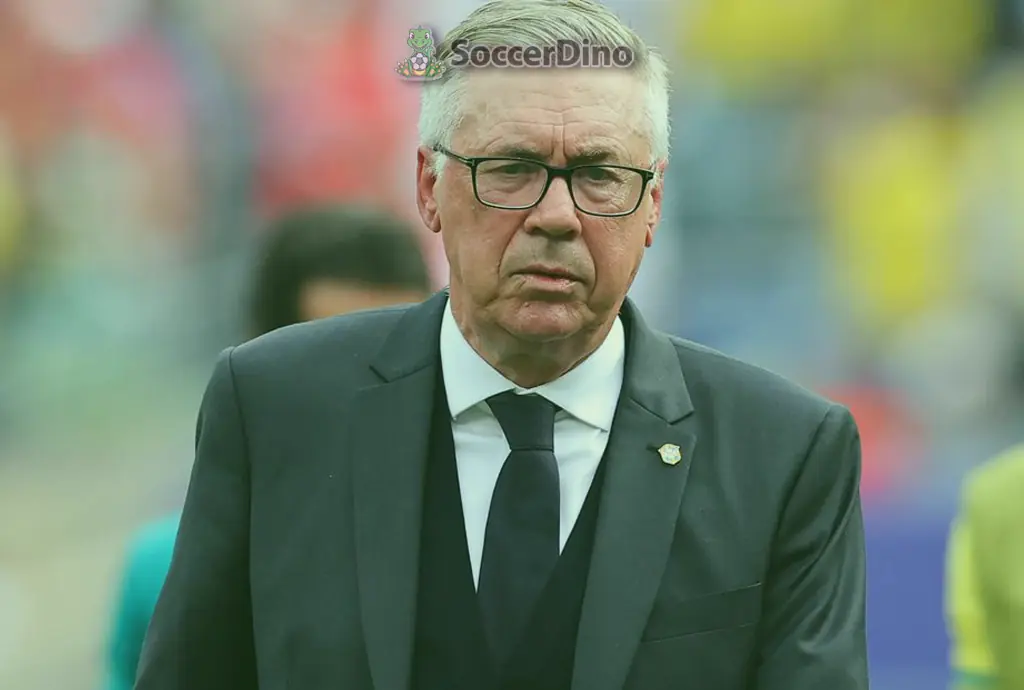
Italy have approached both Pep Guardiola and Carlo Ancelotti as part of an ambitious search for a new national team coach following another deeply disappointing failure to qualify for the World Cup.
The extent of the Italian Football Federation’s plans became clearer on Wednesday, when representatives from Serie A clubs gathered in Milan for a meeting attended by senior FIGC officials. Federation president Giovanni Malagò, technical director Paolo Maldini and adviser Leonardo later addressed the media and outlined a project designed to restore Italy to the highest level of international football.
Maldini confirmed that conversations had already been initiated with Guardiola and Ancelotti, two of the most successful coaches of the modern era. The former AC Milan and Italy defender explained that the federation wants to begin the process by speaking to the leading names in world football before considering other candidates.
“We have approached Guardiola and Ancelotti,” Maldini acknowledged. His comments made it clear that the FIGC is prepared to explore even the most difficult possibilities rather than immediately limiting the search to coaches who are currently available or actively seeking the position.
The approach reflects the scale of the crisis facing the Italian national team. Italy recently missed the World Cup for the third consecutive edition, extending a period of decline that has become increasingly difficult for one of football’s most historic nations to explain.
The failure led to the departure of Gennaro Gattuso and prompted the federation to reconsider not only the identity of the next coach, but also the entire sporting structure surrounding the national team.
Malagò stressed that the appointment of Maldini as technical director and Leonardo as adviser was deliberately completed before the search for Gattuso’s successor began. The FIGC president believes that the national team coach must operate within a broader and more coherent football project rather than being expected to solve every problem alone.
“It took me two weeks to convince Paolo and Leonardo,” Malagò said. “This project goes beyond simply appointing a national team coach. I deliberately reversed the usual order. Apparently, I can be quite persuasive.”
The decision to recruit Maldini and Leonardo gives the federation two figures with extensive experience at the highest level of European football. Both understand the pressure surrounding the Italian national team, while their reputations and international connections could prove important when approaching elite coaches.
Maldini’s role is expected to involve far more than selecting the next manager. The former defender will be asked to help define the sporting direction of the federation, improve communication between the national team and the domestic clubs and contribute to the development of a clearer pathway for young Italian players.
Leonardo, meanwhile, brings experience as a player, coach and senior football executive. His knowledge of international markets and his relationships across European and global football are viewed as valuable assets as Italy attempts to rebuild its sporting identity.
The immediate priority remains the appointment of a new head coach, and Guardiola is reportedly considered the preferred candidate. Italian media claim the Spanish manager has significant support within Serie A, where several club presidents would welcome the arrival of a coach whose ideas have influenced football across Europe.
Guardiola’s style would represent a major commitment to technical, possession-based football. His teams are known for controlling matches through intelligent positioning, aggressive pressing and a carefully constructed build-up from defence.
Appointing him would send a powerful message about the direction the FIGC wants to take. Italy would not simply be hiring a famous coach but attempting to transform the culture of the national team around a clearly defined style of play.
However, convincing Guardiola to accept the role would be extremely difficult. The national team calendar offers far less daily contact with players than club football, where he has traditionally built his success through constant training, detailed tactical preparation and long-term work with the same squad.
The FIGC would therefore need to present a project strong enough to persuade him that international football offers the conditions required to implement his ideas. The support of Serie A clubs could be important, particularly if they are willing to cooperate more closely with the federation over player development, physical preparation and tactical information.
Ancelotti represents a very different type of candidate. The Italian is one of the most decorated coaches in football history and has built a reputation for adapting his methods to the strengths of the players available to him.
Unlike Guardiola, whose teams are generally associated with a highly recognisable tactical identity, Ancelotti is renowned for flexibility, calm leadership and his ability to manage experienced dressing rooms.
His knowledge of Italian football and his understanding of the pressures surrounding the national team would make him an obvious option. He has coached some of the biggest clubs in Europe and has repeatedly demonstrated his ability to succeed in high-pressure knockout competitions.
The main obstacle is his current position with Brazil. Despite the national team’s disappointing World Cup campaign, Ancelotti appears likely to remain in charge and has publicly indicated that he views the elimination as the beginning of another phase rather than the end of his work.
“This is not the end, but a new beginning,” Ancelotti said after Brazil were knocked out of the tournament.
Those words suggest that the Italian may not currently be prepared to leave the Brazilian national team. Nevertheless, the FIGC’s decision to approach him demonstrates that the federation is willing to test every possibility before moving to more realistic alternatives.
Roberto Mancini and Andrea Pirlo are among the other names being discussed. Mancini would bring previous experience in the role and remains closely associated with Italy’s European Championship triumph, although a possible return could divide opinion after the manner of his earlier departure.
Pirlo would represent a younger and less experienced option. His appointment would carry greater risk, but his status as one of the most influential Italian midfielders of his generation and his understanding of the national team environment could appeal to those seeking a long-term project.
The federation’s search is therefore expected to involve two parallel considerations. The first is whether one of the most successful coaches in world football can be convinced to accept the position. The second is identifying the best alternative should those high-profile approaches prove unsuccessful.
Maldini’s comments suggest the FIGC does not want to rush the decision. The technical director appears determined to speak directly with leading candidates and evaluate their motivation, tactical vision and willingness to become involved in a much broader reconstruction.
The role will require more than preparing the senior team for qualification matches. Italy’s repeated absence from the World Cup has exposed deeper problems involving youth development, the number of Italian players receiving regular minutes in Serie A and the connection between the national teams at different age levels.
Malagò acknowledged that the gap between Italy and the leading football nations has become clear. Although the country continues to produce talented players and tactically strong coaches, the senior national team has failed to achieve the consistency required to qualify for the sport’s biggest tournament.
The FIGC believes that closing that gap will require structural reform rather than another temporary change on the bench. The next coach will be an important part of the process, but the federation does not want the entire project to depend on one individual.
Malagò spoke publicly about a six-year programme covering the European Championships in 2028 and 2032, as well as the 2030 World Cup. Maldini reportedly presented an even longer timeline to the Serie A presidents, suggesting that the rebuilding process could require eight to ten years.
That extended period reflects an acknowledgement that Italy’s problems cannot be corrected during a single qualifying campaign. The federation wants to establish a development model capable of producing results across several tournament cycles.
The immediate objective will be returning to major competitions, but the project is also expected to include changes to scouting, academy coordination, coaching education and the progression of young players into senior football.
One of the main concerns is the limited number of Italian footballers starting regularly for the strongest Serie A teams. Domestic clubs increasingly recruit players from across the world, leaving some young Italian prospects without the consistent playing time needed to develop at the highest level.
The federation cannot directly control the selection decisions of individual clubs, but it can attempt to improve cooperation and create incentives that make the development of Italian players more attractive.
Wednesday’s meeting in Milan was therefore significant because it brought the Serie A clubs and the FIGC together at a crucial moment. Any serious reform of Italian football will require support from the domestic league and its leading teams.
The club presidents will also want clarity about how the national team project could affect their players. Issues such as workload, medical information, international call-ups and the scheduling of training camps can only be managed effectively through regular communication.
The possible appointment of Guardiola could demand particularly close collaboration. His tactical methods require players to understand detailed positional principles, something that would be more difficult to teach during the limited training periods available in international football.
Ancelotti, by contrast, might be viewed as a more immediately adaptable option because of his ability to simplify structures and respond to the qualities of the squad. His experience working with elite players from different backgrounds would also help him manage the limited preparation time available to national team coaches.
Both candidates would bring enormous authority. After three consecutive World Cup failures, Italy need a coach capable of restoring confidence and creating a sense of direction around the national team.
The next appointment will also face intense pressure from the first match. Supporters are frustrated, the media will closely examine every selection and the federation can no longer afford another unsuccessful qualification campaign.
For that reason, the FIGC wants the new coach to have the personality required to manage expectations while rebuilding the squad. Tactical knowledge alone will not be enough. The position demands leadership, credibility and the ability to communicate a convincing vision for the future.
Maldini’s presence could help protect the coach from some of the external pressure. As technical director, he can act as a link between the bench, the federation and the public while taking responsibility for decisions that extend beyond individual matches.
His standing in Italian football also gives the project immediate legitimacy. Maldini represented the national team for many years and understands the emotional importance of the shirt to players and supporters.
Leonardo’s advisory role should provide further support in negotiations and strategic planning. Together, the pair are expected to examine coaching candidates, squad development and the wider technical organisation of the federation.
Malagò’s decision to create this structure before appointing the coach represents a break from the traditional approach, in which the manager is often selected first and then asked to shape the sporting project.
The FIGC president believes that reversing that order will create greater continuity. Coaches may come and go, but the federation wants the underlying strategy to remain in place over several years.
This continuity could be essential if the project really extends across the European Championships of 2028 and 2032 and the World Cup in 2030. Italy want to avoid starting again from the beginning every time results force a change of coach.
The next manager will therefore be expected to accept an existing framework and work closely with Maldini and Leonardo. That relationship could prove decisive when the federation evaluates the candidates.
A coach with an impressive record but little interest in the wider development programme may be considered less suitable than someone prepared to contribute to long-term reform.
Guardiola’s reputation for influencing entire football organisations could make him especially attractive. His impact at previous clubs extended beyond the first team, affecting academy methods, recruitment profiles and the technical language used throughout the institution.
Whether such an influence could be reproduced within a national federation remains uncertain, but the FIGC appears willing to explore the possibility.
Ancelotti’s strengths would be different but equally valuable. His diplomatic approach, emotional intelligence and ability to unite dressing rooms could help Italy recover from years of disappointment and internal tension.
The fact that both coaches were contacted also demonstrates that the federation is not limiting itself to a single tactical philosophy. The priority appears to be finding a leader of exceptional quality who can give credibility to the reconstruction.
Italian football still possesses significant resources, a powerful domestic league and a strong coaching tradition. The challenge is turning those advantages into a competitive national team capable of consistently reaching the final stages of major tournaments.
The failure to qualify for three consecutive World Cups has damaged Italy’s international standing and deprived an entire generation of players of the opportunity to compete on the biggest stage.
It has also increased the urgency surrounding the Euro 2028 qualification campaign. The next coach will be expected to achieve immediate results while simultaneously laying the foundations for the longer-term project described by Malagò and Maldini.
That balance will not be easy. A national team in crisis often prioritises short-term stability, but the FIGC now insists that qualification alone will not be enough to resolve the underlying problems.
The federation wants Italy to become a leading football nation again, capable of producing technically strong players, playing with a recognisable identity and entering major tournaments with genuine confidence.
The approaches to Guardiola and Ancelotti are the first public indication of how ambitious that plan may be. Neither appointment will be straightforward, and there is no guarantee that either coach will accept the role.
Nevertheless, Maldini believes it is necessary to begin by speaking with the best. Only after those conversations will the federation decide whether to advance with one of the leading candidates or turn towards Mancini, Pirlo or another alternative.
Further discussions are expected in the coming days as the FIGC attempts to determine which coaches are genuinely interested and what conditions would be required to secure their commitment.
The federation will also need to move quickly enough to give the eventual appointment sufficient time to evaluate the squad, meet players and prepare for the next international fixtures.
For now, Guardiola remains the name generating the greatest excitement in the Italian media, while Ancelotti offers a prestigious alternative with a deep connection to the country’s football tradition.
Whatever the final decision, the message from the FIGC is clear. Italy do not see the appointment as a simple replacement for Gattuso, but as the first major decision in a reconstruction that could shape the national team for the next decade.