Dusan Tadic returns to the Eredivisie at 37 after signing for NEC Nijmegen, bringing experience, creativity and leadership to the Dutch club.
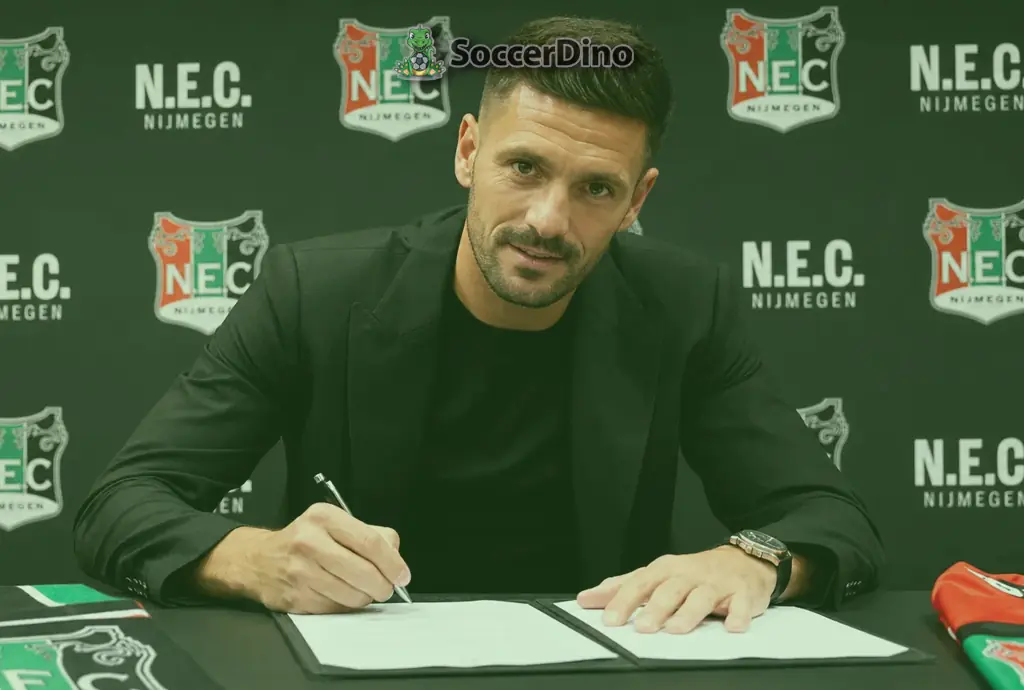
Dusan Tadic returns to the Eredivisie with NEC Nijmegen
Dusan Tadic has completed a return to Dutch football after signing for NEC Nijmegen, bringing one of the most recognisable players of the modern Eredivisie era back to the competition at the age of 37. The experienced Serbian winger arrives after spending the previous year with Al Wahda in the United Arab Emirates and will now begin another chapter in a country where he produced some of the finest football of his career. His decision to join NEC is an important move for both the player and the club, with the Nijmegen side adding technical quality, leadership and considerable international experience to their squad.
Tadic is already extremely familiar with Dutch football, having previously represented Groningen, Twente and Ajax. His first spell in the Netherlands helped establish him as an intelligent and creative attacking player, capable of scoring goals, providing assists and influencing matches from several positions. He later returned to the Eredivisie with Ajax and became one of the central figures in a highly successful period for the Amsterdam club. His performances in domestic and European competition made him one of the most respected foreign players to have appeared in the league.
Although Tadic is now approaching the final stage of his playing career, NEC believe he can still make an important contribution on the pitch. His game has never depended entirely on speed or physical power, which may allow him to remain effective despite his age. The Serbian’s greatest strengths have traditionally been his awareness, technique, passing and ability to make the correct decision in attacking areas. Those qualities can be particularly valuable in matches where NEC are required to break down compact defences or retain possession under pressure.
The move also gives NEC a player who understands the tactical demands of the Eredivisie and should therefore require less time to adapt than someone arriving in the Netherlands for the first time. Tadic knows the style of football, the stadiums, the media attention and the expectations surrounding the competition. He is also familiar with the technical nature of Dutch football, where attacking players are expected to combine intelligently, move between positions and contribute to the construction of attacks. That experience could help him settle quickly and begin influencing the team from the opening weeks of the season.
His role is likely to extend beyond his individual performances. NEC have recruited a player who has spent many years competing at the highest level and who can guide younger members of the squad through difficult periods. Tadic has played in demanding environments, represented major clubs and carried responsibility for both club and country. His professionalism in training, preparation for matches and understanding of tactical instructions could therefore become valuable examples for less experienced teammates.
Tadic began his senior career with Vojvodina in Serbia before moving to Groningen, where he first attracted widespread attention outside his homeland. His creativity and consistency in the Eredivisie earned him a transfer to Twente, where he continued to develop into one of the league’s leading attacking players. Those performances later opened the door to the Premier League, with Southampton bringing him to England. He spent several seasons there and demonstrated that his technical qualities could also be effective in a faster and more physically demanding competition.
His move to Ajax marked the beginning of the most celebrated period of his career. Tadic became a leader in the dressing room and a key figure in an attacking team that gained admiration across Europe. He was capable of operating from the wing, behind the striker or as a false nine, giving his coaches several tactical options. His ability to create chances, combine in tight spaces and remain calm in decisive moments made him one of the first names on the team sheet.
At Ajax, Tadic was valued not only for his statistics but also for the personality he brought to the side. He demanded high standards, regularly accepted responsibility and was often involved in the most important attacking moments. His leadership became particularly significant in a squad containing several young players who were still learning how to handle the pressure of domestic title races and European knockout football. That same mentality is one of the main qualities NEC will hope he can now bring to Nijmegen.
After leaving Dutch football, Tadic continued his career with Fenerbahçe before moving to Al Wahda. Those experiences allowed him to compete in different football cultures and further increased the range of knowledge he can now bring back to the Eredivisie. Playing in Turkey required him to deal with intense pressure and passionate expectations, while his time in the United Arab Emirates offered another type of challenge. Despite moving between leagues, he remained recognised for his ability to influence attacking play through intelligence rather than relying only on physical explosiveness.
NEC’s decision to sign him represents a clear statement of ambition. The club are not simply adding a famous name for publicity but bringing in a player who can potentially improve the quality of their football. Tadic can help the team maintain possession, deliver set pieces and create opportunities for the forwards. His experience may also prove decisive in close matches, particularly when NEC need someone capable of slowing the game down, drawing fouls or identifying spaces that younger players might overlook.
There will naturally be questions about how frequently he can play at 37 and whether he can continue to handle the physical demands of a full Eredivisie campaign. NEC will probably need to manage his workload carefully, particularly during periods containing several matches in a short space of time. Tadic may not be expected to complete every minute of every fixture, but that does not mean his influence will be limited. Even when used selectively, his technical quality and understanding of the game could make him extremely effective.
The coaching staff will now have to determine the position in which he can provide the greatest benefit. Tadic has spent much of his career starting from the left, but his lack of dependence on pace means he can also operate centrally, where his passing and vision may be even more valuable. He could play behind a striker, move between midfield and attack or act as an experienced forward capable of linking the team’s possession. His flexibility should allow NEC to use him differently depending on the opposition and the state of each match.
For the club’s younger attackers, training alongside Tadic could become an important part of their development. He has accumulated knowledge from several leagues and understands the details that separate promising players from consistent senior professionals. His movement before receiving the ball, the timing of his passes and his ability to protect possession are all areas from which teammates can learn. NEC will hope his presence raises the standards of the entire attacking unit rather than simply adding another option to the starting line-up.
The return is also likely to be welcomed by Eredivisie followers who remember his previous spells in the competition. Tadic built a strong connection with Dutch football and became associated with some of the league’s most entertaining attacking teams. Seeing him back in the Netherlands, this time wearing the colours of NEC, adds another point of interest to the new season. His meetings with former clubs will attract particular attention, especially when NEC face Ajax, Groningen or Twente.
For Tadic, the transfer offers the chance to return to an environment in which he has always appeared comfortable. Rather than ending his career far from the European spotlight, he has chosen a competitive league where his performances will once again be followed closely. The move suggests that he still believes he can contribute at a meaningful level and is not returning merely because of his reputation. NEC will expect him to compete, lead and help the team achieve its objectives.
The signing could also change the level of expectation surrounding NEC. Supporters will naturally be excited by the arrival of a player with Tadic’s career and may hope he can immediately transform the team’s attacking play. However, the responsibility cannot rest entirely on one veteran footballer. His success will depend on how well the team is structured around him, how effectively his teammates respond to his movements and whether the club manages his physical condition throughout the season.
Tadic’s experience should nevertheless give NEC greater control in important moments. Matches in the Eredivisie can become open and unpredictable, and a player capable of managing the rhythm can be extremely valuable. The Serbian can recognise when to accelerate an attack and when to retain possession, helping his team avoid unnecessary risks. He is also accustomed to playing under pressure and should not be intimidated by difficult away matches or high-profile opponents.
His set-piece delivery may provide another significant weapon. Tadic has long been known for his ability to create danger from corners, free kicks and wide positions. NEC could benefit from having a player capable of consistently delivering accurate balls into the penalty area, particularly in matches where chances from open play are limited. His composure from the penalty spot may also give the team another reliable option in decisive situations.
The Serbian’s return completes an unusual career circle. After beginning in Serbia and establishing himself in the Netherlands, he moved to England, returned to the Eredivisie, continued to Turkey and the United Arab Emirates, and has now chosen Dutch football once again. Each stage has added something different to his game and his understanding of the sport. NEC will hope that the complete version of Tadic, shaped by years of elite experience, can now make a substantial contribution in Nijmegen.
The coming weeks will reveal how quickly he is integrated into the squad and whether he is ready to play an immediate role. The club will assess his fitness before determining how many minutes he can handle during the opening matches. Whatever his initial involvement, the arrival of Tadic has already increased interest around NEC and given the team one of the most experienced attacking players in the division.
At 37, Tadic no longer represents a long-term investment, but his value should be measured by the quality, leadership and knowledge he can provide now. NEC have secured a player who knows the Eredivisie, understands the demands of high-level football and remains capable of producing decisive moments. For Tadic, the move offers an opportunity to return to the league where he became a star and to demonstrate that his influence on Dutch football is not yet finished.