The Portugal squad for the World Cup contains no surprises. Head coach Roberto Martínez has largely stuck with the group that won the Nations League last year. Cristiano Ronaldo, 41, is, as so often, the absolute figurehead of the 27-man squad, from which one player still has to be cut.
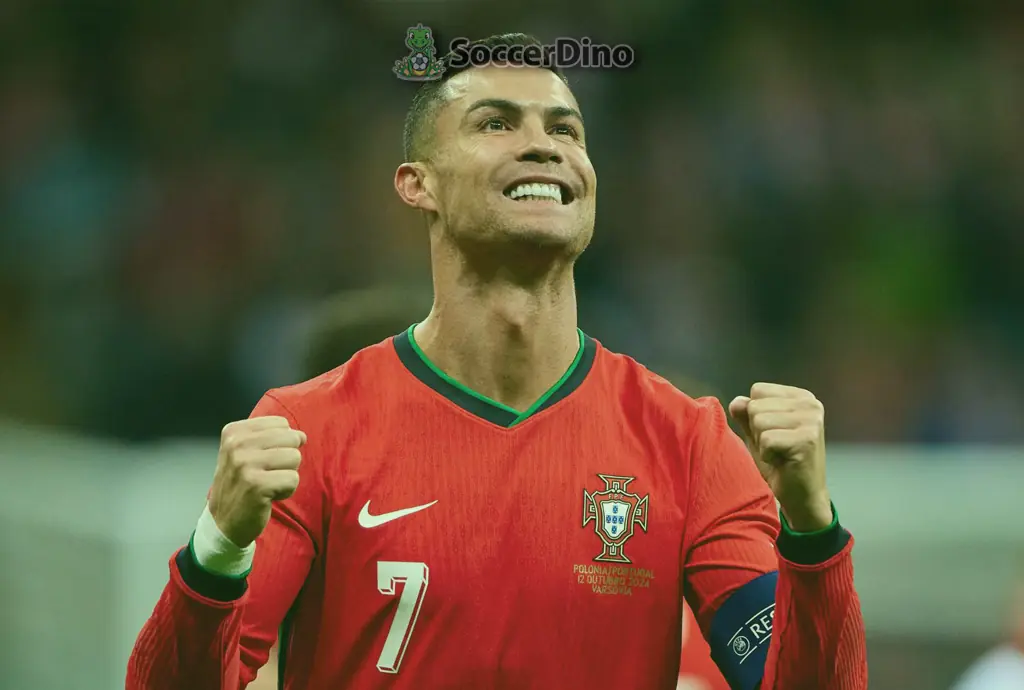
Portugal announce star packed World Cup squad as Ronaldo prepares for historic sixth appearance
Portugal head into the World Cup with a squad full of major names, experience, technical quality and attacking options, as Roberto Martínez once again places his trust in the core group that has carried the national team through recent years. There are no major surprises in the selection, with the Portuguese coach choosing continuity over revolution and keeping faith with many of the players who helped the country win the Nations League last year.
The biggest name, inevitably, is Cristiano Ronaldo. At 41, the Al-Nassr forward is preparing for what would be his sixth World Cup, a historic achievement that underlines the remarkable longevity of one of the greatest players football has ever seen. Ronaldo has already made history by scoring in every World Cup he has played, but there remains one missing chapter in his extraordinary international career. Despite all the goals, all the records and all the memorable nights in a Portugal shirt, he has never managed to take his country to a World Cup final.
That ambition will now return for what may be his final opportunity on the biggest stage of all. Ronaldo is no longer the explosive young winger who first appeared at major tournaments, but his influence inside the Portugal squad remains enormous. He is still the symbolic leader, still the player who attracts the most attention and still a forward capable of deciding matches inside the penalty area. For Martínez, the challenge will be to use that experience without making the team too dependent on one figure.
The situation also carries a wider historical context. Lionel Messi is also expected to reach a sixth World Cup, which means that two players who have defined football for almost two decades could once again share the same global stage. For Portugal, however, the focus is not on comparisons. The focus is on building a balanced team around a generation that combines old leadership with new energy.
That balance is visible throughout the squad. Bruno Fernandes remains one of the central figures in midfield and attack, bringing creativity, work rate, risk taking and leadership from Manchester United. Bernardo Silva offers control, intelligence and tactical flexibility, while Vitinha and João Neves, both from Paris Saint-Germain, give Portugal a modern midfield profile based on mobility, pressure resistance and technical security. With Rúben Neves also included, Martínez has several ways to shape the centre of the pitch depending on the opponent and the game state.
The presence of João Neves is particularly important. He represents the younger face of Portuguese football, a midfielder with intensity, personality and the ability to play under pressure. Alongside Vitinha, he gives Portugal a strong Paris Saint-Germain connection in the middle, which could be valuable in terms of rhythm, understanding and tactical chemistry. Add Bruno Fernandes and Bernardo Silva to that mix, and Portugal have one of the most technically gifted midfields in the tournament.
In attack, the options are also strong. Rafael Leão brings speed, power and one on one threat from the left, Pedro Neto adds directness and Premier League intensity, Francisco Trincão offers creativity from wide areas, and Francisco Conceição, now at Juventus after his earlier spell connected to Ajax, gives Martínez another unpredictable and aggressive attacking option. Gonçalo Ramos remains a natural striker alternative, while João Félix and Gonçalo Guedes add versatility across the front line.
This depth means Portugal do not need to play in only one way. They can control possession with technical midfielders, attack quickly through wide forwards, press high with energetic players or look for Ronaldo in decisive moments. That variety could be one of the main strengths of the team, especially in a tournament where tactical flexibility often becomes essential after the group stage.
The defensive line also contains familiar and reliable names. Rúben Dias remains the defensive leader, a centre-back with authority, experience and elite level habits from Manchester City. Nuno Mendes gives Portugal one of the most explosive left-backs in European football, while João Cancelo, Diogo Dalot and Nélson Semedo offer different solutions in the full-back positions. Gonçalo Inácio, Renato Veiga and Tomás Araújo provide depth and youth in central defence, giving Martínez several possible combinations.
One of the most interesting details of the squad is the decision to call up four goalkeepers. Diogo Costa, José Sá, Rui Silva and Ricardo Velho have all been included, but because the squad currently contains 27 players, one name will still have to be removed before the final list is confirmed. It appears likely that one of the goalkeepers could be the player left out, although Martínez may still use the preparation period to assess physical condition, tactical needs and possible injury concerns before making the final cut.
Diogo Costa is expected to remain the main option in goal. The FC Porto goalkeeper has been a regular presence for Portugal and offers strong distribution, confidence in build-up play and experience in high pressure matches. José Sá brings Premier League experience, Rui Silva offers another reliable option, and Ricardo Velho has been rewarded with a place in the wider group after his development in recent seasons.
Portugal have been drawn in Group K, where they will face DR Congo, Uzbekistan and Colombia. On paper, Portugal will be seen as one of the favourites to progress, but tournament football rarely allows room for complacency. DR Congo can bring physical intensity and athletic power, Uzbekistan are capable of being organised and difficult to break down, and Colombia have enough quality, experience and South American competitive edge to test any European side.
Before the tournament, Portugal will continue their preparation with friendly matches against Chile on 6 June and Nigeria on 10 June. Those games should give Martínez a valuable opportunity to test tactical variations, manage minutes and decide which player will be removed from the final list. They will also offer clues about the role Ronaldo will have, the preferred midfield structure and the attacking combinations most likely to start the opening match.
Another emotional element in the announcement is the 27+1 reference used by Portugal. That tribute is dedicated to Diogo Jota, who died last year in a car accident. Jota had been a regular member of the national team and an important part of the group, not only because of his quality on the pitch, but also because of his connection with teammates and supporters. By including that reference, Portugal made clear that his memory remains part of the squad identity.
That detail gives the squad announcement a deeper emotional weight. This is not only a list of players. It is also a reminder of the bonds that exist inside national teams, where shared tournaments, victories, disappointments and personal stories become part of the same journey. For Portugal, the World Cup will carry ambition, pressure and expectation, but also remembrance.
Martínez now has a squad capable of competing with the best teams in the world. The question is whether he can find the right balance between experience and freshness, individual talent and collective structure, Ronaldo leadership and the growing influence of a younger generation. Portugal have often had talented squads, but the World Cup has remained out of reach. This group will believe it has the quality to go far.
For Ronaldo, the tournament could be one final attempt to complete the most important missing piece of his international story. For the younger players, it is a chance to prove that Portugal future is already present. For Martínez, it is the moment to show that this talented generation can be shaped into a team capable of handling the pressure of the biggest competition in football.
The Portugal World Cup squad
Goalkeepers: Diogo Costa (FC Porto), José Sá (Wolverhampton Wanderers), Rui Silva (Sporting Portugal), Ricardo Velho (Gençlerbirligi)
Defence: Diogo Dalot (Manchester United), Matheus Nunes (Manchester City), Nélson Semedo (Fenerbahçe), João Cancelo (Barcelona), Nuno Mendes (Paris Saint-Germain), Gonçalo Inácio (Sporting Portugal), Renato Veiga (Villarreal), Rúben Dias (Manchester City), Tomás Araújo (Benfica)
Midfield: Rúben Neves (Al-Hilal), Samuel Costa (Real Mallorca), João Neves (Paris Saint-Germain), Vitinha (Paris Saint-Germain), Bruno Fernandes (Manchester United), Bernardo Silva (Manchester City)
Attack: João Félix (Al-Nassr), Francisco Trincão (Sporting Portugal), Francisco Conceição (Juventus), Pedro Neto (Chelsea), Rafael Leão (AC Milan), Gonçalo Guedes (Real Sociedad), Gonçalo Ramos (Paris Saint-Germain), Cristiano Ronaldo (Al-Nassr)