Niklas Sule announces retirement at 30 after injury struggles, ending his Borussia Dortmund spell and Germany career with 49 international caps.
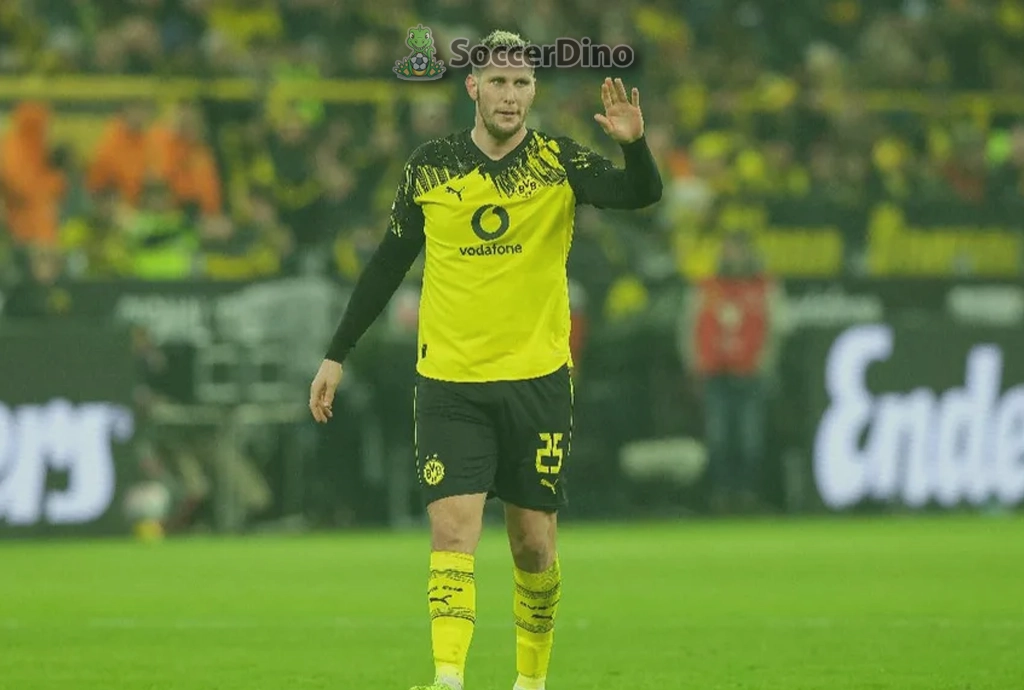
Niklas Sule brings his career to an emotional end at just 30
Niklas Sule has announced that he will bring his playing career to an end at the age of 30, closing a chapter that once seemed destined to last for several more years at the highest level of European football. The Borussia Dortmund centre back, who represented Germany 49 times and played for some of the biggest clubs in the Bundesliga, has decided that the physical and emotional cost of continuing is no longer something he is prepared to accept.
The decision comes after a difficult period marked by repeated injury problems, constant recovery work and the fear that another serious setback could once again take away months of his life as a footballer and as a person. For a player who has already experienced the pain of major injuries, the latest scare appears to have been the moment that forced him to look beyond the next match, the next training session and the next comeback.
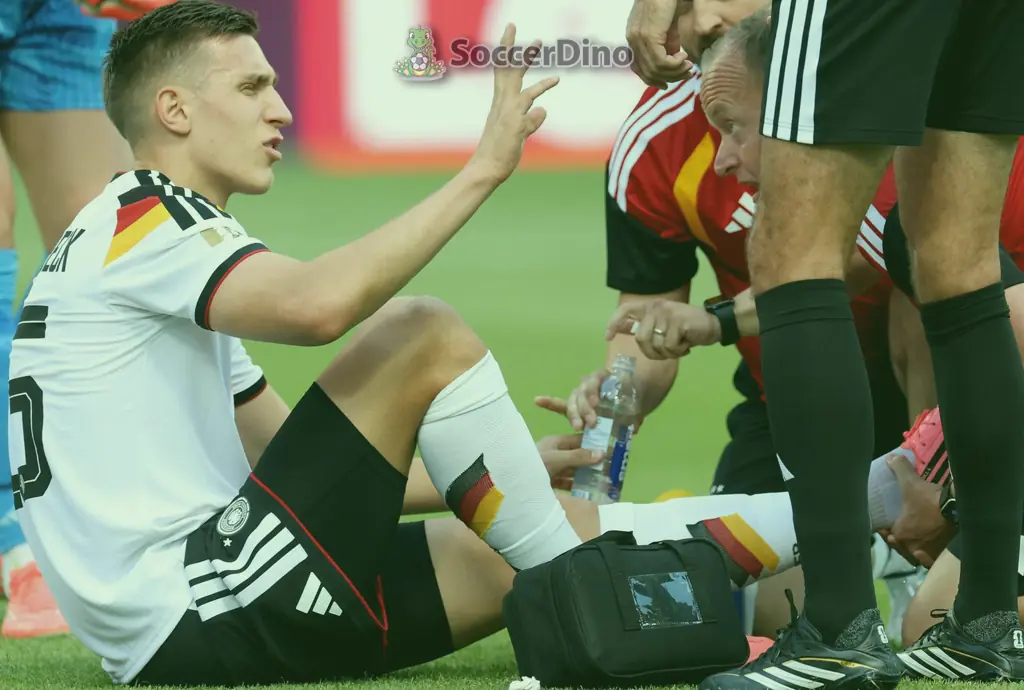
Sule explained that the decisive moment came after the match against Hoffenheim, when he feared that he might have suffered another anterior cruciate ligament injury. The reaction of the medical staff immediately made him think the worst. When the doctor examined him and looked towards the physiotherapist, shaking his head, Sule believed that his knee had suffered another devastating blow. In that moment, the defender was not thinking about tactics, contracts or competition for places. He was thinking about the possibility of another long rehabilitation and another period of suffering.
According to Sule, he went into the dressing room and cried for 10 minutes because he genuinely believed that the ligament had torn. Although the MRI scan later brought relief and confirmed that it was not an anterior cruciate ligament rupture, the emotional impact had already done its work. Instead of feeling only happiness at the positive medical news, Sule felt clarity. The fear of what might have happened was enough to convince him that his body and mind had reached the limit.
That is what makes this announcement so striking. Sule is not retiring because he no longer has the quality to compete. He is not walking away because football has moved beyond him or because he has disappeared from the top level. He is leaving because the price of staying has become too high. At 30, an age at which many central defenders are entering their most mature and tactically complete years, he has chosen peace, family and personal freedom over another battle with pain, uncertainty and rehabilitation.
For supporters, the decision may feel sudden. For Sule, however, it appears to have been building quietly for some time. Serious injuries do not only damage the body. They change how a player thinks, how he moves, how he prepares and how he imagines the future. Every sprint, every duel and every awkward landing can carry a different emotional weight after major knee problems. A footballer can return physically, pass all the tests and still live with the fear of the next setback.
Sule made it clear that he had already started to think about life after football. He spoke about independence, travelling and spending time with his children. Those are simple things, but for a professional footballer they can represent a different kind of freedom. The football calendar is demanding and relentless. Training sessions, recovery routines, away trips, media duties, tactical preparation and constant physical care shape almost every part of life. For someone who has spent years inside that rhythm, the idea of stepping away can be both frightening and liberating.
What seems to have hurt Sule most was the thought of being so close to that next stage of life, only to be pulled back into another long injury fight. He said that he could not imagine anything worse than looking forward to life after football, to being independent, travelling and spending time with his children, while at the same time having to deal with a third anterior cruciate ligament tear. That sentence explains the decision better than any statistic could. It was not only about football. It was about the life around football.
During his career, Sule was often viewed through the lens of his physical profile. Tall, powerful and difficult to beat in direct duels, he had the natural attributes of a dominant centre back. But reducing him to size and strength would be unfair. At his best, he was also calm in possession, capable of progressing the ball and comfortable in defensive systems that demanded more than simply clearing crosses and winning headers. His ability to play at elite level for club and country was never in doubt.
His journey through German football placed him among the most recognisable defenders of his generation. He developed into a Bundesliga standout, became a regular name in Germany squads and earned moves that reflected his status. At Borussia Dortmund, where he spent the final four seasons of his career, he experienced both expectation and scrutiny. Dortmund is a club where every defensive performance is analysed intensely, particularly because the team is often built to play ambitious, attacking football that can leave defenders exposed.
In that environment, Sule had to deal not only with opponents but also with pressure. Every mistake at a club like Dortmund becomes a debate. Every injury becomes a question about reliability. Every absence changes the conversation around the squad. For a player already dealing with physical concerns, that public layer can make the burden even heavier.
His international career also remains an important part of his legacy. With 49 appearances for Germany, Sule was not a fringe figure who merely passed through the national team. He was part of a generation that carried the weight of German football during a period of transition, criticism and rebuilding. Representing Germany almost 50 times is an achievement that places him in a serious category, particularly for a defender competing in a country with such a deep tradition of centre backs.
The emotional tone of his announcement also shows how difficult it is for professional athletes to decide when to stop. Supporters often view retirement as a clean sporting decision, based on age, form or contract offers. In reality, it is frequently far more personal. A player has to listen to the body, understand the mind, speak with family and accept that an identity built over decades is about to change. Footballers spend most of their lives being defined by the game. Walking away means asking who they are without the dressing room, the stadium and the weekly competition.
For Sule, the answer appears to be tied to family and quality of life. That does not make the decision easy, but it makes it understandable. There comes a point when another comeback is not automatically the brave choice. Sometimes the braver decision is to stop before the game takes even more from the person behind the player.
The reaction from Dortmund supporters is likely to be emotional. Even when fans debate performances, form or consistency, the end of a career brings a different perspective. It reminds people of the human cost behind elite sport. The tackles, the blocks, the sprints and the aerial duels are visible. The injections, the pain, the lonely rehabilitation sessions and the private fear are not. Sule announcement brings that hidden side into the open.
It also raises a broader question about the demands placed on modern players. The intensity of elite football has increased dramatically. The calendar is packed, the speed of the game is higher, pressing systems require constant explosive movement and recovery periods are often shorter than ideal. For central defenders, the role has become more complex. They must defend large spaces, build play under pressure, cover transitions, attack set pieces and maintain concentration for 90 minutes under extreme physical stress.
In that context, repeated injuries can be mentally exhausting. Returning from one serious injury is already a major achievement. Returning again requires even more resilience. The possibility of going through the same process for a third time can feel unbearable, especially for a player who has already started to imagine a different life.
Sule decision will inevitably leave Borussia Dortmund with sporting questions. Losing an experienced centre back is never a small matter, particularly one with international pedigree and deep Bundesliga experience. Replacing that profile requires planning, because leadership, physical presence and defensive understanding are not easily found in one player. But this announcement is about more than squad management. It is about a footballer choosing his long term well being.
There will be time to assess his career in detail, to discuss the trophies, the best performances, the difficult periods and the moments when injuries changed his rhythm. But the immediate feeling is one of respect. Sule has chosen honesty over pretending that he could simply continue as before. He has admitted the suffering, the fear and the emotional weight of another possible major injury. In doing so, he has offered a rare and direct look at the vulnerability of elite athletes.
At 30, Niklas Sule leaves the game earlier than many expected. Yet he leaves with a career that many players would be proud to call their own. He played at the top level in Germany, represented his country 49 times and spent years competing under the pressure that comes with major clubs and international football. His final decision may have been shaped by pain, but it also reflects control. After years of fighting to return, recover and prove himself again, Sule has chosen to decide the ending on his own terms.
For supporters, it may be difficult to accept that a player with so much experience and, in theory, several years still ahead of him, is stepping away now. But for Sule, the moment seems clear. The scare after the Hoffenheim match did not end with the worst medical diagnosis, but it revealed something deeper. He no longer wanted to live with the possibility of another devastating injury defining the next stage of his life.
In the end, this is not simply the story of a defender retiring at 30. It is the story of a player who reached the point where the dream of football was no longer stronger than the desire for peace. Niklas Sule gave much of his life to the game. Now, after years of pressure, pain and recovery, he has decided that the next part belongs to him, his family and the life he has been waiting to begin.