Didier Deschamps leaves the door open to coaching Italy after the 2026 World Cup as France prepare for the final chapter of his era.
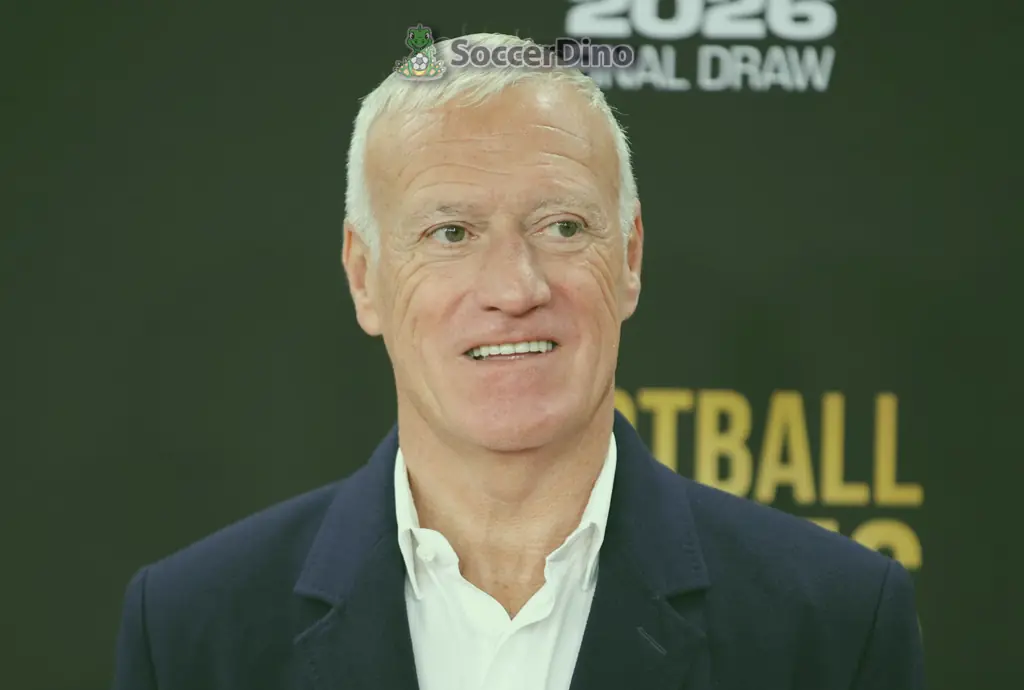
Deschamps leaves Italy door open after confirming France squad for 2026 World Cup
Didier Deschamps has opened the door to a possible future with the Italy national team, although he made it clear that his immediate priority remains the 2026 World Cup with France. The experienced coach confirmed the 26 players selected for the tournament on Thursday and, during the press conference, was inevitably asked about what may come next in his career once his long spell in charge of the French national team comes to an end.
Deschamps has already announced that he will leave France after the World Cup, bringing down the curtain on one of the longest and most successful managerial cycles in international football. Since taking over in 2012, he has turned France into one of the most consistent national teams in the world, leading the country to major finals, rebuilding the squad across different generations and winning the World Cup.
Because of that record, his future is now a major topic in European football. Few coaches have the same level of experience at the highest level, and even fewer have shown the ability to manage pressure, stars, dressing room expectations and national emotion as effectively as Deschamps. That is why the question about Italy was not casual. It came at a time when the Italian national team is searching for direction after another painful failure on the international stage.
When asked directly about the possibility of coaching Italy after the World Cup, Deschamps did not close the door. His answer was careful, but also revealing. He said that he does not rule anything out, that everyone knows he is available, and that for now his full focus is on France and the tournament ahead. He also added, with a light tone, that he may need to start speaking Italian again because nobody knows what the future may bring.
That final remark immediately attracted attention. Deschamps knows Italy very well. His connection with Italian football is not superficial. He played for Juventus between 1994 and 1999, during one of the strongest periods in the history of the club, and became an important figure in a team packed with talent, discipline and competitive identity. He later returned to Juventus as coach in the 2006/07 season, taking charge during a complicated moment for the club and helping it return from Serie B.
That past gives the idea of Deschamps coaching Italy an extra layer of logic. He understands the football culture, the language, the demands of the environment and the weight of history around the Azzurri. He is not an outsider who would need to discover Italian football from the beginning. He has lived it from inside the dressing room, from the pitch and from the bench.
Italy, meanwhile, are facing another major period of uncertainty. After the departure of Gennaro Gattuso, the national team is looking for a new head coach following the failure to qualify for the 2026 World Cup. For a country with 4 world titles and one of the richest football traditions in history, missing another World Cup is not just a sporting failure. It is a national trauma.
The Italian federation now needs to decide what kind of project it wants to build. Italy can choose a coach closely linked to the domestic game, someone who knows the current generation of players and the daily reality of Serie A. But it can also look for a figure with greater international weight, someone capable of restoring authority, structure and credibility from day one. Deschamps would clearly fit that second profile.
His greatest strength has always been pragmatism. Deschamps is not a coach defined by romantic football or tactical exhibitionism. He is defined by balance, competitiveness and the ability to build teams that understand what big tournaments require. France under his leadership have often been compact, disciplined and mentally strong, capable of adapting to different opponents and moments rather than depending on one fixed style.
Those qualities could appeal strongly to Italy. The Azzurri have historically been at their best when they combine tactical intelligence, defensive reliability and emotional resilience. Deschamps has spent most of his coaching career working inside that type of logic. He understands that international football is not only about playing attractive football. It is about surviving difficult matches, managing pressure and arriving at decisive moments with a team that believes in its own structure.
There would also be symbolism in the move. A French World Cup winning coach taking charge of Italy would naturally create discussion, especially because of the rivalry between the two nations. France and Italy have shared some of the most memorable moments in modern international football, including major finals and dramatic knockout matches. A Deschamps move to the Italian bench would therefore be more than a normal appointment. It would be a headline across Europe.
Still, the coach was careful not to feed speculation too much. His message was clear: the World Cup comes first. France are preparing for another major tournament, and Deschamps will not want anything to distract from that mission. He has built his reputation on discipline and focus, so it would be out of character for him to allow future talks to overshadow the present objective.
For the French squad, this tournament will also carry extra emotional weight. It will be the final chapter of the Deschamps era, and many players will know that they are playing not only for another trophy but also for the legacy of a coach who has shaped more than a decade of national team history. His departure after the competition has already been confirmed, but the ending is still unwritten.
That makes the timing of the Italy question even more delicate. Deschamps is available after the World Cup, but he is not available now in a practical sense. Until France finish their campaign, every major decision about his future is likely to remain open. The Italian federation may need to move quickly, but if Deschamps is truly one of the names under consideration, patience could become part of the equation.
From Italy point of view, the attraction is obvious. Deschamps would bring authority, international experience and a winning mentality. He has managed some of the best players in the world and has survived the pressure of being expected to win every tournament. After years of instability and disappointment, Italy may see him as a coach capable of restoring order and status.
From Deschamps point of view, the challenge could also be tempting. After so many years with France, returning to club football would be one option, but taking over Italy would allow him to remain at the highest level of international competition. It would also give him a new historic mission: to rebuild a fallen giant and return one of football great national teams to the biggest stage.
There are, however, obvious difficulties. Italy need more than a famous coach. They need a clear development plan, stronger squad renewal, better attacking solutions and a structure that can protect the national team from short term panic. Deschamps could help with leadership and identity, but the problems around Italian football go deeper than the name on the bench.
Even so, his comments have changed the tone of the conversation. He did not offer himself openly, but he did not reject the idea either. In football, that kind of answer is often enough to start speculation. When a coach of his stature says that he does not rule anything out and adds that he may need to speak Italian again, it is impossible for the subject not to grow.
For now, Deschamps remains the coach of France and his full attention is on the 2026 World Cup. But the door to Italy is no longer closed. It is slightly open, and that is enough to make the next few months extremely interesting. If France go deep in the tournament, his profile will become even stronger. If Italy decide to wait, the possibility may gain momentum after the final whistle of his French era.
Deschamps has spent more than a decade writing history with France. Now, with his exit already defined, the football world is beginning to ask where the next chapter will be written. Italy may not yet be more than a possibility, but after his latest comments, it is a possibility that can no longer be ignored.