Mohamed Salah spoke out this weekend after another Liverpool defeat. The Egyptian right winger will leave the English top club this summer after a difficult relationship with manager Arne Slot. Salahs comments have caused quite a stir in England. Slot should leave him out of the squad next week.
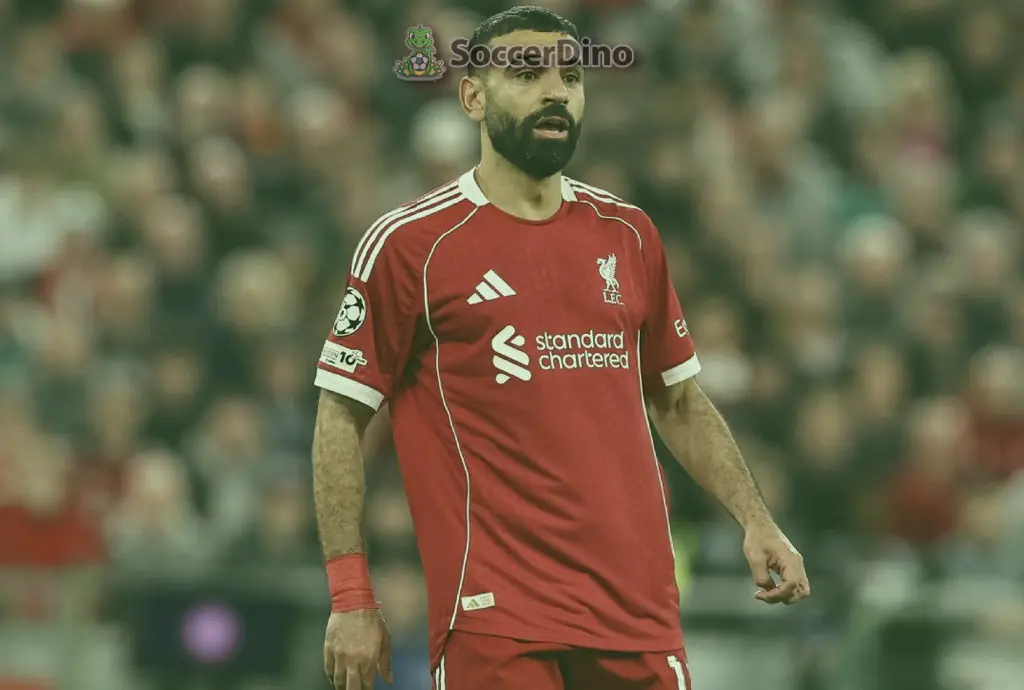
Pressure grows around Liverpool as Salah statement overshadows painful Aston Villa defeat
Aston Villa 4-2 Liverpool, played on 15-05-2026, may end up being remembered for much more than the scoreline. For Liverpool, it was not only another damaging defeat in a season that has become increasingly tense, but also the weekend in which Mohamed Salah placed himself at the centre of a major storm in English football. With only one match left to play, the Egyptian forward has spoken out at a time when Liverpool are still fighting to secure Champions League football, and his words have triggered strong reactions from several of the biggest names associated with the Premier League.
The situation is particularly sensitive because Salah is expected to leave Liverpool this summer, bringing an end to one of the most important individual eras in the recent history of the club. Since arriving at Anfield, he has been one of the defining players of the modern Liverpool side, a key figure in the team built by Jürgen Klopp and a player whose goals, consistency and durability helped return the club to the top of English and European football. For that reason, any public tension involving Salah was always going to attract attention. But the timing of this statement has made the matter far more explosive.
Liverpool are not in a comfortable position. The defeat against Aston Villa has increased the pressure before the final weekend, and Arne Slot is now dealing not only with sporting uncertainty, but also with a dressing-room issue involving one of the biggest names in the squad. At this stage of a season, managers usually want calm, discipline and focus. Instead, Slot now has to deal with a public debate about respect, leadership, legacy and whether Salah should even be involved in what could be his final appearance for Liverpool at Anfield.
Steven Gerrard, one of the greatest icons in Liverpool history, admitted that he was shocked by the timing and nature of Salahs comments. Speaking on TNT Sports, the former midfielder made it clear that Salah is not normally a player who speaks out often, especially not through social media or public channels. That is one of the reasons why the statement has caused such a reaction. When a player who usually keeps a low profile suddenly decides to make his feelings known, people naturally assume that the frustration has been building for some time.
For Gerrard, the main issue is not only what Salah said, but when he chose to say it. Liverpool have one match left, the club still have major objectives on the line, and the manager is trying to keep the group together at the end of a difficult campaign. Gerrard believes the comments are damaging for Slot and his staff because they come at a moment when the team needs unity rather than division. In his view, the public nature of the statement makes the position of the manager more difficult, especially when Liverpool are already under scrutiny for their performances and results.
Gary Neville went even further in his assessment, describing the situation as if Salah had removed the pin from a grenade in the middle of the room before leaving others to deal with the consequences. It was a striking way to frame the problem, but it reflects how many observers in England see the issue. Salah may be on his way out, but Slot and the Liverpool staff still have to manage the fallout. The players still have to prepare for one more match. The club still have to face the supporters. The timing leaves everyone else inside Liverpool dealing with a problem created in public.
Neville also suggested that Salah is clearly unhappy at the moment. That is perhaps the most obvious conclusion to draw from the whole episode. A player of his stature does not speak out lightly, and Salah knows exactly how much attention his words will generate. He is experienced, media-aware and fully aware of his importance to the fanbase. When he says something, it travels quickly. When he says something at a decisive point of the season, the impact becomes even greater.
At the same time, Neville also made an important point about elite players. According to the former Manchester United defender, players of this level cannot simply be silenced. Big personalities, major footballers and global stars often choose their own moment to speak. Clubs can try to control the message, but they cannot always control the emotions of a player who feels frustrated, overlooked or unhappy with the direction of the team. That is part of the challenge of managing a dressing room full of established names.
Even so, Neville believes the comments are painful for Slot. The Liverpool manager is already trying to navigate a complicated end to the season and prepare for what could be a significant rebuild. Salahs public intervention does not help that process. It invites questions about authority, dressing-room harmony and the future of the squad. It also risks turning the final match of the campaign into a referendum on Salah rather than a football match with clear sporting consequences.
Wayne Rooney was even more direct. Speaking about the final game of the season, the former England striker said that, if he were in Slot’s position, he would keep Salah away from the stadium. The remark was deliberately strong, but Rooney backed it up by referring to his own experience under Sir Alex Ferguson at Manchester United. Rooney recalled that after a disagreement with Ferguson, he was left out of the squad for the managers final match at Old Trafford. For Rooney, the principle is clear: no player, however important, should be allowed to openly undermine the authority of the manager.
Rooneys criticism of Salah was severe. He argued that the Egyptian forward wants to play the type of football associated with Jürgen Klopp, but no longer has the same capacity to carry that version of the game. In Rooneys view, Salah is trying to protect himself after a weak season by shifting attention elsewhere. That accusation is one of the harshest parts of the debate, because it questions not only Salahs behaviour, but also his motivation.
The former Manchester United and England captain also described Salahs actions as selfish, especially because he believes this is not the first time the player has created a public issue around the manager. Rooney suggested that Salah knows the supporters will largely stay on his side because of everything he has achieved at Liverpool. That is the delicate part of the story. Salah is not an ordinary player. He is a club legend, a Premier League icon and one of the greatest forwards of his generation. Many Liverpool fans will naturally defend him, even if they disagree with the timing of his comments.
That is what makes the situation so difficult for Slot. Dropping Salah from the squad for the final match would be a huge decision. It would almost certainly dominate the headlines, especially if it prevents the player from receiving a proper farewell at Anfield. But selecting him also carries risk. It could create the impression that a player can publicly challenge the manager and still keep his place without consequences. For a new manager or a manager trying to establish authority, that is a dangerous message.
There is also the emotional side to consider. Salah deserves recognition for what he has given Liverpool. His numbers, trophies and influence are impossible to dismiss. He has been one of the most decisive players in the Premier League for years, and his time at Anfield has changed the modern history of the club. A cold ending, full of tension and criticism, would feel deeply unsatisfactory for many supporters. Football is not only about discipline and results. It is also about memory, legacy and the bond between players and fans.
But legacy can be complicated. A great career at a club does not automatically protect a player from criticism when the final chapter becomes messy. Salah has built an extraordinary reputation through goals, professionalism and consistency, yet the way he leaves Liverpool will also shape how this period is remembered. Supporters may forgive quickly, but football history often holds on to dramatic endings. The concern now is that a legendary spell could close with bitterness rather than celebration.
For Liverpool, the priority remains clear. The club must finish the season as strongly as possible and secure the best possible outcome in the table. Champions League qualification is not a small detail. It affects revenue, recruitment, prestige and the type of rebuild Slot can lead in the summer. A club of Liverpools size expects to be in that competition, and missing out would make an already difficult season feel even heavier. That is why Gerrard, Neville and Rooney have all focused so much on timing. Public tension before the final match is the last thing Liverpool needed.
The wider question is what this says about the transition from the Klopp era to the Slot era. Klopp created a team with an intense identity, built around energy, pressing, belief and a powerful emotional connection with the supporters. Salah was one of the faces of that era. Slot, however, has to build something of his own. That process was never going to be simple, especially with major players reaching the end of their time at the club. When an icon leaves, the dressing room changes. When that icon leaves after public disagreement, the change becomes even more sensitive.
The appointment of Xabi Alonso at Chelsea, mentioned by Neville, adds another layer to the managerial landscape in England. The Premier League is entering another phase of intense competition among elite coaches and ambitious clubs. Liverpool cannot afford to spend months trapped in internal drama. They need clarity, recruitment, tactical direction and a squad fully aligned with the manager. If Slot remains in charge next season, as Neville expects, he will need to show that the club has moved beyond this episode quickly and decisively.
For Salah, the next few days may be crucial. If he plays at Anfield, the reaction from the supporters will be one of the biggest stories of the weekend. There may be applause, emotion and gratitude, but there may also be tension beneath the surface. If he does not play, the decision will be interpreted as a major statement from Slot. Either way, the story has now become impossible to ignore.
What should have been a farewell built around appreciation has turned into a debate about respect and authority. Gerrard sees damage to the manager and staff. Neville sees a player creating an explosive situation and leaving others to deal with it. Rooney sees selfishness and believes Slot should take a firm stance. Together, their reactions show how strongly the English football world has responded to Salahs statement.
There is still room for the situation to calm down, but the damage has already been done. Liverpool now head into the final match of the season with questions hanging over one of their greatest modern players and their manager. For a club that needs focus, it is an unwanted distraction. For Salah, it is a risky final act. And for the supporters, it is a painful reminder that even the most successful football relationships can end in tension when timing, emotion and ambition collide.