Benfica’s supporters are unhappy. On Saturday morning, a group of two hundred angry fans broke into the Portuguese club’s training complex. Benfica spoke with them.
Benfica’s season may still look solid on paper in domestic terms, but the mood around the club has clearly shifted from patience to pressure.
Even though the team remains unbeaten in Portugal, they are already ten points behind league leaders FC Porto, a gap that feels heavy in a title race where margins are usually tight. Add to that a disappointing cup exit and a difficult situation in Europe, where reaching the Champions League playoff round is increasingly seen as a complicated mission, and it becomes easier to understand why frustration has been building among sections of the fanbase.
That tension boiled over on Saturday morning, just hours before Benfica’s match against Estrela da Amadora. A group of around two hundred angry supporters made their way into the club’s training complex, a move that immediately raised alarms given the potential risk of confrontation. The incident was widely interpreted as an attempt by the more hardcore supporters to force direct answers, not through social media or chants in the stadium, but face to face with the people they hold responsible for the direction of the season.
Benfica, however, quickly tried to control the narrative. In an official statement, the club insisted the protest was peaceful. The implication was clear: while emotions were running high, there were no serious incidents inside the facility, and the club chose to address the situation through dialogue rather than escalation. According to Benfica, the fact that things remained calm is precisely why the supporters were invited in and why a formal conversation was allowed to take place.
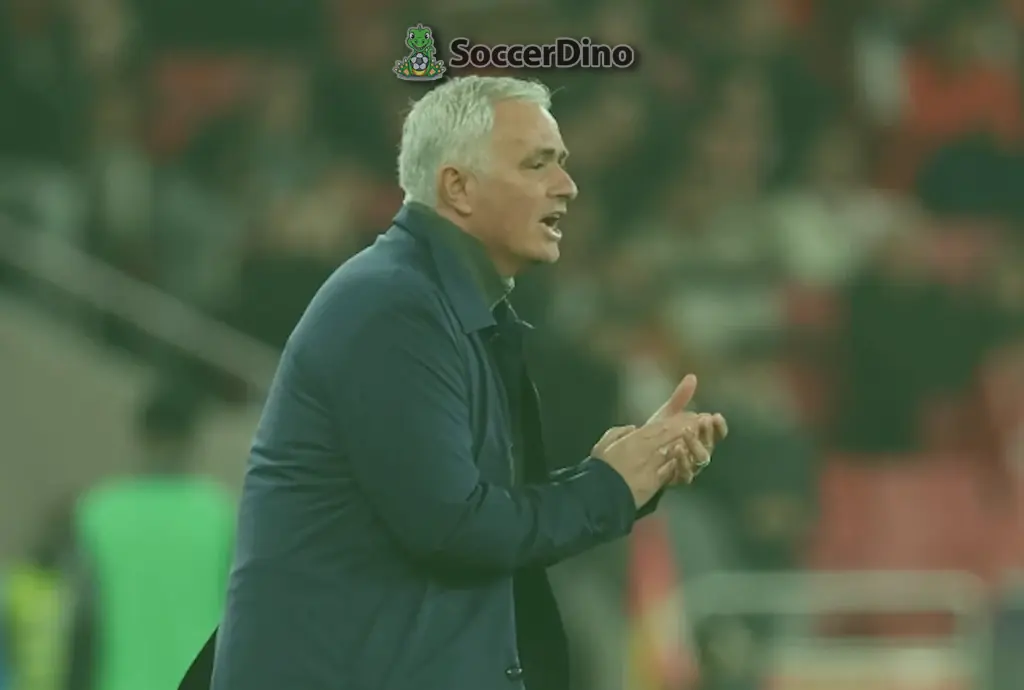
The meeting itself was notable for the names involved. Benfica said the discussion included CEO Mário Branco, sporting director Simão Sabrosa, and head coach José Mourinho. The presence of Mourinho in particular mattered, because he is the figure most visibly associated with both the project and the results. When supporters feel the season is slipping, the coach becomes the natural focal point, whether the issues are tactical, psychological, or structural. Benfica also confirmed that several key players were present: Nicolás Otamendi, António Silva, Fredrik Aursnes and Tomás Araújo. That detail suggests the club wanted the squad to share responsibility and show the fans that leadership inside the dressing room is engaged, listening, and accountable.
While the exact content of the conversation was not made public, the broader themes are not hard to predict. The ten-point deficit to Porto, the sense that performances have not matched expectations, and the fear of a season that ends without major trophies would all be obvious triggers. The cup elimination adds another layer, because it removes a route to silverware and often amplifies frustration quickly. In Europe, where Benfica’s ambitions are traditionally high, the idea that even reaching the next stage could be a struggle is the kind of reality check that supporters tend to react to strongly.
Benfica’s statement tried to emphasize that, despite the anger, the discussion remained controlled and productive. “The meeting took place in an atmosphere of respect, cordiality and constructive cooperation,” the club said. They framed the outcome as a moment of regrouping, ending “with a renewed assurance of unity,” something Benfica underlined as crucial with major challenges still ahead before the season concludes. The choice of words was deliberate, aiming to show that the club and supporters may disagree or feel disappointed, but that they share the same objective and must not fracture when the calendar becomes most demanding.
Then came the response on the pitch. Later that day, Benfica beat Estrela da Amadora 4-0, a result that served as both relief and message. In situations like this, a convincing win does more than improve goal difference. It calms the immediate noise, reduces the urgency of the crisis narrative, and gives Mourinho and his players breathing space. It also allows the club to point to a performance that matches the standards Benfica fans expect, at least in terms of intensity and outcome.
Still, one dominant reality remains: being unbeaten does not automatically feel like progress when the points gap is that large. Draws can quietly damage a title bid as much as defeats, and when Porto continue to win, every missed opportunity becomes magnified. For Mourinho, the task now is not only to keep Benfica winning, but to rebuild momentum in a way that makes the league race feel alive again, while also salvaging the European campaign and restoring belief around the project.
The episode at the training complex will likely linger as a symbol of where the season stands. It showed a fanbase that is no longer content to wait, but also a club that believes it can manage conflict through direct engagement. Benfica’s leadership presented it as a turning point towards unity. Whether it becomes that, or simply a snapshot of a tense campaign, will depend on what follows: results, performances, and whether Benfica can turn pressure into a sustained run that forces FC Porto to look over their shoulder.