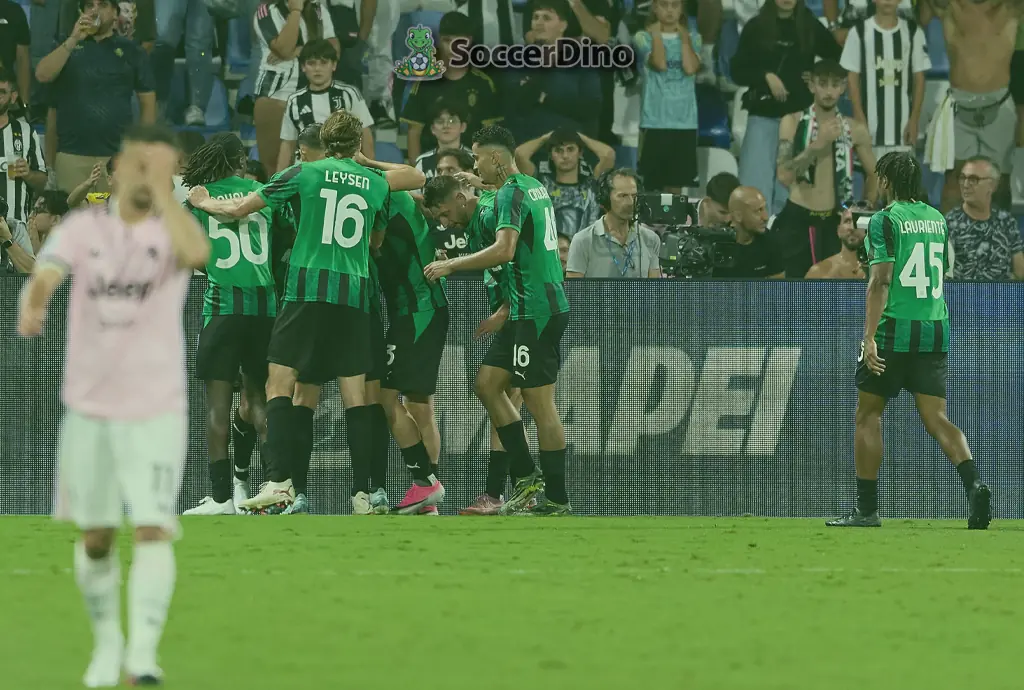
Milan went top of Serie A after a 3-0 win over Verona, with Pulisic scoring before half-time and Nkunku netting twice early in the second half to extend the Rossoneri’s unbeaten run and increase pressure on Inter and Napoli in the title race.

Milan moved to the top of Serie A on a provisional basis after a convincing 3-0 home win over Verona in the 17th round, temporarily leapfrogging city rivals Inter and reinforcing the sense that this season’s title race is likely to be decided by fine margins.
On a night when they were forced to cope without Rafael Leão, their most explosive attacker and a frequent source of individual imbalance in the final third, the Rossoneri ultimately found enough quality, structure and control to break down a relegation-threatened opponent and turn a potentially awkward fixture into a statement victory.
The scoreline was emphatic, but the match itself had a clear narrative shift. Milan’s first half lacked spark and fluency, a drop in attacking dynamism that made Leão’s absence feel even more pronounced. The build-up was often predictable, with fewer carries that could destabilise Verona’s defensive shape, and fewer moments where Milan could generate separation in wide areas. Verona, sitting 18th and in the first position within the relegation zone, leaned into a conservative plan, keeping their lines compact, limiting space between midfield and defence, and prioritising survival over ambition. For long spells, it worked, as Milan struggled to convert territorial dominance into high-quality chances.
Despite that, Milan still carried a steady threat from set pieces and second balls, and it was from a corner that the breakthrough arrived. In first-half stoppage time, Christian Pulisic opened the scoring at 45+1, providing a crucial release for a team that had risked going into the interval with mounting frustration and anxiety. The goal was particularly valuable because it forced Verona to reconsider their approach after the break. A side fighting for points can often tolerate long periods without the ball if the scoreline stays level, but conceding just before half-time typically changes the psychological balance, especially away from home.
The second half was where Milan’s superiority became clearer and more consistent. Within minutes of the restart, Christopher Nkunku doubled the lead from the penalty spot on 48 minutes, giving Milan both breathing room and a platform to manage the game with greater authority. The penalty goal also underlined an important point about Milan’s attacking profile on the night: even without their most dangerous dribbler, they still found ways to put defenders under stress inside the box, prompting decisive moments that can turn matches quickly. With the lead extended, Milan’s passing became cleaner, their pressing more confident, and their overall tempo more aligned with a team that expects to dominate games at San Siro.
Nkunku then added a second goal on 53 minutes to make it 3-0, reacting sharply to follow up after a strike from Luka Modric that Verona’s goalkeeper could only divert onto the post. The sequence encapsulated what top teams often do well against opponents under pressure: they keep attacks alive, they anticipate rebounds, and they punish small defensive lapses with ruthless efficiency. For Verona, it was a damaging spell, conceding twice early in the second half and seeing the contest effectively end before the hour mark. For Milan, it was the opposite: a rapid acceleration from mild control to complete command.
From a broader perspective, the win had significant implications for the table. Milan moved into 1st place with a 2-point advantage over Inter, who were still due to play away at Atalanta later the same night. That fixture carried its own weight, given Atalanta’s reputation for intensity and their ability to disrupt even the best organised sides. Milan’s result therefore applied pressure, setting a target for Inter and ensuring that any slip would be immediately punished in the standings. The picture was further complicated by Napoli’s position in 4th, as they also had the opportunity to reshape the top of the table if they secured victory away at Cremonese earlier in the day, potentially pushing Inter down before the Nerazzurri even took the field.
Milan will also take satisfaction from the way the win was achieved in terms of squad depth and adaptability. Leão’s injury removed a key mechanism in their attack, but the team still produced a high-margin victory by leaning on collective solutions. Pulisic, in particular, continued to justify his importance with another decisive contribution, not only scoring but also offering intelligent movement that helped Milan occupy dangerous zones in the box. His ability to arrive at the right time, rather than simply staying wide, gives Milan a different kind of threat, especially when opponents focus too heavily on blocking central channels.
Nkunku’s brace carried additional significance. Beyond the immediate value of 2 goals, it marked his first goals in Serie A for Milan, which matters both for confidence and for the tactical options it opens up for the coaching staff. A forward settling into a new league often needs a defining night to translate adaptation into tangible output. Scoring twice, including a penalty and a poacher’s finish, suggests he can contribute in different game states, whether Milan need calm execution from the spot or sharp instincts in the area. It also helps that these goals came in a match where Milan’s attacking rhythm was not perfect early on. That is often a better indicator than scoring in a game where everything flows.
There were other encouraging notes. Milan extended their unbeaten run to 15 matches, a figure that speaks to consistency and resilience across varying match contexts. Title challenges are rarely built on isolated big performances; they are built on the ability to collect points even when the team is not at full strength or not at its sharpest. This match fit that pattern: a flat first half, a set-piece breakthrough, and then a ruthless second-half surge. For Milan, it is the sort of sequence that can define a champion’s mentality.
Individually, Pulisic’s goal also carried a personal milestone within the league narrative. With his tally, he drew level with Inter striker Lautaro Martínez at the top of the scoring charts, both with 8 goals. For Milan, having a player competing for the Capocannoniere adds an extra layer of threat, especially in matches where the main striker might be closely marked or where the team needs a goal from a different source. It also provides a measure of balance, reducing reliance on any single attacker, which becomes increasingly important as the season progresses and fixtures accumulate.
For Verona, the result reinforced the scale of the challenge ahead. Sitting in 18th, they remain in the thick of the relegation battle, and defeats of this nature can hurt both goal difference and confidence. Their first-half discipline showed they can frustrate opponents, but the collapse early in the second period highlighted how quickly games can unravel once they concede and are forced to open up spaces. The margin for error at the bottom of the table is minimal, and Verona will need to translate organisation into points, not only into resistance.
Ultimately, Milan did exactly what teams with title ambitions must do in matches like this: win comfortably, manage the contest, and keep the pressure on their direct rivals. The top-of-the-table position may have been provisional, but the performance after the break offered a clear message that Milan intend to remain a central force in the race, even when key pieces are missing.