Stuttgart hammered Wolfsburg 4–0 on Matchday 24, scoring three times before half-time to secure a dominant Bundesliga win and keep pace in the race for the Champions League places.
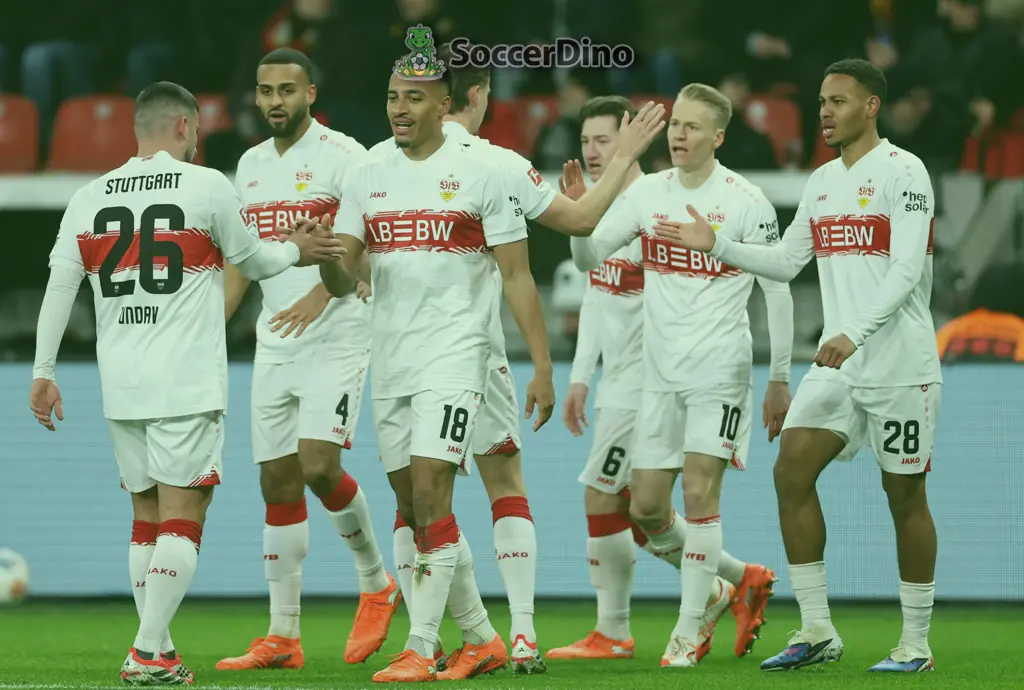
Stuttgart, FC Porto’s opponents in the Europa League, produced a ruthless statement in the Bundesliga by sweeping Wolfsburg aside 4–0 in the 24th round.
The match was effectively decided before half-time, with Stuttgart scoring three times in the opening 45 minutes and controlling the tempo so completely that Wolfsburg never looked capable of changing the story. The margin of victory reflected not only Stuttgart’s clinical finishing but also their authority in every phase, from the intensity of their press to the speed of their attacking transitions.
Playing at home, Stuttgart started with purpose and aggression, pushing Wolfsburg back early and forcing mistakes through coordinated pressure. Wolfsburg struggled to build from the back, often clearing hurriedly or losing possession in midfield, and that fed Stuttgart’s momentum. The home side moved the ball quickly, stretched the pitch well, and repeatedly found pockets of space around Wolfsburg’s defensive line. Even before the first goal, Stuttgart’s approach suggested a team that knew exactly where the weaknesses were and how to attack them.
The breakthrough arrived in the 21st minute and came through Deniz Undav, who continues to be Stuttgart’s most consistent goal threat this season. His finish made it 1–0 and marked his 14th Bundesliga goal, reinforcing his position as the league’s second-top scorer. The goal was important not just because it opened the scoring, but because it rewarded Stuttgart’s dominance and forced Wolfsburg into a more uncomfortable role. With the visitors now needing to chase, Stuttgart gained even more space to exploit.
Only nine minutes later Stuttgart doubled the lead. Jamie Leweling finished a rapid home attack to make it 2–0, a goal that underlined how quickly Stuttgart can turn possession into danger. Wolfsburg’s defensive structure simply could not reset quickly enough when Stuttgart accelerated, and the gaps appeared the moment the hosts moved the ball forward with intent. Leweling then struck again twelve minutes after his first, following a throw-in sequence that Stuttgart executed with far more sharpness and aggression than Wolfsburg could handle. At 3–0, the contest had the feel of a mismatch, and Wolfsburg looked mentally and tactically overwhelmed by the pace of the game.
After the interval, Stuttgart shifted naturally into a more controlled mode. They did not need to take the same risks, and they managed the match with composure, keeping possession intelligently and choosing their moments to attack rather than forcing the issue. Wolfsburg tried to respond, but there was little cohesion to their play. Their forward moves lacked precision and conviction, and whenever they pushed numbers higher, they left themselves vulnerable to Stuttgart’s counterattacks. Stuttgart’s defensive work also stood out, because they prevented Wolfsburg from creating sustained pressure, winning second balls and closing down passing lanes before attacks could develop into genuine chances.
The late stages provided an additional note of interest for Portuguese fans. Tiago Tomás came on in the 88th minute to replace Chris Führich and immediately played with urgency, looking to make an impact rather than simply see out the clock. Even with limited time on the pitch, he contributed decisively in stoppage time, assisting Nikolas Nartey for Stuttgart’s fourth goal at 90+5. It was the kind of cameo that coaches value, because it showed focus and sharpness even when the match had already been settled, and it allowed Stuttgart to finish the afternoon with an even more emphatic scoreline.
The result keeps Stuttgart firmly in the Champions League places. They remain fourth in the Bundesliga and now have 46 points, level with third-placed Hoffenheim, who lost 1–0 to St. Pauli on Saturday. In other words, Stuttgart are still very much in the thick of the race near the top, and wins like this matter not only for the points but also for goal difference and confidence as the season enters its decisive phase. For FC Porto, the performance will be noted carefully, because it highlighted Stuttgart’s ability to overwhelm opponents with early intensity and to punish errors rapidly once momentum swings their way.
For Wolfsburg, the picture is far darker. The heavy defeat leaves them in 17th place, the first relegation spot, with 20 points. They sit two points behind the relegation play-off position currently occupied by Werder Bremen, which means the margin for error is shrinking fast. Beyond the table, the performance itself raised concerns, because Wolfsburg looked fragile when pressed, slow when defending transitions, and short on ideas in the final third. When a team is fighting for survival, those are precisely the areas that must be solid, and this match suggested Wolfsburg still have serious work to do if they are to climb out of danger.