The Bayern Munich striker became the fastest player ever to directly contribute to one hundred goals in the German league by scoring against Heidenheim.
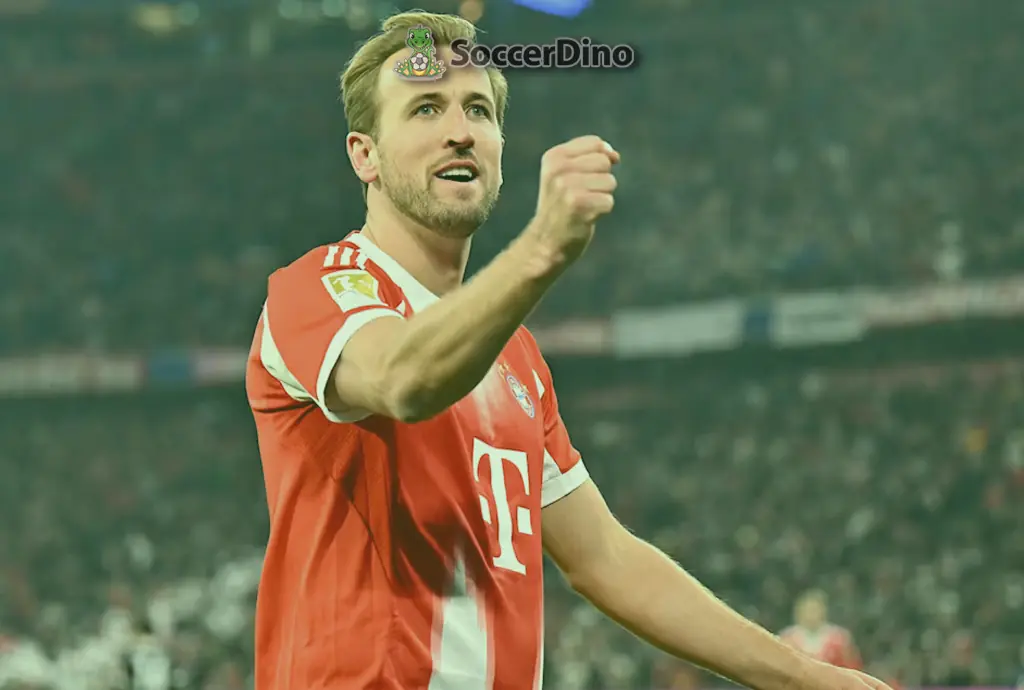
In Bayern’s final match of two thousand and twenty five, Harry Kane added another landmark to his rapidly growing Bundesliga story, sealing a four nil away victory over Heidenheim with a stoppage time goal.
The strike, finished at ninety plus two, did more than put a gloss on a dominant result. It confirmed Kane as the fastest player ever to reach one hundred direct goal contributions in the German top flight, an achievement that underlines how quickly he has adapted to the league and how central he has become to Bayern’s attacking identity.
Kane reached the century mark through a combination of goals and assists, a detail that matters when assessing the overall impact of a centre forward in modern football. He is not simply a penalty box finisher or a final touch specialist. His output reflects a complete forward profile: scoring at elite volume while also creating for others through lay offs, through balls, and combination play in the final third. After this latest match, his Bundesliga totals stand at eighty one goals and nineteen assists in seventy eight appearances. In other words, he is averaging more than one direct goal involvement per league game, a level of consistency that places him among the most productive signings in Bayern’s recent history.
What makes the record even more striking is the comparison with the previous benchmark. Since records began in the two thousand and four to two thousand and five season, Arjen Robben had been the fastest player to reach one hundred direct goal contributions in the Bundesliga. Robben, widely viewed as one of the league’s defining attackers of his era, required one hundred and nineteen matches to reach that figure. Kane did it in seventy eight, which is forty one fewer games. That gap is substantial, not marginal. It suggests that Kane’s Bundesliga impact has been historically accelerated, achieving milestone output over a span that usually represents only two full seasons for an ever present player.
The Heidenheim match itself provided a fitting stage for the record. Bayern’s four nil scoreline reflected control, depth, and a clinical edge, and Kane’s late goal ensured that the game ended with a reminder of why he is so difficult to contain. Even in the final minutes, when opponents often hope the damage is done, Bayern’s forwards still hunt chances, and Kane still finds the spaces and finishes with the same discipline. It was also a symbolic moment because it came in the last Bayern match of the year, closing two thousand and twenty five on a high note both collectively and individually.
The wider context is Bayern’s position in the title race. The victory allowed them to preserve a nine point lead at the top of the Bundesliga, reinforcing a sense that they are setting the pace and forcing their rivals to chase. The ability to win comfortably while also adding to the psychological pressure on competitors is typically what title winning campaigns look like. Kane’s scoring record, therefore, is not a standalone story. It is closely tied to Bayern’s ambitions, because milestones of this kind usually coincide with a team that is generating a steady volume of chances and imposing itself across the season.
After the match, Kane struck a tone that mixed personal satisfaction with a clear emphasis on collective momentum. He described two thousand and twenty five as an incredible year and highlighted how special it felt to win the league with Bayern, pointing to the personal importance of lifting his first major career title. That detail has followed Kane throughout his career, particularly after years of individual excellence without silverware. Becoming champion in Germany was therefore a major milestone in his narrative, and his comments show that it continues to fuel his motivation rather than soften it.
He also referenced the Club World Cup as a key period for team building, suggesting that Bayern developed a strong internal spirit and an energy that opponents find difficult to break. The implication is that Bayern’s success is not purely tactical or technical, but also psychological. When a squad believes in its resilience, it often translates into late goals, strong responses after setbacks, and a consistent ability to close out matches. Kane’s insistence that this spirit has carried into the current season supports the idea that Bayern are not only leading on points, but also establishing an identity based on unity, discipline, and momentum.
Crucially, Kane did not present the season as complete or guaranteed. He acknowledged there is still a long way to go, which reflects the reality of Bundesliga campaigns where form can swing quickly with injuries, fixture congestion, and pressure matches. However, he emphasised that Bayern are doing the right things, pointing to belief and team spirit as foundations they must carry into the new year. It is the language of a captain and a leader rather than simply a star striker. That matters for Bayern because, in seasons where titles are expected, leadership within the squad often becomes the difference between meeting expectations and falling short.
From an analytical standpoint, Kane’s record pace can be linked to several factors. Bayern’s structure has historically been designed to feed a central striker with high quality chances, particularly through wide service, cutbacks, and quick combinations around the box. Kane’s finishing technique, timing, and composure align perfectly with that supply. At the same time, his ability to drop into deeper pockets and connect play helps Bayern sustain attacks, recycle possession in advanced areas, and create secondary chances when the first route is blocked. When a striker offers both finishing and facilitation, the overall attacking output of the team becomes harder to predict and defend.
His seasonal numbers underline that point. Across all competitions this season, Kane has thirty goals and three assists in twenty five appearances. That is elite production by any standard, and it suggests he is maintaining peak output across domestic and international fixtures rather than inflating totals in one competition alone. For FC Bayern Munich, that reliability reduces the risk in tight matches, because they can trust that one or two chances may be enough when Kane is on the pitch.
The record, the result at Heidenheim, and Bayern’s league position all point in the same direction: the club is entering the new year with both confidence and clear objectives. Kane’s comments indicate that the group sees the current standings as a signal of intent, not a reason to relax. The challenge now is sustaining that level through the second half of the season, when pressure increases, fixtures intensify, and every point becomes more valuable.
For Kane personally, the milestone adds another layer to what has already been a transformative period in his career. He arrived from Tottenham in two thousand and twenty three with enormous expectations and immediate scrutiny. Since then, he has delivered goals, leadership, and now record breaking Bundesliga output at unprecedented speed. If Bayern do go on to convert their nine point advantage into another title, Kane’s record will be remembered not just as a statistical achievement, but as a marker of how central he was to a campaign defined by dominance and consistency.