Antonín Kinsky has received plenty of support after his nightmare debut in the Champions League for Tottenham Hotspur. The 22-year-old Czech was at fault for two Atlético Madrid goals within the opening fifteen minutes and was substituted in the seventeenth minute.
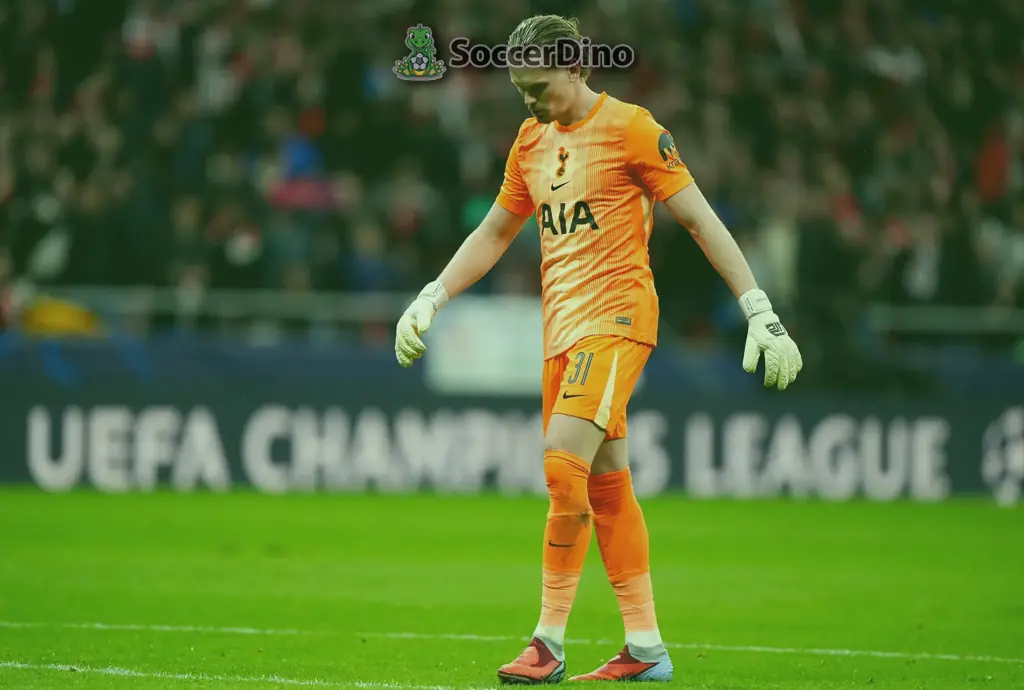
Atlético Madrid beat Tottenham Hotspur 5-2 in a match that quickly turned into a nightmare for young goalkeeper Antonín Kinsky, whose Champions League debut became the main talking point long before the final whistle.
The 22-year-old Czech endured a brutal opening spell, making costly mistakes that led to two Atlético goals inside the first fifteen minutes, before being taken off as early as the seventeenth minute. What should have been one of the biggest nights of his career instead became an evening of intense scrutiny, debate and sympathy from across the football world.
The result itself was already painful enough for Tottenham, who were completely outplayed by an Atlético side that punished every weakness and played with far more composure, aggression and clarity. But beyond the 5-2 scoreline, the match will be remembered above all for the difficult situation surrounding Kinsky. For a young goalkeeper still trying to establish himself at the highest level, the game became an extreme test of character, confidence and resilience. Goalkeeping is a position where mistakes are often exposed more harshly than anywhere else on the pitch, and on a stage as big as the Champions League, every error is magnified.
Support for Kinsky initially came mainly from the Spanish side, which made the reaction even more striking. Rather than piling on criticism, several prominent figures chose to defend the young keeper and highlight just how mentally demanding the position can be. Former Atlético Madrid and Manchester United goalkeeper David de Gea was among the first to show public support, sending an encouraging message on social media. His words carried weight not only because of his status in the game, but also because he knows better than most what it means to live under the microscope as a goalkeeper. His message was simple and human: those who have never played in goal can never fully understand how difficult the role is, and Kinsky must keep his head up because his time will come again.
That reaction set the tone for much of the post-match discussion. While Kinsky had clearly made mistakes, many observers felt the bigger issue was what happened after those mistakes. Antoine Griezmann, one of Atlético Madrid’s most experienced and influential players, openly questioned Tottenham coach Igor Tudor’s decision to substitute the goalkeeper so early. Speaking after the match, the French forward said he felt sorry for Kinsky and suggested that if a coach begins a game with a certain goalkeeper, he should stand by that decision. In his view, the early substitution was not the best solution and may have made the emotional damage even worse.
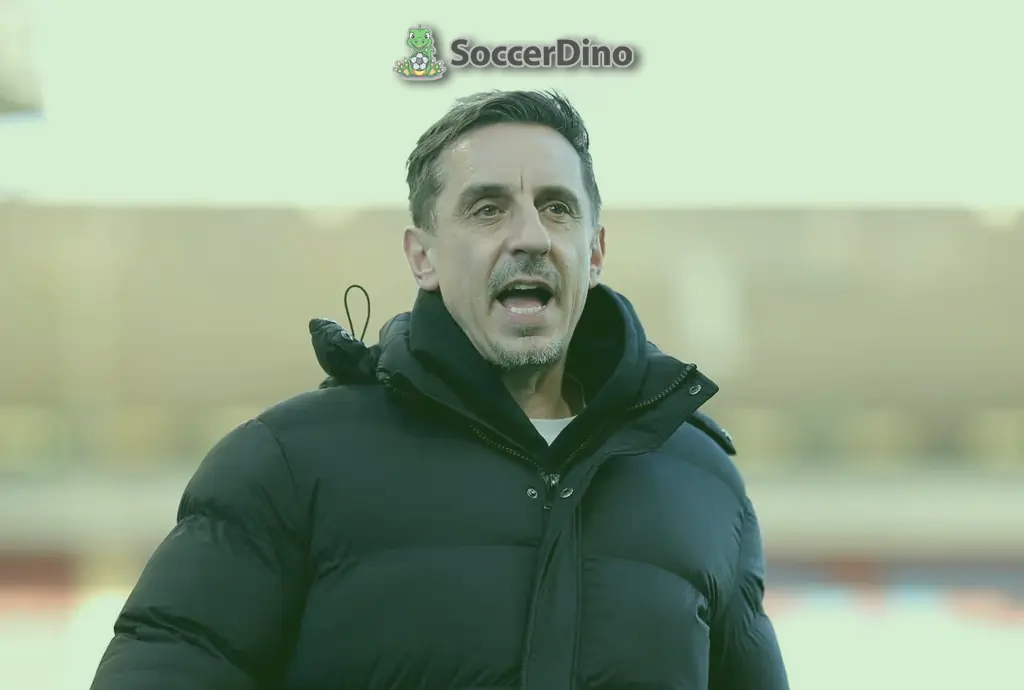
That idea was echoed by several former goalkeepers, many of whom understand how fragile confidence can be in that position. Peter Schmeichel was particularly severe in his criticism of Tudor. The legendary former Manchester United goalkeeper said this would be the kind of moment people remember whenever they hear Kinsky’s name, arguing that the coach should at least have left him on the pitch until half-time. Schmeichel went even further by saying Tudor had effectively destroyed the player’s career in that instant, a dramatic assessment that reflected just how serious he considered the decision to be. His sympathy for Kinsky was obvious, and his comments underlined a broader fear that such a public setback could leave long-term psychological scars.
Former Netherlands international Tim Krul also joined the criticism, taking aim not at Kinsky but at the Tottenham manager. In his view, it was Tudor who should have faced consequences at the break, not the young goalkeeper who was thrown into such an unforgiving situation. That remark captured the wider feeling among many pundits and former players: yes, Kinsky had a terrible start, but the responsibility did not belong to him alone. The coach made the selection, the team around him also failed, and Atlético were ruthless in exploiting the chaos.
Perhaps the most telling reaction came from Tudor himself. After the match, the Tottenham coach admitted that he had made a mistake, though not in substituting Kinsky. Instead, he said the real error was starting him in the first place. It was a revealing statement, because it showed that even the manager believed the decision had backfired almost immediately. Tudor acknowledged that taking off a player so early is always difficult, but he also admitted that he had not yet spoken to Kinsky after the match. That detail will only fuel more questions about how Tottenham intend to manage the situation in the coming days.
For Kinsky, this now becomes less about one terrible evening and more about what happens next. Football history is full of players, especially goalkeepers, who suffered humiliating setbacks early in their careers before rebuilding themselves and returning stronger. The problem is that recovery depends heavily on the environment around them. A goalkeeper needs trust from the coaching staff, support from team-mates and a sense that one bad night will not define everything. Without that, the risk is that doubt begins to grow and every future performance is played under the shadow of the last mistake.
From Tottenham’s perspective, the episode also raises serious questions about man-management and decision-making under pressure. A coach must balance the needs of the team with the well-being of the individual, and in this case many feel Tudor failed to protect a young player in one of the most vulnerable moments of his career. Atlético Madrid deserved their emphatic 5-2 victory, but the story that left the deepest impression was not simply about goals or tactics. It was about a young goalkeeper being exposed on one of football’s biggest stages, and about whether the people responsible for guiding him handled that moment in the right way.
In the days ahead, attention will remain fixed on Kinsky. Not because of the mistakes alone, but because football now waits to see how he responds. Nights like this can break a player, but they can also become the starting point for growth. Much will depend on whether Tottenham help him recover, whether Tudor restores belief, and whether Kinsky himself can turn one of the hardest evenings of his career into a lesson rather than a lasting wound.