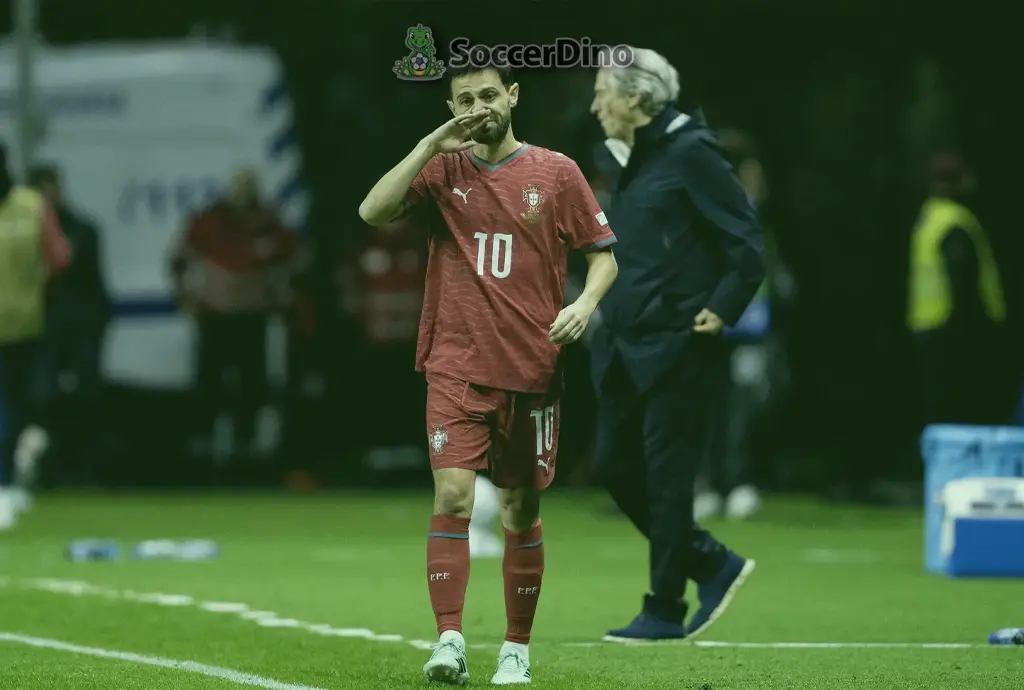
Bayern Munich face growing criticism from FIFPRO over Jamal Musiala's contract, salary protection clause and reported tensions surrounding his health.

Jamal Musiala Contract Controversy Deepens as Bayern Munich Face Criticism Over Handling of German Star
The situation surrounding Jamal Musiala has become one of the most controversial subjects in German football, with Bayern Munich facing increasing scrutiny over their handling of the midfielder's health problems and the financial commitments contained in his contract. What initially appeared to be a matter of concern regarding the player's recovery has developed into a much broader dispute involving senior club officials, the player's representatives and international football organisations. The latest revelations published by the German media have added another dimension to an increasingly delicate situation at the Allianz Arena.
Musiala, who has long been regarded as one of the most important figures in Bayern's sporting project, recently returned to competitive action following a difficult period marked by injuries and health concerns. However, instead of his comeback dominating the headlines for positive reasons, attention has shifted towards public statements from Bayern's leadership questioning the sustainability of his lucrative contract and expressing uncertainty about his ability to rediscover his previous level of performance.
The controversy has already prompted the intervention of FIFPRO, the international organisation representing professional footballers, which has strongly criticised Bayern Munich for discussing the player's contractual situation publicly while he is attempting to recover. Germany's own professional players' union, the VDV, has also expressed concerns, turning what might ordinarily have remained an internal club matter into a wider debate about employment rights, contractual obligations and the responsibilities of professional football clubs towards their players.
Further information published by German magazine Stern on Tuesday, November 24, has intensified the discussion. According to the report, Musiala negotiated a particularly favourable clause when extending his contract with Bayern, guaranteeing continued salary payments for up to six months in the event of illness. The magazine has also reported disagreements within the club's leadership regarding the communication of a recent medical incident involving the player, raising questions about the relationship between senior executives, the sporting department and Musiala's representatives.
Musiala Contract Contains Significant Financial Protection
One of the most important revelations concerns the contractual agreement Musiala signed with Bayern Munich in February 2025. At the time, securing the midfielder's long-term future was considered a major achievement for the German champions. Musiala was attracting considerable attention across European football, and Bayern's decision to extend his contract until June 2030 was widely viewed as a statement of intent regarding the club's future ambitions. The youngster was expected to become one of the central figures around whom Bayern would build their next generation of successful teams.
However, nearly two years after the agreement was announced, certain provisions within the contract have reportedly become a subject of discussion among senior club officials. According to Stern, Musiala's representatives successfully negotiated a clause guaranteeing the continued payment of his salary for up to six months if he becomes unable to work because of illness. The arrangement provides substantially greater financial protection than the standard statutory period normally applicable to professional footballers in Germany.
The clause is particularly relevant given the physical difficulties Musiala has experienced over recent months. While football contracts frequently contain performance-related bonuses linked to appearances, goals, assists and collective achievements, guaranteed remuneration operates differently. The financial obligations arising from a prolonged absence depend on the specific terms agreed between the player and the club, as well as the applicable employment and insurance arrangements.
Although the precise wording of Musiala's contract has not been made public, the reported six-month provision would offer him considerable financial security during an extended period of recovery. Importantly, such protection would have been negotiated and accepted when the agreement was signed. The existence of a favourable contractual clause does not, in itself, suggest any wrongdoing by the player or his representatives.
For Bayern Munich, however, the situation illustrates the financial responsibilities associated with awarding long-term contracts to leading footballers. Clubs must account for the possibility that important players will experience injuries, illness or periods of reduced performance during the lifetime of an agreement. While those risks are an unavoidable part of professional sport, they can become particularly significant when a player occupies one of the highest positions within the club's salary structure.
How Salary Protection Works in German Professional Football
The discussion surrounding Musiala's contract has also attracted attention to an aspect of professional football that is rarely examined in detail by supporters. Despite the substantial salaries earned by leading Bundesliga players, professional footballers are employees whose contractual rights are governed by German employment legislation alongside the specific regulations applicable to the sport.
Under Germany's Continued Remuneration Act, employees who are unable to work because of illness are generally entitled to receive their regular remuneration from their employer for up to six weeks, provided the relevant statutory conditions are satisfied. According to the German professional footballers' union VDV, the standard employment contract used by the German Football League follows this statutory framework.
When that initial period expires, the applicable insurance arrangements become particularly important. In cases involving recognised occupational accidents or injuries, statutory accident insurance may provide injury compensation. Professional footballers in Germany are covered through the VBG, the statutory accident insurance institution responsible for several professional sectors, including sport. Ordinary illness can fall under different health insurance arrangements, depending on the individual's circumstances and coverage.
These benefits are subject to statutory calculation rules and maximum amounts, meaning they generally represent only a fraction of the remuneration received by footballers playing at the highest level. For an established Bundesliga international earning a substantial salary, the difference between contractual remuneration and standard insurance benefits can therefore be considerable.
Individual contractual agreements can provide more favourable protection than the statutory minimum, which explains why experienced agents frequently attempt to negotiate extended salary guarantees for their clients. Such provisions can be especially valuable in professional football, where a serious injury or illness can affect a player's ability to compete for several months and where the duration of a successful career is naturally limited.
Musiala is reportedly not the first prominent Bayern Munich player to benefit from this type of arrangement. Former club legends Franck Ribéry and Arjen Robben are also understood to have negotiated provisions guaranteeing continued salary payments for up to six months. Both players were among Bayern's most influential footballers during their time in Munich, although they also experienced several periods of absence through injury.
Those previous examples provide important context for the current controversy. If the reports concerning Musiala's contract are accurate, his agreement would represent an enhanced form of financial protection rather than an unprecedented arrangement within the club. The central question is therefore not simply why the player negotiated such conditions, but how Bayern intend to manage the contractual commitments they voluntarily accepted.
FIFPRO Strongly Criticises Bayern Munich Leadership
The international players' union FIFPRO intervened on November 21 after several prominent Bayern officials publicly discussed Musiala's contractual situation and future sporting prospects. The organisation expressed serious concern about the timing and nature of those comments, arguing that the midfielder should be allowed to concentrate on his recovery without facing additional public pressure regarding his employment conditions.
The statement followed remarks from Bayern honorary president Uli Hoeneß, chief executive Jan-Christian Dreesen and former chief executive Karl-Heinz Rummenigge. Their comments had raised questions about whether Musiala would be able to return to the standard of performance that originally justified his lucrative contract extension. Rummenigge also suggested that the existing financial arrangements might eventually require discussion.
FIFPRO interpreted the succession of public statements as an attempt to increase pressure on Musiala and his representatives before any potential contractual negotiations. The organisation argued that concerns of this nature should be addressed directly and privately with the individuals involved rather than becoming the subject of repeated public interventions while a player is recovering from health problems.
The union also emphasised the importance of contractual stability in professional football. Its position is that agreements must protect both employers and employees, regardless of whether subsequent developments make the original terms appear more favourable to one side. Just as a footballer cannot automatically demand improved contractual conditions after a successful period on the pitch, a club cannot assume that an injury or decline in performance entitles it to reduce previously agreed remuneration.
That principle is particularly significant in a sport where the financial value of individual players can change rapidly. Clubs regularly benefit when young footballers develop into world-class performers while remaining under contracts negotiated before their emergence. Conversely, they accept financial risks when committing to lucrative long-term agreements based on expectations about future performances.
FIFPRO's intervention has increased the pressure on Bayern to explain their approach to the situation. Although the organisation's criticism does not establish that the club has breached Musiala's contract, it raises wider questions about how employers should communicate concerns involving players who are experiencing medical difficulties.
German Players' Union Also Expresses Concern
The controversy has not been limited to the international football community. Germany's professional players' union, the VDV, has also criticised the public discussion surrounding Musiala, reinforcing the argument that contractual commitments should be respected and that footballers experiencing health problems should receive appropriate support from their employers.
VDV president Carsten Ramelow added his voice to the debate on Monday, November 23, following FIFPRO's earlier intervention. The German union's involvement is particularly relevant because it represents players operating within the specific employment and regulatory framework applicable to Bundesliga clubs. Its concerns therefore extend beyond Musiala's individual circumstances and touch on the broader relationship between professional footballers and their employers in Germany.
The issue has also renewed discussion about whether professional players should receive stronger financial protection during prolonged periods of injury or illness. While leading international footballers can frequently negotiate individual contractual guarantees, players operating in lower divisions or with less negotiating power may have considerably fewer opportunities to obtain enhanced conditions.
For those footballers, a lengthy absence can create serious financial difficulties, particularly when their regular earnings are substantially lower than the salaries received by established Bundesliga stars. The Musiala controversy has consequently brought greater visibility to an employment issue that affects professional players across different levels of the game.
Reports Reveal Tensions Within Bayern Munich Management
Beyond the contractual debate, the latest investigation by Stern suggests that the situation has created disagreements within Bayern Munich's leadership. According to the German magazine, several influential members of the supervisory board believe they were not adequately informed about recent developments concerning Musiala's health. Particular attention has focused on the timing of information provided to senior figures following another reported medical incident last week.
Musiala reportedly collapsed on Monday, November 16, just four days before returning to competitive action against FC Cologne in the Bundesliga. According to the investigation, information about the incident was initially restricted to individuals within the sporting department and the player's management, with other senior club officials only becoming aware of the situation later in the week.
The report claims that this delay caused considerable frustration among influential figures at Bayern, including Uli Hoeneß and Karl-Heinz Rummenigge. Both remain important voices within the club's leadership despite no longer occupying the same executive positions they held during earlier periods of Bayern's history.
According to Stern, some officials have also expressed concerns about whether communication between the player's representatives and the club's leadership has been sufficiently transparent. These concerns have reportedly contributed to the growing tension surrounding the case, although the allegations should not be confused with established evidence that Musiala or his representatives deliberately withheld essential medical information.
The circumstances surrounding the reported incident have not been fully explained publicly, and the complete details of the conversations between the medical department, sporting management and supervisory board remain unknown. It is therefore difficult to establish precisely which individuals were informed, when they received the information or what responsibilities applied to each of the parties involved.
Medical confidentiality is another important consideration. Professional football clubs have a legitimate interest in understanding whether their players are available to train and compete, but that does not automatically entitle every executive to unrestricted access to confidential medical information. The appropriate communication process must balance the club's operational requirements with the player's privacy and the professional obligations of medical personnel.
Musiala Returned to Action Against FC Cologne
Amid the controversy surrounding his contract, one of the most encouraging sporting developments was Musiala's return to competitive action on Friday, November 20. The German international appeared as a second-half substitute during Bayern Munich's 1-1 Bundesliga draw against FC Cologne at the Allianz Arena, ending an absence that had lasted approximately two months.
The midfielder had not featured for Bayern since September, having sustained a hamstring injury while preparing for an international fixture with Germany. His return was therefore welcomed by supporters who had been waiting to see one of the team's most technically gifted players back on the pitch. Although he was unable to inspire Bayern to victory against Cologne, his appearance represented an important step towards rebuilding his competitive rhythm.
Returning after an extended absence is rarely straightforward, particularly for attacking midfielders whose effectiveness depends on acceleration, close control, changes of direction and the ability to make decisions quickly under pressure. Regular training can help restore physical conditioning, but competitive football introduces demands that are difficult to reproduce fully during individual recovery sessions.
For Musiala, the immediate sporting challenge will be gradually increasing his involvement and rediscovering the consistency that made him one of Europe's leading young footballers. His performance levels should be assessed over an appropriate period rather than through isolated appearances immediately following his return.
Bayern's coaching staff also have an important responsibility in managing that process. Vincent Kompany must balance the team's need for attacking creativity with the player's recovery programme, taking medical advice into account when deciding how much playing time Musiala should receive. The midfielder's contractual situation should not determine whether he is medically ready to participate in a particular match.
Previous Health Problems Have Complicated Musiala's Recent Career
The current controversy follows a particularly challenging period for Musiala, who has experienced several interruptions to his footballing career since suffering a serious injury during the 2025 FIFA Club World Cup. That setback required an extended recovery period and prevented him from contributing regularly to Bayern during an important stage of the club's sporting development.
After working his way back towards competitive football, Musiala encountered further difficulties during the summer of 2026. The midfielder subsequently disclosed that he had been diagnosed with absence seizures associated with a neurological dysfunction, following incidents during pre-season. His public explanation indicated that the condition was being treated, although the full details of his medical care have remained private.
Those developments were followed by a separate muscular injury sustained during an international break, further disrupting his involvement with Bayern. The accumulation of different physical setbacks has limited his opportunities to establish a consistent sequence of competitive appearances, making his recent comeback particularly significant.
However, it is important to distinguish between the different medical problems reported over that period. Musiala's previous injury, neurological condition and subsequent muscular difficulties should not automatically be treated as manifestations of the same underlying problem. Without further medical information, drawing conclusions about the relationship between those incidents would be speculative.
Similarly, reports of another collapse do not provide sufficient evidence to establish the severity of his current condition or predict its long-term consequences. Questions about his medical prognosis can only be answered reliably by the qualified professionals responsible for his treatment. Public comments from football executives, regardless of their seniority, cannot replace that assessment.
Jan-Christian Dreesen Defends Bayern Munich Officials
Despite the criticism directed at Bayern's leadership, chief executive Jan-Christian Dreesen has defended the public comments made by Hoeneß and Rummenigge. Speaking on Monday, November 23, Dreesen indicated that he considered their remarks legitimate and expressed surprise at the strength of FIFPRO's response.
His intervention demonstrates that Bayern's senior management does not necessarily share the international union's interpretation of the situation. From the club's perspective, discussing the sporting availability of an important player and the consequences of a prolonged absence can form part of its broader responsibilities regarding squad planning and financial management.
However, there is an important distinction between acknowledging those responsibilities and publicly questioning the contractual conditions of a player who is recovering from medical problems. FIFPRO's criticism has focused particularly on the latter issue, arguing that such discussions should take place privately to avoid placing unnecessary pressure on the individual concerned.
The competing positions illustrate why the controversy has become so difficult to resolve publicly. Bayern have legitimate interests in managing their squad, protecting their financial stability and understanding the availability of important players. Musiala, meanwhile, has legitimate interests in protecting his health, maintaining his privacy and receiving the contractual remuneration previously agreed with the club.
There is no inherent reason why those interests cannot coexist. The difficulty arises when disagreements over communication, financial expectations or medical information become public before the individuals involved have established a mutually acceptable approach. Continuing those discussions through the media could complicate an already sensitive relationship without providing meaningful answers to the outstanding questions.
Bayern Face Questions Over Musiala's Long-Term Contract
When Musiala extended his agreement until June 2030, Bayern Munich were securing the services of a footballer widely regarded as one of the most talented attacking players of his generation. His technical ability, creativity and international experience made him an obvious candidate to become the long-term sporting reference point of the club. The agreement also reduced the immediate risk of losing him to another major European institution.
Musiala's importance extended beyond his contributions on the pitch. As a young German international who had developed into a leading figure at Bayern, he represented continuity between the club's sporting ambitions and its identity within German football. His contract extension was therefore celebrated as a major achievement for the sporting department and an indication of the confidence placed in his future.
Long-term contracts of this nature inevitably involve uncertainty. Footballers can develop beyond expectations, experience periods of inconsistency or suffer injuries that limit their availability. The purpose of a negotiated agreement is to establish predictable rights and responsibilities despite those potential changes.
If Bayern wish to discuss different contractual conditions in the future, the legal and practical possibilities will depend on the existing agreement, applicable employment legislation and the willingness of both parties to negotiate. Public dissatisfaction with the financial terms does not establish an automatic right to modify them.
For the time being, Musiala remains under contract until 2030, and there has been no official announcement confirming that the existing terms have been changed. Speculation about potential salary reductions, renegotiations or a future departure should therefore be treated as speculation rather than an established development.
The Sporting Importance of Jamal Musiala Remains Undiminished
While the financial controversy continues to attract attention, Bayern Munich cannot overlook the qualities that made Musiala such an important player in the first place. At his best, the German international offers a combination of exceptional close control, creativity and the ability to progress through crowded defensive areas. His capacity to retain possession under pressure and move beyond opponents makes him particularly valuable against teams that defend with compact formations.
Musiala's versatility also allows him to influence matches from different attacking positions. He can operate centrally behind a striker, move into wide areas or receive possession between the opposition's defensive and midfield lines. Those movements create opportunities not only for his own attempts at goal but also for teammates whose attacking runs benefit from the attention he attracts.
For Bayern, having a fully available Musiala would provide Kompany with additional tactical flexibility during a demanding campaign involving domestic and European commitments. His creativity can be especially important in matches where the opposition restricts space and forces Bayern to rely on individual technical quality to create clear scoring opportunities.
However, expecting the midfielder to immediately reproduce his previous performances would be unreasonable given the interruptions he has experienced. His progress will need to be assessed through his ability to train consistently, accumulate competitive minutes and gradually regain confidence in the movements that define his game.
The contractual debate risks distracting attention from that process. Rather than assessing every appearance in relation to his reported salary, the sporting department has an opportunity to establish a clear recovery and reintegration programme that prioritises his readiness to contribute. Such an approach would serve both the player's interests and Bayern's long-term sporting ambitions.
A Wider Debate About Player Welfare and Club Responsibilities
The Musiala case has become particularly significant because it raises questions extending beyond Bayern Munich. Professional football operates within an intensely competitive environment where players are frequently assessed according to their market value, salaries, statistical contributions and physical availability. Those factors are important to clubs, but they do not eliminate the responsibilities employers have towards individuals experiencing illness or injury.
Medical recovery can already involve considerable uncertainty, especially when a player has experienced repeated interruptions to his career. Public discussions questioning his value or contractual future introduce additional attention during a period when the primary focus should remain on appropriate treatment and a medically supervised return to competition.
FIFPRO's intervention reflects its broader commitment to protecting professional footballers from what it considers inappropriate employment practices. Its position is not that clubs should be prevented from evaluating their financial commitments or discussing legitimate contractual concerns. Rather, it argues that those discussions must respect existing agreements and be conducted in an appropriate manner.
For other professional clubs, the situation provides an example of how a disagreement involving one player can develop into a much wider reputational issue. Bayern's handling of the controversy is now being discussed by international media organisations, players' unions and football supporters far beyond Germany. What initially concerned the availability and contractual terms of a single midfielder has become a debate about the culture and responsibilities of one of Europe's most influential football institutions.
The outcome could also influence future negotiations between Bundesliga clubs and the representatives of leading footballers. Extended salary protection, medical confidentiality and procedures for communicating prolonged absences may receive greater attention as agents and employers attempt to avoid similar disputes. However, any changes to standard contractual arrangements would require appropriate negotiations within the existing legal and regulatory framework.
Bayern Munich Must Find a Way Forward With Musiala
As Bayern prepare for their upcoming Champions League encounter against Lille and their subsequent Bundesliga fixture against Hamburg, the club must attempt to prevent the controversy from overshadowing its sporting objectives. Musiala's recent return against Cologne was an encouraging development, but the attention surrounding his contract and health has continued to dominate discussions away from the pitch.
The most constructive approach would involve establishing clear communication between the player's representatives, the sporting department, medical professionals and the relevant members of Bayern's leadership. Any legitimate concerns about the contractual agreement or the communication of medical information can be addressed through appropriate internal channels, while respecting the confidentiality of the player's treatment.
For Musiala, the priority remains rebuilding his physical condition and returning to consistent competitive action. At 23, he has already demonstrated his ability to influence matches at the highest level for both Bayern Munich and the German national team. His immediate sporting future will depend on his recovery and the decisions made in consultation with the professionals responsible for his care, rather than on speculation about his contract.
Bayern, meanwhile, face the challenge of demonstrating that their financial and sporting interests can be managed without undermining the relationship with one of their most important players. The club's leadership must recognise that contractual stability and player welfare are not obstacles to sporting success but important foundations of a sustainable professional environment.
Much remains unclear regarding the precise terms of Musiala's salary protection, the internal communication surrounding his reported collapse and whether any formal contractual discussions will eventually take place. Until those questions are answered, the distinction between confirmed information, reported allegations and public speculation remains essential.
What is certain is that a relationship celebrated as central to Bayern Munich's future when Musiala extended his contract in February 2025 is now facing an unexpected test. The manner in which the German champions resolve their differences with the midfielder and his representatives could have lasting consequences, not only for the player's future at the Allianz Arena but also for the club's reputation as an employer and its relationship with the next generation of leading footballers.