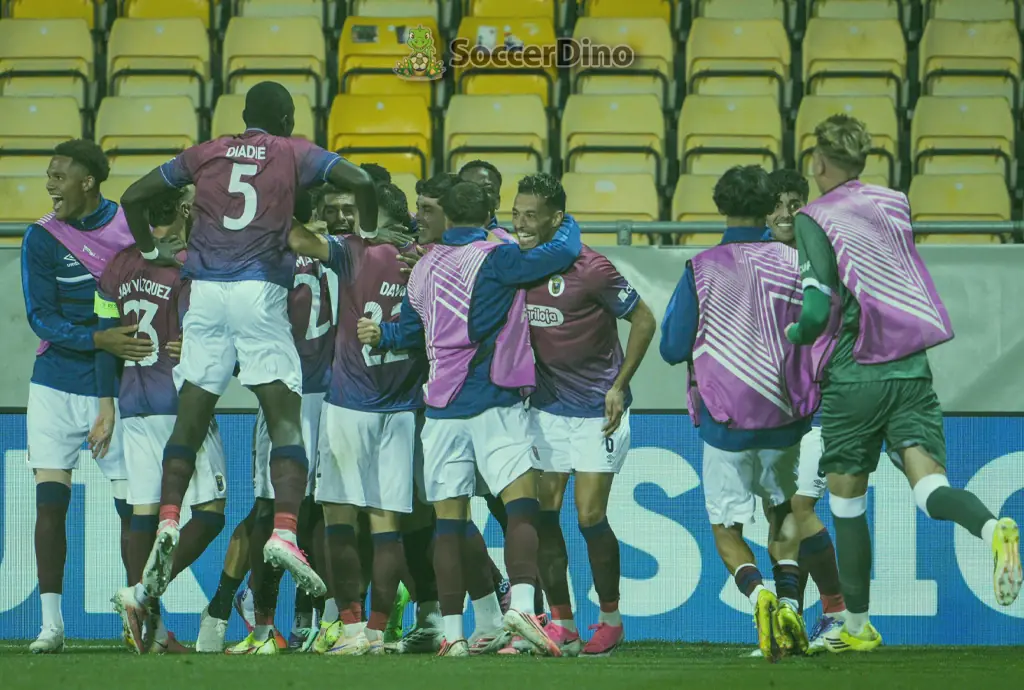
Barcelona needed a late breakthrough to beat third tier Guadalajara 2–0 in the Copa del Rey, with Christensen and Rashford scoring after a De Jong assist, as other ties saw late drama and notable upsets.

Barcelona’s Copa del Rey campaign moved safely into the next round on Tuesday night, but the holders were made to work far longer than expected before finally pulling away from third tier Guadalajara.
A 2–0 victory looks comfortable on paper, yet the match was defined by frustration, a slow rhythm, and a late breakthrough that only arrived in the final quarter of an hour.
The night began with disruption before the ball was even in play. Kick off was delayed by around 30 minutes due to issues involving one of the stadium’s temporary stands, an unusual pre match problem that added an extra layer of uncertainty to a cup tie already loaded with potential banana skin narratives. When the game eventually started, Barcelona faced a familiar Copa del Rey scenario: a lower league opponent defending with intensity, the home crowd fully engaged, and a pitch environment that demanded patience as much as talent.
For long stretches, Barcelona struggled to impose their usual attacking flow. Several of the Blaugrana’s headline names did not find their best level, and the performance carried a flatness that kept the contest alive. Lamine Yamal, one of the players typically capable of injecting acceleration and unpredictability, was among those who did not consistently spark the attack. With Guadalajara compact, aggressive in duels, and quick to close space between the lines, Barcelona’s possession often remained sterile, circulating without turning into clear chances.
Guadalajara, for their part, approached the match with the clarity of a team that understood the script of these cup ties. They defended deep for long periods, protected the central corridor, and attempted to turn turnovers into brief surges forward, mainly to relieve pressure and keep Barcelona’s back line alert. Their aim was not to outplay Barcelona across 90 minutes, but to extend the match into the territory where nerves can influence decision making, and where one mistake or one set piece can swing the outcome.
That is exactly where Barcelona eventually found the solution. In the 77th minute, Frenkie de Jong delivered a precise cross that finally cut through the stubborn resistance. The delivery was sharp and inviting, and defender Andreas Christensen attacked it with purpose, heading home to break the deadlock. In many Copa del Rey ties, the first goal is the critical event, because it forces the underdog to adjust and take risks. Until that moment, Guadalajara could remain disciplined and conservative. After it, the game inevitably opened.
Barcelona used that opening to secure the tie in the 90th minute through Marcus Rashford, who finished to confirm qualification and remove any late doubt. The timing of the second goal mattered almost as much as the goal itself, as it ensured Barcelona would not be dragged into a chaotic closing phase. For a team balancing domestic commitments and the wider demands of a season, clean qualification without extra time is always the priority, even on a night where the performance is not a showcase.
There are, however, clear talking points for Barcelona coming out of the match. The first is the reminder that the Copa del Rey punishes complacency. Even against a third tier opponent, control and intensity are non negotiable if a top side wants to avoid the kind of upset that defines the competition each season. The second is the value of experience and structure when creativity is not flowing. De Jong’s quality in a decisive moment, and Christensen’s contribution from a defender’s position, underline how cup ties can be decided by players who are not necessarily the headline attackers.
From a broader perspective, Barcelona continue to carry the weight of their own history in this tournament. They are the record winners with 32 Copa del Rey titles and entered this tie as holders, meaning every opponent approaches them as the team to knock out. That status changes the dynamic of away matches, particularly against lower division sides for whom hosting Barcelona becomes a major event, often the most significant fixture of the season.
Tuesday’s results elsewhere reinforced how thin the margins can be. Real Sociedad, playing away at Eldense, also needed a dramatic finish to progress. Their 2–1 win was sealed by Marín in the 90+6 minute, assisted by Portugal international Gonçalo Guedes. That late winner suggests a match that remained unstable deep into stoppage time, with Sociedad forced to keep pushing until the final seconds. In these rounds, even clubs accustomed to European football often find themselves in survival mode, because the underdogs play with freedom, and the favourites carry the pressure of expectation.
Another standout result came in A Coruña, where Deportivo La Coruña, a second division side, eliminated top flight Mallorca with a single late goal. Carillo scored in the 85th minute to decide the tie, sending Deportivo through and removing one of the La Liga teams from the competition. For Mallorca, it was a costly night, especially given that Portugal international Samu Costa started, highlighting that they took the match seriously but could not find the breakthrough they needed. For Deportivo, it was exactly the kind of victory that fuels a cup run, combining discipline with one decisive moment.
Elche also progressed with a 1–0 away win at Eibar, another tie featuring teams from the second tier. Martim Neto came on in the second half for the La Liga side, a detail that points to squad management and the importance of depth as clubs navigate a heavy schedule. Valencia, meanwhile, won 2–0 away at Sporting Gijón. Thierry Correia and André Almeida remained unused substitutes, suggesting Valencia were comfortable enough to manage minutes without needing to call on them.
With these ties completed, attention quickly shifts to Wednesday’s schedule, which includes two high profile away trips for Madrid’s giants. Real Madrid travel to Talavera, a third tier side, while Atlético Madrid visit Baleares from the fourth division. On paper, both matches heavily favour the top flight clubs, but the pattern of this round has already shown that favourites often need time to find control, and that lower league opponents can stay in contention if they defend with conviction and seize the emotional momentum of playing at home.
For Barcelona, the conclusion is straightforward. The job is done, the clean sheet is secured, and the team is through. Yet the match also acts as a warning signal: if the rhythm is slow and the attacking level drops, the Copa del Rey can become uncomfortable very quickly. The quality to decide the tie was ultimately there, but the next rounds will demand more intensity, sharper movement in the final third, and a faster ability to turn dominance into goals.