Brazil call up Éderson after Wesley is ruled out of the 2026 World Cup through injury, forcing Carlo Ancelotti into a late squad change.
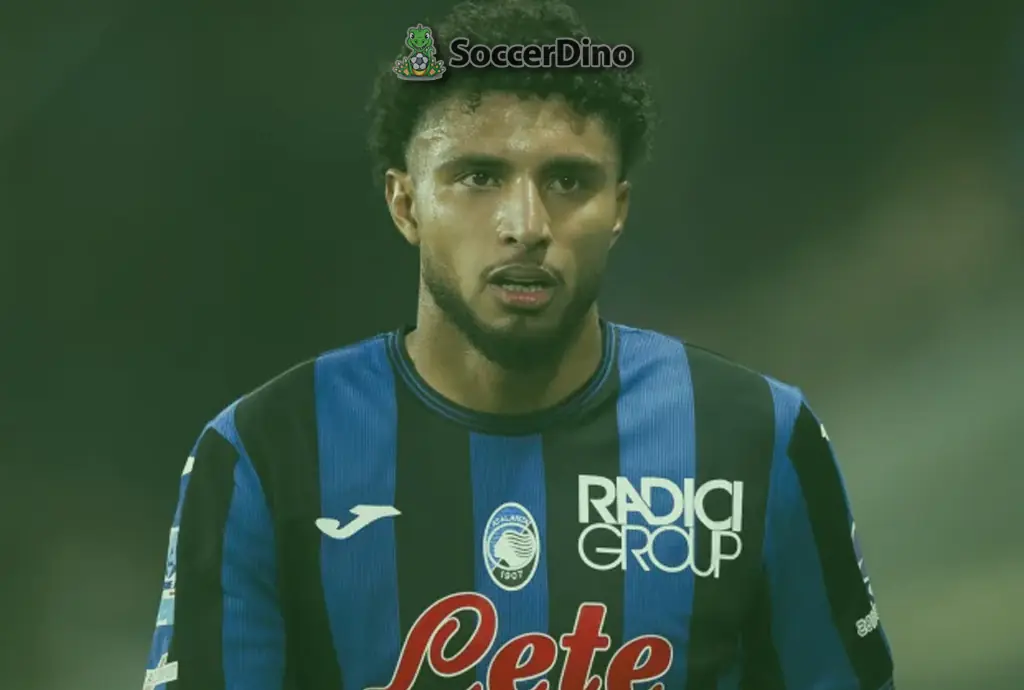
Ancelotti calls up Éderson after Wesley injury forces late Brazil change
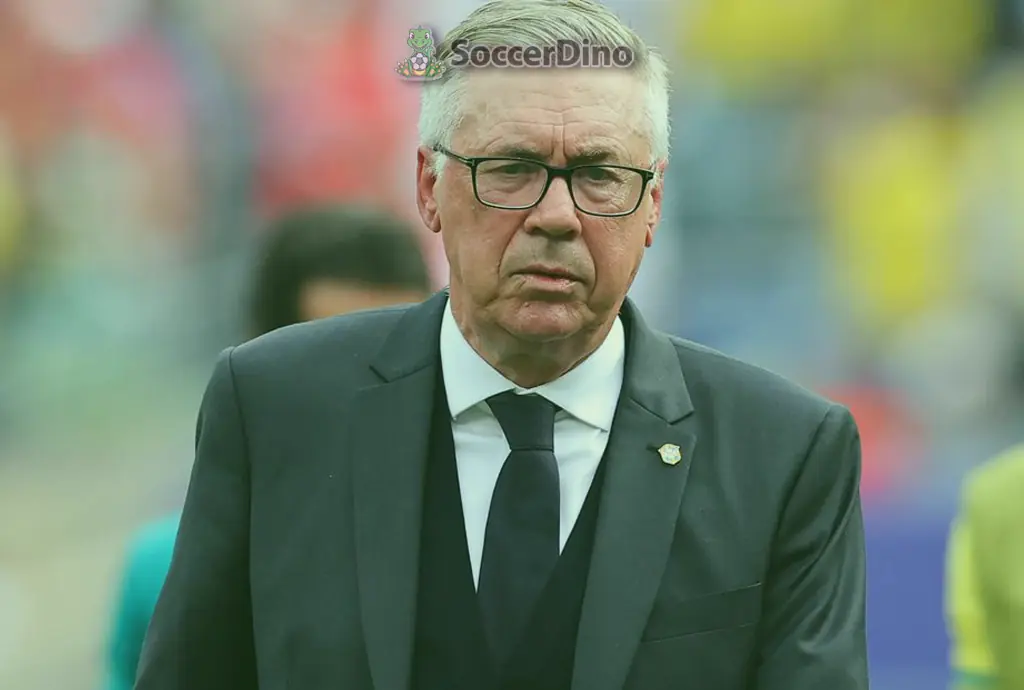
Brazil have been forced into a late change to their World Cup squad after Wesley was ruled out with a muscle injury in his left thigh, prompting head coach Carlo Ancelotti to call up Éderson as his replacement. The Atalanta midfielder will now join the Brazilian delegation on American soil, adding another option to a midfield group that already includes experience, physical presence and technical quality.
The decision came after Wesley underwent further medical assessment following the final preparation match against Egypt. The Roma full-back had started the 2-1 victory, but his evening lasted only 17 minutes before he had to be replaced by Danilo. At the time, the early substitution already raised concern, and the subsequent exams confirmed the worst possible scenario for the 22-year-old defender: a muscle injury in the adductor of the left thigh, serious enough to remove him from the final stage of the 2026 World Cup.
According to the Brazilian Football Confederation, the MRI scan confirmed the injury in Wesley left thigh adductor. The CBF also made a point of stressing the human side of the situation, describing Wesley as a player much appreciated within the group and stating that he will continue to be considered part of the team that is chasing a sixth world title. It was a message designed not only to explain the medical situation, but also to show support for a player whose World Cup dream has been interrupted at the most painful possible moment.
For Wesley, the timing could hardly have been worse. A place in a World Cup squad is the result of years of work, club performances, international recognition and the ability to convince a coach during an intensely competitive selection process. To lose that place after starting the final warm-up match, just days before the tournament begins, is a cruel blow. The injury does not only remove him from the competition; it also prevents him from experiencing what would have been one of the biggest stages of his young career.
From Brazil perspective, the change creates an interesting tactical adjustment. Wesley is a full-back, while Éderson is a midfielder. That means Ancelotti has not made a direct position-for-position replacement. Instead, he has chosen to reinforce another area of the pitch, trusting the defensive options already available in the squad to cover the loss of Wesley. Danilo, Alex Sandro, Douglas Santos and other defensive alternatives give Brazil enough flexibility at the back, while the addition of Éderson strengthens the central zone, where physical intensity and ball-winning ability can be decisive in a long tournament.
Éderson arrives as a player with a different profile from many traditional Brazilian midfielders. At Atalanta, he has developed into an energetic, aggressive and tactically disciplined midfielder, capable of covering ground, pressing opponents and giving balance to teams that want to play with ambition but cannot afford to become exposed. He may not arrive as one of the biggest names in the squad, but his characteristics can be extremely useful in specific match situations, especially when Brazil need more control, more defensive coverage or greater intensity in midfield duels.
His call-up also reflects the way Ancelotti is expected to manage Brazil. The Italian coach is known for valuing balance, dressing-room stability and tactical intelligence. Brazil will always be associated with attacking talent, and this squad contains several players capable of deciding matches in the final third, including Vinicius Júnior, Raphinha, Gabriel Martinelli, Neymar, Endrick and Matheus Cunha. However, major tournaments are often won through control as much as flair. The arrival of Éderson gives Ancelotti another player who can help protect the team structure behind that attacking talent.
The injury to Wesley comes after Brazil completed their final test before the World Cup with a 2-1 win over Egypt. Warm-up matches are always delicate at this stage. Coaches need rhythm, competition and tactical rehearsal, but they also want to avoid physical problems before the tournament begins. In Brazil case, the result was positive, but the injury changed the tone of the evening. What should have been a final confidence-building exercise also became the match that ended Wesley involvement in the competition.
Brazil enter the 2026 World Cup carrying the usual level of expectation. No national team has won the competition more often. The five titles won in 1958, 1962, 1970, 1994 and 2002 remain central to the identity of Brazilian football, and every tournament brings the same question: can this generation finally deliver the sixth star? The wait has now stretched for more than two decades, which only increases the pressure around each new campaign.
The 2026 edition also has a particular historical weight. It will be the first World Cup with 48 national teams and a total of 104 matches, staged across the United States, Mexico and Canada. For Brazil, the expanded format changes the rhythm of the competition, but not the objective. The team are in Group C alongside Morocco, Scotland and Haiti, a group that mixes different football cultures, different levels of tournament experience and different tactical challenges.
Morocco are likely to be viewed as the most dangerous opponent in the group, especially after the country has gained considerable international respect in recent years. Scotland return to the World Cup stage with the ambition of making an impact, while Haiti bring the emotional power of a comeback to the tournament. For Brazil, anything other than qualification from the group would be viewed as a major failure, but the challenge will be to build momentum without underestimating opponents who will see the match against the five-time champions as a special occasion.
Ancelotti will now have to integrate Éderson quickly. Late call-ups are never simple, even when the player already understands the national team environment. A World Cup squad is built around routines, tactical sessions, player relationships and dressing-room roles. Éderson must adapt immediately, but his club experience in a demanding European environment should help. Atalanta play with intensity, tactical detail and constant physical commitment, which gives him a strong competitive base for international football.
The emotional contrast between Wesley and Éderson is also clear. For one player, the World Cup has ended before it truly began. For the other, a door has opened at the last moment. That is one of the harsh realities of tournament football. Injuries can change careers, squads and opportunities in a matter of minutes. Wesley will now begin his recovery, while Éderson must prepare himself for the possibility of being needed in one of the biggest competitions in the sport.
Brazil squad remains packed with high-profile names. In goal, Ancelotti has Alisson of Liverpool, Ederson of Fenerbahçe and Weverton of Gremio. The defensive group includes Danilo and Alex Sandro of Flamengo, Douglas Santos of Zenit, Marquinhos of PSG, Gabriel Magalhães of Arsenal, Bremer of Juventus, Leo Pereira of Flamengo and Ibáñez of Al-Ahli. Even without Wesley, there is still considerable experience and versatility across the back line.
In midfield, Éderson joins Casemiro, Bruno Guimarães, Fabinho, Lucas Paquetá and Santos. It is a group with different qualities. Casemiro and Fabinho bring experience and defensive knowledge, Bruno Guimarães offers control and progression, Lucas Paquetá adds creativity between the lines, Santos brings another domestic option, and Éderson adds energy, pressing and physical power. The challenge for Ancelotti will be finding the right combinations for each match rather than simply choosing the most famous names.
The attacking department remains the most glamorous area of the squad. Vinicius Júnior arrives as one of the leading faces of world football, Raphinha brings width and final-third quality, Gabriel Martinelli offers directness and pace, Luiz Henrique gives another option from wide areas, Igor Thiago and Endrick add different centre-forward profiles, Matheus Cunha offers mobility, Neymar remains the most symbolic figure in Brazilian football, and Rayan completes an attack with depth and variety.
That attacking talent is the main reason Brazil will again be treated as one of the teams to watch. However, recent World Cups have shown that individual quality is not enough. Balance, defensive concentration, squad management and emotional control can decide knockout matches. That is why changes like the one involving Éderson matter. He may not be the player who dominates headlines before the tournament, but he could become important if Brazil need to protect a lead, increase midfield intensity or manage a difficult phase of a match.
For Ancelotti, the immediate priority is clarity. Late injuries can create uncertainty, but successful teams absorb disruption quickly. The coaching staff must now close the Wesley chapter from a sporting point of view, support the player personally, and move forward with Éderson fully integrated into the plan. The squad list has changed, but the ambition has not.
Brazil will begin the 2026 World Cup as the only nation to have appeared in every final stage and as the only five-time world champion. That history brings pride, but it also brings pressure. The replacement of Wesley by Éderson is another reminder that no World Cup campaign is ever completely smooth. Before the first ball is even kicked, every contender has to deal with setbacks, decisions and unexpected changes. Brazil have had their first major one. Now Ancelotti must ensure it does not disturb the larger mission: building a team capable of fighting for the sixth world title.