Divock Origi leaves AC Milan after a season without appearances or first-team training, ending a spell that began in 2022 and included a loan at Nottingham Forest.
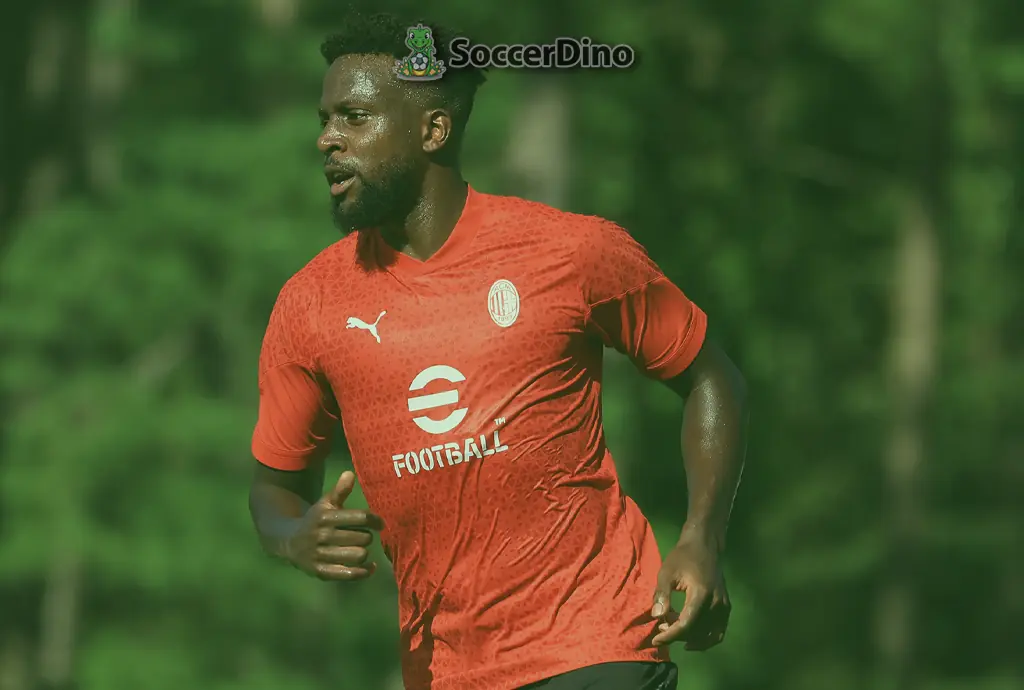
Divock Origi is no longer a Milan player, the Italian club announced this Wednesday, bringing an official end to a spell that had effectively been over in sporting terms for a long time.
The 30-year-old Belgian international forward did not play a single match this season and was not even training with the first team, a clear sign that he was completely outside the club’s plans and that a clean separation had become the most logical outcome for both sides.
For Milan, the announcement closes a file that had turned into a difficult, prolonged situation. A player on senior wages who is not registered as a meaningful option, not used in competitive matches, and not integrated in daily first-team work creates a structural problem for any club. It blocks squad space, complicates the wage bill, and becomes a constant background issue during each transfer window because every sporting director and coach is asked the same question: what will happen with the player who is effectively frozen out. The decision to part ways removes that noise and allows Milan to plan more clearly for the second half of the season, whether that means promoting internal solutions, leaning on a different profile of attacker, or moving in the market with a clearer financial picture.
From Origi’s perspective, the split is also a reset. A forward at 30 is not old in modern football, but momentum matters, and his last sustained run of matches at a high level is now firmly in the past. Being excluded from first-team training is particularly damaging for an attacker because sharpness, timing, and confidence are built through daily repetitions against top defenders and through competitive minutes. Even if a player keeps fit individually, there is a major difference between personal conditioning and match rhythm, especially for a striker whose game depends on split-second decisions in the box, repeated high-intensity sprints, and coordinated movements with teammates.
The report that Origi refused to leave during the summer transfer window is central to understanding how the situation reached this point. When a club is actively trying to move a player on and the player chooses to stay, the relationship often becomes strained. Milan’s position appears to have been that Origi was no longer part of the project, and without an exit, the only remaining tool is to limit involvement and effectively force a resolution at a later date. That is what “sidelined” means in practice: no minutes, no meaningful role, and no pathway back unless circumstances change dramatically, such as an injury crisis combined with a change of stance from the coaching staff.
Origi arrived at Milan in 2022 after several seasons at Liverpool, where his reputation was built on being an impact option, capable of producing decisive moments, often in big games, and frequently off the bench. Milan’s expectation, at least initially, would have been that he could bring depth, goals, and a different profile to their forward line. However, his time in Italy never developed into a stable, productive chapter. In 2022/23 he made 36 appearances for AC Milan, but the return was modest: 2 goals and 1 assist. Those numbers are not catastrophic for a squad player, but they are not enough to justify a prominent role either, particularly at a club that needs consistent output from its attacking rotation.
The following season, 2023/24, he was sent on loan to Nottingham Forest in an attempt to revive his form and raise his market value. He played 22 matches there and again delivered limited production: 1 goal and 1 assist. For a forward, especially one expected to be a reliable scoring alternative, that type of return typically accelerates a club’s decision to move on. By the time 2024/25 arrived, Origi did not feature in any match, and the separation between player and first-team group became total.
One detail that captures how long this decline has lasted is the date of his last appearance in Milan colors: 28 May 2023, in a 1 to 0 win against Juventus. That means his Milan career, in any meaningful competitive sense, ended more than 2 years before the club’s announcement. When a player’s last match is that far back, it is no longer a short-term dip or a temporary omission. It is an extended shutdown, and it usually implies that the club has been unable to find a suitable transfer solution, whether due to salary expectations, lack of interested buyers, the player’s preferences, or a mismatch between market value and contract realities.
Now the key question is what comes next. Origi’s next move will likely be shaped by 3 factors: the level of football he is willing to accept, the contract terms he prioritizes, and the type of sporting project that can offer him minutes quickly. If he wants to remain in a top 5 league environment, he may need to accept a role with fewer guarantees and a contract structure that reflects his recent lack of playing time. If he prioritizes playing every week, leagues where clubs are willing to bet on experienced forwards could become more realistic, especially if the deal is financially manageable and performance-based. For Origi, the immediate objective will be simple: find a team where he is wanted by the coach, integrated into training, and trusted with real minutes, because without that, any attempt to relaunch his career will remain theoretical.
For Milan, the wider implication is squad hygiene and resource allocation. Clubs at Milan’s level cannot afford to carry dead weight for long periods, especially with financial controls and competitive objectives that demand efficiency. Clearing Origi off the books, and closing an unproductive chapter, is a practical step that supports recruitment planning and helps avoid repeating the same problem in future cycles.
In short, this is not just a routine departure announcement. It is the formal conclusion of a situation that had been unresolved for multiple windows, marking a reset for a player who needs football urgently and a club that needs clarity and flexibility as it moves into the next phase of its season.