Spain announce their 2026 World Cup squad with no Real Madrid players included, a historic decision by Luis de la Fuente after a difficult season for the club.
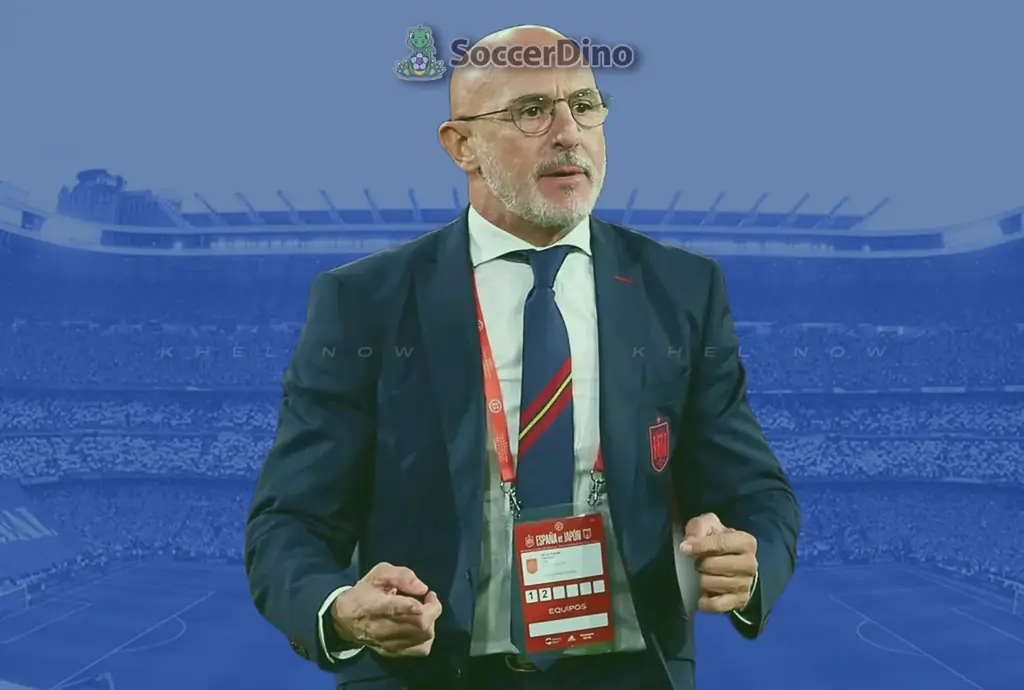
Spain Enter World Cup 2026 With a Squad That Sends a Clear Message
Spain announced their squad for the 2026 World Cup this Monday, and the list immediately became one of the biggest talking points in European football. Not because of a last-minute inclusion, not because of a dramatic injury return, but because of a remarkable absence: for the first time in World Cup history, La Roja will go into the tournament without a single Real Madrid player in the squad.
For a national team so deeply connected to the history of Spanish football, and for a club that has traditionally supplied some of the countrys most influential figures, this is far more than a simple selection detail. It is a symbolic moment. Real Madrid, one of the biggest clubs in the world and a central part of Spanish football identity, will not have any representation in the group chosen by Luis de la Fuente for the biggest international competition of all.
A Historic Absence That Immediately Stands Out
The decision by Luis de la Fuente has created understandable surprise. Real Madrid has almost always been present in Spain squads at major tournaments, either through established leaders, experienced defenders, midfield organisers or attacking talents capable of changing matches. This time, however, there is no white shirt in the national team list.
The absence becomes even more striking because it comes at a World Cup, not a friendly tournament or a Nations League window. World Cups are usually built around experience, hierarchy and trusted names. Coaches often prefer familiar profiles, players used to pressure and footballers from clubs accustomed to decisive nights. Real Madrid would normally be a natural source for that kind of player.
But this squad suggests that De la Fuente has looked at the current moment rather than the weight of the badge. The message is clear: reputation alone has not been enough. Spain are travelling with the players the coach believes best fit his tactical idea, his group dynamic and the competitive demands of the tournament.
Real Madrid Pay the Price for a Difficult Season
The most obvious interpretation is that Real Madrid are paying the price for a season to forget. The club ended the campaign without trophies, and that lack of collective success appears to have influenced the international picture. In a national team environment where competition for places is intense, form and continuity can become decisive.
Spain have no shortage of options, particularly in midfield and wide attacking areas. That depth means that even players from elite clubs are not guaranteed a place. In this case, Real Madrid have seen all their possible candidates left out, creating a situation that few would have predicted at the start of the season.
The most surprising omission is Dean Huijsen. The centre-back had been seen by many as a strong candidate for the final squad, especially given his profile, his technical ability and his potential to become an important figure for Spain in the coming years. His absence will be one of the decisions most heavily debated in the build-up to the tournament.
Fran García and Gonzalo García have also been left out, reinforcing the idea that De la Fuente has not selected on club status. These are not just routine absences. Together, they underline a complete break from the usual presence of Real Madrid within the national team structure.
Dani Carvajal Already Ruled Out by Injury
Dani Carvajal was never expected to be part of the final squad after being ruled out due to injury. His absence from the preliminary 55-man list had already made it clear that Spain would have to prepare without one of the most experienced Spanish defenders of his generation.
Carvajal would normally have been one of the most natural Real Madrid representatives in the squad. His experience, competitive mentality and ability to handle high-pressure matches have long made him a valuable option for Spain. Without him, Real Madrid already had one major route into the squad closed before the final decision was even made.
Even so, many still expected at least one player from the Santiago Bernabéu to make the cut. That expectation has now disappeared completely, turning this squad announcement into a historic moment for both Spain and Real Madrid.
De la Fuente Chooses Balance, Form and Tactical Fit
Looking at the list, it is easy to see what Luis de la Fuente wants from this Spain side. The squad is technically strong, flexible and filled with players capable of controlling matches through possession, movement and pressure after losing the ball. It is also a group with a clear mix of youth, experience and tactical intelligence.
In goal, Spain have three strong options. Unai Simón brings experience and continuity with the national team. David Raya offers composure, excellent distribution and a calm presence under pressure. Joan García, now at Barcelona, adds another high-level option and confirms the depth Spain have developed in this position.
Defensively, De la Fuente has selected a group with different profiles. Pedro Porro offers attacking energy from the right side, while Marcos Llorente gives versatility and physical power. Pau Cubarsí brings youth, intelligence and composure on the ball, while Aymeric Laporte provides experience and a left-footed option in central defence. Eric García, Álex Grimaldo and Marc Cucurella all offer technical quality and tactical flexibility.
The midfield is arguably the strongest area of the squad. Rodri remains the reference point, a player capable of controlling rhythm, protecting the defence and giving Spain authority in the centre of the pitch. Around him, Marc Zubimendi, Pedri, Gavi, Dani Olmo, Fabián Ruiz, Mikel Merino and Álex Baena give the coach several different ways to build his team.
This midfield group is rich in passing quality, movement and competitive personality. Spain can play with a more controlling structure, a more aggressive pressing shape or a more creative attacking midfield depending on the opponent. That variety may be one of the biggest strengths of the squad.
A Young Attack With Speed and Imagination
In attack, the list includes one of the most exciting young names in world football: Lamine Yamal. The Barcelona winger has already become a decisive figure despite his age, and his ability to create danger in one-on-one situations gives Spain something they have sometimes lacked in recent tournaments: unpredictability on the outside.
Alongside him, Ferran Torres brings experience, movement and goal threat. Nico Williams adds pace, directness and the ability to stretch defensive lines. Yéremy Pino, Víctor Muñoz, Mikel Oyarzabal and Borja Iglesias complete an attack that gives De la Fuente different solutions depending on the match scenario.
Oyarzabal can operate between lines, combine well and provide intelligence in the final third. Borja Iglesias offers a more traditional reference point, useful in matches where Spain need presence inside the box. Nico Williams and Lamine Yamal, meanwhile, can transform the rhythm of a game with speed and individual quality.
It is not a squad built around one superstar striker. Instead, Spain appear to be betting on collective movement, wide creativity and midfield control. That has often been the Spanish model, but this version has more speed on the wings and more direct attacking options than some previous teams.
The Group Stage Will Test Spain Immediately
Spain will face Cape Verde on 15 June, Saudi Arabia on 21 June and Uruguay on 27 June in the group stage. On paper, La Roja will be expected to progress, but this is not a group that should be taken lightly.
Cape Verde will enter the tournament with ambition and little fear, and those matches can often become complicated if the favourite does not score early. Saudi Arabia have shown in recent major tournaments that they can compete with intensity and organisation, especially when underestimated. Uruguay will likely be the most demanding opponent of the group, bringing physicality, experience, aggression and attacking quality.
That match against Uruguay may offer the clearest early indication of Spains real level. It will test their midfield control, their defensive strength and their ability to cope with a team that can attack with speed and compete fiercely in duels. For De la Fuente, the first objective will be qualification, but the manner of that qualification will matter too.
A Squad That Will Spark Debate Until Kick-Off
Every World Cup squad creates debate, but this one will generate particular discussion because of the Real Madrid question. Some will argue that the decision is brave and based purely on merit. Others will see it as a risk, especially given the importance of experience in tournaments of this size.
Dean Huijsen will be the name most often mentioned in that debate. His exclusion leaves Spain without a player many considered capable of adding quality and long-term value to the defensive line. Fran García and Gonzalo García may also feel unfortunate, although competition in their areas of the pitch is intense.
Still, De la Fuente has earned the right to build the squad according to his own convictions. His selection suggests a coach who values collective harmony, tactical clarity and current performance. He has not tried to please everyone. He has chosen a group that reflects his idea of football.
The Full Spain Squad for the 2026 World Cup
Goalkeepers
- Unai Simón - Athletic Bilbao
- David Raya - Arsenal
- Joan García - Barcelona
Defenders
- Pedro Porro - Tottenham
- Marcos Llorente - Atlético Madrid
- Pau Cubarsí - Barcelona
- Marc Pubill - Atlético Madrid
- Aymeric Laporte - Athletic Bilbao
- Eric García - Barcelona
- Álex Grimaldo - Bayer Leverkusen
- Marc Cucurella - Chelsea
Midfielders
- Rodri - Manchester City
- Marc Zubimendi - Arsenal
- Gavi - Barcelona
- Dani Olmo - Barcelona
- Pedri - Barcelona
- Fabián Ruiz - PSG
- Mikel Merino - Arsenal
- Álex Baena - Atlético Madrid
Forwards
- Lamine Yamal - Barcelona
- Ferran Torres - Barcelona
- Yéremy Pino - Crystal Palace
- Nico Williams - Athletic Bilbao
- Víctor Muñoz - Osasuna
- Mikel Oyarzabal - Real Sociedad
- Borja Iglesias - Celta Vigo
Spain Move Forward Without One of Their Traditional Pillars
The absence of Real Madrid players will dominate headlines, but Spain will want the conversation to move quickly toward the football itself. This is still a squad filled with quality, balance and high-level experience. It has elite midfielders, dangerous wide players and enough defensive variety to adapt to different opponents.
For Real Madrid, however, the situation is impossible to ignore. A World Cup without any representation in the Spain squad is a historic and uncomfortable marker of a difficult season. For a club used to shaping the biggest stages, watching La Roja travel without a single Madrid player will feel unusual and significant.
For De la Fuente, the decision will ultimately be judged by results. If Spain perform well, the squad will be seen as a bold and coherent choice. If the tournament goes badly, the absence of Real Madrid players will quickly become one of the first points of criticism.
For now, Spain have made their statement. La Roja are heading to the 2026 World Cup with a squad built on form, tactical identity and the vision of their coach. It is a list that breaks with tradition, creates debate and opens a new chapter in the relationship between the national team and one of the most powerful clubs in Spanish football.