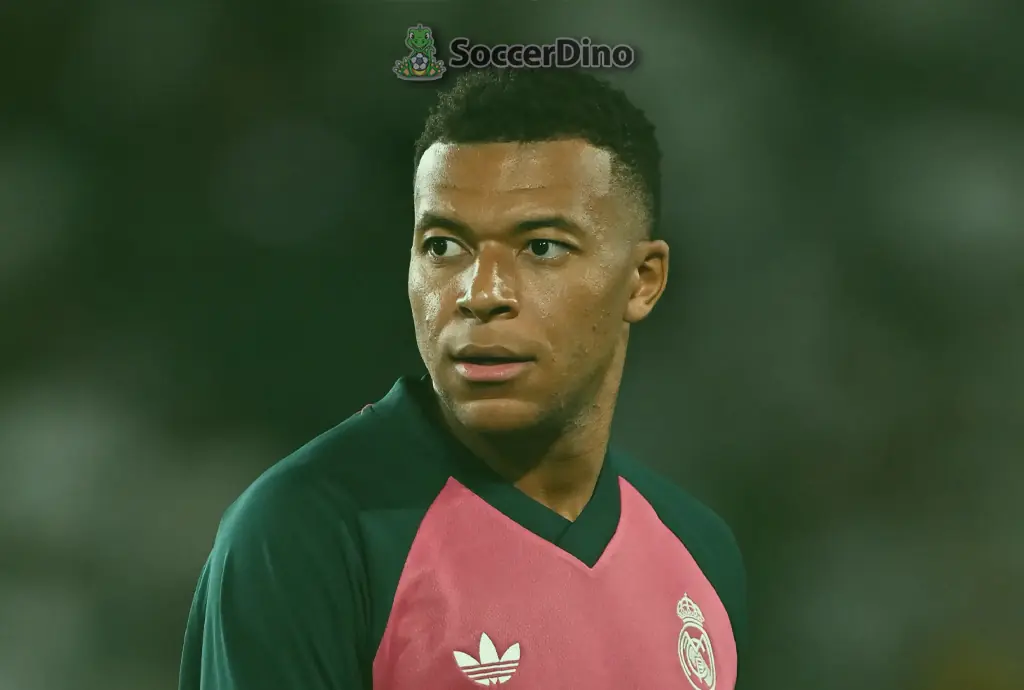
Real Madrid beat Atletico 2-1 in Jeddah to reach the Spanish Super Cup final, setting up an El Clasico with Barcelona after their 5-0 win.

Real Madrid booked their place in the Spanish Super Cup final with a 2-1 win over Atletico Madrid on Thursday in Jeddah, setting up a new El Clasico showdown against Barcelona in Saudi Arabia.
The result sends Carlo Ancelotti's side into their first final of the calendar year and keeps alive the prospect of an early-season statement trophy, while Atletico are left to reflect on a performance that had strong spells but lacked the decisive edge in both boxes.
The derby began at a frantic pace and Real Madrid struck almost immediately. Federico Valverde opened the scoring in the second minute, giving Real the perfect start and forcing Diego Simeone's team to chase the game from the outset. Atletico responded with urgency, trying to establish territorial control through sustained possession and repeated forward surges. They looked determined to turn the match into a high-tempo contest, pressing for quick recoveries and attempting to pin Real back with wide overloads and direct runs into the channels.
Despite Atletico producing more attempts and enjoying more of the ball, Real were comfortable playing the game on their terms. With the early advantage, they were able to manage risk, defend compactly, and look for transitions where their pace and timing could do damage. Real's defensive structure remained largely disciplined, with the midfield working to close central lanes and reduce the quality of Atletico's entries into the penalty area. Atletico's pressure generated volume, but much of it came from positions that Real could absorb without losing their shape.
As the first half progressed, Atletico continued to probe. They circulated possession with patience, switching play and looking for the moment to accelerate through combinations around the box. Their best moments came when they managed to pull Real's block sideways and create angles for cut-backs or second-ball opportunities at the edge of the area. However, Real's ability to keep bodies behind the ball and block shooting lanes limited the number of truly clear chances. The derby remained tense, with Atletico pushing and Real staying clinically focused on game management, waiting for the second goal that would change the balance entirely.
That second goal arrived shortly after the break. In the 55th minute, Rodrygo doubled Real Madrid's lead, finishing off a move that punished Atletico at a moment when they were still searching for rhythm in the second half. The goal gave Real a 2-0 cushion and placed Atletico under even greater pressure, not just on the scoreboard but psychologically. At 2-0, Atletico needed both composure and speed: composure to keep building chances, speed because the clock in a knockout match always feels shorter when you are two goals behind.
To their credit, Atletico responded immediately. Three minutes later, Alexander Sorloth pulled one back in the 58th minute, giving the contest renewed life and turning the final half hour into a genuine battle. The goal energised Atletico, who increased their intensity and committed more numbers forward. Simeone's side pushed higher, moved the ball quicker, and tried to force Real into rushed clearances and uncomfortable defensive decisions.
From that point, the match became a clash between Atletico's momentum and Real Madrid's experience. Atletico threw more into the attack, seeking to create chaos around the box and to stretch Real across the width of the pitch. They looked for shots from range when central routes were blocked and tried to exploit set pieces and second phases, areas where derby matches can swing on a single loose clearance or a deflection.
Real, however, remained composed. They were willing to concede possession but not space. Their defensive line held firm under pressure, and their midfield continued to screen passes into dangerous central pockets. When Real recovered the ball, they looked to slow the game and draw fouls, then accelerate into open grass when Atletico's defensive shape was stretched. The match did not become an end-to-end shootout for long periods, because Real controlled the emotional temperature well, breaking Atletico's rhythm with timely interventions and disciplined positioning.
In the end, Atletico's late push did not produce an equaliser. They had the territorial advantage, they took more shots, and they spent long spells on the front foot, but they could not find the second goal that would have forced extra time. Real's superiority was not about dominating every phase, but about being decisive in key moments. Valverde's early strike shaped the entire match, Rodrygo's goal created separation, and the team as a whole defended with the kind of organisation that wins knockout fixtures.
The result also carries broader meaning because it sets up a final against Barcelona, who reached the decisive match with an emphatic performance the day before. On Wednesday, also in Jeddah, Barcelona swept aside Athletic Bilbao 5-0 in the other semi-final. The Catalans were clinical and relentless, scoring through Ferran Torres in the 22nd minute, Fermin in the 30th, Bardghji in the 34th, and Raphinha twice in the 38th and 52nd minutes. It was a display that underlined their attacking firepower and their ability to punish opponents quickly when the game opens up.
With Barcelona arriving in the final on the back of a five-goal performance and Real Madrid coming through a high-intensity derby, the stage is set for a final shaped by contrasting routes. Barcelona will point to the fluency and depth of their attacking performance, while Real will point to the resilience and efficiency required to win tight matches against elite opponents. El Clasico finals often turn on small margins, but they also tend to produce decisive moments from the players most comfortable under the brightest spotlight.
The setting in Saudi Arabia adds another layer, with the Spanish Super Cup once again being played away from Spain. Jeddah has become a familiar venue for this competition, and the format, with semi-finals followed by a final, gives the tournament a mini-cup feel that can reward teams that hit form quickly. For Real Madrid, winning the Super Cup would provide an early trophy and reinforce the idea that their competitive baseline remains extremely high. For Barcelona, it would be a chance to convert a dominant semi-final into silverware and to claim a statement victory over their greatest rivals.
For Atletico, the defeat will sting because the performance contained positives, particularly in their ability to sustain pressure and compete physically and tactically for long stretches. Yet derby matches are often decided by efficiency. Conceding so early placed them in a difficult scenario, and while their response was strong in phases, they ultimately paid for Real's sharper edge in front of goal and their ability to protect a lead.
The final, an El Clasico, will be played on Sunday in Jeddah. It will bring together two clubs with enormous history, immense expectations, and squads filled with match-winners. After this semi-final, Real Madrid will travel to the final knowing they have already navigated a difficult, emotionally charged test. Barcelona will arrive with momentum and confidence after dismantling Athletic Bilbao. The Super Cup now has the exact matchup the competition was built to showcase, and the trophy will be decided by whichever team can impose its identity over ninety minutes when the stakes are highest.