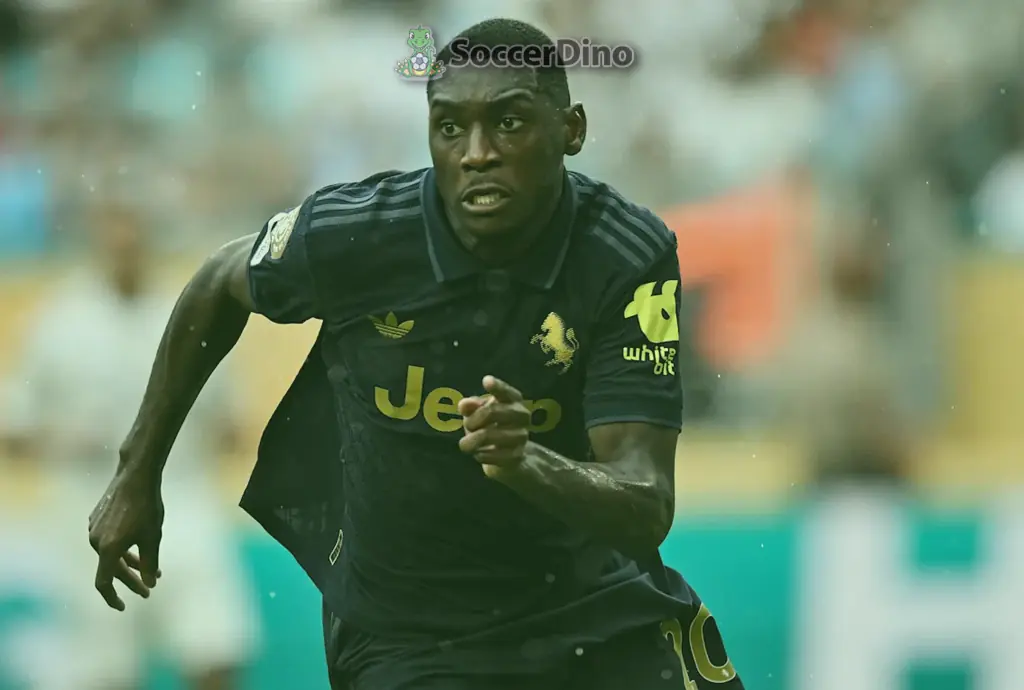
Michael Olise reflects on France’s fourth-place World Cup finish, his record-breaking assist tally and the disappointment of missing out on the trophy.
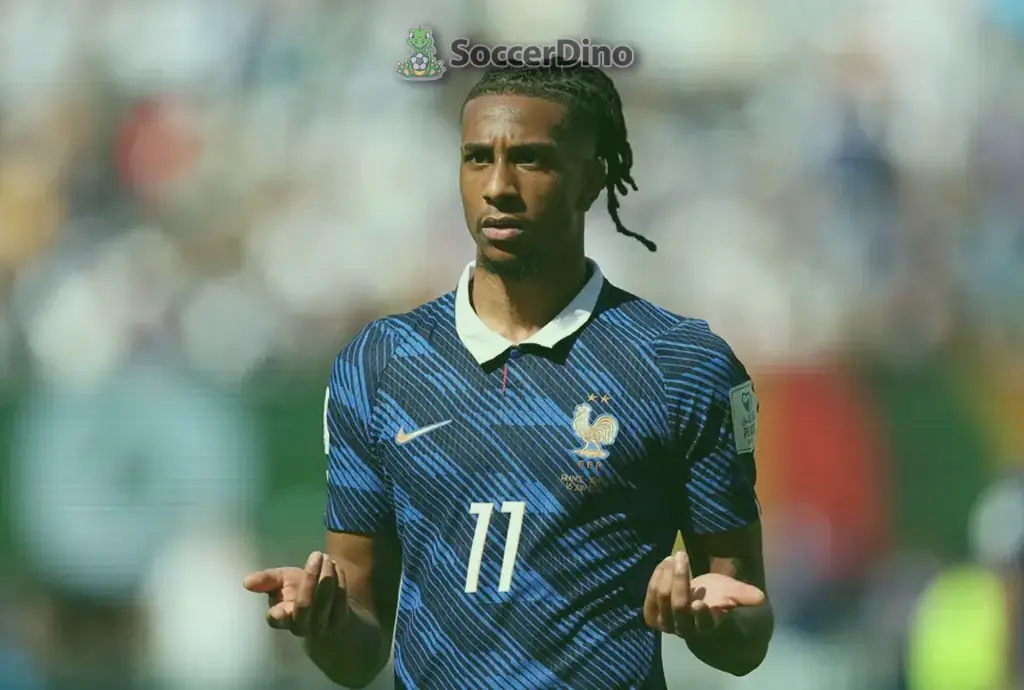
Michael Olise Reflects on France’s World Cup Disappointment After Historic Campaign
Michael Olise has spoken openly about the disappointment felt inside the France squad after Les Bleus finished fourth at the 2026 World Cup, admitting that his record-breaking individual campaign could not compensate for failing to bring the trophy home. The Bayern Munich attacker used social media to reflect on an emotional tournament in which France came close to reaching another final but ended their journey with consecutive defeats against Spain and England.
France travelled to the tournament as one of the leading candidates to lift the trophy and once again demonstrated that they possessed enough quality to compete with the strongest national teams in the world. However, their hopes were ended by Spain in a dramatic semi-final before they suffered another defeat against England in the third-place play-off. The two results left France outside the medal positions and created a painful conclusion to a campaign that had produced several memorable performances.
For Olise, the disappointment was especially significant because the tournament represented his first opportunity to wear the France shirt on the World Cup stage. The 24-year-old emerged as one of the most influential attacking players in the competition, combining technical quality, intelligent movement and outstanding creativity to become the main provider of chances for his teammates.
Despite setting a new record for assists in a single World Cup, Olise made it clear that he would have exchanged the personal achievement for collective success. His message focused less on his individual numbers and more on the frustration of leaving the tournament without the trophy that France had targeted from the beginning.
Olise Admits France Did Not Imagine Such an Ending
Writing on Instagram, Olise described the failure to win the World Cup as an enormous disappointment. France had entered the competition believing they could go all the way, particularly after progressing through the earlier rounds and producing some of their most convincing attacking football during the knockout stage.
“Failing to bring the trophy home is a huge disappointment. This was not how we imagined this World Cup would end when the tournament began. Wearing the France shirt at a World Cup has always been, and always will be, a dream for me,” Olise wrote.
His words reflected the difference between the expectations surrounding France and the eventual outcome. Reaching the semi-finals of a World Cup remains a major achievement for most countries, but the standards inside the French national team are considerably higher. After winning the competition in 2018 and reaching the final again in 2022, anything short of another appearance in the decisive match was always likely to be viewed as a disappointment.
France had the talent, experience and attacking depth required to challenge for the title. The squad contained players accustomed to competing in the latter stages of major domestic and European competitions, while several members of the group had already experienced the pressure of a World Cup final. For that reason, finishing fourth was difficult to accept, even after a tournament containing several positive moments.
Olise’s statement also demonstrated how much representing France means to him. Born in London and eligible to represent several countries, he ultimately committed his international future to Les Bleus. Playing at a World Cup was therefore the fulfilment of a personal ambition, but the experience ended with a sense of unfinished business.
A Historic Record of Seven Assists
Although France were unable to win the tournament, Olise produced one of the most creative individual campaigns in World Cup history. He finished the competition with seven assists, setting a new record for the most assists registered by one player during a single edition of the men’s tournament.
The previous benchmark had stood for more than five decades and was associated with some of the greatest attacking players the competition has seen. Olise surpassed it during France’s match against England, adding another decisive contribution despite the team eventually losing the third-place contest.
His assists were not simply the result of taking set pieces or making routine passes in attacking areas. Olise consistently created opportunities through his vision, close control and ability to recognise the movement of teammates before opposing defenders could react. He was comfortable operating from the right, moving into central areas or dropping into deeper positions to take possession and influence the rhythm of France’s attacks.
Throughout the tournament, his understanding with Kylian Mbappé and the other French forwards became one of the team’s most important attacking weapons. Olise’s left foot allowed him to deliver crosses, disguised passes and carefully weighted through-balls from several areas of the pitch. Defenders frequently attempted to show him away from his preferred side, but his intelligence and technical ability allowed him to find alternative solutions.
“Although we were unable to lift the trophy, I am proud to have set the record for the most assists in the history of a World Cup,” he wrote.
It was a remarkable achievement in his first World Cup, particularly because of the level of pressure surrounding France and the attention placed on their attacking players. Olise arrived at the tournament as an important member of the squad but left it with an enhanced reputation as one of the leading creators in international football.
Collective Success Remained More Important
Olise was nevertheless careful not to allow the record to dominate his message. His immediate reaction was not one of celebration, and he emphasised that winning the trophy with his teammates would have meant far more than establishing a new individual benchmark.
“But above all, I would have preferred to be here saying that we had won the World Cup, all together, with my teammates, the technical staff, the coaches and all the supporters of the French national team,” he added.
That attitude reflects the culture of a France squad that has become accustomed to competing for the biggest honours. Personal awards and statistical records can define the careers of individual players, but they do not replace the experience of lifting the World Cup as part of a successful team.
Olise’s disappointment may also have been increased by how close France came to reaching the final. Their semi-final against Spain developed into an extraordinary contest in which both teams created chances and repeatedly threatened each other’s goal. France demonstrated their attacking quality but were unable to produce the result required to continue their pursuit of the trophy.
The defeat forced them into the third-place play-off against England, a match that can be difficult for players who have only recently seen their hopes of becoming world champions disappear. France again showed attacking ambition, but another loss confirmed that they would finish the tournament in fourth place.
For Olise and his teammates, the emotional challenge was therefore considerable. They had gone from preparing for a possible World Cup final to ending the competition without a medal in a matter of days. His social media message captured both the pride of representing his country and the frustration of coming so close without achieving the main objective.
Olise Emerged as a Central Figure for France
The tournament confirmed that Olise is no longer simply a promising player attempting to establish himself at international level. He has become a central part of France’s attacking structure and one of the players around whom the team can be built in the coming years.
His rise within the national side has been rapid. After receiving his first senior call-up, he gradually earned the confidence of the coaching staff and demonstrated that his qualities could be transferred from club football to the international stage. The World Cup provided the strongest possible evidence of that development.
France often relied on his creativity when opponents defended in compact positions. Olise was capable of slowing down attacks, drawing defenders towards him and then accelerating the play with a pass into space. His ability to make the correct decision under pressure allowed France to create opportunities even when there appeared to be little room available.
He also offered tactical flexibility. Although most comfortable beginning from the right, Olise could move across the attacking line and exchange positions with teammates. That movement made it difficult for opponents to assign one defender to follow him and helped France create overloads in central and wide areas.
The seven assists were the clearest statistical expression of his influence, but his overall contribution went beyond the final pass. He regularly carried the ball through pressure, attracted multiple opponents and helped France maintain possession in advanced areas. His performances suggested that he can remain a major figure for the national team throughout the next international cycle.
A Message of Gratitude to Didier Deschamps
Olise also used his message to thank Didier Deschamps for giving him the opportunity to represent France at senior level. The former national-team coach played an important role in integrating the Bayern attacker into the squad and continued to trust him during periods when he was still adapting to international football.
“I would also like to thank the manager for giving me my first call-up to the national team and for believing in me, even during the most difficult moments. I will always be grateful for that and I wish him all the best for the future, whatever path he chooses,” Olise wrote.
The tribute carried additional significance following the conclusion of Deschamps’ long period in charge of the national team. Having led France for 14 years, the coach departed after the World Cup and left behind an era defined by consistency at major tournaments, a strong collective identity and the 2018 world title.
Deschamps’ decision to include Olise and gradually make him an important part of the side may prove to be one of the final major contributions of his tenure. The winger’s development offers France a creative foundation for the future and ensures that the next coaching team will inherit an attacker already capable of deciding matches at the highest level.
For a player attempting to establish himself in a squad containing some of the biggest names in world football, the confidence of the manager was essential. Olise’s public gratitude suggested that he did not forget the support he received before his record-breaking World Cup performances made his place in the team unquestionable.
France Preparing to Begin a New Era
The end of the World Cup also marked the beginning of a period of change for the French national team. Zinedine Zidane has been appointed to succeed Deschamps and will now be responsible for leading France towards the 2030 World Cup.
Zidane inherits a squad containing several experienced internationals alongside a younger generation capable of remaining together for many years. Olise will be expected to occupy a prominent position in that project after demonstrating his value during the 2026 tournament.
The new coach will need to decide how best to use the creative players available to him and how to build an attacking structure that maximises their individual strengths. Olise’s versatility should make him suitable for several systems, whether France play with traditional wingers, attacking midfielders between the lines or a more fluid group behind the central striker.
His relationship with Mbappé could become particularly important. The combination between Olise’s passing and Mbappé’s movement offers France a natural source of chances, while the presence of other technically gifted attackers gives the team several different ways to threaten opponents.
The challenge will be turning that talent into consistent collective performances. France showed during the World Cup that they could be devastating in attack, but the defeats against Spain and England also exposed areas that must be improved if they are to return to the final of a major tournament.
Disappointment Expected to Provide Future Motivation
Olise concluded his message by looking towards the future and promising that France would continue working to provide their supporters with new moments of happiness. Rather than allowing the disappointment of fourth place to define the group, he presented it as motivation for the challenges ahead.
“This is the objective that will continue to motivate us, and we hope that in the future we can bring you new moments of joy and unforgettable memories to experience alongside us,” he said.
Those words suggested that Olise already views the 2026 World Cup as part of a longer journey with the national team. At 24, he should have several major tournaments ahead of him and may enter the next World Cup at the peak of his career.
The experience gained in North America could prove valuable. Olise has now dealt with the pressure of representing France at a World Cup, faced elite opponents in knockout matches and experienced the emotional difference between individual success and collective disappointment.
His record of seven assists will remain an important part of World Cup history and a remarkable achievement from his first appearance at the tournament. However, his message made clear that he does not want the 2026 competition to be remembered as the high point of his international career.
Olise wants to return to the biggest stage and complete the journey with a trophy. France’s fourth-place finish was painful, but the quality of his performances provided a major source of optimism for the future. With a new coach, a talented generation and one of world football’s most creative attackers entering his best years, Les Bleus will expect to challenge for major honours again.
For now, Olise will take pride in a historic individual record while accepting that it was not the outcome he truly wanted. His words captured the mentality of a player who enjoyed an exceptional tournament but left it focused on what France had failed to achieve. The seven assists established his place in World Cup history, yet his greatest ambition remains unchanged: returning one day to help his country lift the trophy together.