Getafe face a growing crisis after their 5-2 defeat to Lugano, as Jose Bordalas and president Angel Torres clash publicly over squad depth and broken promises.
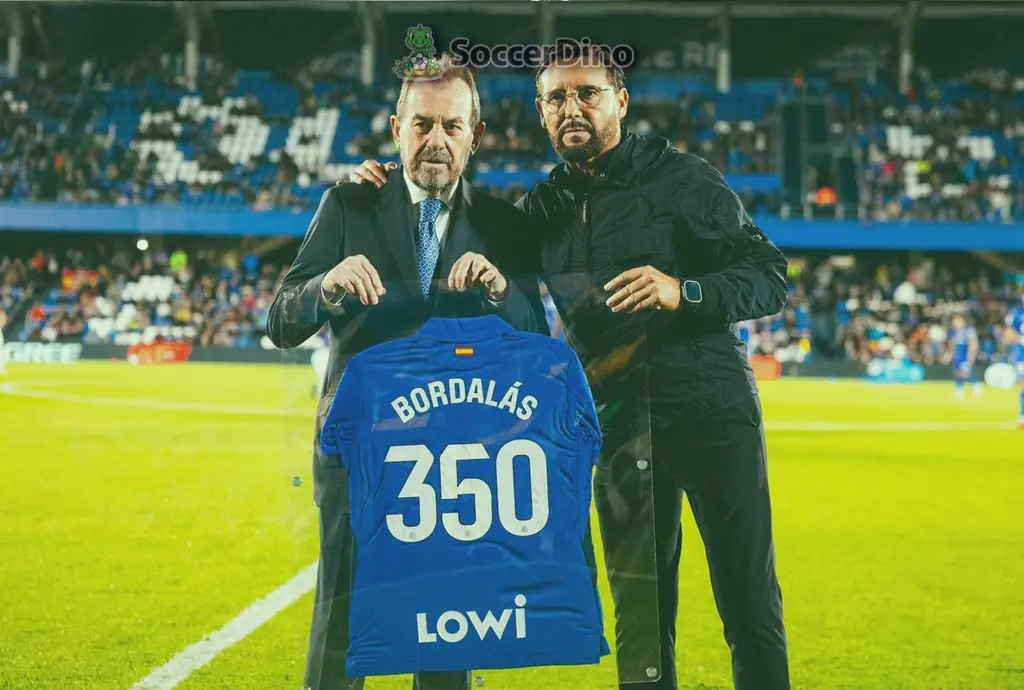
Getafe crisis deepens as Jose Bordalas and president Angel Torres clash publicly after humiliating Lugano defeat
Getafe are facing a growing crisis both on and off the pitch after head coach José Bordalás and club president Ángel Torres became involved in an extraordinary public disagreement following Thursday's humiliating 5-2 home defeat to Lugano in the UEFA Conference League. The result exposed serious concerns about the Spanish club's performances, but the subsequent exchange between the manager and president has created an even more uncomfortable situation ahead of an important La Liga fixture against Athletic Bilbao.
Bordalás, currently in his 10th season at Getafe, delivered a furious assessment of the club's sporting situation after the European defeat. The experienced Spanish coach claimed that the squad was not strong enough to compete across 3 competitions and accused the club's leadership of repeatedly failing to fulfil promises concerning the resources available to him.
His criticism was unusually direct. Rather than limiting his comments to the performance against Lugano, Bordalás suggested that Getafe's problems were rooted in decisions made away from the pitch, insisting that the squad lacked the necessary quality, depth and balance to meet the demands of the season.
President Ángel Torres responded on Friday in an interview with Cadena SER, strongly rejecting the suggestion that he had betrayed the manager. Torres questioned why Bordalás continued working at Getafe if he was so dissatisfied, defended the club's players and made clear that the coach was free to leave if he no longer believed in the project.
Despite the confrontation, Torres insisted that he was not considering drastic action against the manager and played down the possibility of the dispute immediately leading to a dismissal. Instead, he called for the team to concentrate on winning its next match in Bilbao.
The disagreement comes at a difficult moment for Getafe. The Madrid-based club sit 15th in La Liga with just 9 points from 9 matches, while their Conference League campaign has produced 1 draw and 1 defeat. With results falling short of expectations and tensions now emerging publicly between 2 of the club's most influential figures, Getafe must find a way to restore stability before their season becomes increasingly complicated.
Bordalas furious after Getafe suffer 5-2 home defeat to Lugano
The controversy began after Getafe's heavy defeat against Lugano in the UEFA Conference League. Playing at home, the Spanish side suffered a damaging 5-2 loss that immediately raised questions about the team's competitiveness and its ability to manage the demands of European football alongside domestic commitments.
For Bordalás, however, the result was not simply the consequence of a poor individual performance. He considered it evidence of a much broader problem involving the construction and depth of the squad.
"Today proved that we don't have a squad capable of competing at this level. We don't even have enough players for 1 competition, let alone 3," the manager declared after the match.
The statement represented an exceptionally severe assessment of the resources at his disposal. Managers frequently complain about congested schedules, injuries and limited opportunities for rotation, but Bordalás went considerably further by questioning whether Getafe possessed sufficient personnel to compete effectively in any competition.
His frustration was understandable in the context of the result. Conceding 5 goals at home in a European fixture is a major disappointment for a team attempting to establish itself on the continental stage.
Yet the manager's comments suggested that he regarded the defeat as a predictable consequence of existing weaknesses rather than an isolated setback.
Getafe's European commitments have increased the number of matches the squad must prepare for, placing greater emphasis on rotation, recovery and the availability of alternatives in different positions.
When those alternatives are considered insufficient, managers face difficult decisions. Keeping established starters on the pitch too frequently can increase physical workloads, while making substantial changes may reduce the team's overall cohesion and competitiveness.
Bordalás believes he has been placed in precisely that situation, and the defeat against Lugano appears to have pushed his frustration into the public domain.
Getafe manager claims club failed to deliver on repeated promises
The most serious element of Bordalás's criticism concerned his relationship with the club's management. The coach suggested that commitments made to him over several seasons had not been fulfilled, leaving him increasingly dissatisfied with the resources available to compete.
"I don't deserve this. I feel deceived because the promises made to me have not been fulfilled, year after year, and I'm angry," Bordalás said.
Those words changed the nature of the discussion surrounding Getafe's defeat. What might otherwise have remained a debate about tactical choices, squad rotation or the performance of individual players became a confrontation over trust between the manager and the club's leadership.
Bordalás did not publicly identify the precise commitments he believed had been broken. His remarks therefore do not establish whether the disagreement concerns particular transfer targets, squad numbers, financial resources or other sporting decisions.
Nevertheless, his reference to promises allegedly going unfulfilled over several years indicates that the frustration did not begin with the Lugano result.
For a manager who has spent so many seasons associated with Getafe, the accusation carries considerable weight. His continued involvement with the club suggests a long-standing professional relationship, making a public disagreement with the president especially significant.
The coach also insisted that his anger reflected his affection for the institution rather than a lack of commitment.
"I love Getafe, and this is extremely painful," he explained.
That distinction is important. Bordalás presented his criticism as an expression of disappointment from someone who believes the team is being asked to meet expectations without receiving the resources necessary to achieve them.
Whether the club's leadership accepts that interpretation is another matter. Torres's subsequent response demonstrated that the president strongly disputes the manager's description of their relationship.
Squad rotation against Lugano exposed Getafe's lack of depth
Bordalás also explained why he had selected a starting lineup that included players who are not usually among his first choices.
According to the Getafe manager, several regular starters needed rest because he considered them at risk of injury. With important fixtures approaching, he believed it was necessary to manage their physical condition rather than continue exposing them to demanding workloads.
"I decided to field that starting XI because I had to rest players who were at risk of injury," Bordalás said.
However, the decision quickly became problematic as Getafe struggled against Lugano.
"I was then forced to take them off at half-time because the situation was already ridiculous and could have become even worse," he continued.
The admission revealed how little confidence the coach appeared to have in the squad's ability to maintain its competitive level when regular starters were unavailable.
For teams competing in several competitions, effective rotation is essential. A manager cannot reasonably expect the same group of players to perform every match without considering accumulated fatigue, recovery time and the risk of physical problems.
However, rotation is only sustainable when the alternatives can perform the tasks required within the team's tactical structure.
Getafe's performance against Lugano suggested that the changes disrupted the side considerably, at least according to Bordalás's assessment.
The manager acknowledged that the team improved after introducing more familiar starters, but he insisted that those adjustments merely reinforced his concerns about the squad.
"We improved slightly when I brought on players who usually feature in the starting lineup, but it became clear that the squad is unbalanced," he said.
His conclusion was particularly severe.
"This performance demonstrated that we simply don't have enough quality or depth. Not for 3 competitions, and not even for 1."
The remarks placed attention on the difference between Getafe's preferred starting team and the alternatives available when changes are required. That imbalance, in the manager's view, has become one of the principal obstacles to achieving consistent results.
Angel Torres rejects Bordalas accusations of betrayal
Bordalás's statements prompted a forceful response from club president Ángel Torres, who spoke to Cadena SER on Friday and made clear that he considered the accusations unacceptable.
Torres was particularly offended by the suggestion that he had betrayed the coach, insisting that he had never acted dishonestly towards Bordalás or anyone else.
"What I don't understand is why he's still here if he feels so unhappy," the president began.
"To say that I betrayed him... You have to have some nerve to say that to me after 30 years, when I've never betrayed him or anyone else."
The response demonstrated the personal nature of the disagreement. Rather than simply defending the club's recruitment policy or explaining the limitations of its sporting budget, Torres challenged the legitimacy of the manager's complaint.
His reference to 30 years emphasised the importance he attaches to his record and relationships in football. He clearly regarded the accusation as an attack on his integrity.
However, the president did not offer a detailed public explanation of the promises Bordalás claimed had not been fulfilled.
Consequently, the disagreement remains unresolved at the factual level. Bordalás believes the club has repeatedly failed to deliver what he was promised, while Torres categorically rejects the accusation that he betrayed the manager.
Both positions are now public, increasing the pressure on Getafe to address the underlying concerns.
Such disagreements can become particularly damaging when they involve the individuals responsible for setting the club's sporting direction. Managers depend on institutional support, while club presidents expect coaches to work within the resources available and maintain confidence in the squad.
When those expectations diverge so dramatically, even routine decisions about team selection and recruitment can become sources of tension.
Getafe president questions why Bordalas remains at the club
Torres went further than denying the accusations. He openly questioned why Bordalás had chosen to remain in charge if he believed the working conditions were unacceptable.
The president pointed out that the coach had willingly signed his contract and suggested that leaving remained an option if he was dissatisfied with the club's direction.
"He signed his contract because he wanted to. In any case, the door is open for him. If we're really that bad, what can we do? This is Getafe," Torres declared.
The phrase "the door is open" is particularly significant because it suggests that the president does not intend to persuade the manager to remain at the club under circumstances he finds unacceptable.
However, those words should not be interpreted as confirmation that Bordalás has been dismissed or that an immediate departure has been arranged.
Torres subsequently made clear that he was not considering drastic measures, indicating that the manager's position had not been formally terminated as a consequence of the dispute.
Nevertheless, the public invitation to reconsider his future creates additional uncertainty.
For Bordalás, continuing in his role may require accepting that the club's leadership does not share his assessment of the squad or the commitments he believes were made.
For Torres, maintaining the relationship means working with a coach who has publicly questioned the adequacy of the resources provided to him.
The disagreement may not make an immediate separation inevitable, but it has exposed a significant difference in expectations.
Torres defends Getafe players after harsh criticism from manager
Another important aspect of the president's response concerned the treatment of the squad.
Torres appeared uncomfortable with the severity of Bordalás's criticism, particularly the suggestion that Getafe did not possess enough quality to compete effectively in even 1 competition.
He argued that the manager should demonstrate respect towards his players, just as he expects them to respect his authority.
"What I will say is that he needs to respect the players, just as the players respect him," Torres stated.
The comment introduced another dimension to the dispute. While Bordalás regarded his assessment as a criticism of squad construction and recruitment, Torres appeared concerned about the potential effect of those statements on the footballers themselves.
Public criticism can be difficult for a squad to absorb, particularly when it comes from the coach responsible for preparing and selecting the team.
Players naturally want to believe that their manager has confidence in their ability to compete. When a coach questions the overall standard of the squad, those remarks may be interpreted as criticism of individual quality, even if the original intention was to highlight insufficient depth.
That distinction matters at Getafe because the club must continue relying on those same players throughout the season.
Whatever frustrations Bordalás has with recruitment or the resources available, he still needs the squad to respond positively in training and matches.
Torres believes the players have an opportunity to demonstrate that their manager's assessment is mistaken.
"He believes one thing, and now the players will show him that he's wrong. That's all there is to it," the president explained.
His comments effectively placed the responsibility for responding to the criticism on the team's next performances.
The club's players have not been quoted directly in the information surrounding the dispute, so their own interpretation of the exchange remains unknown.
No immediate dismissal planned despite public confrontation
Despite the strength of his response, Torres insisted that the disagreement would not automatically lead to dramatic action against Bordalás.
Asked whether he was considering significant measures following the manager's accusations, the president dismissed the suggestion.
"Am I considering taking any drastic action? No, none whatsoever. It's not a drama," he said.
That response provides an important qualification to the speculation surrounding Bordalás's future.
Although the relationship appears strained, the president has not publicly announced an intention to dismiss the manager. He instead presented the controversy as a disagreement that should not distract Getafe from their immediate sporting responsibilities.
Torres also indicated that he did not intend to pursue an extended confrontation through the media.
"I'm not going to get involved in a war of words," he declared.
His interview nevertheless included several direct challenges to Bordalás's position, illustrating how difficult it can be to contain a public dispute once both sides have expressed their frustrations.
The president later questioned the purpose of holding further discussions about the matter.
"I have nothing to discuss with him. What would we talk about? We live in a free country where everyone can say whatever they want. What does he expect me to do?" Torres asked.
Those comments suggest that the president is not currently treating the controversy as an issue requiring urgent public reconciliation.
However, successful cooperation between a manager and club leadership generally depends on clear communication. If the disagreement over squad resources remains unresolved, similar tensions could emerge again when Getafe encounter further difficulties.
Getafe face difficult La Liga situation after disappointing start
The disagreement between Bordalás and Torres has emerged against the background of a disappointing domestic campaign.
Getafe currently occupy 15th place in La Liga after collecting 9 points from their opening 9 matches. Their average of 1 point per game reflects the difficulty they have experienced establishing consistency during the early stages of the season.
While the club remain outside the relegation positions, the standings provide little room for complacency.
For a team competing in domestic and European competitions, balancing those responsibilities can become particularly demanding when league results are already disappointing.
Managers must decide how to allocate their strongest available players between different competitions, especially when fixtures are separated by only a few days.
Prioritising European matches may increase physical demands before important domestic encounters, while extensive rotation can reduce competitiveness in continental fixtures.
Bordalás has argued that the current squad is not sufficiently equipped to manage those competing demands.
His decision to rest players against Lugano was intended to reduce injury risks, but the resulting defeat demonstrated how difficult that strategy can become when the manager lacks confidence in his alternatives.
The president, meanwhile, has refused to accept that the players are incapable of delivering better performances.
That disagreement creates a fundamental question about the club's current level: is Getafe underperforming because the squad is inadequately constructed, or because the available players are not producing what they are capable of achieving?
The answer may involve several factors, but the club's next results will inevitably influence how both arguments are received.
Conference League campaign adds pressure to Getafe's domestic struggles
Getafe's participation in the UEFA Conference League was expected to provide an opportunity to compete internationally, but their opening results have brought further frustration.
After 2 matches, the Spanish club have collected 1 draw and suffered 1 defeat, leaving them without a victory in the competition.
Thursday's 5-2 loss to Lugano was particularly damaging because of the defensive problems exposed and the scale of the defeat on home soil.
The result also intensified the debate over whether Getafe possess sufficient depth to compete on several fronts.
European football introduces a different rhythm to the season. Midweek matches reduce recovery time, while tactical preparation must be divided between opponents with different playing styles and competitive demands.
For clubs with limited squad depth, maintaining the same intensity across those fixtures can become difficult.
However, competing in several competitions is not simply a matter of having more players available. The overall balance of the squad is equally important.
A team may have sufficient numbers in some positions but lack reliable alternatives elsewhere, creating vulnerabilities when regular starters require rest or become unavailable.
Bordalás's comments suggest that he sees precisely that imbalance within Getafe's current squad.
He believes the available alternatives are insufficient to preserve the team's usual level of performance, particularly when several changes are necessary simultaneously.
Torres has not publicly accepted that assessment, leaving the disagreement over the squad's capabilities unresolved.
Ten seasons at Getafe make Bordalas dispute particularly significant
The public confrontation is especially notable because Bordalás is currently completing his 10th season at Getafe.
His long association with the club means that the disagreement cannot be viewed in the same way as a dispute involving a recently appointed coach still becoming familiar with the institution.
Bordalás understands Getafe's environment, expectations and the challenges associated with competing against financially stronger opponents.
That experience gives particular weight to his concerns about the resources available, although it does not automatically establish that his criticism of the club's management is justified.
Long-serving managers often develop strong relationships with their clubs, but those relationships can become complicated when sporting ambitions and institutional limitations no longer appear aligned.
Over time, disagreements concerning recruitment, budgets and squad planning may accumulate, particularly when a coach believes repeated requests have not been addressed.
Bordalás's reference to promises allegedly being broken year after year suggests that his frustration extends beyond the immediate circumstances of the Lugano defeat.
At the same time, Torres's response indicates that the president believes the manager has been treated fairly and should accept responsibility for working with the players available.
The strength of their relationship will now be tested by the club's ability to move beyond the public confrontation.
The dispute also places greater attention on how Getafe intends to manage the remainder of the campaign. If Bordalás continues, he will need to restore confidence among players who have heard their squad publicly described as inadequate.
The president, meanwhile, must decide whether the current working relationship can support the long-term stability he wants for the club.
Athletic Bilbao clash becomes immediate priority for Getafe
Despite the controversy, Ángel Torres was determined to redirect attention towards Getafe's next La Liga encounter against Athletic Bilbao.
The president made clear that he considers obtaining a positive result in Bilbao more important than continuing the public disagreement with Bordalás.
"What we need to do is win in Bilbao, and that's it," Torres said.
The fixture arrives at a delicate moment. Getafe are struggling in the league, have just suffered a heavy European defeat and are dealing with an unusually public disagreement between the manager and president.
A positive performance could help restore some stability, even if it would not automatically resolve the underlying dispute concerning recruitment and squad depth.
Conversely, another disappointing result would place further attention on the team's weaknesses and could intensify questions about whether Bordalás and the club's leadership can continue working effectively together.
The players also face a particularly demanding situation. Following the manager's criticism and the president's public defence of their abilities, their next performance will inevitably be examined through the context of those statements.
Torres has suggested that the squad can prove Bordalás wrong. The coach, meanwhile, must prepare those same players for a competitive encounter while maintaining the authority and confidence necessary to lead the team.
That balance will be essential if Getafe are to avoid allowing the disagreement to influence their preparation.
Whatever happens in Bilbao, the club's wider challenges will remain. Improving domestic results, becoming more competitive in Europe and managing the physical demands of the schedule will require consistent cooperation between the coaching staff and the institution.
Public disagreement raises questions about Getafe's long-term stability
The exchange between Bordalás and Torres has revealed 2 contrasting interpretations of Getafe's current problems.
The manager believes the squad is inadequately equipped and claims that promises made to him have repeatedly gone unfulfilled. His criticism focuses on the limitations he sees in the team's resources and the difficulty of meeting competitive expectations under those circumstances.
The president rejects the suggestion that he betrayed Bordalás and believes the coach should demonstrate greater respect for the players. He also argues that the manager voluntarily accepted his contractual responsibilities and remains free to reconsider his position if he is unhappy.
Neither perspective can be fully assessed from the public statements alone.
The exact promises referenced by Bordalás have not been detailed, while Torres has not provided a comprehensive explanation of the sporting decisions the manager appears to be challenging.
However, the consequences of their disagreement are already visible.
The dispute has shifted attention away from Getafe's next fixtures and towards the relationship between the individuals responsible for the club's sporting direction.
At a time when the team need to improve results, uncertainty over that relationship can create additional complications.
Players may be asked to respond to criticism of their overall quality, while supporters must consider whether the club's difficulties result primarily from squad limitations, coaching decisions or the combination of several factors.
The president has insisted that he does not intend to take drastic action, but his refusal to engage further in the debate does not necessarily mean that the underlying differences have disappeared.
For Getafe to move forward, the sporting project will need sufficient clarity over expectations, responsibilities and the resources available to achieve the club's objectives.
Can Bordalas and Torres repair their relationship?
The immediate future of the relationship between José Bordalás and Ángel Torres remains uncertain, although the president's comments indicate that an immediate dismissal is not currently planned.
Both men have expressed strong positions publicly, making it difficult to ignore the disagreement.
For Bordalás, the key issue appears to be the squad's capacity to compete. He believes the team lacks sufficient depth and claims that the situation reflects promises that were not fulfilled.
For Torres, the coach's accusations are unacceptable, particularly the suggestion of betrayal and the criticism directed towards the squad.
Finding common ground would require both sides to establish a shared understanding of the club's immediate priorities.
Getafe must compete effectively in La Liga while attempting to improve their Conference League campaign. Those objectives cannot be achieved solely through public declarations or criticism.
The coaching staff need confidence in the players available, while the club's management must understand the sporting requirements associated with the competitions in which the team are participating.
If those expectations remain incompatible, the disagreement may reappear whenever results fall short.
However, it would be premature to conclude that a separation is inevitable. Torres has explicitly ruled out drastic action for now, and Bordalás has not announced any intention to resign.
The situation therefore remains a public disagreement rather than a confirmed managerial change.
What happens next will depend not only on the relationship between the 2 men but also on Getafe's performances and their ability to respond to an increasingly difficult period.
Getafe must unite after Lugano humiliation and leadership dispute
Getafe's 5-2 home defeat to Lugano has developed into a much larger controversy than the European result itself.
The heavy loss prompted José Bordalás to deliver an angry assessment of the club's sporting situation, claiming that his squad is not sufficiently equipped to compete across 3 competitions and that promises made by the leadership have repeatedly gone unfulfilled.
His comments reflected frustration with the depth and balance of the team, particularly after he felt compelled to rest important players because of injury concerns.
However, president Ángel Torres strongly rejected the accusations, insisting that he had never betrayed the manager and questioning why Bordalás remained at the club if he was so unhappy.
Torres also defended the players, arguing that they deserve respect and suggesting that their performances can demonstrate that the coach's assessment is mistaken.
Although the president stated that no drastic action is planned, his public response has exposed significant tension within Getafe's leadership.
The dispute comes at an especially difficult moment for the Spanish club. Getafe sit 15th in La Liga with 9 points from 9 matches, while their Conference League campaign has produced only 1 draw and 1 defeat.
Those results illustrate the need for improvement, regardless of which explanation is considered more convincing.
Bordalás believes the squad lacks the necessary resources, while Torres expects the available players to demonstrate greater quality and competitiveness.
The upcoming visit to Athletic Bilbao now represents an opportunity to redirect attention towards football and begin restoring confidence after an uncomfortable week.
Nevertheless, 1 positive result would not necessarily resolve the deeper disagreement over squad construction and the relationship between the manager and president.
For Getafe, the challenge is to prevent a public confrontation from becoming another obstacle during an already demanding season.
Bordalás must continue preparing the team and maintaining confidence among the players, while Torres faces the responsibility of ensuring that the club operates with sufficient stability and a clear sporting direction.
Both have emphasised their commitment to Getafe, but their latest comments demonstrate that they currently disagree sharply about the reasons behind the team's disappointing performances.
With domestic results under pressure and the European campaign still searching for a first victory, Getafe need answers on the pitch more urgently than another exchange of accusations.
Whether Bordalás and Torres can move beyond their differences remains to be seen. For now, their public disagreement has added another layer of uncertainty to a difficult season, leaving Getafe facing an important test of their sporting ambitions and internal stability.