Michael Carrick is set to return to Manchester United as interim head coach until the end of the season, with contract details being finalized after a verbal agreement on Monday night.
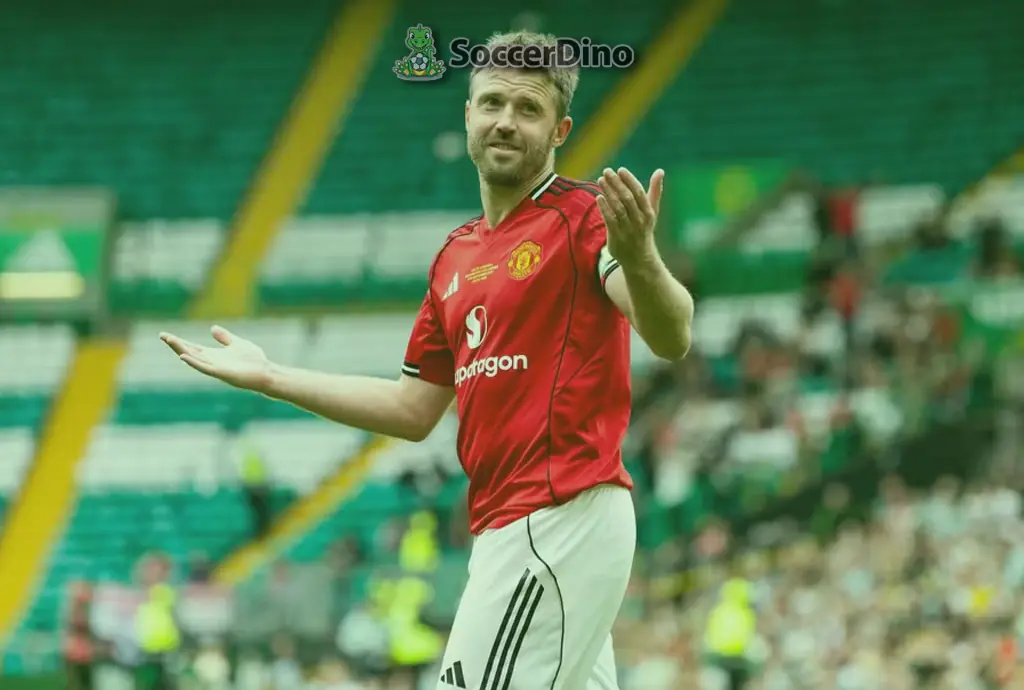
Michael Carrick is set to take charge of Manchester United on an interim basis until the end of the season, after reaching a verbal agreement to return to the club on Monday night.
The move would mark a familiar face stepping in during another turbulent period at Old Trafford, with United looking for immediate stability, clearer leadership on the training ground, and a calmer tone around the first team while the club plans its next steps.
According to Sky Sports, the final details of Carrick’s contract are currently being completed. Carrick has already been seen at the Carrington training complex, which underlines how quickly United want this transition to happen. If paperwork and formal approvals are completed on time, the club could confirm his appointment officially this afternoon, allowing him to lead preparations straight away and take charge of upcoming fixtures without delay.
Carrick is not a stranger to the role of “steady hands” at United. He previously took charge of the first team for a short spell in the 2022/23 season, overseeing three matches in a transition period between Ole Gunnar Solskjaer’s exit and the arrival of Ralf Rangnick. Even though that spell was brief, it reinforced the idea that the club sees him as a trusted figure, someone who understands the pressure of the job, the demands of the dressing room, and the expectations that come with wearing the United badge, whether as a player or as a coach.
His appointment would also be viewed as a return to a familiar coaching environment. Carrick spent years inside United’s structure and knows how the club operates day to day, from the rhythm of training at Carrington to the intensity of media scrutiny that builds around every team selection and result. That internal knowledge is often a key reason clubs choose interim solutions from within their own ecosystem, because they reduce the adaptation time and can bring immediate clarity in messaging and routines.
The context around United’s recent results adds urgency to the situation. In the two matches following the dismissal of Rúben Amorim, Darren Fletcher was placed in temporary charge. Under Fletcher, United drew 2-2 with Burnley in the Premier League and then lost 2-1 to Brighton, a defeat that also eliminated the club from the FA Cup. Those outcomes increased the sense that United needed a defined interim head coach rather than a short-term caretaker arrangement, especially with the season moving into a phase where each match carries heavy consequences for league position, confidence, and the atmosphere around the squad.
Fletcher is expected to return to his role within the academy, taking his place again on the under-18 bench. That shift also signals a return to clearer lines of responsibility across the club, something United have often sought during periods of instability. A focused structure matters because interim periods can become messy if roles overlap, if decision-making becomes unclear, or if the squad begins to feel that accountability has been diluted.
Carrick’s coaching profile has also evolved since his earlier stint at United. After leaving his previous role at the club, he moved into senior management and worked in the Championship, where he coached Middlesbrough last season. That experience is important because it gave him day-to-day ownership of a team, including training methodology, match planning, squad management, and tactical adjustments across a long, demanding campaign. Even though the Championship is a different environment from the Premier League, it is an intense league where managers are tested on consistency, adaptability, and the ability to keep players aligned through form swings and fixture congestion.
Since that Middlesbrough spell, Carrick has been without a club, which makes this opportunity both timely and significant. From United’s perspective, appointing someone who is available immediately avoids delays and reduces the risk of a prolonged caretaker period. From Carrick’s perspective, it is a high-profile return that brings obvious pressure but also a major platform, with the chance to rebuild his reputation at the elite level and potentially put himself in the conversation for future top jobs, depending on results and performances.
As a player, Carrick’s status at Manchester United remains substantial. He was one of the defining midfielders of the Alex Ferguson era’s later years, known for control, positional intelligence, and the ability to dictate tempo. He won the Champions League once and lifted the Premier League title five times, among other trophies, and he did so in a team built around elite standards, strong personalities, and relentless expectations. That playing background matters because it usually gives a coach instant credibility with a squad, particularly in a club where the identity is closely tied to past winning eras.
The immediate challenge for Carrick, if confirmed, will be to stabilize performances quickly. United’s priorities in an interim period typically include tightening defensive structure, restoring intensity without overloading players, and re-establishing clarity in roles, especially in midfield and in the press. He will also need to manage the mental side of the squad, because interim periods often bring uncertainty about the future, changes in selection, and increased media noise. In those moments, communication becomes as important as tactics, and Carrick’s calm public persona could help reduce pressure on the players.
There will also be attention on how Carrick balances pragmatism with identity. Manchester United supporters often demand both results and a sense of direction, even in transitional periods. An interim head coach often has to make practical choices to win points quickly, but also needs to show enough structure and cohesion to prevent the season from drifting. That means decisions around leadership within the squad, consistent selection where possible, and clear standards on and off the pitch.
For now, the focus is on the finalization of the agreement and the timing of an official announcement. With Carrick already at Carrington and the reported contract details being completed, the expectation is that the process is moving fast. If confirmed, his return will be framed as a familiar figure stepping in at a critical moment, tasked with steadying the club until the end of the season and giving Manchester United a clearer footing while the longer-term managerial plan is decided.