Kylian Mbappé explained why he did not fully display the Todos somos caballas shirt, saying he wanted to show solidarity with both Ceuta and migrants affected by the crisis.
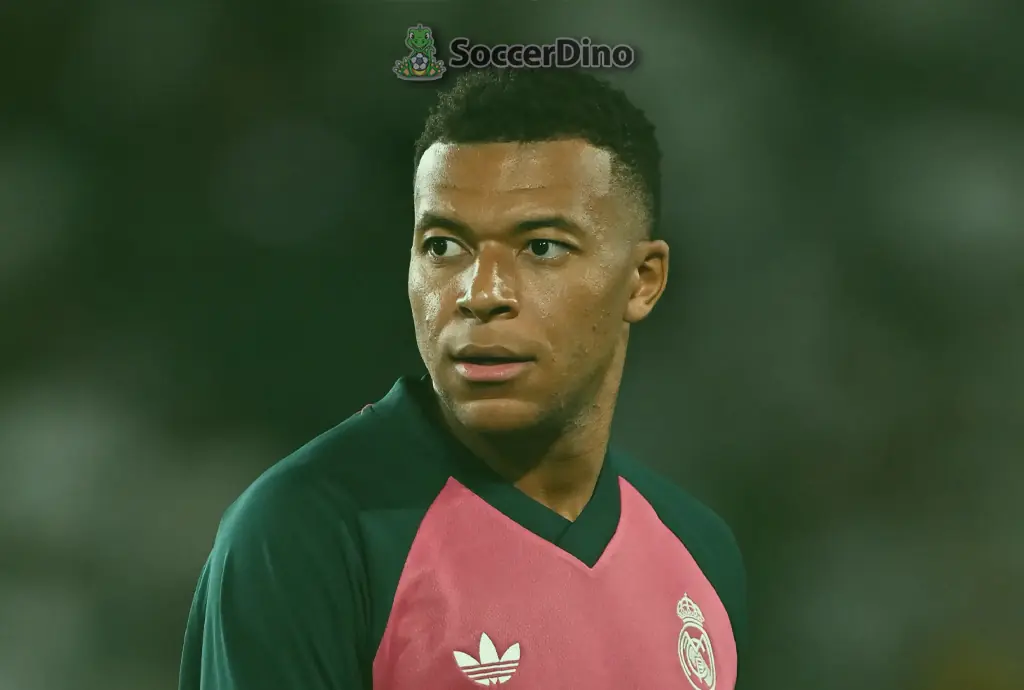
Mbappe explains decision over Todos somos caballas campaign
Kylian Mbappé has explained why he chose not to fully display the “Todos somos caballas” message before Real Madrid match against Elche, insisting that his decision was not intended as a rejection of the people of Ceuta but as an attempt to recognise all those affected by the migration crisis. Speaking in an interview with Spanish sports newspaper AS, the France international addressed a controversy that had grown after images from the Martínez Valero showed him, Vinicius Júnior and Konaté wearing the campaign shirt differently from the majority of the other players. Mbappé said he fully supported the people of Ceuta and the victims of the crisis, but felt uncomfortable appearing to prioritise one group of people who were suffering over another. He therefore wanted his position to include the migrants who had lost their lives or were living in extremely difficult conditions as well.
The incident took place before Elche and Real Madrid faced each other on Tuesday, with players entering the pitch wearing white shirts carrying the slogan “Todos somos caballas”. The phrase has become associated with a solidarity campaign supporting Ceuta following the migration crisis that affected the Spanish autonomous city at the end of July. While most players displayed the message normally, images showed Mbappé, Vinicius and Konaté with the shirts partially folded, meaning part of the slogan was obscured. The three then removed the shirts shortly after entering the pitch and greeting their opponents. Their actions immediately attracted attention because Real Madrid had institutionally agreed to participate in the initiative, creating questions about whether the players were distancing themselves from the campaign or expressing a different position.
Mbappé has now provided his explanation and made clear that his intentions were humanitarian rather than confrontational. “It was a decision by the clubs to include the shirt, to wear the shirt. We, the players, were also expected to wear it. The first thing I want to say is that I have complete solidarity with Ceuta and with all the victims because, before being a footballer, I am a human being. But I also wanted to make a gesture and spare a thought for all the immigrants who have lost their lives and who are also living in very difficult conditions,” he said. The Real Madrid forward acknowledged that the position could easily be misunderstood because declining to display the message in the same way as his teammates could be interpreted as opposition to Ceuta. He strongly rejected that reading, stressing that he had no problem with the residents of the city and supported them fully.
“It was not an easy position to take because, in the end, people might think that I am against the people of Ceuta, but absolutely not. I have nothing against them and I support them 100% in my thoughts, but I also wanted to think about everyone who is suffering because, ultimately, I am human and I do not want to create a hierarchy of suffering,” Mbappé explained. “There are people suffering, and it makes me very sad to see that happening around the world. I am someone who wants the best for the world we live in. I want to send a message of optimism and peace, and I hope this situation can be resolved quickly.” His remarks therefore frame the decision as an attempt to avoid choosing between different groups affected by the same crisis, rather than as a political statement against the campaign itself.
How the Todos somos caballas campaign began
The expression “Todos somos caballas”, meaning “We are all caballas”, uses the popular nickname traditionally associated with residents of Ceuta. The slogan became the central message of a solidarity campaign created after the migration crisis at the end of July, with organisers presenting it as a way of showing that the people and business community of the autonomous city were not facing the consequences alone. The campaign has repeatedly been summarised with another simple message, “Ceuta is not alone”, and initially emerged outside football before quickly reaching Spanish stadiums. The Valencian Association of Entrepreneurs, known as AVE, publicly launched the initiative on 11 September and said its intention was to demonstrate support for the citizens of Ceuta and the city business community during a difficult period.
AVE is chaired by businessman Vicente Boluda Fos, president of Boluda Corporación Marítima and a figure with a long-standing connection to Real Madrid. Boluda served as interim president of the Spanish club in 2009 following the departure of Ramón Calderón and before Florentino Pérez returned to the presidency. He later considered standing for the position himself. That football connection became particularly relevant once the solidarity initiative expanded beyond the business community and began appearing around professional matches. Villarreal and Real Betis were among the first clubs associated with the campaign, with players wearing shirts bearing the message before games. Betis also announced a match against AD Ceuta FC with proceeds intended for Cáritas Ceuta, strengthening the link between the campaign and Spanish football.
Elche and Real Madrid subsequently joined the initiative, but it was their match at the Martínez Valero that brought far greater national and international attention to the campaign. The focus shifted from the message itself to the behaviour of several Real Madrid players after Mbappé, Vinicius and Konaté were seen concealing part of the slogan. At the time the first reports emerged, none of the three had publicly explained their reasons. Spanish newspaper El País reported that Real Madrid regarded the actions as personal decisions taken by the players rather than as a change in the institutional position of the club. According to a club source cited by the newspaper, the sensitivities of those players did not necessarily coincide with the position adopted by Real Madrid when it accepted Elche proposal to participate.
Mbappe becomes first to explain his position
Mbappé comments now provide important context to a situation that had initially been interpreted largely through photographs and television images. His explanation makes clear that he did not view the issue in simple terms of supporting or rejecting Ceuta. Instead, he said he wanted his gesture to reflect sympathy for both the residents affected by the crisis and the migrants caught in extremely difficult circumstances. His repeated insistence that he did not want to create a “hierarchy of suffering” is central to understanding the decision. Rather than saying the campaign itself was wrong, Mbappé argued that his own response had to encompass people on both sides of a humanitarian situation.
The comments also illustrate why the episode was particularly sensitive. Public campaigns linked to migration can easily acquire meanings beyond their original intention once they enter football, where players come from different countries and backgrounds and may interpret the same message differently. Real Madrid institutional participation did not automatically mean every individual player would feel comfortable expressing solidarity in exactly the same way. Mbappé was careful to say that he understood why the club had agreed to wear the shirts and that he supported the people of Ceuta, while also making clear that his personal conscience led him to acknowledge migrants as well.
That distinction may explain why the French forward chose not to refuse the shirt entirely. He did wear it onto the pitch but kept part of the message folded and removed it soon afterwards. The gesture was therefore less absolute than a complete refusal, but it was visible enough to provoke debate. His subsequent explanation suggests that he was trying to communicate discomfort with what he perceived as a potentially incomplete representation of the human suffering surrounding the crisis, rather than rejecting the underlying idea of solidarity.
Vinicius and Konate also drew attention
Vinicius Júnior and Konaté were involved in the same pre-match scene and similarly wore the shirts in a way that obscured part of the message before removing them. Their reasons, however, were not included in the explanation given by Mbappé, and his comments should therefore be understood as describing his own decision rather than speaking on behalf of his teammates. The initial attention around the three players came from the fact that they behaved differently from the rest of the Real Madrid squad, but there is no basis for assuming that all three acted for exactly the same reasons unless they choose to explain their positions themselves.
That distinction is particularly important because the issue touches on different personal, cultural and humanitarian sensitivities. Real Madrid may have accepted the campaign institutionally, but the club reportedly considered the way the three players handled the shirt to be an individual matter. Mbappé has now explained his reasoning in detail, while the broader controversy continues to illustrate the difficulty clubs face when collective campaigns intersect with the personal views of players.
Barcelona participation remains unclear
The campaign has not been adopted uniformly across Spanish football. Barcelona, for example, have not issued an official statement explaining whether they deliberately chose not to participate. Images from a recent trip to the Valencian Community showed Levante players wearing campaign shirts while Barcelona players did not. That difference generated speculation about whether the Catalan club had refused the initiative, but without an official explanation it remains impossible to establish whether there was a formal decision not to take part or whether other circumstances were involved.
The lack of uniform participation highlights an important aspect of the campaign: although it has received support from several clubs, it is not a mandatory football-wide initiative with one single interpretation. Clubs have made their own decisions, and within those clubs individual players may also have personal views about how they wish to associate themselves with the message. Mbappé explanation is perhaps the clearest example so far of a player attempting to distinguish between support for the people of Ceuta and concern that the suffering of migrants should not be overlooked.
Ez Abde previously faced backlash
The sensitivity surrounding the campaign had already become evident before the Real Madrid match through the reaction to Ez Abde. The Real Betis winger, who represents Morocco internationally, wore the “Todos somos caballas” shirt as part of the initiative before the match involving Villarreal and Betis. Images of the player participating in the campaign subsequently circulated online and triggered criticism from some Moroccan social media users. Abde was accused by some individuals of “betrayal”, there were calls for him to be excluded from the Morocco national team and personal threats were also posted online.
Those reactions came from individual users and should not be confused with an official position from Moroccan institutions or the national team. Nevertheless, the episode demonstrated how quickly a solidarity campaign connected to Ceuta can become highly sensitive for players with personal or national connections to the wider issue. What one participant may understand as a straightforward humanitarian message can be interpreted differently by others, particularly when questions of migration, identity and the status of Ceuta become part of the public debate.
Mbappé appears to have been conscious of precisely that complexity when making his decision. His explanation avoided criticism of the campaign organisers, Elche or Real Madrid and repeatedly returned instead to the idea of recognising suffering wherever it exists. By emphasising both his solidarity with Ceuta and his concern for migrants, he attempted to separate his gesture from suggestions that he was taking a position against the city or its residents. His message was that compassion should not be restricted to one group simply because another group is being publicly supported at that moment.
A humanitarian explanation after days of speculation
The controversy had grown largely because the images from the Martínez Valero were open to interpretation. Without an explanation from the players involved, the decision to fold the shirts could be read in several different ways. Mbappé interview with AS now provides a direct account from one of the central figures and makes clear that, in his case, the motivation was to avoid placing different forms of human suffering in competition with one another. He remains supportive of the people of Ceuta, but felt it was equally important to remember migrants who had died or were enduring difficult circumstances.
His comments are unlikely to remove every disagreement surrounding the campaign, but they significantly clarify why he acted differently from most of his teammates. The France international did not present his decision as an attack on “Todos somos caballas”, nor did he criticise Real Madrid for agreeing to take part. Instead, he described an uncomfortable personal choice in which he attempted to express solidarity with a wider group of people affected by the crisis. “Before being a footballer, I am a human being,” was the principle he repeatedly returned to, along with his refusal to establish what he called a hierarchy of suffering.
What began as a local solidarity campaign has therefore developed into a wider conversation within Spanish football about how clubs and players express support during complex humanitarian situations. The involvement of Villarreal, Betis, Elche and Real Madrid brought the initiative onto the pitch, the reaction to Ez Abde demonstrated how sensitive it could become, and the behaviour of Mbappé, Vinicius and Konaté pushed the debate to an even higher level of visibility. Mbappé has now offered his own answer: he supports Ceuta, he sympathises with its people and its victims, but he also wanted the migrants affected by the same crisis to remain visible. For him, the message was not one of rejection but of extending solidarity beyond a single group.