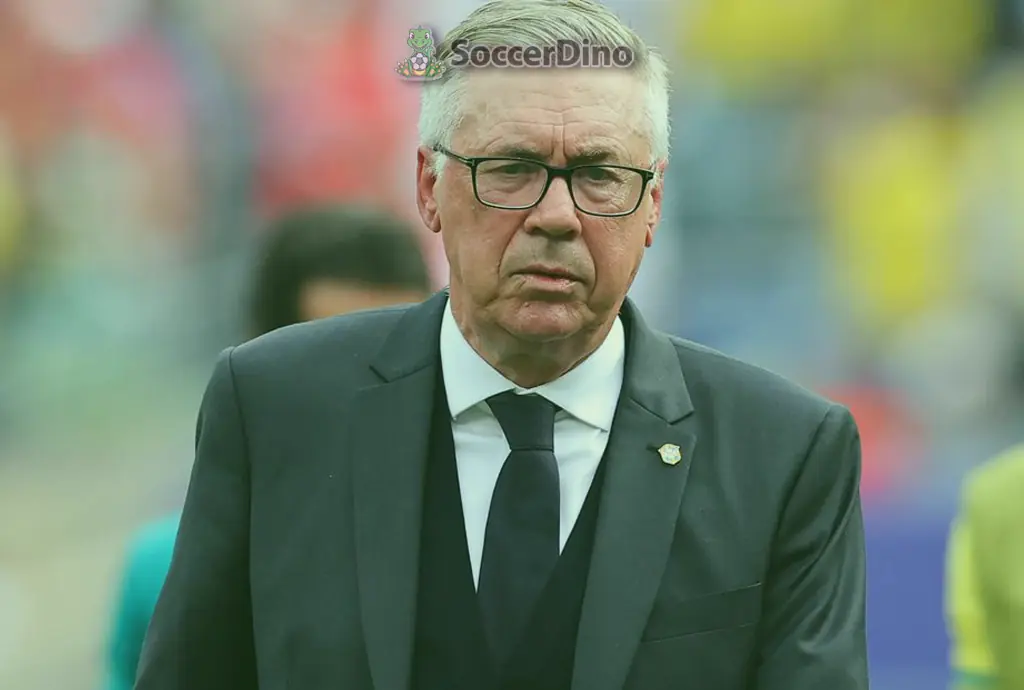
Cristian Chivu is disappointed by Denzel Dumfries’ imminent move to Real Madrid. At the same time, the Internazionale coach acknowledged that he could do nothing to stop the transfer, so he has accepted it.
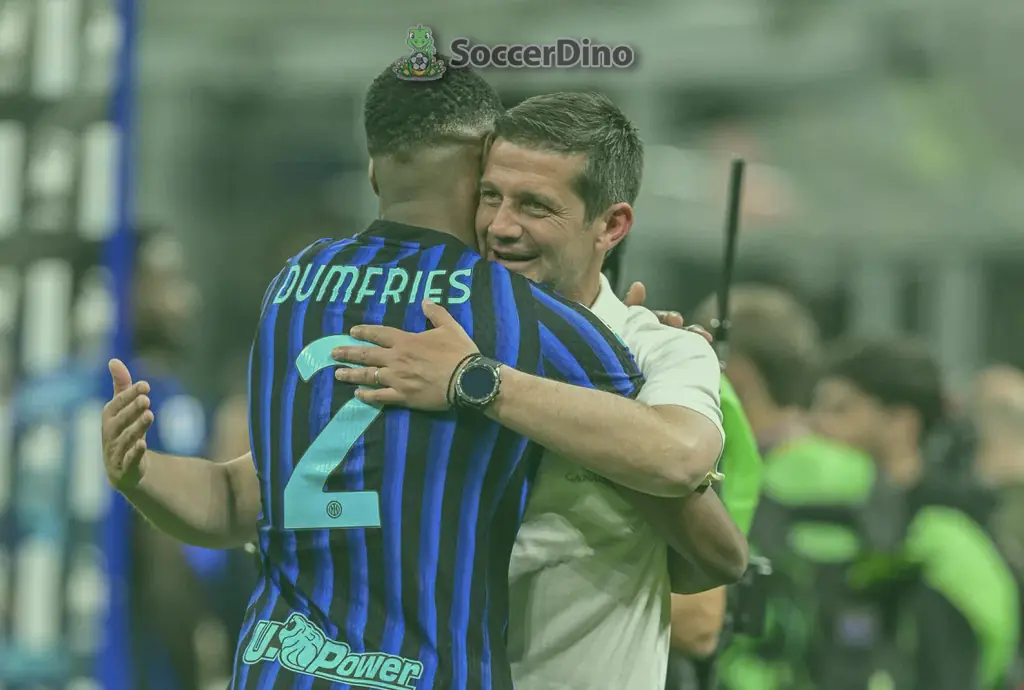
Inter frustrated as Denzel Dumfries prepares for Real Madrid move
Inter are preparing to lose one of the most important players on the right side of their team, with Denzel Dumfries set to complete a move to Real Madrid after the Spanish club took advantage of the €20 million release clause in his contract. For the Italian champions, the transfer is a difficult one to accept, not only because Dumfries has been a valuable figure in the squad, but also because the fee is far below what Inter would probably have demanded in a normal negotiation.
Cristian Chivu has not hidden his frustration at the situation, although the Inter coach also made it clear that there was very little the club could do once Real Madrid decided to act. Dumfries had a clause in his deal, the player was open to the move, and Real Madrid have already completed his medical examination. At that point, Inter’s role in the operation became almost passive, with the club forced to accept the contractual reality and begin planning for life without the Dutch international.
“Denzel has done his job...,” Chivu said in an interview with La Gazzetta dello Sport. His words carried a sense of resignation rather than anger. The coach did not criticise Dumfries for wanting to take the next step in his career, nor did he suggest that the player had behaved incorrectly. Instead, he acknowledged that the situation was created by the release clause and that Inter had no legal or sporting mechanism to block the move.
“He had a clause in his contract and Inter could do nothing to stop him. We have to be ready to bring in the right replacement and understand what we need in order to make a step up in quality in the future,” Chivu added.
That final part of the statement is important. Chivu does not want Inter simply to replace Dumfries with the first available option. He wants the club to use this moment to think carefully about what the squad needs next. Losing a player like Dumfries creates an obvious gap, but it also forces the club to reassess the balance of the team, the type of football it wants to play and the kind of profile that can help Inter remain competitive at the highest level.
Dumfries has been more than just a right-sided defender for Inter. His physical power, attacking timing and ability to cover huge distances have made him a constant presence in both defensive and offensive phases. He can defend deep, push high, attack the far post and give the team width when matches become tight. In a system where the wide players are essential to the structure, his departure is not a minor adjustment.
The frustration inside Inter is made even greater by the price of the transfer. In the current market, €20 million for an established international with Serie A, Champions League and major tournament experience looks like a very attractive deal for Real Madrid. If there had been no clause, Inter would almost certainly have valued Dumfries much higher, especially because elite wing-backs and full-backs with his physical profile are not easy to find.
For Real Madrid, the move makes clear sporting and financial sense. The Spanish club are adding experience, intensity and athleticism for a fee that is modest by elite European standards. Dumfries may not be the most elegant technical full-back in possession, but he offers directness, power and vertical movement. In a squad full of creative and technically gifted players, that kind of profile can be extremely useful, especially in matches where Madrid need more width and physical presence on the right side.
For Inter, however, the focus now has to shift quickly to the market. According to Italian media, the club are already working on the possible arrival of Marco Palestra from Atalanta. The young Italian is seen as one of the names who could help fill the gap left by Dumfries, although Chivu was careful not to speak too openly about a player who is still under contract elsewhere.
“He is a great player, but he is not my player at the moment, so I cannot talk about him... We already have many strong Italians who know what Inter means and identify with the club. That is the path we want to continue following,” Chivu said.
Those comments suggest that Inter are looking at more than just technical qualities. The club appear to value players who understand Italian football, who can grow within the identity of the team and who can handle the pressure of playing for a club with high expectations. Palestra would represent a different type of move from Dumfries. He would be younger, more developmental and potentially part of a longer-term plan.
That kind of signing can be exciting, but it also carries risk. Dumfries is already proven at the highest level. A younger replacement would need time, patience and the right tactical environment to develop. Inter, as defending champions, may not have the luxury of waiting too long if results are expected immediately. That is the challenge facing the club: they need to think about the future without weakening the present.
Chivu’s own position was also part of the conversation. While Dumfries is heading for the exit, the Inter coach made it clear that he does not expect to leave. Still, he spoke with realism about the pressure that comes with the job. In his view, managers are always the first to be judged when results go wrong, regardless of whether that is fair.
“Maybe if I lose three games in a row... That is the reality of football. I understand why players get five-year contracts and coaches only get two. The coach is the first one who has to be held accountable. Whether it is fair or not, that is just the way it is,” he said.
It was an honest reflection from a coach who knows that even winning the league does not completely remove pressure. Inter became champions in Italy, but Chivu admitted that there were moments during the season when he feared he might not be allowed to finish the campaign. The defeats against Udinese and Juventus were particularly difficult, creating doubts at a time when the season could have gone in a very different direction.
“Especially after the defeats against Udinese and Juventus. For a moment, I thought everything was going to go completely wrong, but then I saw that the club thought differently from me. In fact, they supported me. I felt nothing but support and unity,” Chivu explained.
That support from the club proved crucial. In difficult moments, a coach needs more than public statements. He needs the board, the dressing room and the wider structure of the club to remain aligned. Chivu felt that backing, and Inter were eventually able to turn the season into a successful one. The title confirmed the quality of the work, but it did not remove the need for smart decisions in the summer.
The Dumfries transfer now becomes one of the first major tests of Inter’s planning after becoming champions. Winning a league title often brings new problems. Rivals study weaknesses, important players attract interest and the squad has to be refreshed without destroying what already works. Dumfries’ exit forces Inter to act quickly and intelligently.
The right side of the team will need a clear solution. Inter cannot afford to leave that role weakened, especially if they want to defend their domestic title and compete strongly in Europe. The replacement will need stamina, tactical awareness, attacking contribution and defensive reliability. In Chivu’s system, that position is not simply about staying wide. It is about timing, movement, transitions and understanding when to attack and when to protect the structure behind the ball.
For Dumfries, the move to Real Madrid represents a major step in his career. He leaves Inter after doing his job, as Chivu put it, and joins one of the most demanding clubs in world football. For Real Madrid, it is a transfer that adds depth and experience without requiring an enormous financial investment. For Inter, it is a painful reminder of how dangerous release clauses can be when a player becomes attractive to a bigger foreign market.
Chivu’s message, however, was not one of panic. He accepted the reality of the transfer and immediately turned the conversation towards the future. Inter must now find the right replacement, maintain the quality of the squad and use the disappointment as motivation to improve. Dumfries may be leaving, but the response to his departure will say a lot about the ambition and clarity of the club’s project.
The next move will be decisive. If Inter replace him well, the loss can be absorbed and perhaps even turned into an opportunity to refresh the team. If they get it wrong, Dumfries’ departure could become a recurring issue throughout the season. For now, Chivu is asking for calm, planning and ambition. Inter have lost an important player, but the coach knows that champions are often judged not only by the trophies they win, but by how they react when key players walk out of the door.