Michael Carrick calls for patience at Manchester United ahead of Atletico Madrid clash, as the club faces its worst Premier League start in 40 years.
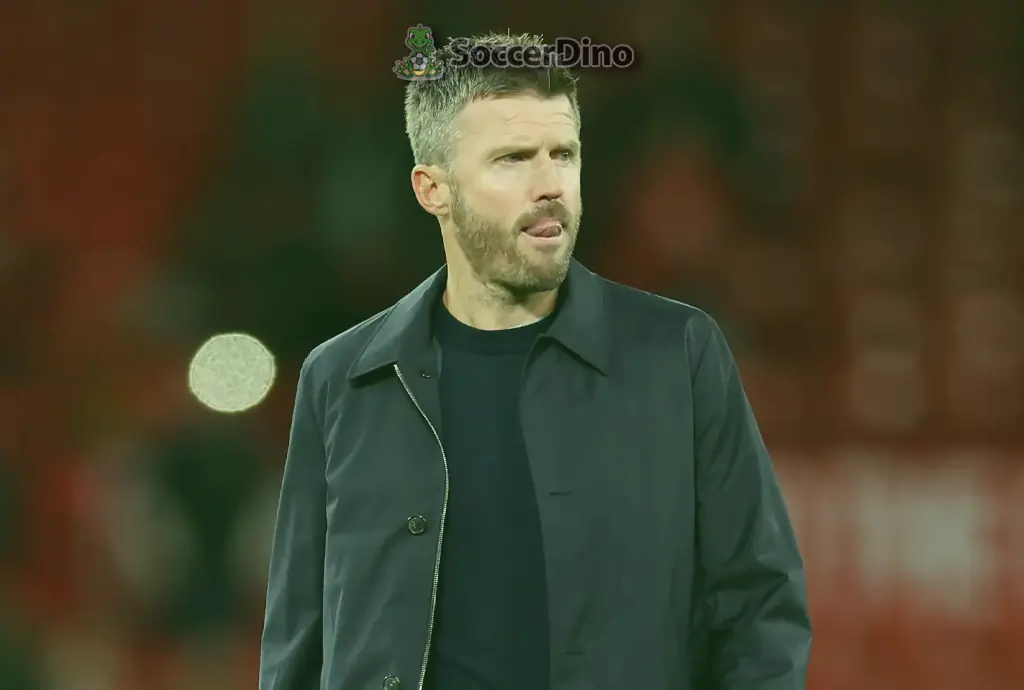
Michael Carrick asks for patience at Manchester United as pressure grows ahead of Atletico Madrid clash
Michael Carrick has defended his long-term vision for Manchester United and urged supporters to remain patient as the English club prepares for a difficult Champions League encounter against Atletico Madrid. With United experiencing their worst start to a Premier League season in 40 years, the manager believes that rebuilding a successful team requires time, stability and the determination to overcome difficult periods rather than constantly searching for immediate changes.
Speaking ahead of Tuesday's Champions League league-phase match in Madrid, scheduled for 20:00, Carrick pointed to Diego Simeone and Mikel Arteta as examples of managers who were given the opportunity to develop their projects despite encountering setbacks. The former Manchester United midfielder insisted that challenging circumstances are an unavoidable part of football management and suggested that the current difficulties could reveal which players are genuinely committed to the club's future.
His comments come at a particularly sensitive moment for Manchester United. After six Premier League matches, the Red Devils have collected just six points, their lowest total at this stage of a campaign since the 1986/87 season. They have managed only one victory, against Ipswich Town, and are currently on a four-match winless run that has increased frustration among supporters.
The latest disappointment came on Saturday, when United surrendered a late lead against Tottenham despite playing the closing stages with a numerical advantage. Bryan Mbeumo appeared to have secured an important victory with a goal in the 73rd minute, but Dominic Solanke equalised in stoppage time to ensure the contest finished 1-1. The result prompted boos from sections of the Old Trafford crowd, directed at Carrick both at half-time and following the final whistle.
With Portuguese internationals Bruno Fernandes and Diogo Dalot among the players attempting to help United recover, the trip to Atletico Madrid represents an important opportunity to change the mood surrounding the club. However, Carrick has made clear that he does not believe the answer to every difficult period is another managerial change.
Carrick uses Diego Simeone as an example of long-term success
During his pre-match press conference, Carrick highlighted the extraordinary longevity of Diego Simeone, who has been in charge of Atletico Madrid since 2011. The Argentine coach has become one of the most recognisable figures in European football, establishing a strong identity at the Spanish club and overseeing periods of considerable domestic and continental success.
For Carrick, Simeone's career demonstrates why a manager should not necessarily be judged solely on a disappointing sequence of results. Even successful projects experience difficult periods, and the ability to overcome those setbacks is often an essential part of building a competitive team.
"I'm sitting alongside a manager who has been here for a very, very long time, and I'm sure there have been periods when things haven't gone exactly as planned," Carrick explained.
"They have enjoyed enormous success, won league titles and reached the latter stages of the Champions League, but there have also been times when things haven't gone according to plan. I understand that when things aren't going particularly well, there's a strong feeling that it's a disaster and that everything needs to change. That's not my mentality," he continued.
The comparison is particularly relevant because Simeone has been allowed to build a footballing identity over an extended period. His Atletico Madrid teams have evolved as players arrived and departed, but the club has maintained a degree of continuity that is increasingly unusual in modern football, where managers often face intense scrutiny after relatively short sequences of disappointing performances.
Carrick appears to believe that Manchester United need a similar commitment to a clearly defined sporting direction. While he acknowledged the frustration caused by poor results, he rejected the idea that every setback should trigger a complete reassessment of the project.
His argument does not remove the responsibility to improve performances. Manchester United remain one of the most prominent clubs in world football, and their supporters expect them to compete at the highest level. However, Carrick believes that sustainable progress depends on overcoming obstacles rather than allowing short-term pressure to dictate every decision.
The encounter with Atletico Madrid therefore carries an additional dimension. Carrick will attempt to secure an important European result against a manager whose longevity he has publicly praised, while hoping to demonstrate that his own Manchester United project deserves continued support.
Mikel Arteta provides another example of patience paying off
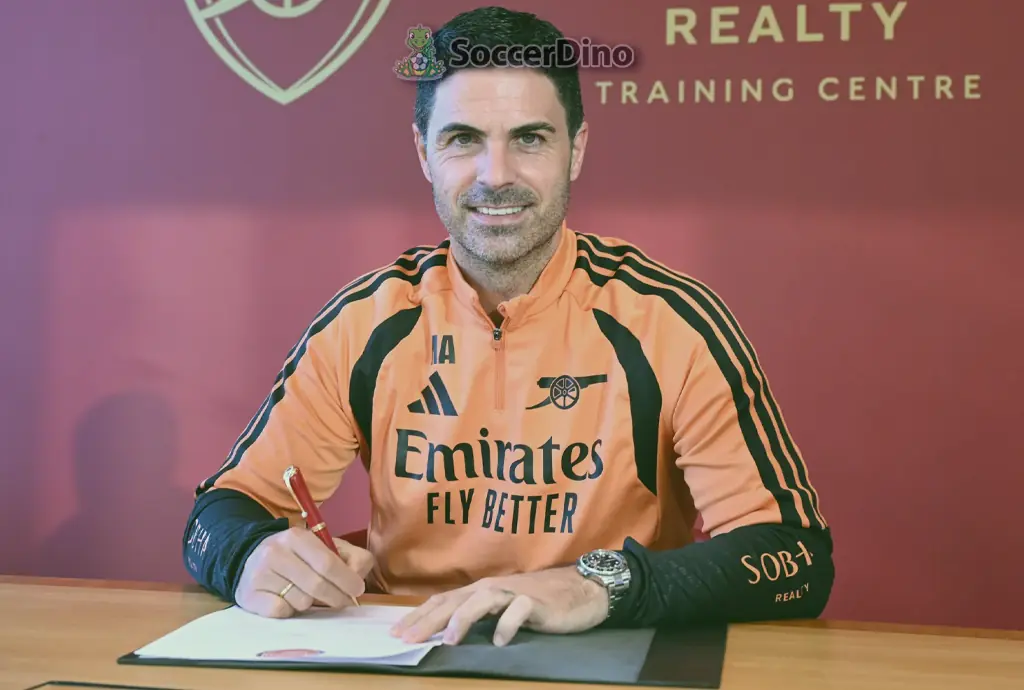
Carrick also referred to Arsenal manager Mikel Arteta, whose development at the London club has become another reference point in discussions about managerial stability. Arteta took charge of Arsenal in 2019 and gradually transformed the team into one capable of competing for the Premier League title.
The Manchester United manager acknowledged that Arsenal experienced difficult periods during the early stages of that process. He argued that the club's willingness to maintain its confidence in Arteta eventually contributed to the success achieved in subsequent seasons.
"It pains me to say it, but the manager who won the league in our country last season has been there for a long time," Carrick said, referring to Arteta.
"It's been seven years, and in his first two seasons, they finished perhaps seventh or eighth in the Premier League. I think Mikel has done an incredible job, and that's another example," he added.
The reference to Arsenal is significant because Manchester United and the London club have traditionally been major domestic rivals. Carrick nevertheless chose to acknowledge the work of another manager, using Arteta's progress to reinforce his argument that successful teams are not always constructed through immediate results.
Arsenal's improvement illustrates how continuity can allow a manager to establish tactical principles, develop relationships within a squad and shape recruitment decisions around a consistent sporting philosophy. Those changes are rarely completed in a single transfer window, particularly when a club is trying to rebuild expectations after a disappointing period.
However, the circumstances at Arsenal and Manchester United are not identical. Each club faces different squad challenges, competitive demands and institutional pressures. Patience alone does not guarantee improvement, and Carrick will ultimately need to demonstrate that his methods can produce better performances.
What he wants to emphasise is the importance of distinguishing temporary difficulties from an unsuccessful long-term project. In his view, changing direction every time results deteriorate can prevent a team from developing the stability required to challenge consistently for major honours.
Manchester United endure their worst league start since 1986
Although Carrick's arguments focused on the value of patience, the statistics surrounding Manchester United's opening weeks provide a clear explanation for the pressure he is facing. The Red Devils have collected only six points from their first six Premier League fixtures, matching their lowest total at this stage of a campaign since 1986/87.
That historical comparison is particularly uncomfortable for a club accustomed to competing near the top of English football. Manchester United have spent much of their modern history associated with domestic success, major European occasions and expectations of challenging for trophies. Their current results therefore represent a significant departure from the standards supporters expect.
United have won only once, defeating Ipswich Town at Old Trafford. Since that victory, Carrick's side have failed to win any of their next four Premier League matches, collecting three draws and suffering one defeat.
The sequence began with a 2-2 draw against Everton, followed by a 1-0 defeat to Manchester City. United then shared the points with Fulham and Tottenham in consecutive 1-1 draws, leaving them unable to establish the momentum required to climb the standings.
The problem is not simply the number of points dropped. The repeated inability to turn competitive matches into victories has increased the sense of frustration surrounding the team. Draws may prevent a difficult run from becoming even worse, but they offer limited progress when a club is attempting to recover from a poor opening to the season.
Manchester United also face the challenge of restoring confidence among supporters who have grown increasingly impatient with disappointing results. Every additional match without a victory makes the next encounter more important, creating a situation in which the pressure can become difficult to separate from the team's actual performances.
For Carrick, the immediate task is to interrupt that sequence. While he believes the club must remain committed to its longer-term objectives, he also understands that collecting victories is essential to changing the atmosphere around Manchester United.
Late Tottenham equaliser increases frustration at Old Trafford
Saturday's draw with Tottenham represented another example of United's inability to protect a promising position. The hosts appeared to have done enough to secure their second Premier League victory of the campaign, only to concede in the closing moments against opponents who were playing with ten men.
The match began with Manchester United struggling to establish control. Carrick later acknowledged that his players had difficulty during the opening stages and failed to perform at the level he expected.
Despite those problems, United gradually recovered and placed themselves in a position to claim all three points. Bryan Mbeumo broke the deadlock in the 73rd minute, providing a moment of relief for the home supporters and giving Carrick's side an opportunity to end their winless sequence.
The situation became even more favourable five minutes later when Tottenham midfielder Rodrigo Bentancur was sent off. The Uruguayan had only recently entered the match but was dismissed following an incident in which he lost his composure, leaving the visitors to complete the closing stages with ten players.
At that moment, Manchester United appeared to have a significant advantage. They were leading at home, had more players on the pitch and were facing an opponent that had not managed a league victory during the opening weeks of the season.
However, Tottenham remained competitive and produced a decisive response in stoppage time. Dominic Solanke scored in the 92nd minute to secure a 1-1 draw, transforming what had seemed an encouraging afternoon for United into another deeply disappointing result.
The equaliser was only Tottenham's third Premier League goal of the campaign and their first away from home. Those figures made the late setback even more frustrating for Manchester United, who had been unable to preserve their advantage despite the favourable circumstances.
The final whistle was greeted with dissatisfaction from sections of the Old Trafford crowd. For supporters who had watched United struggle through the opening weeks of the season, losing two points so late in the match became another indication that significant improvement was required.
Bruno Fernandes and Diogo Dalot involved in another disappointing result
Portuguese internationals Bruno Fernandes and Diogo Dalot were both involved in the draw against Tottenham. Fernandes captained Manchester United, while Dalot was introduced from the substitutes' bench as Carrick attempted to manage the encounter.
Fernandes remains one of the important figures within the squad, both because of his experience and his responsibilities as captain. During difficult periods, leadership becomes particularly significant, with senior players expected to help maintain concentration and prevent frustration from affecting performances.
Dalot's involvement also illustrates the depth of decisions facing Carrick as he searches for a winning combination. The manager must balance individual form, tactical requirements and the physical demands of competing in domestic and European competitions.
United's recent performances suggest that improving results will require a collective response rather than relying exclusively on established players. Defensive concentration, more effective management of possession and better decisions during crucial moments are all areas that can influence whether narrow matches end in victory or disappointment.
The draw against Tottenham demonstrated how quickly the course of a match can change. Manchester United had recovered from a difficult start, established a lead and gained a numerical advantage, but they were still unable to secure the result.
That inability to manage the closing stages will be a concern ahead of the Champions League encounter with Atletico Madrid. European away matches frequently demand discipline and concentration throughout the full 90 minutes, particularly against experienced opponents capable of taking advantage of mistakes.
Michael Carrick admits boos from supporters were painful
Carrick did not attempt to disguise his disappointment when asked about the reaction from Manchester United supporters following the Tottenham draw. The English manager was booed during the interval and again after the final whistle, a response that highlighted the growing dissatisfaction at Old Trafford.
Rather than criticising the fans, Carrick acknowledged their frustration and accepted that the team's results had failed to meet expectations.
"It's not pleasant. It hurts a lot because I care about this club. But I understand the disappointment. The reality is that we have to start winning matches again," he said.
His remarks reflected the personal significance of his relationship with Manchester United. As a former player who enjoyed a distinguished career at Old Trafford, Carrick understands the importance of the club to its supporters and the expectations associated with representing it.
That history provides him with a strong emotional connection to United, but it also increases the responsibility he feels when results are poor. Supporters who once celebrated his achievements as a player now expect him to demonstrate that he can guide the team through a challenging period as manager.
Carrick recognised that the performance against Tottenham contained different phases, with United struggling initially before recovering sufficiently to take the lead.
"It was a game of different moments. We struggled at the beginning. For various reasons, we weren't at our usual level. You could clearly see that we were going through a difficult period," he explained.
The manager also rejected the suggestion that the team's problems could be attributed entirely to a lack of confidence. Although he acknowledged that difficult circumstances can affect performances, he appeared more concerned by how quickly matches can change when players fail to manage decisive situations effectively.
"I don't think it's a lack of confidence, but a game can get away from you very quickly. We managed to recover, put ourselves in an excellent position, and that's one of the most disappointing things," Carrick added.
His analysis suggests that the frustration was heightened by the knowledge that United had created an opportunity to win. The manager did not portray the draw as an acceptable result against difficult opponents. Instead, he recognised that failing to protect the lead represented a missed opportunity to change the direction of the team's season.
Tottenham continue their own difficult start despite late point
While Manchester United were disappointed to surrender their advantage, Tottenham left Old Trafford with a point that offered limited relief during an even more difficult opening to the campaign.
The London club have yet to record a Premier League victory this season, despite making their largest-ever investment in new signings during the summer transfer window. Expectations had been high following that spending, but performances and results have failed to match the ambition demonstrated in the transfer market.
Solanke's late equaliser took Tottenham to three points after six matches, confirming the worst start to a season in the club's history. Although the result allowed them to move above Fulham, who remain bottom with two points, Tottenham are still searching for their first victory.
The lack of attacking production has been a particularly worrying feature of their campaign. Solanke's goal was only the team's third in the Premier League this season and their first away from home, highlighting the difficulties Tottenham have experienced in converting possession and attacking opportunities into goals.
The dismissal of Bentancur also created an unnecessary obstacle during Saturday's encounter. Tottenham were required to chase an equaliser while playing with ten men, making their eventual recovery notable even if the wider league situation remains concerning.
Portuguese midfielder Mateus Fernandes was introduced during the closing stages, contributing to a match that ultimately ended with both teams extending their winless sequences.
The result offered a reminder that Manchester United were not the only major English club struggling to meet expectations. Both teams entered the encounter desperate for points, and neither emerged with the victory required to ease pressure significantly.
Carrick believes difficult moments reveal the true commitment of players
One of the most revealing elements of Carrick's press conference was his insistence that difficult periods can provide valuable information about the character of a squad. Rather than viewing the current situation exclusively as a source of frustration, he believes it offers an opportunity to identify the players and individuals who are genuinely committed to Manchester United's long-term development.
"To achieve anything in life, you have to be able to deal with difficult situations and overcome obstacles. That's simply part of it," Carrick said.
The manager then referred to his experiences during his playing career, explaining that overcoming setbacks had been a normal part of professional football.
"I did that throughout my playing career, and that's just how things are. I actually enjoy this part, when things aren't going particularly well for you," he continued.
Carrick's remarks suggest that he sees adversity as a test of the squad's mentality. When a team is winning consistently, it can be relatively easy for everyone involved to maintain a positive attitude. Poor results create different pressures, particularly when criticism increases and individual performances are questioned.
It is during those moments, he believes, that the strength of relationships inside a club becomes more apparent. Players must continue working for one another, accept difficult decisions and remain focused on collective objectives even when immediate rewards are limited.
"That's when you discover who is really committed within the group, the players, the squad, the club, who genuinely wants to be here for the long term and be fully involved in the project," Carrick explained.
His comments can also be interpreted as a message to the dressing room ahead of the Atletico Madrid encounter. The manager wants commitment to be demonstrated through performances rather than simply expressed in public statements.
For United to recover, Carrick needs his players to respond collectively to the setbacks they have experienced. The quality of the squad will remain important, but the ability to maintain organisation and determination when matches become difficult may prove equally significant.
Atletico Madrid present another demanding European challenge
Manchester United now turn their attention to the Champions League, where they face Atletico Madrid away from home in the second round of the league phase. The match arrives at a moment when the English side desperately need a positive performance to restore confidence and reduce the pressure surrounding their domestic form.
Facing a team coached by Diego Simeone represents a difficult examination for Carrick's side. Atletico have developed a reputation for competing with determination and maintaining a strong collective approach, characteristics that can be particularly challenging for opponents experiencing inconsistent form.
United must also adjust to a different competitive environment. While the Premier League presents its own physical and tactical demands, a European away fixture requires the ability to manage unfamiliar conditions and remain disciplined against opponents capable of exploiting individual mistakes.
The significance of the match extends beyond the immediate Champions League standings. A positive result could give Manchester United an important psychological boost before returning to domestic competition, while another disappointing performance would increase the attention surrounding Carrick's position.
The manager has chosen to focus on the value of continuity rather than react defensively to speculation about his future. Nevertheless, he understands that his arguments will carry greater weight if the team begins collecting victories.
Against Atletico, Manchester United will need to demonstrate greater consistency than they managed against Tottenham. Starting matches strongly, responding effectively when opponents apply pressure and protecting favourable positions will all be essential if the visitors are to improve on their recent performances.
Bruno Fernandes, Diogo Dalot and the rest of the squad will also have an opportunity to show the collective determination Carrick described in his press conference. A demanding European encounter provides a suitable setting for players to demonstrate that they remain united behind the manager's ideas.
Patience alone will not remove pressure on Manchester United
Carrick's appeal for patience reflects an understandable desire to establish stability at Manchester United, but the manager is also aware that time must eventually produce measurable progress. Supporters may accept that rebuilding a team is a complicated process, yet they will still expect improvements in performances and results.
The comparisons with Simeone and Arteta illustrate what can be achieved when clubs maintain confidence in managers during difficult periods. However, those examples also demonstrate that long-term backing must be accompanied by the development of a recognisable playing identity and evidence that the team is moving in the right direction.
Atletico Madrid's experience under Simeone has been defined by continuity, while Arsenal's progress under Arteta required the gradual establishment of a coherent sporting structure. Carrick believes Manchester United should approach their own difficulties with a similar willingness to work through challenges rather than constantly reconsider the project.
However, the immediate circumstances remain demanding. Six points from six Premier League matches represent an unacceptable return by the standards traditionally associated with United, and the four-match winless sequence has already created considerable frustration.
The late equaliser against Tottenham was especially damaging because it denied the team an opportunity to restore confidence at Old Trafford. Manchester United were leading against ten men and appeared positioned to secure three important points, but their inability to protect the advantage reinforced concerns about consistency and concentration.
Carrick's acknowledgement of the supporters' disappointment suggests that he understands the seriousness of the situation. His request for time is not an attempt to dismiss criticism, but an argument that the club's response should be based on long-term improvement rather than immediate emotional reactions.
The difficulty lies in demonstrating that improvement while results remain poor. Every unsuccessful match increases the pressure, and the responsibility for changing that situation ultimately rests with the manager and his players.
Champions League trip offers Carrick an opportunity to change the narrative
Tuesday's meeting with Atletico Madrid therefore arrives as an important moment in Manchester United's season. Carrick has publicly defended his methods, praised the value of managerial continuity and challenged his squad to demonstrate its commitment during adversity. The next step is to translate those messages into a performance that restores confidence.
Although one result cannot resolve every problem facing Manchester United, a strong display in Madrid could provide a starting point for recovery. It would also offer evidence that the team are capable of responding positively to criticism and competing effectively against demanding opposition.
The manager's position is clear. He believes that successful football projects require patience, resilience and the willingness to endure difficult periods. His references to Simeone and Arteta were designed to show that setbacks do not necessarily mean a club should abandon its direction.
At the same time, Carrick has acknowledged that the frustration expressed by Manchester United supporters is justified by the team's results. The boos following the Tottenham draw were painful for a manager with such a strong personal connection to the club, but he accepts that the most effective response will come through winning football matches.
Manchester United now face the challenge of finding a balance between short-term recovery and long-term stability. Their poor domestic start has created urgency, while the Champions League offers a different stage on which to demonstrate progress.
For Carrick, the encounter in Madrid will be another opportunity to prove that his players possess the determination he believes is essential for rebuilding Manchester United. He has asked for time and pointed to successful managers who overcame early difficulties, but he knows that results will ultimately determine whether supporters and club officials continue to share his confidence.
As United prepare to face Atletico Madrid, the contrast is difficult to ignore. Simeone represents the benefits of managerial longevity, while Carrick is attempting to establish the same principle at a club struggling for consistency. The English manager believes patience can eventually lead to success, but with Manchester United enduring their worst league start in four decades, the pressure to demonstrate meaningful improvement has rarely been greater.