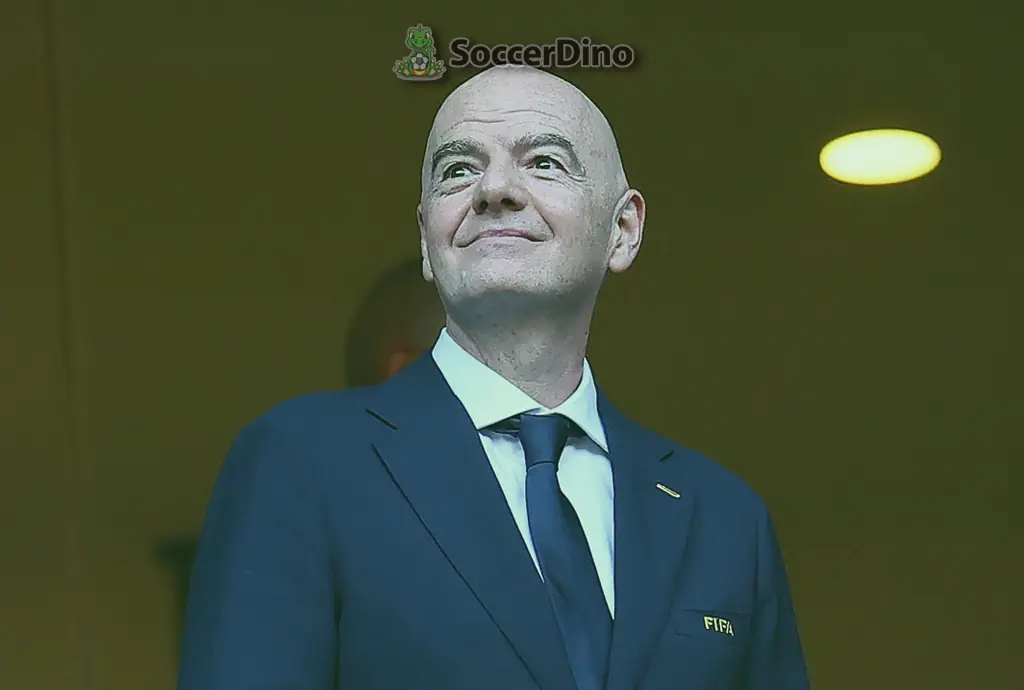
France has withdrawn its support for Gianni Infantino re-election as FIFA president, joining a growing group of European federations opposing his 2027 bid.
France withdraws support for Infantino re-election as European opposition grows
The French Football Federation has decided not to support Gianni Infantino in his bid for another term as FIFA president, marking a significant change of position ahead of the election scheduled for March 2027. The decision was communicated on Thursday by federation president Philippe Diallo following a meeting of the executive committee and places France among a growing group of European football associations that have turned against the current FIFA president.
France had previously taken the opposite position. Like a number of other European federations, the French governing body had signed a letter expressing support for Infantino and his re-election. That backing has now been withdrawn following the recent controversies involving the Swiss-Italian official, with the federation deciding that it can no longer maintain the position it had originally adopted.
The reversal is particularly notable because of the influence of the French federation within European and international football. France is one of the major football nations within UEFA and has traditionally carried considerable weight in discussions surrounding the governance and future direction of the game. A decision of this kind therefore goes beyond the position of one federation and adds further political pressure around the FIFA presidency.
France reverses previous support
The most important element of Thursday announcement is the fact that France had already formally aligned itself with Infantino before reconsidering its position. The federation was among the associations that had signed a letter backing his candidacy, meaning the latest decision represents a clear change rather than a refusal to take a position.
According to the announcement made by Diallo after the executive committee meeting, the French federation will no longer support Infantino when the election takes place. The decision follows the series of recent controversies surrounding the FIFA president and reflects growing concern among several European associations about his continued leadership.
The fact that the matter was discussed at executive committee level also underlines the importance attached to the issue inside the French federation. Rather than maintaining its original endorsement automatically, the organisation reassessed the situation and concluded that a different position was required before the election.
That change adds another prominent federation to the list of European bodies distancing themselves from Infantino. Sweden, Scotland, Italy and Belgium are among those already opposed to his re-election, and France has now joined that group.
European resistance continues to grow
France decision adds to what is becoming a broader movement of opposition within European football. Although many federations had initially supported Infantino, recent developments have caused some of them to reconsider whether they want to continue backing him for another mandate.
The presence of Sweden, Scotland, Italy, Belgium and now France on the opposing side demonstrates that the issue is no longer limited to isolated criticism. Several national associations from different parts of Europe are now publicly taking positions against his continued presidency.
That does not automatically determine the outcome of the election, as the FIFA presidency is decided by the wider global membership rather than Europe alone. However, the gradual loss of support among major European federations creates a different political environment ahead of the vote and places greater scrutiny on Infantino ability to maintain a broad coalition of support.
France reversal may also encourage other federations to reconsider their own positions. Associations that previously signed letters of support could now face internal discussions similar to those held by the French executive committee, particularly if the controversies surrounding the FIFA leadership continue in the months leading up to the election.
Infantino faces increasing pressure before 2027 vote
The timing of the French announcement is important because the election is still several months away. With the vote scheduled for March 2027, there remains time for positions to change, new candidates to emerge and alliances between federations to develop.
Infantino therefore enters the next phase of the election cycle with growing opposition in Europe. The Swiss-Italian official has held one of the most powerful positions in world football for years, but the latest developments suggest that his next campaign may face more resistance than previously expected.
France withdrawal of support is especially damaging from a symbolic perspective because the federation had already been counted among those backing him. Losing an existing supporter can carry more significance than failing to gain a new one, as it suggests that recent events have been serious enough to alter a previously established political position.
For Infantino, the challenge will now be to maintain support elsewhere within FIFA while responding to the concerns that have caused European federations to distance themselves. The global structure of FIFA means votes from every confederation matter, but divisions within UEFA remain politically important because of the economic and sporting influence of European football.
French federation takes a clear public position
By allowing Diallo to communicate the decision publicly after the executive committee meeting, the French Football Federation has removed any ambiguity surrounding its position. France will not support Infantino re-election under the current circumstances.
The announcement also signals that the federation does not intend to remain neutral in the debate. Having previously endorsed Infantino, it has now chosen to move clearly into the opposition camp alongside several other European associations.
That distinction matters ahead of an election in which national federations will have to determine whether they want continuity at FIFA or a change in leadership. France has effectively decided that its previous endorsement no longer reflects its current view.
The reasons for the change are connected to the recent controversies involving Infantino, although the announcement as presented did not provide a detailed list of individual incidents behind the decision. What is clear is that those developments were sufficient for the French federation to reassess its support.
Growing split inside European football
The developments also highlight an increasingly visible split within European football over the future of FIFA leadership. Not every national federation has taken the same position, and there is still no indication that Europe will approach the March election with a completely unified stance.
However, the number of federations expressing opposition is significant enough to become part of the wider election story. France joining Sweden, Scotland, Italy and Belgium increases the political weight of that group and makes it more difficult to describe opposition to Infantino as marginal.
The next question will be whether that opposition becomes coordinated. National federations can decide individually not to support a candidate, but the political impact becomes much greater if they eventually unite behind an alternative candidate or a common reform agenda.
No such development has yet been outlined in the information available, but the decision by several federations to withdraw or withhold support creates the conditions for further discussions before the vote.
March 2027 election increasingly important
The FIFA presidential election in March 2027 is therefore beginning to take on greater significance. What might once have appeared to be a straightforward re-election process now faces increasing uncertainty as more European associations publicly question whether Infantino should continue.
There is still substantial time before the vote, and much can change during that period. Federations may alter their positions again, potential challengers may enter the race and further developments could influence how the global membership approaches the election.
France latest decision nevertheless represents one of the clearest signs yet that support within Europe is no longer guaranteed. A federation that had previously signed a letter in favour of Infantino has now formally changed course after discussing the matter at executive level.
For Philippe Diallo and the French Football Federation, the position is now established. France will not back the current FIFA president for another term and has instead aligned itself with the growing group of European federations calling for a different direction.
The move adds another layer of pressure ahead of the March 2027 vote and ensures that the debate over FIFA leadership will remain one of the most closely watched political issues in international football over the coming months.