Eddie Howe has resigned as Newcastle manager after five years, ending a successful spell that included Champions League qualification and a League Cup triumph.
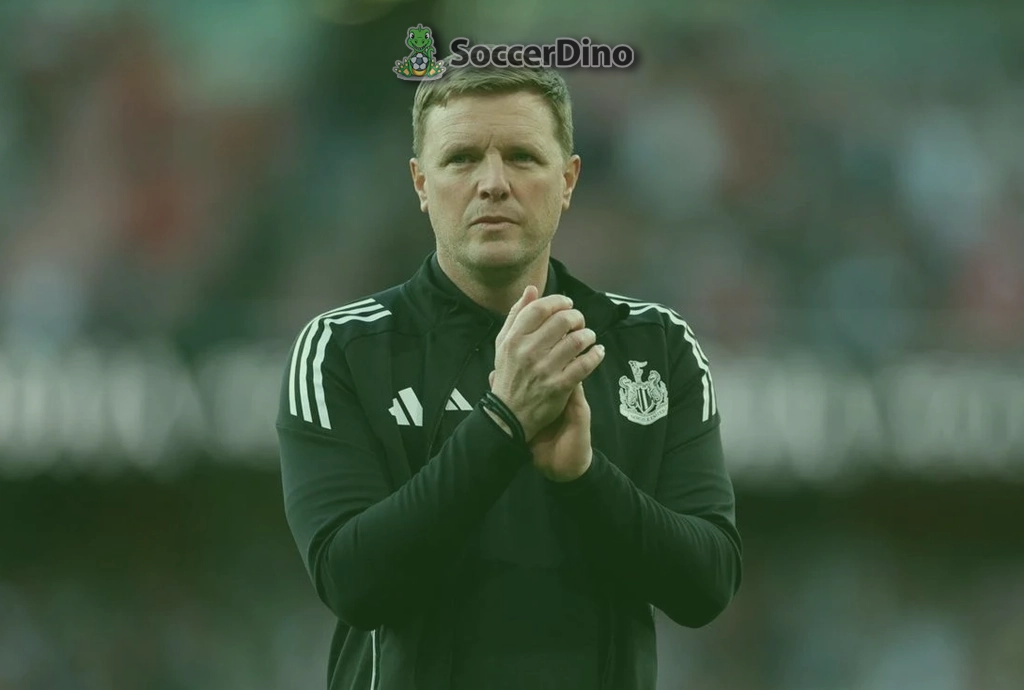
Eddie Howe Resigns as Newcastle Manager After Five Years in Charge
Eddie Howe has resigned as Newcastle United manager after almost five years in charge, bringing an end to one of the most significant periods in the club’s recent history. Newcastle confirmed the English coach’s departure on Friday, explaining that he had decided to step away from management in order to rest and recover after an intense spell at St James’ Park.
The 48-year-old leaves after overseeing Newcastle’s transformation from a team fighting near the bottom of the Premier League into a club capable of competing for European qualification and domestic trophies. During his time in the north-east, Howe guided the Magpies back into the Champions League, restored belief among the supporters and delivered silverware after a long period without success.
His decision comes at the beginning of preparations for the new campaign and leaves Newcastle searching for a new manager at an important stage of the summer. The club have not yet announced who will succeed Howe, while the board must now move quickly to identify a coach capable of continuing the project he helped build.
Howe Decides to Take a Break From Management
In a statement published by Newcastle, Howe explained that the demands of the job had led him to conclude that the right time had arrived to step away. He described the decision as one made in the interests of both himself and the club, stressing that he had given everything to Newcastle since accepting the position in 2021.
“After almost five years of giving my life, heart and soul to the club with relentless energy, I believe it is in both the club’s best interests and my own to step away, recharge and take a break,” Howe said.
The language of the statement suggested that his resignation was not caused by an immediate offer from another club. Instead, Howe appears determined to spend time away from the daily pressure of professional management before deciding what direction to take next in his career.
Managing a Premier League club carries constant physical and emotional demands, particularly when expectations rise as quickly as they did at Newcastle. Howe had to deal with domestic competitions, European football, transfer-market pressure, injuries and the responsibility of leading a club whose ambitions changed considerably during his time in charge.
His departure may therefore have surprised supporters because of its timing, but the manager made it clear that he felt unable to continue with the same level of energy. After almost five years of constant work, Howe has chosen to prioritise a period of rest rather than begin another demanding campaign without feeling fully prepared.
A Newcastle Team Transformed Under Howe
Howe arrived at Newcastle in 2021 after previously building his reputation during two spells with Bournemouth. When he took over, the Magpies were struggling in the Premier League and faced a serious battle to preserve their top-flight status.
The new manager immediately focused on improving the organisation, intensity and confidence of the team. Newcastle became more difficult to beat, while several players who had previously struggled for consistency improved considerably under his guidance.
Howe’s detailed work on the training ground quickly became one of the defining features of his management. He demanded greater physical intensity, more aggressive pressing and stronger discipline without the ball. Newcastle gradually developed a clear identity and moved away from the cautious football that had characterised previous periods.
The transformation was not based only on new signings. Howe also helped existing members of the squad rediscover their best form, creating a competitive environment in which every player was expected to meet higher standards.
That progress allowed Newcastle to move away from the relegation zone and begin looking towards the upper half of the table. Within a relatively short period, the club had changed from fighting for survival to challenging some of the strongest teams in English football.
Champions League Qualification Returned to St James’ Park
One of Howe’s greatest achievements came during the 2022/23 season, when Newcastle secured qualification for the Champions League. The result represented a major step forward and marked the club’s return to Europe’s leading competition after a long absence.
Newcastle combined defensive strength with energy and attacking ambition throughout that campaign. The team became particularly difficult to defeat at St James’ Park, where the atmosphere created by the supporters regularly gave the players additional momentum.
Finishing among the Premier League’s leading clubs demonstrated how quickly the project had developed. Newcastle were no longer seen simply as a team with future ambitions. Under Howe, they had become capable of competing immediately for places in Europe.
The Champions League campaign that followed gave the squad valuable experience against elite opposition. It also exposed the players to the physical demands created by competing in several major competitions at the same time.
Although Newcastle did not progress as far as they had hoped, the experience contributed to the club’s development. Howe later guided the team back into the Champions League through their performance in the 2024/25 season, confirming that the first qualification had not been an isolated achievement.
Reaching the competition twice during his tenure strengthened Howe’s legacy. It showed that he had been able to establish Newcastle as a serious contender for European football rather than simply benefiting from one exceptional campaign.
League Cup Victory Delivered a Memorable Trophy
The defining moment of Howe’s time at Newcastle arrived in March 2025, when he guided the club to victory in the English League Cup. The triumph ended a long wait for silverware and gave supporters an occasion they had been hoping to experience for many years.
Newcastle had made progress in league competition, but winning a trophy provided clear evidence that the team could also succeed in decisive knockout matches. Howe and his players handled the pressure of the competition and completed a memorable campaign by lifting the cup.
The victory carried enormous emotional importance. Newcastle have one of the most passionate supporter bases in English football, but those fans had endured years without seeing their club celebrate a major success.
Howe’s side changed that. The scenes of celebration following the final became one of the most important moments of his period in charge, securing his place in the club’s recent history regardless of how the following seasons developed.
The trophy also strengthened the belief that Newcastle could continue progressing towards even greater objectives. Champions League qualification had shown their quality across a full league campaign, while the League Cup demonstrated their ability to perform when a trophy was directly at stake.
Newcastle Praise Howe’s Extraordinary Contribution
In confirming his departure, Newcastle paid tribute to Howe’s work and described his contribution to the club as extraordinary. The statement recognised not only the results achieved during his time in charge but also the role he played in changing standards and expectations throughout the organisation.
Howe leaves behind a club in a very different position from the one he inherited. Newcastle are now expected to compete for European places, progress in domestic cup competitions and attract players capable of performing at the highest level.
That change in expectation is itself evidence of his success. Results that would once have been considered encouraging began to be judged more critically because Howe had demonstrated that Newcastle were capable of achieving much more.
He also helped strengthen the relationship between the team and the supporters. St James’ Park became a difficult venue for visiting clubs, with the crowd responding positively to a side that played with intensity and commitment.
The connection between the manager and the fans remained one of the strongest aspects of his tenure. Even during more difficult periods, Howe was generally respected for his professionalism, calm manner and willingness to accept responsibility.
A Difficult Final Premier League Campaign
Despite the major achievements of previous seasons, Howe’s final year in charge proved much more difficult. Newcastle finished the Premier League campaign in 12th position, a disappointing outcome for a club that had entered the season with hopes of returning to European competition.
The team struggled to reproduce the consistency that had defined its strongest periods under Howe. Performances varied considerably, and Newcastle were unable to maintain the momentum required to challenge the clubs near the top of the table.
A mid-table finish increased the pressure surrounding the manager and raised questions about the future direction of the project. After Champions League qualification and a domestic trophy, expectations had risen to a level where 12th place was always likely to be viewed as a significant failure.
The campaign may also have placed greater strain on Howe personally. Managing a club with growing ambition leaves little room for prolonged periods of poor form, particularly after significant progress has already changed what supporters and directors consider acceptable.
Although the disappointing season does not erase his previous work, it created an uncertain background to the summer. Newcastle needed to decide how to respond, whether through changes to the squad, adjustments to the coaching structure or a broader reconsideration of the club’s sporting plan.
Heavy Friendly Defeat Preceded His Departure
Howe’s resignation was announced shortly after Newcastle suffered a 4-1 defeat against Bristol City in a pre-season friendly on Wednesday. The result itself was not responsible for his departure, but it provided an uncomfortable conclusion to his final days in charge.
Pre-season matches are primarily used to improve fitness, test tactical ideas and give opportunities to younger players. Results during this period do not usually carry the same importance as competitive fixtures, but a heavy defeat can still expose problems and increase concern among supporters.
Newcastle’s performance against Bristol City suggested that considerable work remained before the opening weekend of the Premier League season. The players lacked defensive organisation and were punished repeatedly, leaving the coaching staff with several issues to address.
Howe’s resignation now means that responsibility for correcting those problems will fall to someone else. The next manager will inherit a squad already involved in pre-season and will have limited time to introduce new ideas before competitive football begins.
Newcastle Must Find the Right Successor
The board have not yet announced who will replace Howe, making the appointment of a new manager the club’s immediate priority. Newcastle need a coach capable of handling high expectations while continuing the progress made during the previous five years.
The timing creates a difficult situation. Ideally, a new manager would have an entire pre-season to assess the squad, communicate transfer priorities and introduce a tactical structure. Howe’s departure means his successor may have to complete that work within a much shorter period.
The club must decide whether to appoint someone with Premier League experience or pursue a coach from another major European competition. Familiarity with English football could reduce the adaptation period, but Newcastle may also be attracted by a manager with a different tactical profile and a strong record in continental competitions.
Whoever accepts the position will inherit significant pressure. Newcastle’s supporters have now experienced Champions League football and a domestic trophy, meaning the objective will not simply be to stabilise the team in mid-table.
The new manager will be expected to restore the club to the European places, improve results quickly and maintain a positive relationship with the supporters. He will also need to make important decisions regarding the squad before the transfer window closes.
A Squad Built for Greater Ambitions
Howe leaves behind a group containing several established internationals and players capable of competing at a high Premier League level. The next coach will therefore have a strong foundation, even if the final season exposed weaknesses that need to be addressed.
Newcastle must improve their consistency and ensure that the team are not overly dependent on a small number of important players. Injuries and fixture congestion have caused problems in previous campaigns, highlighting the need for greater depth across several positions.
The defensive structure that once made Howe’s Newcastle so difficult to beat also needs to be restored. During the club’s strongest periods, opponents found it difficult to create clear chances, while the Magpies were aggressive and organised when pressing.
The next manager must determine whether to rebuild that identity or introduce a new style. Major tactical changes may take time, but the pressure for immediate results will make patience difficult.
There will also be decisions to make regarding senior players whose roles may change under new leadership. Every managerial appointment creates opportunities for some members of the squad while reducing the prospects of others.
Howe Leaves With His Reputation Strengthened
Although the final campaign ended in disappointment, Howe’s overall record at Newcastle strengthened his reputation as one of the leading English managers of his generation. He accepted the job when the club were in serious difficulty and transformed their sporting position within a relatively short period.
His work at Bournemouth had already demonstrated his ability to develop teams and improve players. At Newcastle, he showed that he could manage greater expectations, work with high-profile signings and compete in the Champions League.
The League Cup victory also answered questions about whether he could deliver a trophy at a club operating under intense pressure. Winning silverware and qualifying twice for Europe’s leading competition represent achievements that will remain closely associated with his time at St James’ Park.
Howe’s decision to take a break means he is unlikely to immediately accept another position. However, his record should ensure that he remains an attractive candidate for major jobs when he eventually decides to return.
Future opportunities could emerge in the Premier League or abroad, while his name may also be considered for international management at some stage. For now, the English coach appears determined to step away from the game and recover after an exhausting period.
An Emotional Farewell After a Transformative Era
Howe’s departure closes a chapter that changed the direction of Newcastle United. He arrived with the club fighting to remain in the Premier League and leaves after delivering Champions League football, a domestic trophy and several memorable moments.
Supporters may feel disappointed that his time has ended without another opportunity to respond to the 12th-place finish. Others may believe that a change was required after a difficult campaign. Regardless of those opinions, the scale of his contribution is difficult to question.
His statement reflected the emotional connection he developed with Newcastle. By referring to the life, heart and soul he had given to the club, Howe made clear that the role had been far more than another managerial position.
The relationship was built through difficult relegation battles, major victories, European nights and the celebration of a long-awaited trophy. Those experiences created a connection that will not be erased by the disappointing results of his final season.
The End of One Chapter and the Beginning of Another
Newcastle must now move forward without the manager who led their recent transformation. The board face one of the most important decisions of the current project, as the identity of Howe’s successor could determine whether the club quickly returns to the European places or enters a longer period of transition.
The immediate focus will be on completing the appointment as soon as possible. Pre-season is already under way, the transfer window remains open and the opening Premier League fixture is approaching.
For Howe, the next stage will involve rest rather than another football challenge. After almost five years of constant pressure, he has chosen to step away before deciding how and where his career will continue.
His final season did not end as Newcastle had hoped, but it represents only one part of a much larger story. Howe restored ambition, brought European football back to St James’ Park and delivered a trophy that created an unforgettable moment for the club’s supporters.
The Newcastle board must now find a manager capable of protecting that progress and taking the team forward. Whoever arrives will inherit higher expectations largely because of what Howe achieved. His successor will be asked to build upon a foundation created during five demanding and transformative years in the north-east.