Mario Balotelli signs a two-and-a-half-year deal with Al Ittifaq in the UAE second division, returning after 13.5 months out as the bottom-placed club looks for goals and a turnaround.
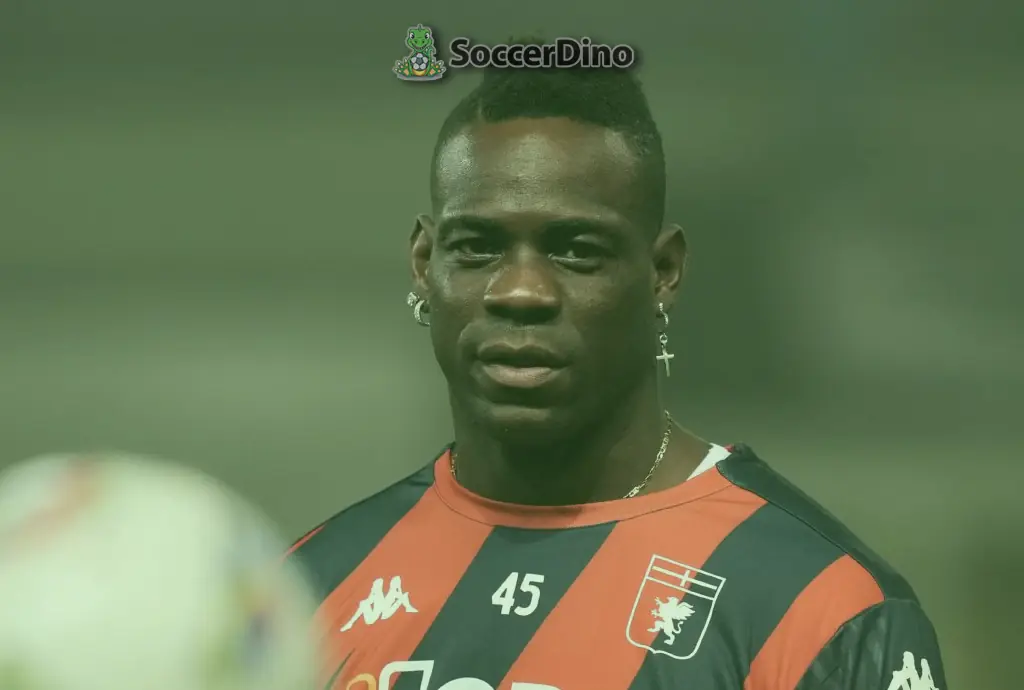
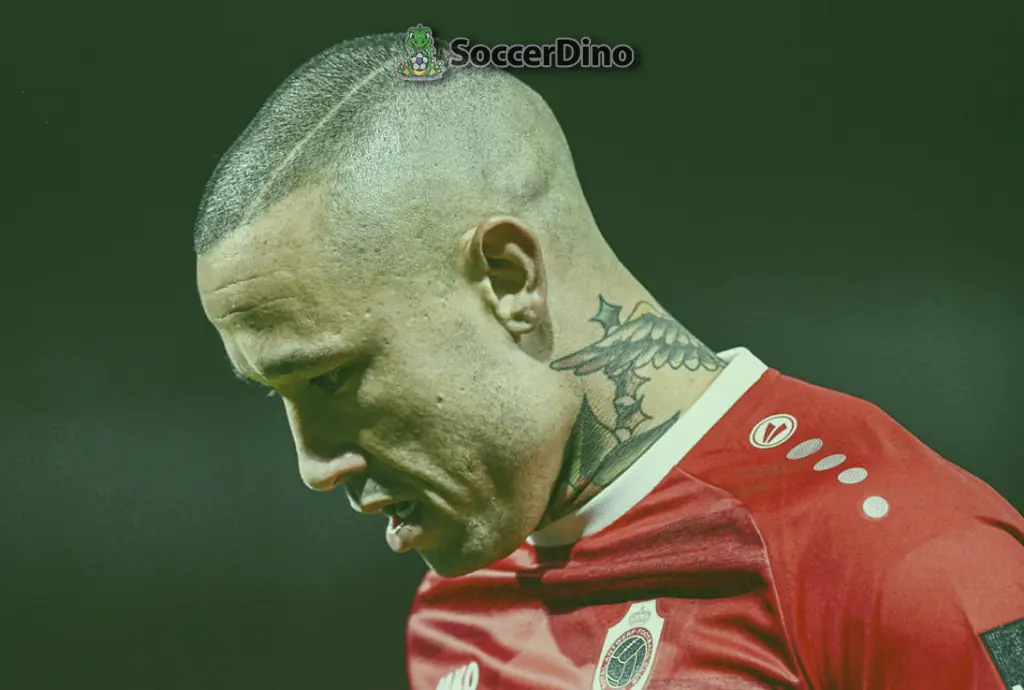
Mario Balotelli is set to restart his career in an unexpected setting after signing a two-and-a-half-year contract with Al Ittifaq, a club competing in the second tier of football in the United Arab Emirates.
The move places the Italian striker into a team currently at the bottom of the league table, a context that immediately frames the transfer as more than a simple change of scenery. For Balotelli, it is a return to competitive routine after a long spell without an official appearance, and for Al Ittifaq it is a high-profile gamble designed to change the direction of a struggling season.
Balotelli’s last official match came 13.5 months ago, during his time at Genoa. Since then, his career has been defined by uncertainty, fitness questions, and the familiar pattern of short-term opportunities that never fully developed into sustained momentum. At 35, he is no longer signing for projects built around potential. This is now about impact, professionalism, and whether he can still deliver goals and leadership in a team that needs both urgently.
Al Ittifaq’s league position makes the task clear. The club sits 15th and last with 6 points, meaning it is already under pressure in a competition where a poor start can quickly turn into a fight for survival. A signing like Balotelli’s is typically aimed at shifting the mood inside the dressing room and creating an immediate reference point on the pitch: a striker who can take responsibility, occupy defenders, and turn tight games with a single action. Even if he is not at peak condition, his presence alone changes how opponents prepare. Defenders defend differently when the striker has elite-level pedigree, even if that pedigree is from earlier seasons.
From Balotelli’s perspective, the UAE offers a reset that is hard to find in the major European leagues at this stage of his career. The environment is less dominated by weekly media storms, the tactical demands can be different, and the league can offer a platform to build rhythm without the same level of relentless scrutiny that followed him in Italy, England, and France. At the same time, the challenge should not be underestimated. A bottom-placed side in any league is not a comfortable landing. It is usually a dressing room with damaged confidence, a team that has conceded too much, created too little, or struggled to control matches, and a club that needs results immediately. That can be a difficult context for a forward, because strikers depend heavily on service and structure.
Balotelli’s career has always carried two narratives at once. One is the undeniable talent. At his best, he combined strength, technique, and finishing ability in a way few defenders enjoyed facing. The other is volatility, with frequent resets and moves that arrived before any real continuity could settle in. His list of clubs is a reminder of how wide his football journey has been: Inter, Manchester City, AC Milan, Liverpool, Nice, Marseille, Brescia, Monza, Adana Demirspor, Sion, and Genoa, among others. Each stop contained its own story, some marked by trophies and major nights, others by frustration, limited minutes, or injuries.
In terms of honours, Balotelli’s trophy cabinet remains a key part of his reputation. He has won 8 trophies, including the Champions League in 2009-10 with Inter. That era, alongside his later success with Manchester City and moments for the Italian national team, helped build the “Super Mario” image: a player capable of delivering on the biggest stages when the conditions aligned. The question now is not whether he once had that level. It is whether he can consistently meet the demands of a club that needs him every week, and whether he can do so after a long competitive absence.
The contract length is also important. Two-and-a-half years is not a short emergency deal. It signals a level of commitment from both sides and suggests the club believes Balotelli can contribute beyond a brief publicity spike. For Balotelli, it provides stability, a rare commodity in the later phases of his career. For Al Ittifaq, it is a bet that his experience can help lift the team out of the bottom positions and, ideally, set a base for improvement over more than one season.
On the pitch, Balotelli’s value will likely be judged in a few very specific ways. Goals are the obvious metric, but not the only one. A struggling team often needs a striker who can hold the ball up, bring midfielders into play, win fouls, and give the side a way to breathe when under pressure. If Al Ittifaq have been spending too long defending, Balotelli can potentially become an outlet that relieves that pressure. Set pieces could also become a bigger weapon, given his physical presence and finishing instincts around the box.
There is also the leadership angle. Balotelli has played in title races, Champions League campaigns, and high-pressure derbies. A relegation-style battle in the second tier is a different kind of pressure, but experience can still matter if it is channeled correctly. The best-case scenario for Al Ittifaq is that Balotelli becomes a focal point who raises standards in training, demands more from teammates, and provides belief that the team can escape its current position. The worst-case scenario is familiar in football: a big name arrives, but fitness, adaptation, or dressing-room dynamics prevent the move from producing real change.
For neutral observers, the transfer is also a reminder of how modern careers can evolve. Players who once occupied the center of elite European football increasingly take unconventional routes later in their careers, chasing playing time, stability, and a role that suits their current phase. Balotelli’s move fits that pattern, but it remains distinctive because of how famous he is and how much his career has always been followed for both football reasons and headline reasons.
The next steps are straightforward. Balotelli will need minutes, sharpness, and a run of games that allows him to find form rather than chase it. Al Ittifaq will need to build a structure that maximizes his strengths quickly, because a bottom-placed team rarely has the luxury of patience. If both sides get that alignment, this could become one of those late-career chapters that looks unconventional at first but ends up being productive. If they do not, it will be another short-lived stop in a career that has never lacked for plot twists.