Arsenal were held to a 0-0 draw at Nottingham Forest but stay top of the Premier League with a seven-point lead as Manchester City lost to Manchester United.
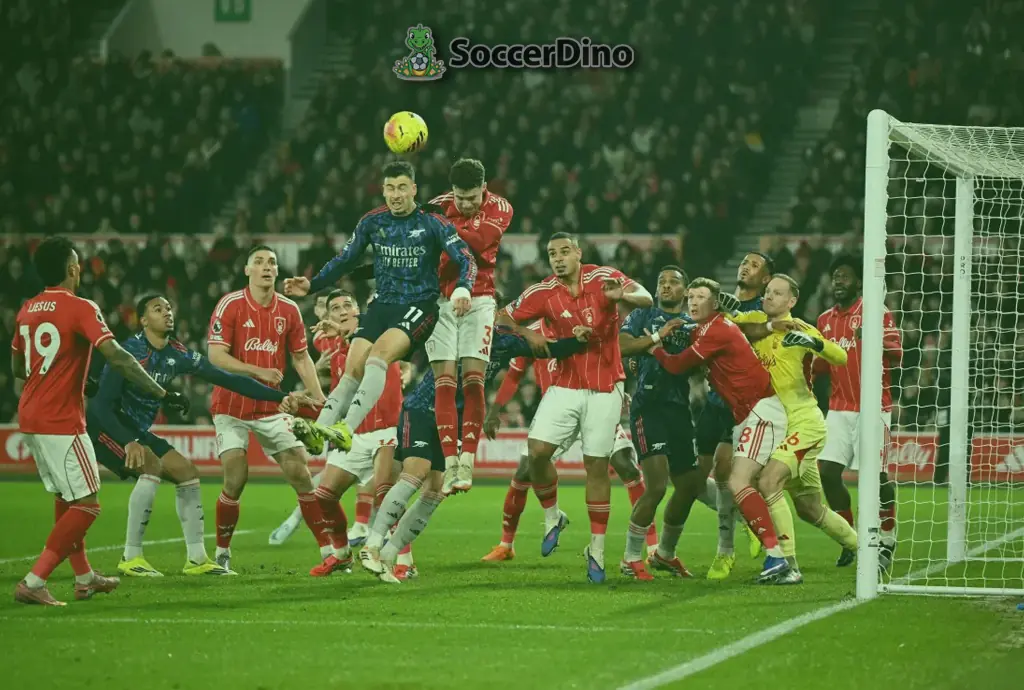
League leaders Arsenal were held to a 0-0 draw away to Nottingham Forest on Saturday in the 22nd round of the Premier League, a result that extends a small run of dropped points but still leaves Mikel Arteta side firmly in control of the title race.
After also drawing 0-0 at Liverpool in the previous round, Arsenal have now gone two straight league matches without scoring, yet they remain top with 50 points and a seven-point cushion over both Manchester City and Liverpool.
From Arsenal perspective, the Forest draw is best described as frustrating rather than alarming. The London club again controlled large spells, had more of the ball, and spent longer in the attacking third, but found it difficult to turn that territorial dominance into clear, high-quality chances. Nottingham Forest approach was straightforward and disciplined: stay compact, protect the central lanes, and force Arsenal wide into crossing situations or low-percentage shots. It is the type of game Arsenal often win when they score first, because the opponent then has to open up, but a stubborn 0-0 tends to reward the defending team’s patience and make the attacking team’s final decision-making feel heavier with every minute.
The key consequence for Arsenal is not the single point, but the missed opportunity. With their nearest rivals also dropping points, this was the kind of weekend where one win could have widened the gap and added extra pressure to the chasing pack. Instead, Arsenal keep their advantage, but without that additional momentum that normally comes from turning rivals stumbles into a decisive step forward. Even so, the bigger picture remains strongly in Arsenal favour: a seven-point lead at this stage of the season is significant, and maintaining it through a period that includes two scoreless draws can be read as a sign of underlying stability.
The reason Arsenal stayed “safe at the top” despite failing to win was the chaos behind them. Manchester City, in second, lost 2-0 to Manchester United. Bernardo Silva started for City, while Bruno Fernandes and Diogo Dalot both started for United, and the match carried extra attention because it was the first game under Michael Carrick following the departure of Ruben Amorim. City’s defeat means Pep Guardiola side remain on 43 points, and in a season where margins are already tight, the psychological cost of losing to a rival can be as damaging as the points themselves. City are used to controlling the narrative of a title race through winning streaks, and results like this interrupt that familiar pattern.
Manchester United, meanwhile, will view the win as a potential turning point, not only because of the opponent but because it immediately changes the tone around the coaching transition. Bryan Mbeumo opened the scoring in the 65th minute after an assist from Bruno Fernandes, and Patrick Dorgu doubled the lead in the 76th. The final scoreline was both efficient and impactful: United climb to fifth on 35 points, pulling themselves closer to the top-four picture and reinforcing the sense that the squad can still deliver decisive performances in big games. For Carrick, it is the kind of debut that buys breathing room and goodwill, especially when it comes against a Guardiola team.
Aston Villa are the other major beneficiaries of City slip. Villa sit third on 43 points, level with City but with a chance to move ahead on Sunday when they host Everton. That match becomes strategically important for Villa for two reasons. First, it offers an opportunity to separate from City in the table and strengthen their claim as the most consistent challenger behind Arsenal. Second, it provides a route to trim Arsenal lead further, even if that remains a longer-term ambition. The immediate target is clear: consolidate a top-three position and keep the pressure on the teams around them, particularly in a season where Champions League qualification is likely to be contested into the final weeks.
Liverpool, in fourth, also failed to take advantage. They were held 1-1 at home by Burnley, another result that adds to the broader story of dropped points among the traditional frontrunners. For the table, it keeps Liverpool on 43 points alongside City and Villa, but the mood around the draw is inevitably different because it happened at Anfield and because it follows a pattern of Liverpool struggling to convert dominance into wins in certain match types. When rivals falter, the title race often becomes a test of who can be most ruthless in these “should-win” fixtures. Liverpool leaving points on the board in that context is exactly the kind of outcome that Arsenal will welcome, even on a day when Arsenal themselves did not win.
Behind the top four, the weekend also reshaped the contest for European places. Chelsea, sixth on 34 points, beat Brentford 2-0 at home, with Pedro Neto involved. That win matters because it not only adds points but also restores a sense of normality after the kind of inconsistent stretches that tend to define teams fighting for Europa League or Champions League contention. Brentford remain seventh on 33 points, and the gap between those sides is now thin enough that one result can swing positions quickly. Even more pressure comes from Sunderland, also on 33 points, after their 2-1 win over Crystal Palace. The immediate picture is that Chelsea, Brentford, and Sunderland are tightly bunched, and the next head-to-head results in that group will carry outsized importance.
Further down the table, West Ham finally found a moment of relief. Callum Wilson scored in stoppage time, at 90+3, to secure a 2-1 win at Tottenham, giving Portuguese coach Nuno Espirito Santo a badly needed league victory more than two months after the last one. Late winners often do more than add three points: they can change belief inside a dressing room and soften the pressure around a club that has been living week-to-week. However, the reality for West Ham remains harsh. Even with the win, they stay 18th, in the relegation zone. That means the next phase is about consistency rather than isolated drama. One win is a spark, but survival demands repeated results, particularly against direct rivals in the bottom half.
Tottenham, by contrast, continue to drift. Sitting 14th, they remain below several teams they would normally expect to compete with comfortably. Losing at home, and conceding a decisive goal in stoppage time, is the kind of result that magnifies scrutiny on performance levels, game management, and the overall direction of the season. For a club with Tottenham expectations, mid-table is rarely acceptable, and results like this intensify the sense of a campaign that needs rescuing quickly.
Fulham, managed by Marco Silva, also had a setback, losing 1-0 to Leeds after a late Lukas Nmecha goal at 90+1. It was a particularly bitter way to lose because Fulham recent form had been strong, with the note that they had not lost in the league since December 7 and had won four of their last six league games. A late defeat does not erase that progress, but it does underline how fine the margins are for teams in the mid-table battle for momentum and positioning. A single late goal can flip a “good point” into “no points,” and those swings often determine final table positions by May.
Taken together, the weekend delivered a familiar Premier League message: even when the leaders drop points, the race rarely becomes simple, because the teams behind them tend to drop points too. Arsenal will be disappointed not to have turned their dominance into a win at Forest, but they will also be realistic about what the table now says. Two 0-0 draws in a row is not ideal, yet the gap remains seven points, and the chasing pack has failed to apply sustained pressure. If Arsenal find their finishing touch again, this round may ultimately be remembered as a period they navigated without real damage rather than a turning point.
For Manchester City and Liverpool, the frustration is sharper. When the leader gives you openings, you must take them. City loss to United and Liverpool draw with Burnley mean both clubs have surrendered one of the most valuable assets in a title chase: the ability to punish Arsenal on an off-day. Villa, meanwhile, have a clear incentive to keep building, because stability around the top three can become a genuine pathway into the Champions League places and, depending on how the season develops, could even elevate their ambitions further.
At both ends of the table, the same truth applies. Arsenal are still in a position of strength, but must convert control into goals again. City and Liverpool need consistency and clinical execution to keep the pressure on. And in the relegation fight, West Ham late win is encouraging, but only becomes meaningful if it is followed by points in the next matches.