Portugal elimination against Spain in the last 16 of the World Cup has led to harsh reactions both in Portugal and beyond. National coach Roberto Martínez and Cristiano Ronaldo in particular have come under fire. Portuguese media see the end of a failed era, while foreign newspapers are mainly focusing on Ronaldo emotional farewell at the World Cup.
World media tear into Roberto Martínez and Cristiano Ronaldo after Portugal World Cup exit
Portugal elimination from the 2026 World Cup has triggered a wave of severe criticism in Portugal and abroad, with Roberto Martínez and Cristiano Ronaldo at the centre of the reaction. The 1-0 defeat against Spain in the last 16 did not only end another tournament campaign for Portugal. It also opened a much deeper debate about the direction of the national team, the choices made by the coach and the final World Cup image of the most famous player in Portuguese football history.
The match itself was enough to create disappointment, but the response after the final whistle has gone far beyond a simple reaction to a narrow defeat. Portuguese newspapers have framed the elimination as the collapse of a project that never truly convinced, while foreign media focused heavily on Ronaldo, his tears and the sense that this was his last appearance on the World Cup stage.
Martínez had already been under pressure before the tournament reached its decisive phase. The national coach was regularly criticised for his handling of Ronaldo, with several voices in the Portuguese press suggesting that he protected the captain too much and did not have the authority to make difficult decisions around him. Once Portugal were knocked out by Spain, those doubts became direct and unforgiving accusations.
Portugal fall to Spain and face a brutal reaction
The final score was simple and painful for Portugal: Portugal 0, Spain 1. In a World Cup knockout match between two neighbouring football powers, there was always going to be strong emotion attached to the result. But for Portugal, this defeat carried a heavier meaning because of the expectations placed on the squad.
This was not seen as a team lacking talent. On the contrary, Portugal arrived with a generation widely described as one of the most gifted in the country history. That is why the reaction has been so severe. For many critics, the problem was not a lack of quality, but the inability to turn that quality into a convincing collective performance when the stakes were highest.
The defeat against Spain became the breaking point. Portugal left the tournament in the last 16, and the press quickly moved from disappointment to judgment. The tone was not one of patience or understanding. It was one of frustration with a project that, in the eyes of many, had failed to deliver on its promise.
The criticism aimed at Martínez was especially strong because the national team seemed to fall into familiar problems. The team lacked attacking clarity, struggled to respond when Spain pushed them back and appeared unable to change the rhythm of the match at the key moments. That left the coach exposed to questions about selection, tactical choices and leadership.
Roberto Martínez accused of wasting a golden generation
A Bola delivered one of the strongest verdicts on the end of Portugal campaign. The newspaper described the mission of Martínez as clear from the beginning: to guide one of the most talented generations in Portuguese football history to the world title in 2026.
On paper, that idea seemed powerful. Portugal had individual quality, international experience and players capable of deciding matches at elite level. But according to the criticism, the plan collapsed once it met the reality of knockout football.
"His mission was clear: to lead one of the most talented generations in our history to the 2026 world title. On paper, the plan seemed perfect and untouchable, but the harsh reality on American pitches completely destroyed that script."
The newspaper went further, describing the defeat to Spain as the bankruptcy of a sporting project that collapsed because of structural mistakes and negligence. That language shows how the elimination is being interpreted in Portugal. It is not being treated as an unfortunate isolated result, but as the natural consequence of a project with problems that were visible before the tournament ended.
For Martínez, that is the most damaging part of the reaction. A coach can sometimes survive a defeat if the performance suggests progress or if the context allows for patience. In this case, the tone of the Portuguese press suggests the opposite. The defeat has been presented as proof that the doubts were justified.
The Gonçalo Ramos decision becomes a symbol
One of the decisions most heavily criticised was the choice not to start Gonçalo Ramos. In the view of Portuguese critics, that decision became a symbol of the problems around Martínez and his inability to move away from certain established names.
Portugal were pushed back by Spain during the second half and struggled to create the kind of attacking threat needed to change the match. In that context, the absence of Ramos from the starting line-up became one of the biggest talking points.
"Not starting Gonçalo Ramos in a match in which Portugal were constantly pushed back by Spain in the second half was the icing on the cake of the circus of horrors under Roberto Martínez."
The phrase captured the anger around the coach choices. Ramos represented, for many observers, a more direct attacking option and a possible way to challenge Spain defence differently. The fact that Martínez did not use him from the start was interpreted as another example of caution at a moment when Portugal needed courage.
The criticism was not only tactical. It was also about authority. The central accusation against Martínez was that he did not have the force of personality required to make uncomfortable decisions, especially around Ronaldo and other senior figures.
Martínez labelled a coach who avoided conflict
The Portuguese press also attacked the leadership style of Martínez. One of the harshest lines described him as a diplomat chosen by the Portuguese federation to avoid making waves and to keep smiling while the house was on fire.
That image was powerful because it framed the coach as someone more concerned with calm and harmony than with confrontation and decisive leadership. In the world of national team football, managing egos is important, but the criticism suggests that Martínez took that approach too far.
The idea repeated across the reaction is that Portugal needed a coach capable of making strong calls at the most difficult moments. Instead, critics argue that Martínez stayed trapped in compromise, preserving established hierarchies even when the match demanded something else.
That is where Ronaldo and Bruno Fernandes entered the centre of the discussion. The criticism did not focus only on the coach system, but also on his loyalty to certain players, even when their level or match impact was questioned.
"The guilty party has 2 names: Roberto Martínez."
The verdict was brutal, but it reflected the mood after the Spain defeat. For many, the elimination was not merely the responsibility of the players on the pitch. It was the result of a coach who failed to take charge of the team at the decisive moment.
Ronaldo and Bruno Fernandes also under scrutiny
Although Martínez received the heaviest criticism in Portugal, Ronaldo and Bruno Fernandes were also central to the discussion. The argument from the Portuguese press was that the coach obsession with not disturbing them ultimately damaged the team.
Ronaldo remains the most symbolic figure in Portuguese football, but his role in the national team has been questioned for several years. At 41, his presence still carries enormous weight, emotionally and historically, but the debate around his sporting impact has become increasingly difficult to ignore.
For Martínez, the issue was not simply whether Ronaldo should play. It was whether the coach had the freedom and courage to treat him like any other player when the match required a change. That question has followed Portugal for a long time and returned with full force after the defeat to Spain.
Bruno Fernandes was also mentioned in the criticism. The press described him as far removed from the player who had recently been recognised among the best in the Premier League. That comparison made the disappointment sharper, because Portugal needed leadership and clarity from its most influential players in midfield and attack.
The result was a painful conclusion: Portugal had names, reputation and individual quality, but not enough collective strength when the tournament demanded it.
The shadow of 2006 returns
One of the most emotional parts of the Portuguese reaction came through comparisons with the 2006 generation. The names of Miguel, Ricardo Carvalho, Petit, Tiago, Deco, Maniche, Costinha, Luís Figo, Simão Sabrosa, Nuno Gomes and Fernando Meira were invoked as examples of a Portugal side that honoured the country on the world stage.
The comparison is significant because the current squad has often been described as one of the best in Portuguese football history. Yet the results have not matched that label. For critics, calling this the greatest generation becomes uncomfortable when older teams achieved more with less glamour and perhaps more competitive identity.
The 2006 World Cup remains a reference point because Portugal reached the semi-finals. Since then, the country has often struggled to go deep in the competition. The latest last-16 elimination has strengthened the feeling that Portugal continue to waste opportunities at World Cup level.
That historical context adds pressure to the debate. This is not just about Spain 1-0 Portugal. It is about a wider pattern of frustration in World Cup campaigns, especially when expectations are high.
Público says Portugal are back to square one
Público also delivered a sharp reading of the match, arguing that Portugal had returned to the starting point. The newspaper described the performance as passive and suggested that the team effectively slept through the decisive stage of the game.
"Portugal took a nap and will watch the rest of the World Cup from home. There seemed to be a non-aggression pact between Portugal and Spain, but that turned out to be an illusion. The Portuguese fell asleep during their siesta and went home."
The metaphor was especially cutting because it suggested a lack of urgency. In knockout football, hesitation can be fatal, and Público presented Portugal as a team that failed to recognise the danger quickly enough.
The newspaper also noted that few would dare to say the outcome was undeserved. That line is important because it removes the comfort of bad luck. The suggestion is that Spain deserved to progress and that Portugal did not do enough to change the story of the match.
For a squad with so many attacking options, being described as sleepy and passive is a damaging judgment. It strengthens the idea that the problem was not only the result, but the manner of the defeat.
The shortest World Cup in Portugal history
Público also recalled earlier comments from Martínez about the structure of the tournament. According to the newspaper, the coach had said that the World Cup only truly began for Portugal against Croatia in Toronto, with the first 3 matches treated as preparation.
That statement has now returned as a weapon against him. If the tournament only began in the knockout phase, then Portugal World Cup lasted just 2 matches. The criticism is sharp because it uses the coach own framing to expose how quickly the campaign ended.
"If that is the case, then this was the shortest World Cup in the history of Portugal: just 2 matches."
The newspaper also placed the elimination within a familiar World Cup pattern. Portugal reached the quarter-finals in 2022, struggled in the last 16 in 2018, failed in the group stage in 2014 and also fell in the last 16 in 2010, coincidentally against Spain and also by a 1-0 scoreline.
That comparison with 2010 is especially painful. Once again, Spain blocked Portugal path. Once again, the score was narrow. Once again, Portugal were left with questions about whether they had done enough with the players available.
The only real exception in recent memory remains 2006, when Portugal reached the semi-finals. That fact now hangs over every failed campaign, especially when the country believes it has a squad capable of much more.
Foreign media turn focus to Ronaldo
Outside Portugal, the reaction took a different direction. While Portuguese newspapers focused heavily on Martínez and the collapse of the project, foreign media placed Ronaldo at the centre of the story.
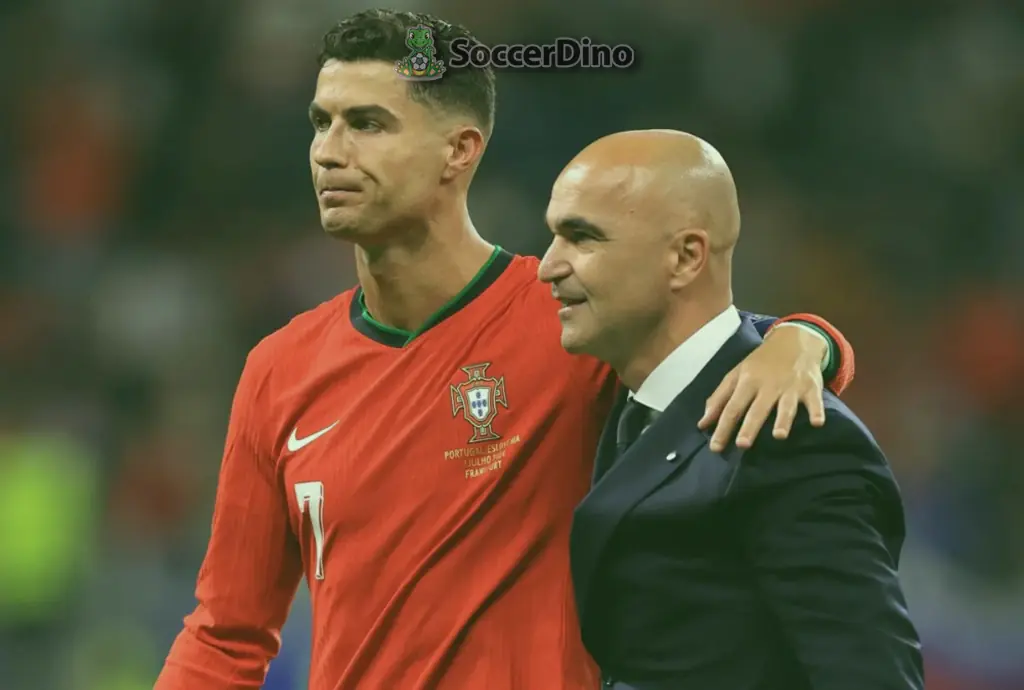
In Spain, Marca focused on the emotional image of Ronaldo after the final whistle. The cameras immediately turned toward the Portugal captain as Spain celebrated qualification and Portugal players came to terms with elimination.
"He burst into tears when Spain eliminated Portugal. The cameras immediately turned to the Portuguese star, who became visibly emotional as he said goodbye."
The Spanish newspaper described his eyes filling with tears in a moment loaded with emotion, pointing to the likelihood that he will never play in another World Cup. For a player whose career has been built around records, ambition and relentless longevity, that image carried enormous symbolism.
Ronaldo has spent more than 2 decades at the highest level of football. He has broken records, won major trophies and defined an era alongside the greatest players of his generation. But the World Cup has always remained the one trophy missing from his career. The defeat to Spain made that absence feel final.
The Guardian frames it as the end
The Guardian also treated the match as the definitive farewell of Ronaldo on the global stage. The focus was not only on the defeat, but on the human image of a player confronted by time.
"For Cristiano Ronaldo, this was the end. At the final whistle, he stared blankly ahead; impermanence had finally caught up with him."
The wording captured the contrast between Ronaldo image of permanence and the reality of a career moving toward its final international chapter. For years, he seemed capable of resisting time through discipline, physical preparation and sheer competitive will. But a World Cup at 41 always carried the feeling of a final attempt.
The Guardian also noted that Ronaldo remains the only player to have scored at 6 World Cups. That achievement is historic and may stand for a very long time. Yet the same line of analysis pointed out that a seventh World Cup goal will never come.
That is the cruelty of the moment. Ronaldo leaves the World Cup stage with records that confirm his greatness, but also with the pain of an ending that did not deliver the trophy he wanted most.
A farewell without the dream ending
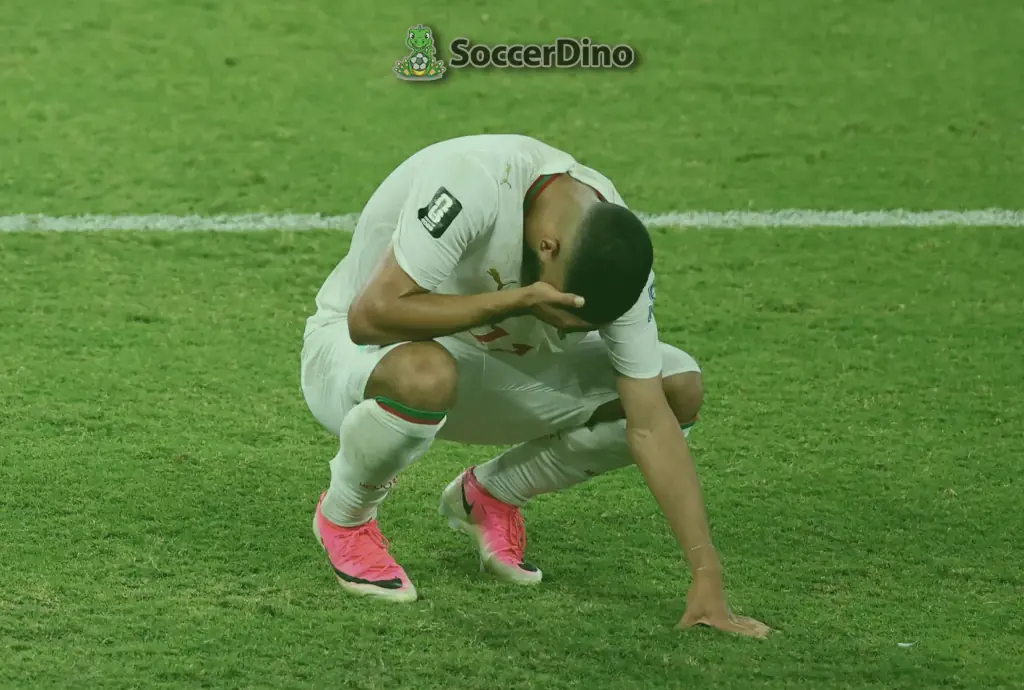
Ronaldo emotional reaction after the match became one of the defining images of the night. For Portugal supporters, it was painful because it symbolised not only the end of a campaign, but possibly the end of an era.
For almost 2 decades, Portugal at major tournaments has been inseparable from Ronaldo. Even when the squad changed, even when new generations arrived, his presence remained the central reference point. That made the defeat against Spain feel larger than a normal elimination.
The discussion now becomes unavoidable. If this was Ronaldo final World Cup match, Portugal will need to fully confront life after him. That transition has been delayed many times because of his extraordinary longevity, but the tournament in 2026 may have brought the question to a final point.
There is admiration in the foreign reaction, but also finality. Ronaldo is recognised as a player whose career has been a miracle of durability. At the same time, the tone suggests that the World Cup chapter has closed.
Portugal must now face difficult questions
The defeat to Spain leaves Portugal with several major questions. The first is about the coach. Martínez has been heavily criticised and his cycle appears to have ended without the authority or success expected when he was appointed.
The second question is about the team structure. Portugal have many talented players, but the balance between experience, reputation and current performance needs to be reassessed. The next phase cannot be built only on names. It must be built on form, clarity and a tactical idea that works under pressure.
The third question is about Ronaldo. His status is untouchable in historical terms, but the national team now needs to decide how to move forward. If this was his final World Cup, the emotional weight will be enormous. But the sporting planning must continue.
Portugal have Euro 2028 and the 2030 World Cup ahead. Those tournaments will require a clear direction. The country cannot afford another cycle defined by uncertainty, delayed decisions and reliance on individual moments.
A painful ending for a talented generation
The strongest criticism from the Portuguese press comes from the belief that this group had the quality to do more. That is why the elimination hurts so much. It was not a heroic defeat after a brilliant performance. It was seen as a timid exit from a team that should have been more ambitious.
Spain were described as cold-blooded and deadly. Portugal, by contrast, were described as passive, sleepy and poorly led. Those descriptions will be difficult to shake because they speak not only to the result, but to the feeling of a team that never fully imposed itself.
For Martínez, the judgment has been devastating. For Ronaldo, the night may be remembered as the emotional end of a World Cup journey that began many years earlier. For Portugal, the defeat is another reminder that talent alone does not win major tournaments.
The reaction from the world media has been harsh, but it reflects the size of the expectation around this team. Portugal were not supposed to exit quietly in the last 16. They were expected to compete for the title. Instead, they leave with criticism, regret and the image of Ronaldo in tears as Spain moved on.
Portugal leave the World Cup under a cloud
The 1-0 defeat against Spain will now stand as the final act of a campaign that promised much more. In Portugal, the focus is on Martínez, his decisions and the failure of a sporting project. Abroad, the focus is on Ronaldo and what appears to be the end of his World Cup story.
Together, those 2 narratives make the elimination even heavier. It is both a tactical and institutional failure, and an emotional farewell to a player who shaped the history of the national team.
The days after the defeat are likely to bring more analysis, more criticism and more debate about what comes next. But the immediate verdict is already clear. Portugal are out, Spain are through, Martínez has been torn apart by the press and Ronaldo leaves the stage with tears instead of the final triumph he had chased for so long.
For a country that believed this generation could fight for the world title, the ending could hardly feel more bitter.