Arbeloa insists Real Madrid do not need a revolution, defends Camavinga after a controversial Champions League exit, and questions refereeing in both Europe and LaLiga.
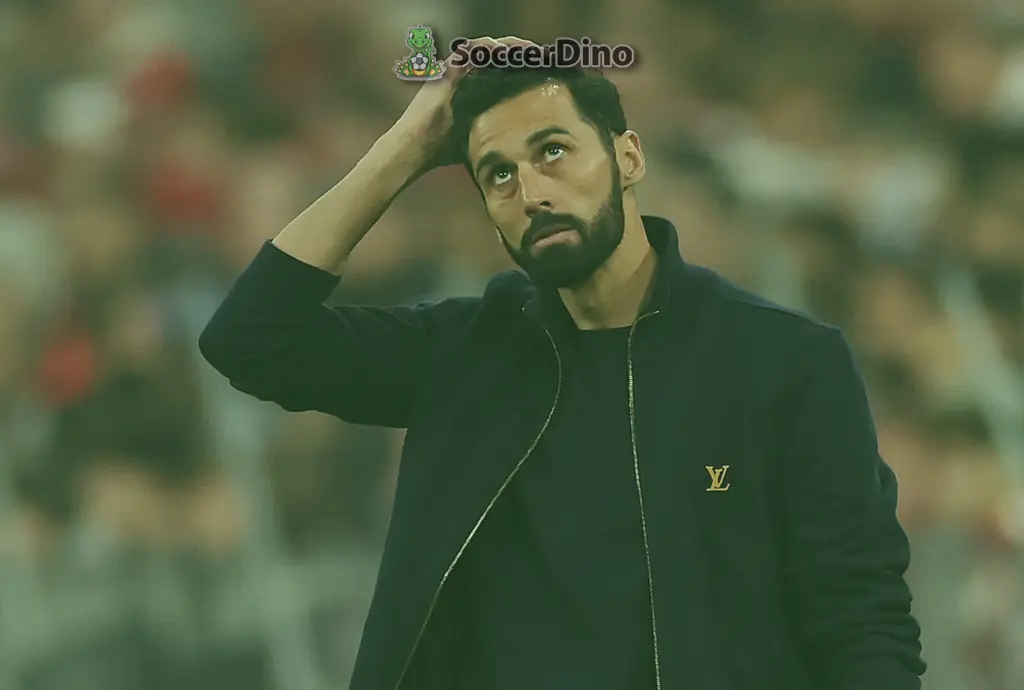
Real Madrid coach insists the squad remains strong enough to compete for major honours despite a painful season and growing outside pressure
Álvaro Arbeloa used his latest media appearance to deliver a clear message about the state of Real Madrid. At a moment when frustration is building around the club and the season is drifting toward a finish without silverware, the Spanish coach made it clear that he does not see the current situation as one that demands a dramatic rebuild. Instead, he believes Real Madrid already have the quality required to return to the fight for the biggest trophies in 2026-27, even if the past few months have exposed weaknesses, created tension and left supporters demanding answers.
Speaking ahead of the home meeting with Alavés in the 33rd round of LaLiga, Arbeloa tried to strike a balance between realism and defiance. Real Madrid sit second in the table, 9 points behind Barcelona, and with only 7 league games left, the title race is hanging by a thread. That context naturally shaped the tone of his comments. There was no attempt to disguise the disappointment of the campaign, but there was also no sense of surrender in the way he assessed the squad. For Arbeloa, the issue is not a lack of talent. In his view, the foundations remain strong, even if the team has not managed to build enough consistency on top of them.
His remarks were especially significant because they came at a time when the noise around Real Madrid is becoming louder. Whenever the club fails to lift major trophies, talk of sweeping changes begins almost immediately. Questions emerge about the coach, the dressing room, recruitment, leadership and mentality. Arbeloa pushed back against that mood by insisting that quality already exists in abundance within the group. He argued that arriving in the middle of the season, especially in difficult circumstances and with injuries disrupting the balance of the squad, changes the conditions of the job. From his perspective, that context matters and should not be ignored when judging the team too harshly.
There was also an interesting honesty in the way he described his relationship with the dressing room. Arbeloa did not try to paint an unrealistic picture of perfect harmony. Instead, he spoke about a working environment where pressure, demands and uncomfortable conversations are part of daily life. That is often the reality at a club of this size. Managing Real Madrid is not simply about keeping players happy. It is about pushing elite professionals to meet the highest standards, even when that creates friction. Arbeloa seemed keen to stress that a strong relationship with the squad does not mean softness. It means honesty, authority and a mutual understanding that everyone is there to compete at the highest level.
That point matters because one of the recurring criticisms aimed at Madrid during difficult stretches this season has been that the team has lacked edge in certain domestic matches. There have been moments when the side has looked sharp in big occasions, only to drop intensity or control in games where patience and concentration were equally important. Arbeloa appeared to acknowledge that contradiction. He suggested that Madrid have delivered in several major moments under his watch, but he also admitted there is still considerable room for improvement. It was a revealing admission, one that reflected a coach who knows the standards of the club and understands that partial progress is never enough on its own.
Perhaps the strongest part of his press conference came when he turned his attention to refereeing decisions. Arbeloa was clearly still frustrated by the Champions League quarter final second leg against Bayern, a game Real Madrid lost 2-1 and one that ended their hopes in Europe. His comments on Eduardo Camavinga showed both anger and protectiveness. The coach argued that the sending off was the result of a serious refereeing error, suggesting the official did not even realise the midfielder was already on a booking. In his view, such mistakes are unacceptable at the highest level of European football, where a single decision can alter an entire tie and reshape the season of a major club.
By defending Camavinga so firmly, Arbeloa was doing more than criticising the referee. He was also making a broader statement about trust inside the squad. He spoke about the player with admiration, highlighting his experience, his achievements at a young age and the confidence the club continues to place in him. That public support matters in difficult moments, especially after a painful elimination. Camavinga remains one of the most important young figures in the Madrid project, and Arbeloa seemed determined to make it clear that one controversial night does not change that reality.
The coach then widened the discussion beyond Europe and hinted at frustration with the way certain domestic matches have unfolded too. His reference to the 1-1 draw against Girona was telling. Arbeloa appeared to suggest that there have been league games in which circumstances have gone against Madrid in ways that have made the title race even harder. It was a pointed remark, one that fed into a familiar feeling around the club: that while Madrid have the mentality and level to survive the chaos of knockout football, the grind of a league season can become more complicated when dropped points, refereeing debates and moments of inconsistency all begin to pile up together.
That idea, that it can feel easier for Real Madrid to win the Champions League than LaLiga, may sound exaggerated on the surface, but it reflects a real tension in how the club is often perceived. In Europe, Madrid have built a reputation for resilience, belief and composure under extreme pressure. In the league, however, the task is different. It demands control over many months, mental freshness across dozens of matches and the ability to avoid slips against a wide range of opponents. This season, that balance has not always been there. Arbeloa seemed to be admitting as much, even as he defended the overall value of the squad.
The timing of his comments is important as well. With Alavés next on the schedule, Madrid still have competitive obligations to fulfil, even if the major prizes appear out of reach. That creates a difficult emotional challenge. The players must keep performing in matches that may no longer carry the same excitement as they once did, while the coach must maintain standards inside an environment already drifting toward end of season judgement. Arbeloa tried to narrow the focus by saying that his future is not what matters right now. For him, the only relevant issue is the run of 7 remaining league matches.
That answer about his future was brief, but it said a lot. It suggested a coach trying to keep external speculation at a distance while concentrating on immediate responsibilities. Whether he remains in place beyond the summer may depend on decisions made above him, but he clearly wants the conversation to stay on the team and its response during the final weeks. In a season where Real Madrid have often been surrounded by noise, that attempt to simplify the picture may be deliberate.
What now matters most is whether his words are followed by a convincing reaction on the pitch. Real Madrid may no longer control the title race, but they can still shape the way the season is remembered. Strong finishes have value, especially at a club where momentum often carries into the next campaign. Arbeloa has made his view unmistakable: this squad is not broken, this dressing room is not beyond repair, and this season, however disappointing, should not automatically lead to revolution. The coming weeks will show whether the players can support that belief with performances that restore some pride and give Madrid supporters a reason to look toward 2026-27 with renewed confidence.