Danish goalkeeper Kasper Schmeichel will retire at the end of the season, at the age of 39, due to a serious shoulder injury, the player announced on Wednesday. He currently plays for Scottish club Celtic.
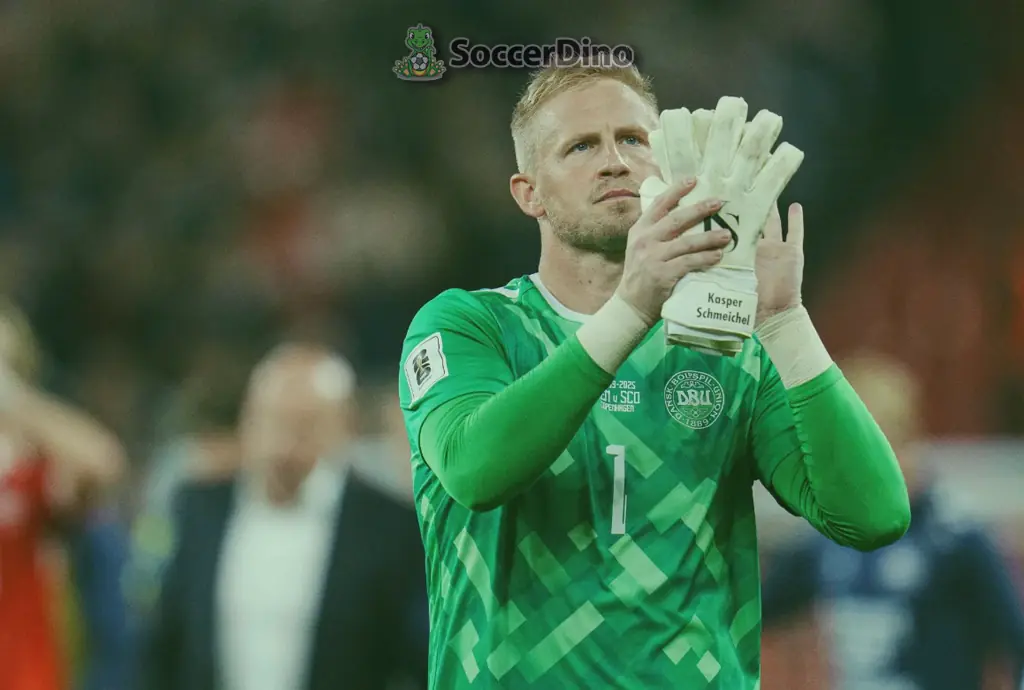
Kasper Schmeichel to retire at the end of the season
Danish goalkeeper Kasper Schmeichel has announced that he will bring his professional football career to an end when the current season finishes. The 39-year-old, who currently represents Scottish club Celtic, confirmed the decision after struggling with a serious shoulder injury that has made it extremely difficult for him to continue competing at the highest level.
Schmeichel revealed that his contract with Celtic will expire in June and that, once that moment arrives, he will officially close the final chapter of a long and successful career. The decision was not an easy one for the Denmark international, especially because he had hoped to leave the game in different circumstances. However, after medical advice and several consultations with specialists, the goalkeeper accepted that his body may no longer allow him to perform with the same reliability and intensity required in elite football.
A painful decision after medical advice
"When my contract with Celtic ends in June, I will bring my professional football career to an end," Schmeichel said in comments to Danish television channel TV2.
The veteran goalkeeper explained that the decision came after speaking to several medical specialists, who gave him a difficult but clear assessment of his condition. According to Schmeichel, the chances of returning to the highest level were very small, forcing him to think seriously about his future and about the physical limits that come with a long career in professional football.
"It is not fun, and it is not how I would have liked my career to end. But, on the other hand, everything comes to an end," he added.
Those words reflect the emotional weight of the announcement. For a player who has spent so many years competing at the top, retirement is never just a professional decision. It also means stepping away from the daily routine of training, the dressing room, the pressure of matchdays and the rhythm of a life built almost entirely around football. In Schmeichel’s case, the end arrives not because of a gradual loss of ambition, but because of a physical problem that has made continuation increasingly unrealistic.
The shoulder injury that changed everything
The injury that has now led to his retirement decision was aggravated after Schmeichel had already suffered a problem while representing Denmark. The situation became worse during the match against German side Stuttgart in February, in the Europa League play-off, leaving the goalkeeper with a serious shoulder issue at a decisive stage of the season.
For goalkeepers, shoulder injuries can be particularly damaging. The position demands constant diving, explosive reactions, physical contact, aerial duels and repeated impact with the ground. A goalkeeper needs full confidence in his body, especially when attacking crosses, making saves at full stretch or throwing himself into crowded penalty areas. Once that confidence is affected, returning to the same level becomes a major challenge.
Schmeichel’s case is even more delicate because of his age and the number of years he has already spent in professional football. At 39, recovery from a serious injury becomes more complicated, and the demands of elite competition leave little margin for physical uncertainty. After listening to specialists, the Danish international understood that pushing for another return could risk prolonging the problem without any realistic guarantee of performing again at the level he expects from himself.
A career shaped by resilience and leadership
Schmeichel’s retirement will mark the end of a career defined by consistency, personality and major achievements. As the son of Peter Schmeichel, one of the most iconic goalkeepers in football history, Kasper carried a famous surname from the beginning of his journey. That could easily have become a burden, but over time he built his own reputation and created his own legacy.
He began his development at Manchester City, where expectations were naturally high because of his family name and his position. Yet his career was not built on shortcuts. Schmeichel had to work through different stages, different clubs and different challenges before establishing himself as one of the most respected Danish players of his generation.
His most memorable period came at Leicester City, where he became a central figure in one of the most extraordinary stories in modern football. In 2016, Leicester stunned the football world by winning the Premier League, and Schmeichel was one of the key players in that historic campaign. His saves, leadership and authority from the back helped give the team the defensive security it needed during a season that remains almost impossible to repeat.
The Leicester legacy remains unforgettable
The Premier League title with Leicester will always be the defining achievement of Schmeichel’s club career. It was not just another league title. It was one of the greatest underdog stories football has ever seen, and Schmeichel played a major role in making it possible. His presence in goal gave Leicester belief, structure and emotional strength throughout a campaign in which every match increased the pressure on a team that few had expected to challenge for anything more than survival.
That triumph transformed Schmeichel’s status. He was no longer simply known as the son of a legendary goalkeeper. He had become a Premier League champion in his own right, with his own story, his own achievements and his own place in football history.
In 2021, he added another major honour with Leicester by winning the FA Cup. That success carried huge emotional value for the club and its supporters, and once again Schmeichel was part of a team that delivered a historic moment. His time at Leicester was marked not only by trophies, but also by loyalty, leadership and a deep connection with the club.
Experience across Europe before the final chapter at Celtic
After Leicester, Schmeichel continued his career in European football, representing Nice, Anderlecht and then Celtic. Each move brought a different challenge, a different football culture and a different environment. Even in the later stages of his career, he remained willing to test himself and continue competing outside his comfort zone.
His move to Celtic gave him another opportunity to play for a club with major expectations, passionate supporters and constant pressure to win. Goalkeepers at clubs like Celtic are not always busy for long periods, but when they are called into action, they are expected to be decisive. That requires concentration, experience and mental strength, qualities Schmeichel carried throughout his career.
Although his time in Scotland will now end with the disappointment of injury, it also represents the final stop in a career that took him through several major football environments. From England to France, Belgium and Scotland, Schmeichel experienced different leagues and remained a recognisable figure wherever he played.
A major figure for Denmark
Schmeichel’s importance was not limited to club football. For Denmark, he earned 120 international caps, an impressive number that underlines his longevity and influence at national-team level. Representing his country for so many years required consistency, professionalism and the ability to perform under pressure in international football.
For Denmark supporters, Schmeichel became a familiar and trusted presence in goal. His experience helped the national team through several important moments, and his leadership was valuable both on the pitch and inside the dressing room. Reaching 120 caps is a major achievement for any player, but especially for a goalkeeper, where competition for one position can often define entire generations.
His international career also strengthened the Schmeichel family’s place in Danish football history. Peter Schmeichel had already built a legendary status with Denmark, and Kasper followed by creating a long and respected path of his own. Together, they represent one of the most remarkable goalkeeper legacies in European football.
An ending he did not choose, but a career to be proud of
Schmeichel admitted that this is not the ending he wanted. Very few players want to finish because of injury. Most dream of choosing the perfect moment, playing one final match, saying goodbye on the pitch and leaving with full control of the story. Football, however, rarely offers perfect endings, and Schmeichel now has to accept a conclusion shaped by physical reality rather than personal preference.
Still, the disappointment of the final months should not overshadow the scale of his career. He won major trophies, represented major clubs, became a Premier League champion, lifted the FA Cup and played 120 times for Denmark. He also succeeded while carrying one of the most famous surnames in football, turning expectation into achievement and pressure into motivation.
For Celtic, the end of the season will now also mark the farewell of an experienced goalkeeper who brought leadership and pedigree to the squad. For Denmark and for Leicester supporters in particular, the announcement will be received with emotion, because Schmeichel was more than just a reliable player. He was part of historic moments that will continue to be remembered for many years.