Jurgen Klopp comments on Mohamed Salah’s Liverpool controversy after three straight benchings, a heated reaction toward Arne Slot, and Salah’s Champions League omission, stressing that Salah’s drive is both his strength and a potential source of tension.
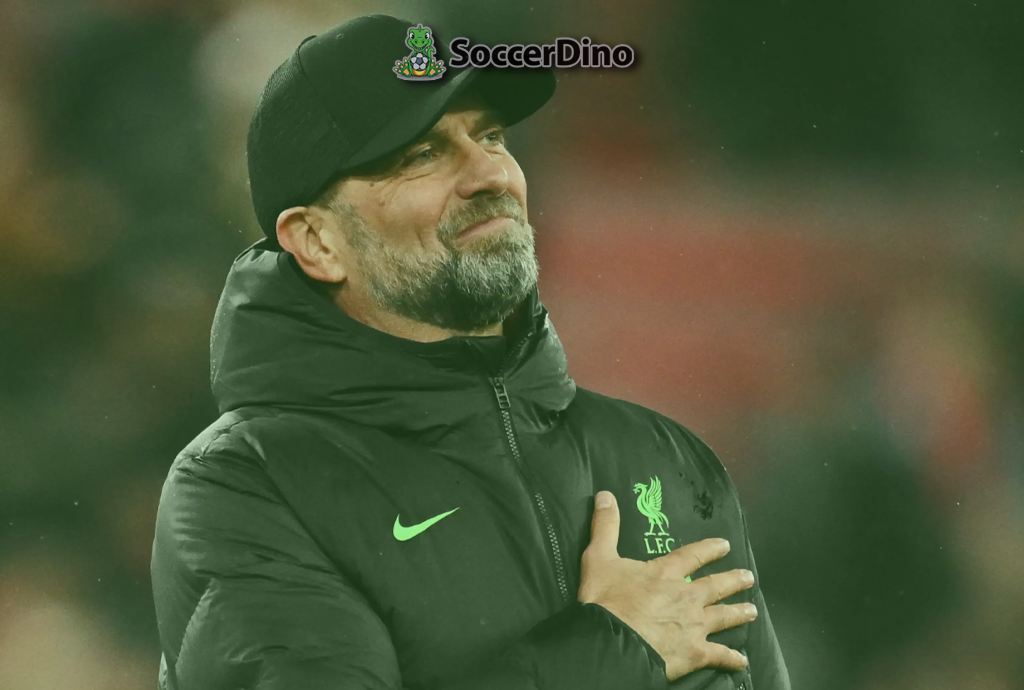
Jürgen Klopp has spoken publicly about the controversy surrounding Mohamed Salah at his former club Liverpool, offering a perspective shaped by seven seasons of working closely with the Egyptian forward.
The situation escalated after Salah began on the bench for a third consecutive match in Saturday’s 3-3 draw away to Leeds United and then spent the entire game watching from the sidelines at Elland Road. His visible anger after the final whistle, directed at head coach Arne Slot, quickly became the central talking point, not only because of Salah’s status at the club, but because it suggested a relationship under strain. The fallout intensified further when Slot subsequently left Salah out of the squad for the Champions League match against Internazionale, which Liverpool lost 0-1.
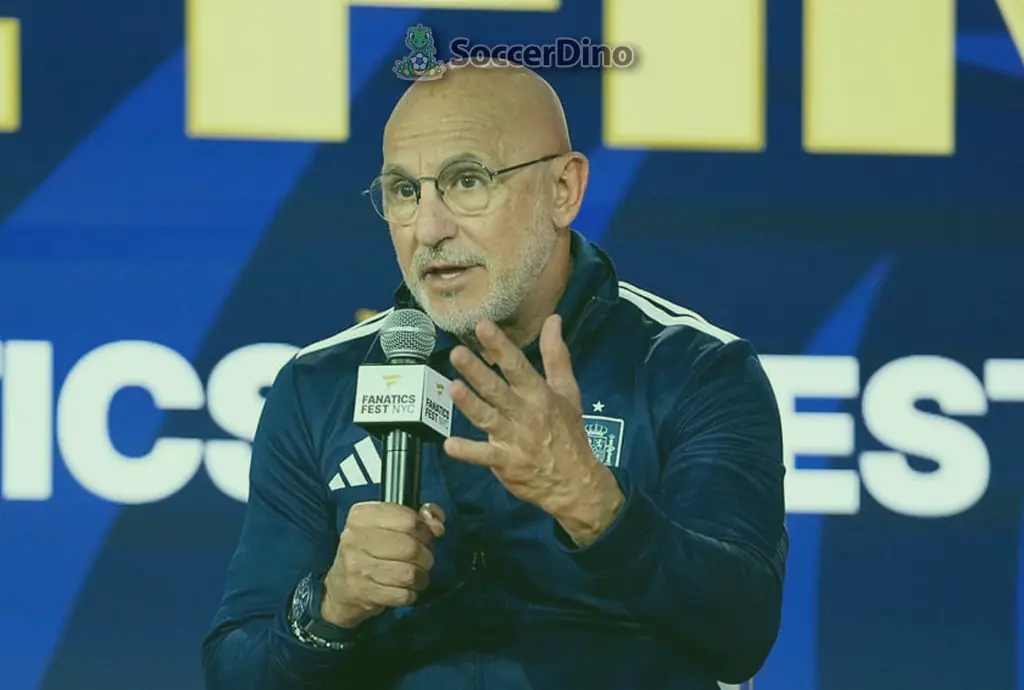
Klopp, now working as sports coordinator within Red Bull’s football organization, addressed the episode in an interview with the BBC and framed it less as a scandal and more as a predictable consequence of elite-level competitiveness. In Klopp’s view, Salah’s drive, pride, and relentless professional hunger are not side traits. They are core features of what made him so effective for Liverpool across multiple seasons. Klopp’s argument is essentially that the same mentality that pushes a player to extraordinary performance levels can also create friction when that player feels underused or sidelined. He pointed out that Salah constantly pushed himself to improve, and that this intense standard-setting mentality had a direct impact on Liverpool’s collective identity during the period when they won the Premier League.
At the same time, Klopp did not sanitize the reality of managing a top attacker. He acknowledged that Salah is not inherently difficult to manage in the sense of day-to-day discipline or training attitude, but that tensions can arise when selection decisions go against him. For a forward of Salah’s stature, being benched or substituted is rarely interpreted as a purely tactical choice. It can be felt as a challenge to hierarchy, importance, or trust, particularly when it happens repeatedly or in high-profile matches. Klopp’s comments suggested that this is not unique to Salah, but it is more visible with him because of his profile and because of the standards he holds himself to.
The immediate question inside Liverpool is what motivated Slot’s decisions and how much of the situation is tactical versus relational. Starting Salah on the bench three times in a row, then not using him at all in a match that ended 3-3, is the sort of sequence that naturally invites wider interpretations. It may be rooted in physical management, a desire to change the balance of the front line, a pressing plan, or a specific opponent-based approach. However, once the player’s reaction becomes public, the tactical discussion often becomes secondary. The focus turns to authority, communication, and whether the manager has created a scenario where one of the team’s biggest figures feels marginalized.
Slot’s next step, leaving Salah out of the Champions League squad against Inter, can be read in two ways. One interpretation is disciplinary, an effort to protect the manager’s authority and set a boundary around public dissent. Another interpretation is protective, removing a player from an emotionally charged situation to lower the temperature and avoid further escalation. In practice, it can be a mix of both. Managers at elite clubs often have to make decisions that serve multiple objectives at once: maintaining standards, controlling the message, and keeping the dressing room stable. Either way, excluding a senior player from a Champions League squad is a high-leverage move, and it tends to create waves within the squad because everyone understands its implications.
Klopp’s intervention matters because his relationship with Salah at Liverpool was foundational. Under Klopp, Salah was not just a scorer. He was a system-defining player, a consistent reference point around which the attack was built, and a reliable source of goals and decisive actions. Klopp had to manage the same tension points that inevitably arise with elite forwards, but he did so within a framework of trust built over years. His public comments can be seen as a reminder that the qualities that make Salah exceptional are inseparable from the expectations he carries and the emotions he shows when those expectations are not met.
There is also a broader context: transitions in management often bring moments like this, especially when the new coach is trying to establish new standards and alter routines that senior players are used to. A new manager must balance respect for what came before with the necessity of making the team their own. For a club like Liverpool, where the previous era was defined by strong personalities, clear principles, and a deep emotional bond between manager and squad, the first major star-management conflict becomes symbolic. It is no longer just about minutes in one match. It becomes a test case for the new regime.
From a squad-dynamics standpoint, the key issue is not whether Salah was right to be angry. The key issue is how the situation is handled internally and how quickly it is stabilized. If teammates perceive that a respected figure is being frozen out without clear reasoning, that can create uncertainty. If they perceive that a senior player is challenging the manager publicly, that can undermine authority. The best outcome for Liverpool is typically a controlled reset: clear internal communication, a defined role, and a return to performance-based selection rather than a prolonged public standoff.
On the pitch, Liverpool’s attacking structure is also relevant. Teams at the top level rarely bench a high-output forward unless they believe the collective performance benefits or the player’s condition requires it. If Slot is experimenting with different combinations, different pressing triggers, or different patterns of width and central occupation, it might naturally affect who starts and who finishes matches. However, the higher the player’s status, the more important it becomes to manage that shift transparently. Even when the decision is tactical, the player’s acceptance often depends on whether they believe the process is coherent and whether the manager is consistent.
Klopp’s remarks essentially lean toward empathy without excusing disruption. He is advocating a realistic understanding of Salah’s personality: an exceptionally driven, intensely professional competitor who demands a lot from himself and from the environment around him. In Klopp’s framing, that drive is productive when it is aligned with the team’s direction, and combustible when the player feels excluded from the plan. That is why selection and substitution decisions can become flashpoints. They do not just change a match. They touch status, leadership, and the sense of contribution.
The next few weeks will likely determine whether this episode becomes a brief storm or a structural problem. If Salah returns to the squad quickly and is reintegrated with clarity, the story can fade into the background, especially if results improve. If the exclusion continues or if communication breaks down further, it can become a recurring headline that distracts from performance. In elite football, these situations are often judged not by what happened once, but by whether the club shows coherence afterwards: consistent messaging, stable roles, and results that justify the decisions.
Ultimately, Klopp’s message is that Salah’s intensity is not a defect to be removed. It is part of the engine that made him elite. Managing that engine requires skill, honesty, and timing. The challenge for Slot is to assert authority without creating a prolonged rupture, and to ensure that Liverpool’s competitive aims are not compromised by a dispute that can grow bigger than the original team selection.