Celta came from behind to beat Valencia at Mestalla, showing composure and quality to move closer to a possible Champions League place.
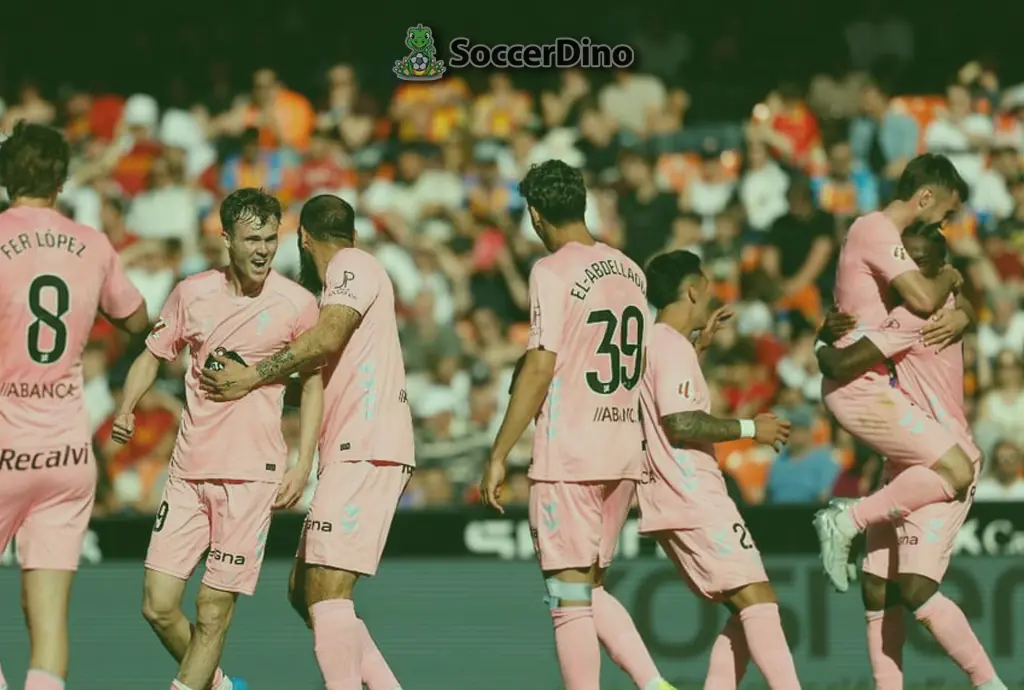
Celta show composure, depth and ambition in comeback win over Valencia at Mestalla
Celta delivered one of their most revealing performances of the season with a comeback victory over Valencia at Mestalla, a result that underlined the growing maturity, resilience and tactical clarity of Claudio Giraldezs side. In a stadium where emotion can quickly shape the rhythm of a match, Celta stayed calm when they went behind, adjusted with intelligence at the break and then struck with ruthless precision to take control. By the end of the afternoon, the visitors had not only secured a major away win, they had also strengthened the feeling that they are genuine contenders for a top five finish and a possible place in next seasons Champions League.
What made the result even more impressive was the context around it. Celta arrived carrying absences, managing physical demands and with one eye on a Europa League fixture later in the week. That combination might have tempted a team to protect energy, lower intensity or settle for caution. Instead, Celta showed balance and personality. They absorbed adversity, read the game correctly and found the right solutions at the right moments. Valencia, by contrast, had entered the match hoping a home win could revive their own European ambitions. For parts of the contest they competed with heart and urgency, but they never managed to match Celta in terms of control, structure and decision making once the game turned.
Valencia made the first move but never truly controlled the match
The opening goal belonged to Valencia and to Guido Rodriguez, who reacted well in a crowded penalty area before sending a finish from the edge of the box beyond Radu. It was an important moment not just because it put the home side ahead, but because it created a rare emotional landscape for both the team and the Mestalla crowd. Valencia do not often take early control of games in the first half, and the lead released a wave of belief inside the stadium. Before this match, they had scored only a limited number of goals before the interval throughout the league campaign, so going 1 to 0 up early felt significant.
That goal appeared to lift the side psychologically. For a team that has often looked fragile both in footballing terms and in confidence, the strike offered relief and excitement. But the effect was deceptive. Rather than pushing on for a second goal and forcing Celta deeper, Valencia became more concerned with protecting what they had. The home side dropped into a more cautious posture, prioritising defensive spacing and compactness instead of trying to impose themselves through possession or pressure higher up the pitch. That decision allowed Celta to settle and slowly take ownership of the ball.
Even then, the visitors were not immediately dangerous. They circulated possession with growing authority, but for much of the first half they lacked the final acceleration to trouble Dimitrievski in a meaningful way. Their first shot on target did not arrive until the 40th minute, when Jutgla tested the goalkeeper without causing major concern. It was a sign that Celta were present in the game without yet being fully sharp in the decisive areas. Valencia, however, misread that stage of the contest. The home side seemed to believe that Celta control of possession was manageable and that the lead could be protected without major risk. That proved to be a costly illusion.
Giraldez changed the match at half time
The turning point came with the interval and with Giraldez making a triple substitution that transformed both the energy and the direction of the match. More than just fresh legs, the changes brought clarity, verticality and a new level of aggression in the final third. Above all, Williot emerged as the catalyst. His impact was immediate and decisive, and the entire attacking structure of Celta looked more dynamic once he entered the game.
The equaliser came when his effort from inside the box was parried by Dimitrievski straight into the path of Ilaix Moriba, who finished emphatically from close range. It was the sort of goal that often reflects a shift in momentum as much as technical execution. Valencia had already begun to feel the game slipping away from them, and the rebound only confirmed that Celta were now playing with conviction and force.
What followed was even more damaging for the home side. Only moments later, Williot again made the difference, this time with a delivery that found Fer Lopez in space inside the area. The finish was clinical, guided high into the top corner from close range, and it completed a turnaround that radically changed the emotional atmosphere of the stadium. What had begun as an encouraging afternoon for Valencia suddenly became another scene of frustration, anxiety and growing anger from the stands.
Celta moved into a different class after the turnaround
The speed of the comeback reopened the familiar tensions around Valencia. Chants calling for Corberan to step down returned from sections of the crowd, exposing just how thin the margin is between hope and unrest at Mestalla. The coach responded with a quadruple substitution, trying to inject urgency, energy and a different attacking impulse into his team. But by that point the game had already moved beyond Valencias comfort zone.
In footballing terms, Celta were now operating at a much higher level. Their possession had purpose, their movements were cleaner and their decisions under pressure were sharper. Valencia still fought, still ran and still tried to drag the contest into the kind of emotional battle where determination can sometimes compensate for a lack of control. But Celta had already established the more sophisticated rhythm of the game. They were no longer merely reacting. They were dictating.
The third goal captured that superiority perfectly. In the 82nd minute, Williot completed his outstanding contribution with a solo move that ended in a composed finish through the legs of Dimitrievski. It was a goal that effectively settled the match and rewarded both his individual quality and Celta broader dominance in the second half. By that stage, the visitors had gone from patient to dangerous, from dangerous to decisive.
Valencia pushed late but Celta never lost their calm
To their credit, Valencia did not give up. They continued to push forward and they did create moments, but their football became increasingly rushed and disordered. There was urgency, but not enough precision. There was effort, but too little control. The team threw numbers forward, chased second balls and tried to feed off the energy of the crowd, yet the desperation in their play also increased the sense that they were forcing situations rather than constructing them.
Guido Rodriguez, who had opened the scoring and stood out once again, gave Valencia a final burst of hope when he made it 2 to 3 in the 93rd minute. It was another reminder of his quality and influence, and another sign that he remains one of the most important figures in the side. But even that late goal did not truly destabilise Celta. The visitors returned immediately to the quality that had defined their entire performance: composure. They slowed the game, protected possession when needed, managed the final moments with authority and closed out the win without panic.
A result with major implications
This was more than just an entertaining comeback. For Celta, it was a statement about where they are and what they could still achieve before the season ends. Teams with European ambitions often speak about maturity, but not all of them show it in difficult away matches after conceding first. Celta did. They showed mental balance, tactical flexibility and enough attacking quality to punish a rival once weaknesses appeared. That is why the result feels important beyond the 3 points alone.
For Valencia, the match exposed familiar contradictions. There were good moments, emotion, commitment and some valuable individual performances, especially from Guido. But there was also the recurring inability to turn a promising position into a controlled and complete performance. The lead created hope, yet it also tempted the team into passivity. Once the game demanded calm and clarity after the break, those qualities belonged almost entirely to the visitors.
By the final whistle, the defining image was unmistakable. Valencia had fought, but Celta had understood the match better. Celta had absorbed the first blow, found answers through their coach, accelerated at exactly the right time and then controlled the closing stages with the serenity that now defines them. In a season increasingly shaped by pressure, schedule congestion and rising expectations, that ability may prove as valuable as any single result. At Mestalla, it carried them one step closer to a place among the elite.