For Union Berlin and Bayern Munich, there will be a quick reunion. Twenty-five days after their draw in the Bundesliga, the two very different teams meet again in the round of 16 of the DFB-Pokal.
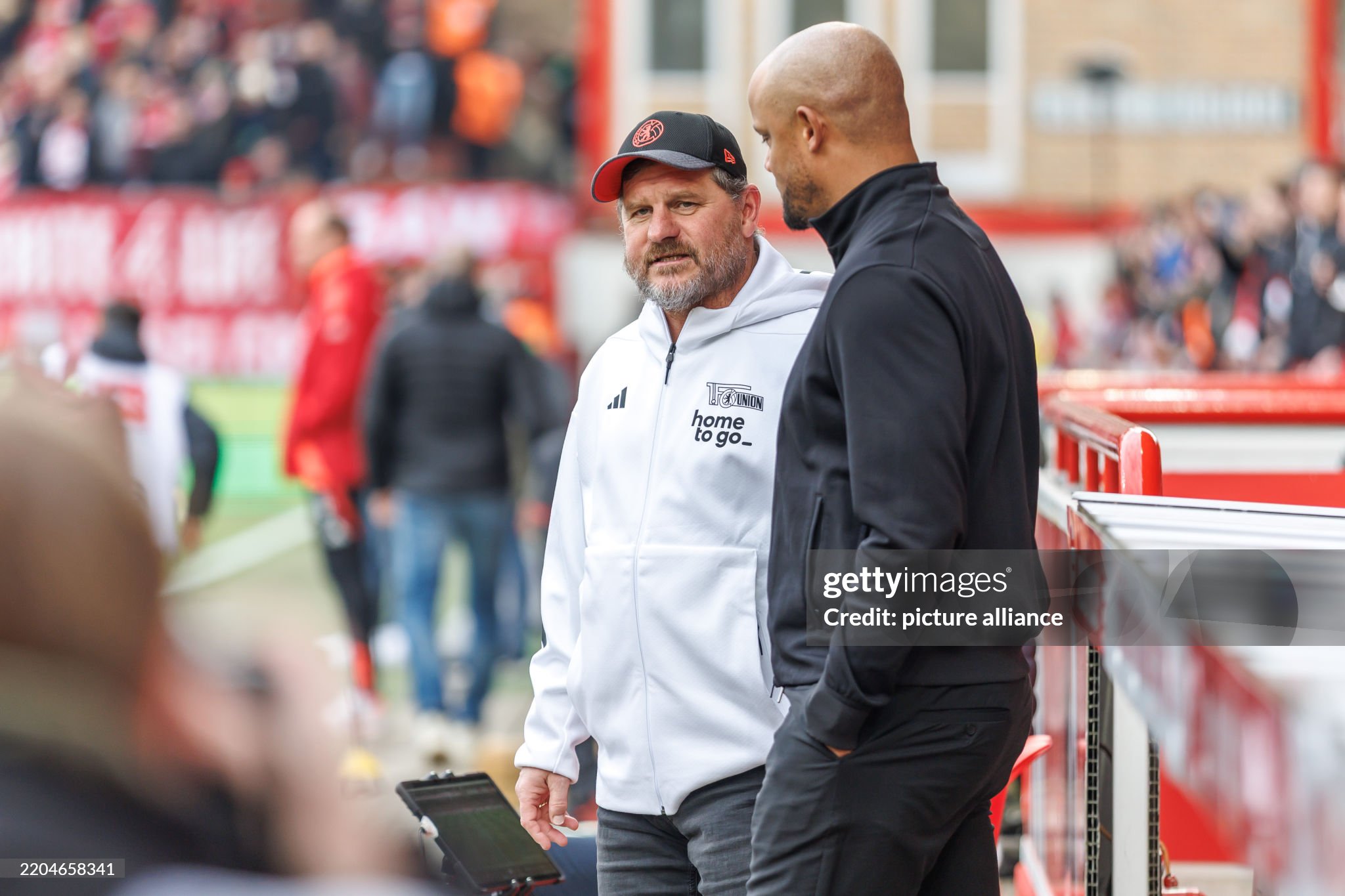
Maybe on Wednesday evening at 8:45 p.m. (live on kicker), FC Bayern Munich will really turn it on for the second time this season at the Stadion An der Alten Försterei.
For Union Berlin, the visit of the German record champions arrives at a delicate emotional moment. The 2-1 defeat against Heidenheim still hurts, not only because of the result itself, but above all because of how and when it happened. Late goals, missed chances and small lapses in concentration have a way of gnawing at players and supporters, and Union would certainly have preferred to go into a cup tie of this magnitude with a positive result behind them.
The DFB-Pokal round of 16, however, offers a quick chance to reset. Everyone involved at Union knows that facing Bayern in a knockout game demands absolute focus from the first whistle to the last. Against a team with so much quality in every line, any moment of distraction can be punished. Coach Steffen Baumgart acknowledged that the Heidenheim loss felt like a real blow, something like a punch to the neck. At the same time, he framed the meeting with Bayern as an immediate highlight, a match where there is no middle ground and no grey area. For him and his players, the task is clear: lift their heads, deliver the best possible performance and earn the right to dream of the next round.
The sense of opportunity comes not only from the stage, but also from recent history. On 8 November, Union Berlin already showed that they can trouble Bayern. In the league encounter between the two clubs, Union managed to take the first and so far only points off the champions in this Bundesliga season. Danilho Doekhi scored twice, and for a long time it looked like Union were heading for a famous 2-1 victory. Only in stoppage time did Harry Kane rescue Bayern with a header to make it 2-2, a moment that was both heartbreaking for the home side and a reminder of the fine margins at this level.
Baumgart has not forgotten that performance. In his view, Union delivered a very strong display that day, matching Bayern in intensity and organisation for most of the ninety minutes. At the same time, he is convinced that Bayern will also have learned from that match. The champions rarely make the same mistakes twice in a short space of time. They will arrive in Berlin with fresh memories of how close they came to defeat and with a clear idea of what they need to improve in order to assert their superiority more ruthlessly this time.
From a tactical point of view, the duel promises to be fascinating. Union will likely look to combine defensive discipline with quick transitions, trying to compress space around their own penalty area while remaining ready to break forward with pace whenever they recover the ball. The atmosphere at the Stadion An der Alten Försterei can play an important role here. The compact stands, the noisy home support and the sense of intimacy in the ground often give Union an extra push, especially on big nights. The crowd will know that the team is facing a huge challenge and will look to turn every tackle, every sprint and every counterattack into a wave of noise.
For Bayern, the objective is straightforward: dominate possession, create chances and avoid being drawn into the kind of chaotic, transitional game that would suit Union. They know that the cup has a reputation for surprises, and that a single bad evening can end their participation in the competition. The DFB-Pokal remains an important trophy for the club and for the supporters, and the prospect of being knocked out early by an underdog is exactly the scenario they want to avoid. That is why the visitors are expected to field a strong side and approach the game with full seriousness.
In terms of personnel, the situation for Union is relatively positive. Apart from defenders Robert Skov and Andrik Markgraf, and forward Dmytro Bogdanov, Baumgart has the rest of his squad available. Skov and Markgraf reduce the options in the back line slightly, which makes the choice of system and back four or back three particularly interesting. Bogdanov, who recently travelled with Ukraine’s under 19 national team and picked up an injury there, is unlikely to feature again this year. His absence removes one attacking option from the bench, which could be felt if the game goes into extra time and fresh legs are needed in the final stages.
On the other side, Bayern’s depth is well known. Even when they are missing key players, they are able to bring in internationals of high quality. For Union, this means that concentration cannot drop even when the first wave of stars is substituted. A replacement can be just as dangerous as the player leaving the pitch. Managing the emotional and physical energy over ninety minutes, and possibly 120, will therefore be crucial.
Historically, the head to head record between the two clubs underlines the scale of the task for Union. In 13 competitive matches against Bayern, they have never managed to record a single victory. There have been five draws, which at least prove that stalemates are possible when everything goes right at the back and small moments fall in their favour. In the cup, though, a draw after ninety minutes is only a pause rather than a solution. One way or another, a winner must emerge, whether in extra time or via a penalty shootout.
That is what Baumgart and his players must keep in mind. To knock Bayern out of the competition, a lot has to come together on the night. The defensive shape must be disciplined, the pressing triggers must be coordinated and the duels in midfield must be contested with maximum intensity. Set pieces can become a key weapon. A well worked corner or free kick might provide the opening goal that changes the mood in the stadium and plants a seed of doubt in Bayern minds. Equally, defending those situations against tall and powerful Bayern players will demand focus and physical commitment.
Psychologically, the match is a test of how quickly Union can move on from disappointment. The Heidenheim defeat could easily drag them down if they allowed frustration to dominate the dressing room. Instead, the coaching staff are trying to reframe the situation. The idea is simple: the team has taken a painful hit, but now has a special opportunity to respond immediately in front of its own supporters. A big performance against Bayern would not erase the previous result, but it would shift the narrative around the team and remind everyone what Union are capable of when they play with courage, togetherness and clarity.
For the fans, the equation is just as clear. Nights like this do not come along every week. Facing Bayern in a do or die cup tie at the Alte Försterei is precisely the type of occasion that has helped build the modern identity of Union Berlin. Even if the statistics and budgets point strongly toward an away win, the cup feeds on belief, atmosphere and the refusal to accept the script. Union will need all of that, plus a near perfect performance, if they want to turn a respectable underdog story into a genuine sensation.