The Japanese star went down injured on January 18, and his absence has not been as serious as might have been expected thanks to the excellent form of Oyarzabal and, above all, Guedes, as well as Real Sociedad’s strong performances overall.
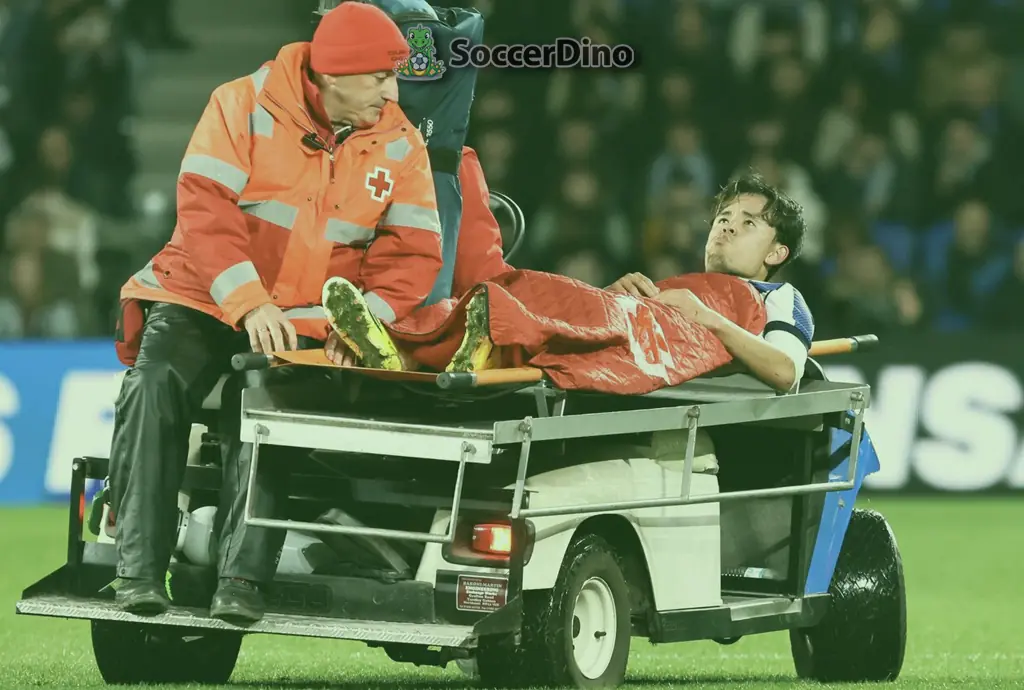
Take Kubo marks one month on the sidelines with Real Sociedad today, having last featured on January 18 against Barcelona.
That night, in the 69th minute, the Japanese forward suffered a significant muscle injury that immediately raised alarm bells inside the club. Since then, he has been recovering at Zubieta with the hope of returning to Pellegrino Matarazzo’s plans as soon as possible. Even so, Real Sociedad’s strong collective response, led by the outstanding form of Mikel Oyarzabal and especially Gonçalo Guedes, has ensured that Kubo’s absence has not hit the team as hard as many feared.
The injury itself came in a moment that perfectly captures Kubo’s style: acceleration, close control, and a sudden burst with the ball at his feet. As he launched into one of his trademark runs against Barcelona, he felt a sharp pull in his left hamstring. The immediate reaction told the story. He went down instantly, visibly unable to continue, and the fact he had to be carried off on a stretcher was a clear sign that the damage was likely serious rather than a simple precaution. For Real Sociedad, it was the kind of scene that usually means weeks rather than days, and the early expectation inside the squad was that the team would have to navigate a difficult run of fixtures without one of its most decisive attackers.
Before the setback, Kubo had once again been establishing himself as a key piece in Real Sociedad’s attack. He is not just a winger who stretches the pitch, he is often the player who turns possession into danger: driving inside, creating numerical advantages, attracting defenders, and opening space for others with his movement. Under Matarazzo, the team had shown signs of rediscovering rhythm and confidence, and Kubo looked like one of the players most ready to thrive in the new framework. That made the timing of the injury even more frustrating, because it arrived just as Real Sociedad were entering a demanding stretch where rotation, depth, and momentum would be tested.
The calendar was unforgiving. Real Sociedad had to juggle domestic and cup commitments, including LaLiga matches and a Copa del Rey run that demanded intensity and focus. Matarazzo, however, managed the month without his number 14 in a way that strengthened the team’s belief. The results underline it: 4 wins against Celta and Elche in LaLiga, plus victories over Deportivo Alavés and Athletic Club in the Copa del Rey, a league draw against Ernesto Valverde’s side, and only a single defeat, the loss last Saturday at the Santiago Bernabéu. In other words, Real did not merely survive without Kubo, they built a strong sequence that kept them competitive on multiple fronts.
A big reason for that resilience has been the productivity of the players who stepped into the spotlight. Oyarzabal has been the reference point, producing 5 goals during this period and offering both leadership and clinical finishing. In many matches, he has been the stabiliser when Real needed calm in the final third, and the spark when they needed a decisive action. Guedes, meanwhile, has been crucial in a different way: 3 goals, plus the kind of directness and vertical threat that can change games quickly. His contribution has been particularly important because it has helped replace some of the unpredictability and attacking edge that Kubo usually provides.
Just as significant has been the spread of responsibility across the squad. Rather than relying on a single replacement to mimic Kubo’s exact profile, Real Sociedad have leaned into a more collective attacking model. Players like Óskarsson have added presence and movement in key areas, while Turrientes has contributed energy and continuity in the buildup, helping the team sustain pressure and keep opponents pinned back. Sučić has also made his presence felt, offering support in attacking phases and adding another option to link midfield and attack. This shared effort has made the team more adaptable, and it has prevented opponents from simply focusing on shutting down one obvious danger man.
From a tactical perspective, Kubo’s absence has forced Real to find alternative ways to progress the ball and create chances. When Kubo plays, a lot of play can funnel toward him because he can beat defenders in isolation and draw fouls or create shooting lanes. Without him, the team have had to move the ball faster, rotate positions more, and use different patterns to access the final third. That can be uncomfortable at first, but it can also accelerate a team’s development, because it demands solutions that are not dependent on one player’s individual brilliance. The last month suggests Matarazzo has been able to turn that necessity into a positive, at least in the short term.
Still, the club know that getting Kubo back will raise the team’s ceiling again, especially against opponents who defend deep and require a moment of creativity to break them down. For now, the recovery timeline remains cautious. The expectation is that Kubo still needs at least 2 more weeks before he can return, because severe muscle fiber tears typically require around 6 to 8 weeks of rehabilitation. That kind of injury is not only about healing, but about returning safely to high-speed actions, the very actions that define Kubo’s game. Rushing it would carry obvious risks.
Kubo has already been working at Zubieta since the beginning of the month, a sign that he is progressing through a structured recovery plan. He had previously spent a few days back in Japan with the club’s permission, a brief reset before fully committing to the final stages of rehabilitation. The next steps will likely involve gradually increasing intensity: controlled running, strength work, sport-specific drills, and eventually team training, all designed to ensure that when he returns, he can sprint, turn, and explode with confidence, not hesitation.
For Real Sociedad, the story of this month is clear: Kubo has been missed in terms of profile, but not in results. Oyarzabal and Guedes have carried a large share of the attacking weight, and the rest of the squad have contributed enough to keep the team moving forward. The challenge now is to maintain that momentum while Kubo completes his final phase of recovery, and then reintegrate him smoothly so that Real Sociedad can combine the collective strength they have built with the individual edge he provides.