Olympique Marseille let a lead slip in a bizarre setting in their first match after the dismissal of Roberto De Zerbi. Protesting ultras only entered the stands once the scoring opened against Strasbourg. The visitors struck back from behind deep into stoppage time.
What should have been a reset after a turbulent week turned into another chaotic night, with protest, a goalkeeper switch, a two goal lead, and a late penalty that left the home side feeling like it had thrown away the one thing it needed most: calm.
The backdrop was striking before the football even started. For the opening phase, the most vocal section of the home support stayed away to make a point. In the empty area, banners were visible with criticism aimed at the club leadership, including owners Frank McCourt and Margarita Louis-Dreyfus. The message was simple: anger had been building, and this was the moment to show it publicly.
That anger had been fuelled by a week in which the pressure finally became too heavy to carry. Coach Roberto De Zerbi was dismissed on Wednesday, a decision that followed a humiliating loss and a run of results that had turned the atmosphere poisonous. The club, already known for emotional swings, now had to deal with the usual questions that come after a managerial change: who takes control, how the dressing room reacts, and whether the team can play with clarity when everything around it feels unstable.
The match itself reflected that instability. Under interim coach Jacques Abardonado, selection choices hinted at a return to basics. Goalkeeper Jeffrey de Lange, who had surprisingly started the previous marquee match, returned to the bench. In his place, former AFC Ajax keeper Geronimo Rulli took the gloves, a move that looked like a signal: pick experience, reduce risk, stabilise the first phase of the build up, and avoid the kind of early wobble that invites chaos.
In front of him, winter signing Quinten Timber started and was the only Dutch player in the starting eleven. For the visitors, striker Emmanuel Emegha was missing through injury, which removed one of their most direct outlets and forced them to seek other ways to threaten, especially through movement between the lines and late runs into the box.
Even with the protests and the tension, the football began with a familiar cup tie feel: cautious, slightly scrappy, and shaped by nerves. The home side had more of the ball, but the rhythm was not always clean. Strasbourg sat compact, waited for loose touches, and looked to counter quickly whenever possession changed hands. For Marseille, the priority seemed to be control, but control without penetration can turn into frustration, and frustration is dangerous when the mood in the stadium is already sharp.
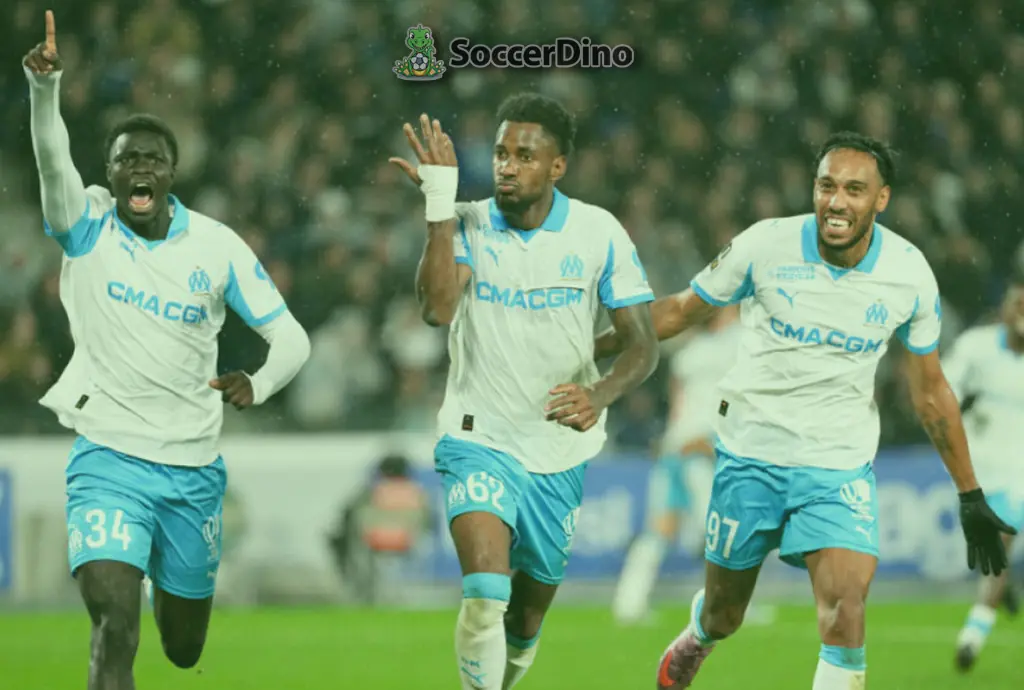
Then came the moment that made the whole scene feel almost scripted. Just as the ultras arrived in the stand after skipping the opening part, Marseille scored. Whether coincidence or energy shift, it immediately changed the temperature inside the ground. The move itself was efficient: Amine Gouiri created the opening and slipped a clever pass into Mason Greenwood, who stayed composed and finished for 1-0. The roar that followed drowned out the earlier messages of discontent, at least for a while, and for a few minutes it felt like the club had found the simplest way to reset: score, settle, and let the stadium do what it usually does when the team gives it something to hold onto.
The second half began in the same way, with the kind of punch that normally kills a game. Gouiri made it 2-0 in the 47th minute, a goal that should have allowed the home side to manage the match with patience. At that point, the plan seemed clear: keep the ball, force Strasbourg to open up, and use the space for controlled counter attacks rather than end to end chaos.
But the evening refused to stay simple. Strasbourg responded with more urgency, pushing higher and committing more bodies to the final third. The home side, instead of tightening its grip, began to lose a bit of structure. Passing became less secure, clearances came earlier, and the team started to defend deeper than it wanted. In that phase, Strasbourg found a way back through Sebastian Nanasi, pulling it to 2-1 and changing the psychology of the match again. Suddenly, every Marseille possession looked like it needed to end with safety rather than ambition, and that is when teams start inviting pressure.
From there, it became a contest of nerves. Strasbourg sensed that a second goal was not impossible, while Marseille looked caught between two instincts: protect the lead or go and score a third to finish it. With the crowd alternating between impatience and encouragement, the final minutes drifted toward that classic scenario where one side feels it is surviving rather than controlling.
The decisive moment, and the most painful for Marseille, arrived deep into stoppage time. Defender Emerson Palmieri attempted to clear the ball from inside his own area but failed to check what was behind him. Substitute Gessime Yassine anticipated the situation, got to the ball first, and was then brought down. The referee pointed to the spot, and Joaquin Panichelli stepped up to take the penalty.
The finish was as dramatic as the circumstances: straight down the middle. Rulli stayed upright, which gave him a chance, but the ball still squeezed through his hands and into the net for 2-2. For Strasbourg it was a huge reward for persistence. For Marseille it felt like the worst possible ending to a night that was supposed to mark a new chapter.
Beyond the scoreline, the draw underlined the deeper problem: this team does not just have to win matches, it has to win back stability. A two goal lead at home should be a platform for a controlled finish, not a bridge to late panic. The protest, the managerial change, the selection switches, and the late collapse all pointed to the same reality: the club is still searching for balance.
For the interim staff, the takeaway is uncomfortable but clear. The team can create moments, and it still has individual quality, but game management remains fragile. Once Strasbourg increased intensity, Marseille struggled to slow the match down, win tactical fouls, keep possession in safe zones, and kill momentum. Those details are not glamorous, but they are exactly what prevents late disasters.
And for the stands, the night captured the Marseille identity in full: noise, emotion, drama, and a feeling that anything can happen, even when the scoreboard suggests the job is done. On a weekend that should have been about moving on from the De Zerbi era, Marseille ended it the only way Marseille ever seems to do it: with another story that no other club could quite replicate.