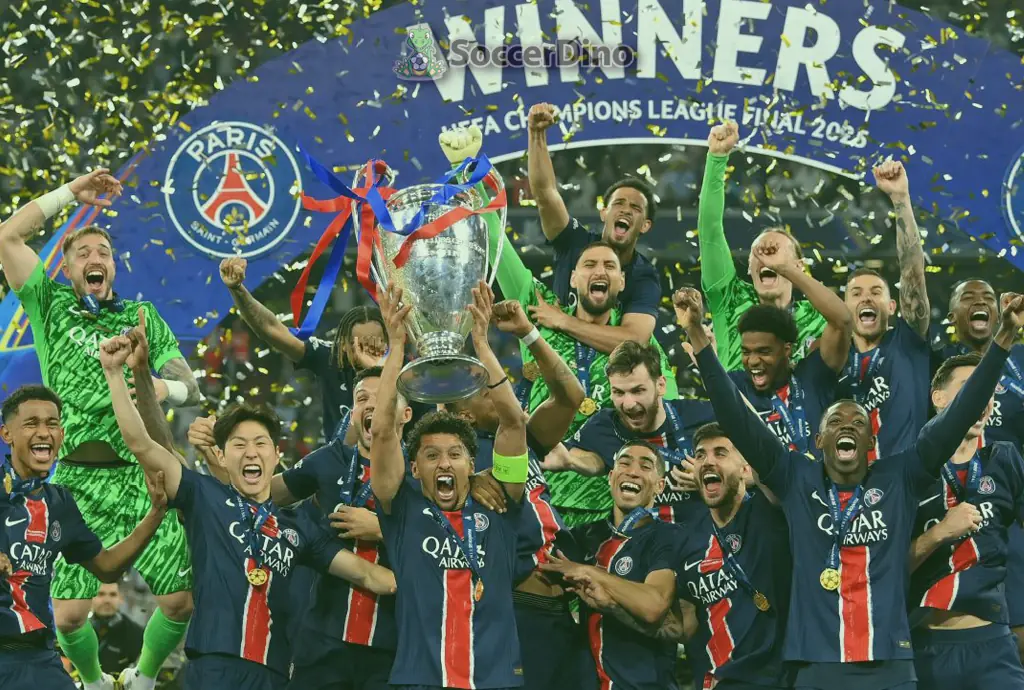
Spain have extended Luis de la Fuente contract until 2032 after his success at Euro 2024 and the 2026 World Cup, securing long-term continuity.
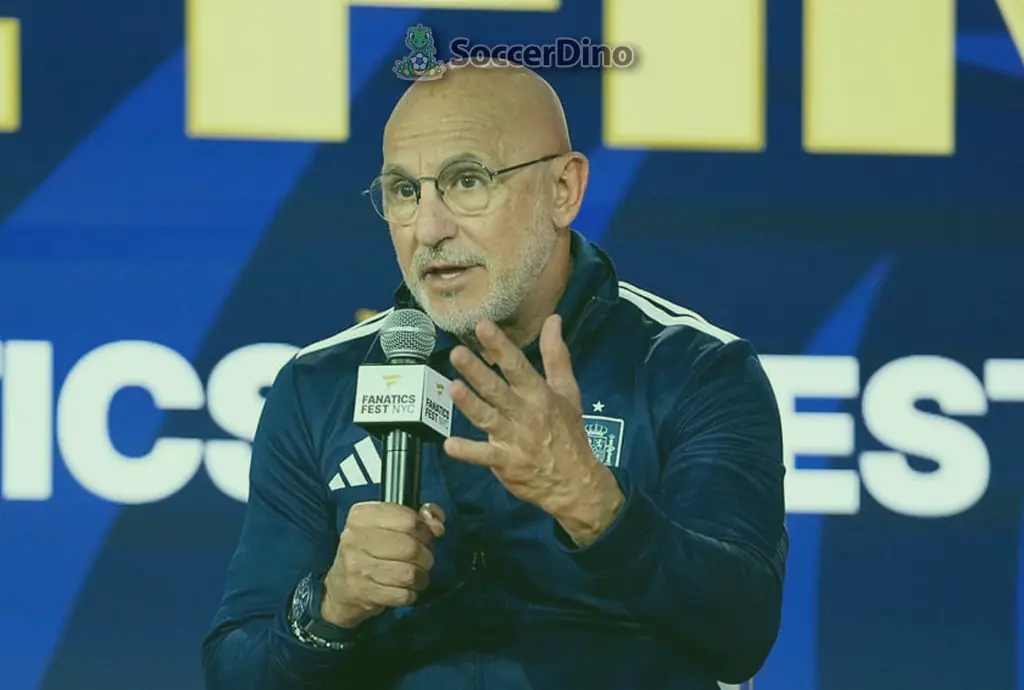
Spain extend Luis de la Fuente contract until 2032
Luis de la Fuente will remain in charge of the Spain national team until 2032 after the Royal Spanish Football Federation unanimously approved a long-term contract extension for the 65-year-old head coach. The decision gives Spain continuity through an entire cycle of major tournaments, including Euro 2028, the 2030 World Cup and Euro 2032, and represents a major show of confidence in a coach who has overseen one of the most successful periods in the history of the national side. The RFEF confirmed the agreement in an official statement, explaining that its board had given unanimous support to the renewal and that De la Fuente would continue leading the sporting project for the coming years.
“The board of the Royal Spanish Football Federation [...] unanimously approved the renewal of national team head coach Luis de la Fuente, who will remain under contract with the RFEF until 2032,” the federation said. The length of the deal is particularly significant because it goes far beyond a standard short-term extension. Rather than simply rewarding the coach for recent results, the RFEF has effectively handed De la Fuente responsibility for planning Spain future across several international cycles, including a home World Cup in 2030, when Spain will co-host the tournament alongside Portugal and Morocco.
From youth football to the senior national team
De la Fuente relationship with the Spanish federation stretches back to 2013, giving him more than a decade of experience inside the RFEF structure. Before taking charge of the senior team in 2023, he worked with several youth national sides and built his reputation through success at development level. That background has been an important part of his progression because it allowed him to work closely with generations of Spanish players before many of them reached senior international football, giving him a detailed understanding of the federation pathway and the technical profile Spain wanted to maintain.
His record at youth level already included major honours before he was promoted to the senior job. De la Fuente guided Spain to the European Under-19 Championship title in 2015 and later won the European Under-21 Championship in 2019. Those successes strengthened his position within the federation and demonstrated his ability to manage tournament football, develop young players and build teams capable of competing successfully over short, high-pressure international competitions.
When he was appointed senior head coach in 2023, De la Fuente therefore arrived with a deep knowledge of the federation rather than as an outsider brought in to change direction completely. That continuity has since become one of the central features of his tenure. Spain have continued to promote technically gifted players, integrate younger generations and combine possession-based football with greater verticality and attacking speed, all while producing results at the highest level.
A historic run of trophies
The decision to extend De la Fuente contract until 2032 is ultimately based on results. Since taking control of the senior team, he has built a trophy record that the federation now regards as unprecedented. Spain won the Nations League in 2023, giving De la Fuente his first major title with the senior side, before adding Euro 2024 the following year. That European Championship success confirmed that Spain had returned to the highest level of international football and established the coach as a central figure in the country renewed success.
The high point came at the 2026 World Cup, where Spain defeated Argentina 1-0 after extra time in the final. That victory elevated De la Fuente status further and completed a remarkable sequence of international achievements. Winning a World Cup after already collecting the Nations League and European Championship transformed his tenure from a successful rebuilding project into one of the defining periods in Spain national-team history.
There was one major disappointment during that run, when Spain lost the following edition of the Nations League to Portugal on penalties, but that result did little to change the overall assessment of De la Fuente work. International football rarely offers complete domination, and the federation has clearly judged the broader trajectory rather than one isolated defeat. The combination of continuity, tournament success and the ability to integrate players from different generations has convinced the RFEF that extending the partnership is preferable to beginning another coaching cycle.
RFEF wants stability around the project
RFEF president Rafael Louzan made that reasoning explicit when announcing the extension. He said the federation wants to build “a project based on stability and trust” and described the renewal as the natural consequence of the confidence placed in De la Fuente and in the sporting structure he has created. Rather than waiting until the end of another tournament to reconsider the position, the federation has chosen to remove uncertainty now and give the coach a long-term mandate.
“We are talking about the most successful head coach in the history of the national team and, after 14 years in our organisation, this is something Luis de la Fuente deserves, a long future with the RFEF,” Louzan said. The reference to De la Fuente long service is important because the federation does not see the agreement merely as a reward for the World Cup. It reflects more than a decade of work across several age levels and the gradual development of a coach who has been closely connected to Spain football structure for years.
For the federation, stability also offers practical advantages. International teams have limited time together compared with clubs, so continuity in coaching methods, player relationships and tactical principles can be especially valuable. By securing De la Fuente until 2032, Spain can plan recruitment, player development and tournament preparation without the uncertainty that often surrounds a coach whose contract expires after every major competition.
2030 World Cup will be central to the new deal
The 2030 World Cup will inevitably become one of the defining objectives of the new agreement. Spain will be one of the host nations alongside Portugal and Morocco, meaning expectations will be enormous both on and off the pitch. For De la Fuente, it represents the opportunity to defend Spain status as world champions while leading the team through a tournament in which the country itself will be at the centre of attention.
Home World Cups carry a different type of pressure. Familiar stadiums, strong public expectation and constant media attention can create an environment very different from an ordinary international tournament. The RFEF decision to settle the coaching question years in advance should help reduce one source of uncertainty. Rather than entering the build-up to 2030 with speculation over the future of the head coach, Spain already know who will be responsible for preparing the team.
The long-term nature of the deal also gives De la Fuente time to manage generational change. Some players who are central to the current squad may no longer be at their peak by 2030 or 2032, while younger players will inevitably emerge. His previous experience with Spain youth teams should be particularly useful in that process. De la Fuente has already shown that he is comfortable introducing younger players into major competitions, and the federation clearly expects that ability to remain important over the next six years.
Euro 2028 and Euro 2032 also included
Before the 2030 World Cup, Spain will compete at Euro 2028, giving De la Fuente another opportunity to defend the European title he won in 2024. The new contract then extends through Euro 2032 as well, meaning the RFEF has effectively committed to one of the longest uninterrupted coaching cycles in modern international football. Such continuity is relatively unusual at elite level, where results at one tournament can often determine whether a coach remains in charge.
That makes the agreement a particularly strong statement. Spain are not simply saying they are satisfied with recent trophies; they are saying they believe De la Fuente is the right person to manage the national team through different phases of its development. The squad that competes in 2032 will almost certainly look significantly different from the one that won the 2026 World Cup, meaning the coach will be expected not only to preserve success but also to oversee a transition.
The challenge will be to ensure that continuity does not become stagnation. De la Fuente has been successful partly because he has adapted the team, given opportunities to new players and avoided relying entirely on reputation. Maintaining that flexibility over such a long contract will be essential. A coach who remains in place for nine years at senior level must continue refreshing both the squad and the tactical approach if results are to remain competitive.
Spain choose continuity after extraordinary success
The extension therefore represents both recognition and responsibility. De la Fuente has earned the federation trust through a remarkable period that includes Nations League success, Euro 2024 and the 2026 World Cup. His path through the youth teams gives him a rare continuity with the wider Spanish system, while his senior achievements have made the case for renewal difficult to ignore.
For Louzan and the RFEF, the objective is now to protect that momentum and build around a coach who already knows the players, the federation and the demands of major tournaments. There is no guarantee that the next six years will reproduce the same level of success, but the federation has decided that stability gives Spain the best framework from which to try.
De la Fuente will therefore lead Spain into another European Championship, a home World Cup and potentially a second European tournament before his new deal expires. For a coach who first entered the RFEF structure in 2013, the extension takes his relationship with the federation into an entirely new phase. What began with youth football has developed into one of the longest and most successful national-team projects in Spanish football history, and the RFEF has now made clear that it wants that project to continue until 2032.